PFAS in Saudi Arabia: 2026 Discharge Limits Explained
PFAS in Saudi Arabia lack a single binding effluent statute as of mid-2026. NCEC and PME converge on the EU Directive 2020/2184 Σ20 PFAS baseline of 0.10 µg/L (100 ng/L). Individual PFOA and PFOS guidance trends toward 4–10 ng/L. Royal Commission Yanbu, Jubail, and KAEC permits typically hold industrial discharges to ≤25 ng/L PFOA/PFOS.
Three political-engineering forces are converging in 2026. First, Saudi Vision 2030 mandates zero-pollution operations at NEOM, KAEC net-zero industrial clusters, and Royal Commission green parks in Jubail and Yanbu. Those targets cannot be met with PFAS in the effluent at µg/L levels. Second, NCEC (formed under the 2020 PME reorganization) is harmonizing GCC guidance with EU Directive 2020/2184 and the US EPA April 2024 PFAS National Primary Drinking Water Regulation. That rule set MCLs of 4.0 ng/L PFOA, 10 ng/L PFOS, 10 ng/L PFNA, 10 ng/L PFHxS, and 10 ng/L HFPO-DA (GenX). Third, Gulf Standardization Organization (GSO) technical references already incorporate OECD PFAS values, giving Saudi regulators a defensible framework without a standalone national PFAS statute.
The practical consequence for EPC tenders issued in 2026 is clear. International EPC clients and Royal Commission permit reviewers now specify the US EPA 2024 numbers as the de facto design basis. A Yanbu petrochemical facility that commissioned against a 1 µg/L PFOA target in 2022 is now asked to demonstrate ≤25 ng/L PFOA/PFOS in its next permit renewal cycle. Most plants we size for Royal Commission zones run at the lower end of that 10–25 ng/L action band.
Current Discharge Numbers and Who Enforces Them
Saudi Arabia has no single binding PFAS statute as of mid-2026, so enforcement runs through three parallel instruments. PME Presidential Decrees set overarching policy. NCEC technical guidance adopts EU and GCC references. Facility-specific discharge permits come from the Royal Commission in Jubail and Yanbu, or from NCEC elsewhere. The numbers below are the thresholds a compliance officer or design engineer is asked to meet today.
| Analyte / Group | Limit (ng/L) | Regulator / Source Instrument |
|---|---|---|
| Σ20 PFAS (sum of 20 specified PFAS) | 100 (0.10 µg/L) | NCEC guidance referencing EU Directive 2020/2184 |
| PFOA (individual) | 4.0 | US EPA NPDWR, April 2024 — mirrored in Royal Commission Yanbu permits |
| PFOS (individual) | 10 | US EPA NPDWR, April 2024 — mirrored in Royal Commission Jubail permits |
| PFNA | 10 | US EPA NPDWR, April 2024 |
| PFHxS | 10 | US EPA NPDWR, April 2024 |
| HFPO-DA (GenX) | 10 | US EPA NPDWR, April 2024 |
| Hazard Index 4 (mixture of PFNA, PFHxS, HFPO-DA, PFBS) | 1.0 (unitless) | US EPA NPDWR, April 2024 |
| PFOA + PFOS action level (industrial permit) | 10–25 (sum) | Royal Commission Yanbu/Jubail permit conditions, 2024–2026 |
Convergence with the EU is direct on the Σ20 metric and near-direct on individual substances. Convergence with the US EPA 2024 rule is the working assumption for 2026 EPC tenders. For broader context on how these numbers compare to other Gulf jurisdiction thresholds, see the 2026 GCC circular water economy and zero-discharge policy regional analysis. Sister markets face similar permit pressure; the Indonesia PFAS discharge limit compliance guide shows how another industrial economy is translating global MCLs into local permits.
Operators should also expect NCEC inspectors to reference EPA Method 533 (29 short- and long-chain PFAS by LC-MS/MS) and EPA Method 537.1 as the analytical basis when validating compliance reports under Royal Commission permit conditions.
What are Saudi environmental discharge standards?
Saudi environmental discharge standards for conventional parameters and emerging contaminants are set through PME decrees, NCEC guidance, and site permits rather than one PFAS statute. Facilities outside Royal Commission zones follow NCEC; Jubail and Yanbu plants follow Royal Commission permit conditions that increasingly mirror US EPA 2024 MCLs for PFOA and PFOS. Adjacent conventional reporting for COD and BOD still runs in parallel with PFAS sampling packages.
When a tender package cites the broader industrial waste discharge process in saudi arabia, treat that as the conventional-parameter baseline and layer PFAS targets on top from the table above. Designers who ignore that split often undersize polishing stages.
Industrial Sources of PFAS in Saudi Wastewater
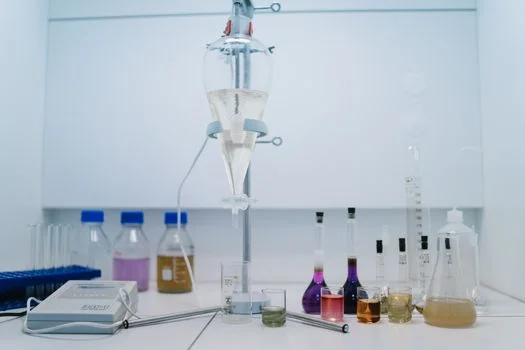
PFAS loading in Saudi industrial effluent is dominated by five source categories. Influent concentration drives both media sizing and OPEX. In the petrochemical sector (SADARA, SABIC affiliates, Aramco downstream), process wastewater carries fluoropolymer-manufacture residues and legacy AFFF firefighting foam contamination. Site characterization studies in the Gulf region routinely show 0.5–20 µg/L PFOA/PFOS in AFFF-impacted process drains.
Textile and carpet finishing operations using durable water repellent coatings (typically C6 or C8 fluorotelomer-based) discharge 0.5–50 µg/L total PFAS in process water. Short-chain PFAS rise as the industry transitions away from long-chain chemistries. Desalination plants do not generate PFAS, but their brine reject stream concentrates upstream PFAS by 1.5–2.5×. That concentrate is now treated as a regulated stream under Vision 2030 brine management protocols.
Food packaging and paper mills contribute grease-resistant coating migration, generally at 0.1–2 µg/L. Landfill leachate in arid Saudi conditions concentrates PFAS to 1–10 µg/L and is increasingly co-treated with industrial effluent at centralized facilities. For broader MENA-side context on co-treatment design, the regional industrial wastewater compliance benchmarks for MENA article covers similar influent profiles. Understanding PFAS in Saudi Arabia source profiles before media selection avoids short-chain breakthrough on GAC-only trains.
Treatment Technologies for PFAS Removal: Removal Efficiency Comparison
There is no single best PFAS technology for every Saudi site. Influent profile, target effluent, and concentrate handling capability determine the right train. Conventional biological treatment (MBR, SBR, AAO) does not meaningfully destroy PFAS; it dilutes and partitions PFAS into waste activated sludge, which then becomes a long-term liability. Removal is a physical-separation and adsorption problem. The realistic options are summarized below.
| Technology | PFOA/PFOS Removal | Short-Chain PFAS (PFBA, PFBS) | Typical EBCT / Service Life | Key Limitation |
|---|---|---|---|---|
| Granular Activated Carbon (GAC) | >90% at EBCT ≥10 min | Poor (30–60%) | ~20,000 bed volumes to breakthrough | Short-chain bypass; spent carbon regeneration |
| Anion Exchange (AIX) resin | >95% | >90% | 1,000–2,000 bed volumes | Higher media cost; brine regeneration waste |
| Reverse Osmosis (RO) | 90–99% (chain-length dependent) | 85–95% | N/A (membrane-based) | 15–25% concentrate stream requiring destruction |
| Nanofiltration (NF) | 70–90% | 60–80% | N/A (membrane-based) | Lower rejection than RO; lower pressure |
| UV / Persulfate AOP | 80–99% mineralization (PFOA/PFOS) | Variable | Reactor-dependent | High energy; sulfate residual handling |
| Electrochemical Oxidation (EO) | 90–99% | 70–90% | Reactor-dependent | Electrode fouling; ideal for concentrate destruction |
For polishing to ≤25 ng/L PFOA/PFOS, an industrial RO system for PFAS polishing provides the most reliable near-complete barrier. An automated chemical dosing for PFAS coagulation and pH control package handles upstream conditioning and antiscalant injection. Spent regeneration brine and RO concentrate should be routed to electrochemical oxidation or thermal destruction. Landfill or deep-well injection of liquid PFAS concentrate is no longer defensible under Vision 2030 zero-discharge expectations. Market uptake of these polishing trains is rising; see the 2026 PFAS removal technology growth rate outlook for buyer-side capacity and cost trends.
Are RO plants used for Saudi PFAS projects?
RO plants are widely specified on Saudi PFAS projects as the polishing barrier after GAC or AIX, not as a stand-alone pretreatment unit. At 95% recovery and about 99% PFOA rejection, RO drives individual PFOA/PFOS into single-digit ng/L for Yanbu- and Jubail-class permits. The trade-off is a 15–25% concentrate stream that must go to electrochemical oxidation or thermal destruction before discharge or reuse claims can stand.
Recommended Treatment Train for Saudi Industrial Effluent
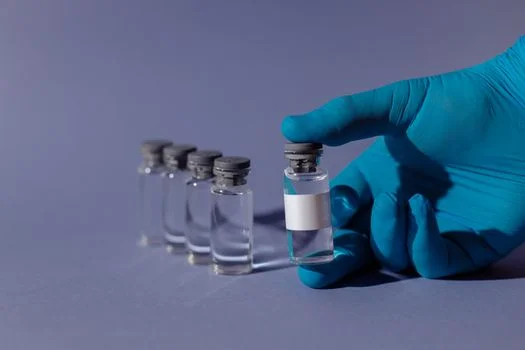
A defensible process flow for an influent of up to 50 µg/L total PFAS targeting ≤25 ng/L individual PFOA/PFOS at the discharge consists of five stages. The train below is sized for a 2,000–5,000 m³/day Yanbu-class petrochemical or textile facility (HydropureWater field data, 2026).
Stage 1 — Pre-treatment. A DAF pre-treatment for PFAS-loaded wastewater removes free oil, TSS, and emulsified fluoropolymer residues down to <30 mg/L TSS to protect downstream GAC and AIX media from fouling. Coagulant dosing (polyaluminum chloride, 50–150 mg/L) is controlled by an automated chemical dosing for PFAS coagulation and pH control skid.
Stage 2 — Biological equalization. An MBR stage for PFAS-bearing industrial effluent strips BOD/COD and provides flow/load equalization, but is not credited for PFAS removal.
Stage 3 — Primary PFAS removal. Parallel GAC contactors (EBCT 10–15 min) handle long-chain PFAS to breakthrough, while parallel AIX polishers capture short-chain PFBA/PFBS that GAC misses. Combined effluent target: <100 ng/L total PFAS.
Stage 4 — RO polishing. An industrial RO system for PFAS polishing at 95% recovery and 99% PFOA rejection drives individual PFOA/PFOS to single-digit ng/L. The 15–25% concentrate stream is routed to electrochemical oxidation.
Stage 5 — Concentrate destruction & monitoring. Electrochemical oxidation mineralizes >95% of concentrate PFAS. An in-line total PFAS monitor with auto-divert sends any exceedance back to Stage 3. Spent GAC and AIX media are dewatered on a plate-and-frame filter press and sent for thermal destruction.
Selection checklist before freezing the P&ID covers seven items. Confirm measured influent ΣPFAS and chain-length split. Lock the permit action level in ng/L, not only µg/L language. Name the concentrate destruction path with NCEC documentation. Keep EBCT ≥10 min on GAC if long-chain dominates, and add AIX or RO for short-chain. Secure ISO 17025 Method 533/537.1 lab access and a parallel-run window of at least 6 months before decommissioning the old train.
PFAS Monitoring and Sampling Requirements in Saudi Arabia
NCEC and Royal Commission auditors expect PFAS monitoring to follow three documented layers. First, compliance samples are collected as 24-hour composites using ISO 21675 containers (HDPE, no PTFE-lined caps, sodium thiosulfate preservation for chlorinated matrices). Samples are analyzed by an ISO 17025-accredited lab under EPA Method 533 (29 PFAS, isotope dilution LC-MS/MS) or EPA Method 537.1. Chain of custody must be traceable from sample port to instrument.
Second, online surrogate monitoring — total oxidizable precursor (TOP) assay, fluorescence-based PFAS sensors, or conductivity-based surrogate parameters on the RO reject — provides real-time process control. A multi-media filter skid with in-line PFAS surrogate monitoring configuration is now common in Saudi tender specs.
Third, recommended sampling frequency for a Yanbu- or Jubail-class facility is weekly 24-hr composite for LC-MS/MS compliance plus daily surrogate monitoring, with monthly duplicate sampling for QA/QC. For broader permit context, the 2026 global COD and BOD discharge limit standards article covers adjacent conventional parameter reporting that runs alongside PFAS monitoring.
Compliance Roadmap: Steps to Meet Saudi PFAS Limits in 2026
- Baseline audit (Weeks 1–4). Map all PFAS sources — AFFF storage, fluoropolymer handling, textile coatings, landfill leachate — and submit a 24-hr composite influent/effluent profile to an ISO 17025 lab under EPA Method 533.
- Gap analysis (Weeks 4–8). Compare measured PFAS against NCEC guidance and your current Royal Commission permit conditions; quantify exceedance margins per analyte.
- Pilot testing (Months 2–5). Run parallel 60–90 day pilots on site water: GAC at EBCT 10 min, AIX at 1,500 BV, RO at 95% recovery. Confirm removal efficiencies and media life against your actual water matrix.
- Engineering design (Months 5–8). Specify full-scale train with concentrate destruction (EO or thermal), redundancy on the polishing RO, and a multi-media filtration feed package to protect RO membranes.
- Installation, commissioning, and parallel monitoring (Months 8–14). Run the new train in parallel with the existing system for 6 months while both are sampled; use the parallel data set to validate compliance before the old system is decommissioned.
Who This Is For and Next Step
This guide is for plant engineers, EPC contractors, and procurement managers sizing PFAS polishing trains. It fits Jubail, Yanbu, KAEC, or NCEC-permitted sites that must hit 10–25 ng/L PFOA/PFOS action levels. Look elsewhere if you only need drinking-water point-of-use filters, or if your permit still lists only conventional COD/BOD limits with no PFAS language. To match a 2,000–5,000 m³/day train to your influent matrix and permit text, request a PFAS treatment design review with your latest Method 533 results attached.
Frequently Asked Questions
Is there a binding PFAS law in Saudi Arabia?
No. As of mid-2026, Saudi Arabia has no single standalone PFAS statute. Enforcement runs through PME Presidential Decrees, NCEC technical guidance that references EU Directive 2020/2184, and facility-specific Royal Commission permits in Jubail and Yanbu. NCEC is the competent authority for permits outside Royal Commission zones. EPC packages should cite the permit text and the EU Σ20 or US EPA 2024 numbers used as design basis.
Does the 4 ng/L PFOA limit apply in Saudi Arabia?
Not as a direct national regulation. Royal Commission permits in Yanbu and Jubail issued in 2024–2026 are mirroring the US EPA April 2024 MCL (4.0 ng/L PFOA, 10 ng/L PFOS), and EPC tenders routinely specify these as design basis. The typical enforceable action level today is 10–25 ng/L PFOA + PFOS sum. Confirm the exact analyte list and units on your current permit before freezing media volumes.
Should I choose GAC or RO for PFAS removal?
Use both. GAC or AIX is the cost-effective workhorse for the bulk PFAS load to <100 ng/L; RO is the polishing barrier to single-digit ng/L. GAC alone misses short-chain PFBA/PFBS; RO alone produces a concentrate stream that requires destruction. The combination is the only defensible train for current Saudi permits that target ≤25 ng/L PFOA/PFOS with Vision 2030 concentrate handling expectations.
How is PFAS concentrate disposed of in Saudi Arabia?
Landfill or deep-well injection of liquid concentrate is no longer acceptable under Vision 2030 zero-discharge expectations. The working approach is on-site electrochemical oxidation or thermal destruction of the RO/AIX regenerate stream. Documentation must be provided to NCEC as part of the discharge permit file, including destruction efficiency and residual monitoring results from the concentrate line.
How often should I sample for PFAS compliance?
Weekly 24-hour composite samples analyzed by EPA Method 533 or 537.1 at an ISO 17025 lab, with daily in-line surrogate monitoring for process control. Royal Commission permits in Yanbu and Jubail commonly require monthly QA duplicate sampling and quarterly third-party split sampling. Keep PTFE-free sample gear and full chain-of-custody records with every submission.