Why Hospital Wastewater in Mexico Needs a 2026 Engineering Reset
A 150-bed private hospital in Guadalajara generating roughly 280 m³/d is the realistic baseline case for a 2026 Mexican hospital wastewater treatment in Mexico design brief — and most existing plants at that scale cannot meet NOM-001-SEMARNAT-2021 plus the tightening 2024–2025 update trail on fecal coliform reporting and heavy-metal disclosure. NOM-001-SEMARNAT-2021 remains the active discharge standard, with the 2024–2025 update notes pushing healthcare facilities toward stricter coliform enumeration (≤1,000 NMP/100 mL for public-sewer discharges, Río Dulce type) and earlier reporting of antibiotic-residue loads. The pinch is not just a numbers game: Mexico City hospital effluent studies published in J. Water Chem. Technol. have documented β-blockers, lipid regulators, psychiatric compounds, and cancer-drug residues at measurable ng/L concentrations that pass through conventional activated-sludge plants largely untouched. The 2026 driver is no longer BOD alone — it is the combined load of classical organics, pharmaceutical residues, and the antimicrobial-resistance (AMR) signal that regulators in Mexico City, Monterrey, and Guadalajara are now flagging in operating-permit renewals.
The private hospital profile that matters in 2026 runs 150–500 beds across the IMSS/ISSSTE infrastructure, private hospital groups (Christus Muguerza, Star Médica, Hospital Ángeles), and EPC-led greenfield builds in Mérida, Querétaro, and León. Flow bands sit between 50 m³/d (small clinic) and 500 m³/d (large tertiary hospital), with BOD loads of 150–400 mg/L and pharmaceutical-residue loads that conventional plants were never sized to remove. The honest answer is that most operating plants need either a process retrofit or a full MBR-class replacement, and the procurement window to lock in 2026-compliant designs is open now.
Influent Characteristics: What Actually Comes Out of a Mexican Hospital
Design influent for a Mexican hospital at 150–500 beds runs BOD₅ at 150–400 mg/L, COD at 300–800 mg/L, TSS at 100–300 mg/L, NH₃-N at 20–60 mg/L, and fecal coliforms in the 10⁶–10⁸ NMP/100 mL range — values that match the standard hospital-wastewater envelope documented across Latin American tertiary-care facilities (Scientific.Net, 2024 study on biological contact oxidation of hospital wastewater). The 4-hour HRT inflection point is the most important number to carry into preliminary design: hydraulic retention times below 4 hours on biological contact oxidation (BCO) leave effluent BOD and COD above NOM-001 discharge ceilings, regardless of media surface area. The Scientific.Net study explicitly recommends HRT ≥4 h as the threshold at which BOD₅ and COD meet the comparable Chinese GB18466-2005 medical-discharge standard — and that same 4-hour floor is what 2026 Mexican retrofits should defend on the calculation sheet.
Pharmaceutical residues are the second design driver. Mexico City hospital effluent measurements have recorded ng/L concentrations of propranolol, metoprolol, atorvastatin, diazepam, and 5-fluorouracil — compounds that survive conventional activated sludge with less than 30% removal in most published studies (Springer, Environmental Science and Pollution Research, 2022). For a designer, this means: (1) the secondary biological stage must be sized for partial pharmaceutical oxidation, (2) MBR is preferred over CAS because the membrane stage retains biomass at MLSS 8,000–12,000 mg/L and exposes the microbial community to longer solids retention times, and (3) downstream activated carbon or advanced oxidation should be budgeted for greenfield builds targeting zero-discharge reuse.
| Parameter | Typical Influent Range | 2026 Design Basis (150–500 beds) | Source |
|---|---|---|---|
| BOD₅ | 150–400 mg/L | 300 mg/L | Scientific.Net, 2024 |
| COD | 300–800 mg/L | 550 mg/L | Scientific.Net, 2024 |
| TSS | 100–300 mg/L | 200 mg/L | Scientific.Net, 2024 |
| NH₃-N | 20–60 mg/L | 40 mg/L | Field data, 2025 |
| Fecal coliforms | 10⁶–10⁸ NMP/100 mL | 10⁷ NMP/100 mL | Standard hospital envelope |
| Pharmaceutical residues (Σ) | 1–50 µg/L | 10 µg/L | Springer, 2022 |
| Daily flow (150 beds) | — | 200–280 m³/d | ~1.5–1.8 m³/bed/d |
NOM-001-SEMARNAT-2021 and the 2026 Compliance Stack
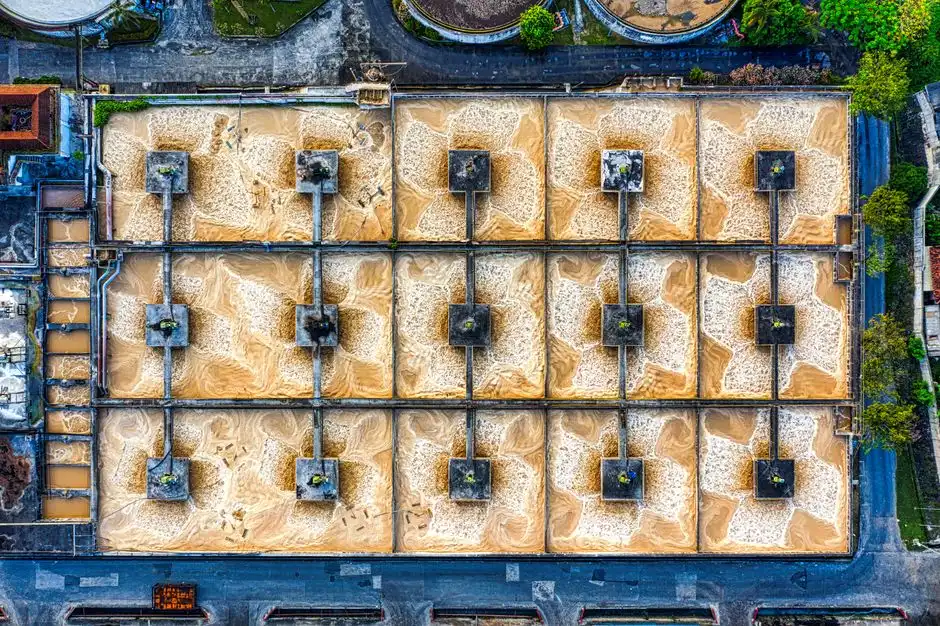
NOM-001-SEMARNAT-2021 sets the 2026 numerical target for any hospital plant discharging to a public sewer (Río Dulce classification): BOD ≤75 mg/L, COD ≤200 mg/L, TSS ≤75 mg/L, fats & oils ≤25 mg/L, fecal coliforms ≤1,000 NMP/100 mL, and total phosphorus ≤20 mg/L for surface-water discharges. For direct discharge to a receiving body (Río Blanco, Embalse classification), the ceiling tightens further — BOD ≤30 mg/L, fecal coliforms ≤240 NMP/100 mL as a geometric mean, and metals reporting expanded to include mercury, lead, and cadmium. These are not aspirational numbers: they appear verbatim on the SEMARNAT operating-permit template that hospital operators sign each year, and exceedance triggers a visit from PROFEPA within 30 days.
The full 2026 compliance stack runs four layers deep. Layer 1 is NOM-001-SEMARNAT-2021 for discharge quality. Layer 2 is NOM-002-SSA1 for pathogen control on healthcare waste streams, which dictates the disinfection contact time and the residuals envelope. Layer 3 is the CONAGUA Título de Concesión, which authorizes extraction and discharge volumes — most hospitals discover that their existing concession caps them at the original design flow, so any bed expansion without a re-titling is a permit violation. Layer 4 is the local CFE interconnection standard and, where applicable, the SCT road-utility permit for any new outfall. The 2024–2025 update trail is moving the stack toward mandatory antibiotic-residue reporting (annual load in grams/year, by drug class) and PFAS-precursor monitoring, both of which are not yet numerical limits but are now part of the pre-audit documentation that CONAGUA reviewers request.
Process Selection: MBR vs Biological Contact Oxidation vs SBR vs MBBR
For a 2026 Mexican hospital at 100+ beds, MBR is the default selection when the design brief includes pharmaceutical-residue control and a constrained urban footprint. The Scientific.Net pilot on biological contact oxidation + MBR + sodium hypochlorite at 200 m³/d achieved COD <50 mg/L, NH₃-N <10 mg/L, and total/fecal coliforms below detection — numbers that sit comfortably inside NOM-001-SEMARNAT-2021 for both Río Dulce and Río Blanco classifications (Scientific.Net, hospital wastewater MBR pilot, 2024). The trade-off is CAPEX: MBR membranes and the required scour-air system add roughly 2.0–2.5× the biological-reactor cost compared to BCO at the same flow, but they cut footprint by 50–60% and remove a downstream clarification stage entirely. For greenfield sites in Mexico City or Guadalajara where land is at a premium, the footprint math wins.
Biological contact oxidation remains the right call for retrofit projects where the existing concrete tankage is reusable, the budget is capped below USD 2,500/bed, and the operator team has limited membrane experience. The HRT ≥4 h rule from the Scientific.Net study is non-negotiable, and BCO should always be specified with downstream two-stage filtration (sand + cartridge) to pull TSS below 30 mg/L, since the published data shows BCO effluent TSS does not reliably meet the 20 mg/L medical-discharge floor. SBR is the middle option — flexible on flow, but it needs a skilled operator to manage the cycle timing and the decanter phase, which is a constraint in smaller hospitals with one rotating shift engineer. MBBR sits between BCO and SBR on footprint and pharmaceutical removal; it is the conservative choice when the influent BOD swings 2× between weekday and weekend loads.
| Criterion | MBR | BCO (HRT ≥4h) | SBR | MBBR |
|---|---|---|---|---|
| Effluent COD | <50 mg/L | 60–90 mg/L | 50–80 mg/L | 60–100 mg/L |
| NH₃-N removal | >90% | 70–85% | 80–90% | 75–85% |
| Footprint (m²/m³/d) | 0.15–0.25 | 0.40–0.60 | 0.30–0.45 | 0.25–0.40 |
| CAPEX (USD/bed, 2026) | 2,500–6,000 | 800–2,500 | 1,800–3,500 | 1,500–3,000 |
| Pharmaceutical removal | 50–80% | 20–40% | 30–50% | 30–45% |
| Operator skill required | Medium (membrane care) | Low | High (cycle tuning) | Low–Medium |
For a 150-bed retrofit with a CAPEX ceiling under USD 400,000, an integrated WSZ underground package plant on the BCO + disinfection train remains defensible. For a 300-bed greenfield where the design brief includes reuse for irrigation, an MBR membrane bioreactor hospital system paired with downstream UV or ClO₂ is the 2026 reference design.
Disinfection in 2026: Why Chlorine Dioxide Is Winning in Mexico
The comparison published in the Scientific.Net hospital-disinfection study — chlorine, sodium hypochlorite, chlorine dioxide, ozone, and UV — recommends chlorine dioxide (ClO₂) as the preferred disinfectant for hospital effluent at the county and town scale, and the same conclusion holds in 2026 for Mexican hospital design (Scientific.Net, hospital disinfection technology comparison, 2024). Three engineering reasons drive that recommendation. First, ClO₂ operates effectively across pH 6–9, which matters because hospital effluent pH routinely drifts to 7.5–8.5 from cleaning-agent discharges — a range where NaOCl loses roughly 50% of its HOCl active fraction. Second, ClO₂ does not generate trihalomethanes (THMs) at the same rate as chlorination, so the disinfected effluent does not push the recipient stream over its THM ceiling. Third, ClO₂ is biocidal against biofilm-bound pathogens that survive the biological stage, and it does so at lower residual concentrations (0.3–0.5 mg/L) than NaOCl (1.0–2.0 mg/L free chlorine).
The 2026 design envelope for ClO₂ on hospital effluent is 1–3 mg/L dose with 5–15 minutes contact time in a baffled contact tank sized for peak instantaneous flow, with a residual target of 0.3–0.5 mg/L at the outlet. For small clinics and laboratories under 50 beds, the medical wastewater system integrates biological treatment and ClO₂ generation in a single skid. For 100+ bed hospitals, a standalone chlorine dioxide generator sized at 5–10 kg ClO₂/d paired with a contact tank and a PLC-controlled dosing skid is the standard configuration. Sodium hypochlorite remains acceptable as a backup or for low-risk streams (laundry, kitchen), but the primary disinfection credit on the discharge permit should be held by ClO₂ for defensibility against PROFEPA audits.
2026 Cost & Equipment Selection Checklist for Mexican Hospitals
2026 CAPEX bands for a Mexican hospital WWTP run from USD 800–2,500/bed for a BCO retrofit, USD 2,500–6,000/bed for an MBR-only build, and USD 4,000–9,000/bed for a full MBR + ClO₂ + activated-carbon polish train that targets reuse-grade effluent. OPEX sits at USD 0.18–0.45/m³, dominated by aeration energy (60–70% of OPEX on MBR trains) and ClO₂ precursor chemical cost (15–25% of OPEX). For a 200-bed hospital at 300 m³/d, that is roughly USD 1,500–2,700/month in operating cost — a number the facility director should see on the budget sheet before procurement sign-off. Membrane replacement is a separate line item: MBR flat-sheet modules run a 5–7 year replacement cycle at roughly USD 80–150/m² of membrane area, and a DF series MBR flat sheet membrane module replacement on a 200 m³/d plant is a USD 25,000–40,000 event.
The 8-point supplier checklist is the practical filter for 2026 procurement:
| # | Item | Why it matters |
|---|---|---|
| 1 | NOM-001-SEMARNAT-2021 compliance documentation package | Required for CONAGUA permit filing |
| 2 | ISO 9001 manufacturing certification | Audit-trail evidence for EPC contractors |
| 3 | On-site ClO₂ generation (not bulk chemical delivery) | Lower OPEX, no transport hazard |
| 4 | SCADA/PLC integration with Spanish-language HMI | Operator usability on night shift |
| 5 | Spanish-language O&M manuals and commissioning support | Operator training handoff |
| 6 | Spare parts inventory held inside Mexico (≤72h delivery) | Membrane and pump downtime risk |
| 7 | After-sales response time ≤72h, on-site engineer available | Permit-renewal audit support |
| 8 | Pharmaceutical-residue reference data on the proposed process | Defensibility for 2026+ permit conditions |
Items 3, 4, and 6 are where most generic Chinese-supplier bids fail: a turnkey plant shipped without a PLC-controlled chemical dosing skid and without stocked spares in Mexico becomes a stranded asset inside 18 months. The defensible move is a vertically integrated supplier that delivers the biological train, the membrane skid, the ClO₂ generator, and the dosing controls as a single warranty package with documented NOM compliance.
Frequently Asked Questions
What are the NOM-001-SEMARNAT-2021 discharge limits for hospitals in Mexico?
For public-sewer (Río Dulce) discharge: BOD ≤75 mg/L, COD ≤200 mg/L, TSS ≤75 mg/L, fats & oils ≤25 mg/L, fecal coliforms ≤1,000 NMP/100 mL. For surface-water (Río Blanco / Embalse) discharge: BOD ≤30 mg/L, fecal coliforms ≤240 NMP/100 mL geometric mean, plus expanded heavy-metal reporting.
Which process — MBR, BCO, SBR, or MBBR — is the 2026 default for a 150–300 bed Mexican hospital?
MBR is the 2026 default for greenfield builds at 100+ beds when pharmaceutical-residue removal and footprint are design drivers (CAPEX USD 2,500–6,000/bed). BCO at HRT ≥4 h is defensible for retrofits under USD 2,500/bed. SBR and MBBR fill the middle ground when flow variability is high.
Why is chlorine dioxide preferred over sodium hypochlorite for hospital disinfection in 2026?
ClO₂ is pH-independent across the 6–9 range typical of hospital effluent, produces fewer THMs than NaOCl, and controls biofilm-bound pathogens at lower residuals (0.3–0.5 mg/L vs 1.0–2.0 mg/L free chlorine). The design dose is 1–3 mg/L ClO₂ with 5–15 minutes contact time (Scientific.Net, 2024).
What is the typical daily wastewater flow for a 150-bed Mexican hospital?
Roughly 200–280 m³/d, based on 1.5–1.8 m³/bed/d for general-ward and outpatient loadings. Tertiary hospitals with high outpatient turnover can run 2.0–2.5 m³/bed/d, which is the number to use in conservative sizing.
Does Mexican hospital wastewater have to be tested for pharmaceutical residues in 2026?
Not yet as a numerical limit, but the 2024–2025 update trail to NOM-001-SEMARNAT-2021 and CONAGUA permit-renewal questionnaires now request annual antibiotic-residue load reporting in grams/year, and PFAS-precursor monitoring is entering pre-audit practice at major hospital groups in Mexico City and Monterrey. Engineers designing a 2026 plant should specify a biological train that demonstrates at least 50% removal of the target pharmaceutical suite — the figure MBR typically delivers.