Why Kampala Buyers Choose MBR Over Conventional Activated Sludge
A membrane bioreactor system in Kampala combines activated sludge biology with submerged PVDF ultrafiltration (0.1–0.4 μm pore) inside a single tank, replacing the secondary clarifier and sand filter of a conventional activated sludge plant (ASP) with a physical membrane barrier. The result is reuse-grade effluent: BOD₅ <5 mg/L, TSS <1 mg/L, turbidity <0.5 NTU — an order of magnitude cleaner than a well-run ASP at 20/20 mg/L. For a brewery in Namanve or a hospital in Mulago, that gap is the difference between discharging and reusing.
Footprint is the second driver. Replacing the clarifier and tertiary stage with a membrane cassette cuts the aeration basin plus solids-separation footprint by roughly 60% against a conventional ASP of equivalent throughput (HydropureWater MBR product data). On a 1,000 m² industrial plot in Nakawa or Kyaliwajjala, that is the difference between a buildable project and a redesign.
Technology maturity matters to risk-averse African buyers. The global MBR market is projected to grow from USD 4.1 billion in 2024 to USD 6.8 billion by 2030 at an 8.9% CAGR — a trajectory consistent with the 2026 MBR market growth outlook. Buyers evaluating an integrated MBR wastewater treatment system for a 10–500 m³/day requirement are not piloting; they are specifying a technology that has been deployed at multi-megalitre scale globally for two decades.
NEMA Uganda Discharge Limits an MBR Must Meet in 2026
Uganda's National Environment Act (2019) and the NEMA Wastewater Discharge Regulations set the binding effluent thresholds for any discharge to a sewer or watercourse. The commonly cited NEMA Uganda thresholds for industrial and municipal effluent are BOD₅ 30 mg/L, COD 100 mg/L, TSS 30 mg/L, NH₃-N 10 mg/L, total N 20 mg/L, total P 5 mg/L, and fecal coliforms <10,000 CFU/100 mL — buyers should always confirm the exact figures against the current regulation version before issuing an RFQ. The table below shows how a properly operated MBR typically performs against these limits.
| Parameter | NEMA Uganda limit | MBR typical effluent | Safety margin |
|---|---|---|---|
| BOD₅ | 30 mg/L | <5 mg/L | ~6× |
| COD | 100 mg/L | <50 mg/L | ~2× |
| TSS | 30 mg/L | <1 mg/L | ~30× |
| NH₃-N | 10 mg/L | <2 mg/L (with nitrification) | ~5× |
| Fecal coliforms | <10,000 CFU/100 mL | ~10³–10⁴ CFU/100 mL (MBR alone) | Tight — disinfection required |
The binding constraint for hospitals, abattoirs, and dairy processors is the fecal coliform limit. MBR alone typically delivers 10³–10⁴ CFU/100 mL, which sits at the edge of compliance. A downstream ClO₂ or UV step is therefore standard practice; a chlorine dioxide generator sized at 5–10 mg/L residual for 30 minutes contact reliably brings total coliforms below 10 CFU/100 mL.
Lake Victoria basin sensitivity raises the stakes. NWSC's trade-effluent pre-acceptance rules for industrial discharge into the Kampala sewer network or to a soak-away within the basin effectively push buyers toward reuse-grade MBRs rather than minimum-compliance ASPs. Combined with the National Water and Sewerage Corporation's escalating trade-effluent surcharges, the economic case for tightening below NEMA minimums is real — and reused water at USD 0.8–1.2/m³ displaces freshwater that is becoming less reliable in the dry season.
MBR Process Flow for Industrial Sites in Greater Kampala
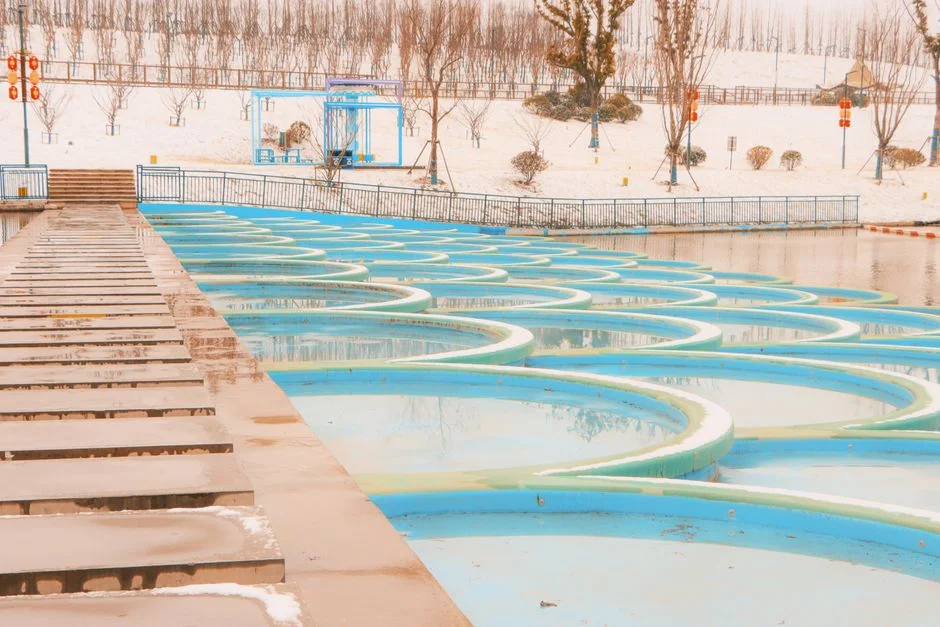
A robust MBR train for a Kampala industrial site runs: rotary bar screen (1–2 mm aperture) → equalization tank (8–24 h HRT) → fine screen / grit removal → MBR tank with anoxic, aerobic, and membrane compartments → disinfection → reuse or sewer discharge. Each stage has a specific job; skipping the upstream screening is the most common cause of premature membrane fouling I see in East African MBR audits.
Design parameters for tropical feed (25–30°C mixed liquor) settle in a narrow band. MLSS 8,000–12,000 mg/L — higher than the 6,000–8,000 mg/L typical of temperate MBRs because warm liquor is less viscous and the membrane can carry the solids loading. HRT 4–8 h, SRT 15–30 d, membrane flux 15–25 L/m²·h for flat-sheet modules. Aeration has two distinct jobs: coarse-bubble diffusers beneath the membrane cassette deliver continuous scouring air at roughly 0.3–0.5 m³/m² membrane area per hour, while fine-bubble diffusers in the aerobic zone satisfy BOD. Running these on separate blowers with VFD control typically saves 15–25% on aeration energy versus a single blower with manual balance.
Module selection matters more in Kampala than in most temperate installations. PVDF flat-sheet modules — such as the PVDF flat-sheet DF-series membrane module with 0.1 μm pore, 80–225 m² per cassette, and 32–135 m³/day per module (HydropureWater DF-series product data) — handle tropical MLSS better than hollow-fibre for three reasons: higher tolerance to solids spikes from brewery or slaughterhouse batch loads, easier manual wash-down when fouling eventually occurs, and elimination of the air-lift pump on the permeate side that hollow-fibre systems depend on. Upstream, a GX-series rotary mechanical bar screen with 1–2 mm aperture protects the membrane from ragging and is the single most cost-effective fouling prevention step on a tropical MBR.
Sizing the MBR: From Influent Load to Membrane Area
Worked example: a 200 m³/day brewery or dairy effluent, influent COD ~3,000 mg/L, BOD₅ ~1,500 mg/L, target effluent COD <100 mg/L. Loading to the bioreactor is 200 m³/d × 1.5 kg/m³ = 300 kg BOD₅/d. At an F/M ratio of 0.10–0.15 kg BOD₅/kg MLSS·d and MLSS 10,000 mg/L, the aeration basin volume works out to 200–300 m³ (8–12 h HRT at this flow). Membrane area at flux 20 L/m²·h and 24 h operation: Q = 200,000 L/h ÷ 20 L/m²·h = 10,000 m² gross, divided by a 60% packing factor inside the cassette frame — but in practice a single 200 m³/day skid carries a 150–200 m² flat-sheet cassette operating at 15–18 L/m²·h to keep fouling in check.
| Flow (m³/d) | Membrane area (m²) | DF-150 modules | Tank volume (m³) | Blower size (kW) |
|---|---|---|---|---|
| 10 | 20–30 | 1 | 5–8 | 0.75–1.5 |
| 50 | 80–120 | 1 | 20–30 | 2.2–4 |
| 200 | 150–200 | 1–2 | 80–120 | 5.5–11 |
| 500 | 350–500 | 3–4 | 200–300 | 15–22 |
The standard integrated MBR wastewater treatment system line covers 10–2,000 m³/day in skid-mounted builds, so a 200 m³/day requirement sits comfortably inside the standardized range. Add a 20–30% membrane area margin for Kampala's influent variability — wet-season infiltration in combined sewers, brewery seasonal peaks around the festive quarter, slaughterhouse batch loads that arrive in 4-hour windows rather than across a 24-hour day (HydropureWater field data, 2026).
2026 CAPEX and OPEX for an MBR in Kampala
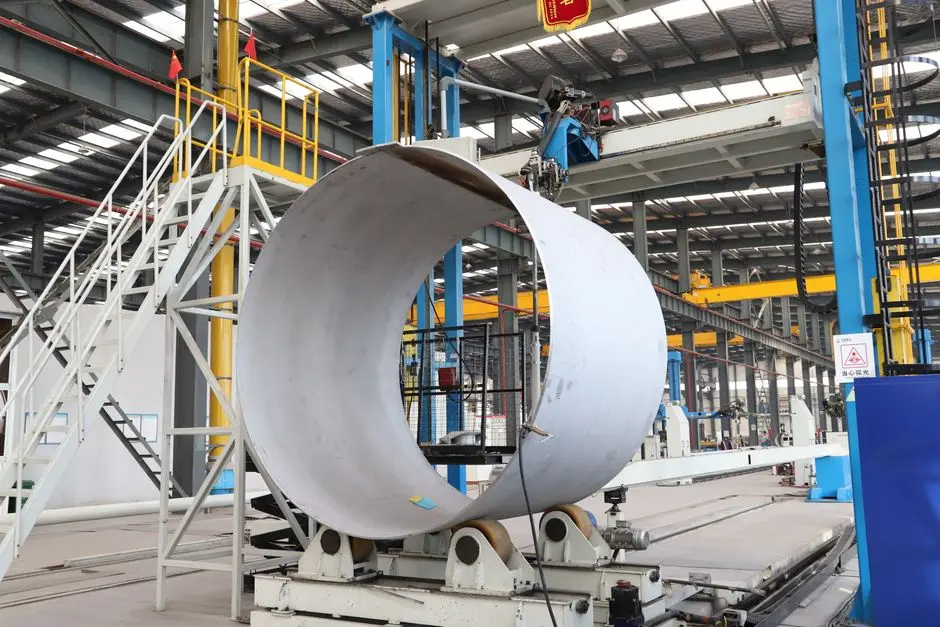
Containerized skid, ex-factory CAPEX in USD scales roughly linearly with flow up to ~200 m³/day and sub-linearly above that. The figures below are the typical 2026 bands observed in East Africa (HydropureWater field data, 2026); inland logistics, Ugandan import duties, and site installation typically add 25–40% on top of these ex-factory numbers.
| Capacity | CAPEX (USD, ex-factory skid) |
|---|---|
| 10 m³/day | 18,000–28,000 |
| 50 m³/day | 45,000–70,000 |
| 200 m³/day | 90,000–180,000 |
| 500 m³/day | 200,000–400,000 |
OPEX for a well-run tropical MBR lands between USD 0.12 and USD 0.28 per cubic metre treated, broken down as: energy for aeration and permeate pumping USD 0.06–0.12/m³, membrane cleaning chemicals (NaOCl + citric acid) USD 0.02–0.05/m³, membrane replacement reserve amortized over 8–12 years USD 0.02–0.05/m³, and sludge handling plus labour USD 0.02–0.06/m³. For comparison, a 2026 municipal sewage treatment plant price guide typically puts conventional ASP OPEX at USD 0.08–0.15/m³ — cheaper on chemicals, but without the reuse-grade effluent.
5-year TCO worked example: a 200 m³/day plant at ~USD 130,000 CAPEX (mid-range, including 30% for Kampala logistics and installation) plus ~USD 38,000/year OPEX × 5 = ~USD 320,000 lifetime. Offset against reuse water value at USD 0.8–1.2/m³ displacing freshwater, payback falls inside 3 years for sites that currently truck in potable water for non-potable use — a common case for housing estates around Kawanda and for industrial clusters in Namanve. Two cost drivers that buyers in Uganda consistently underestimate: power reliability (specify 1.5–2× blower redundancy on generator backup, since membrane cassettes do not tolerate a multi-hour aeration blackout), and membrane-spare stocking for the 6–8 week import lead time into Entebbe.
Supplier and Technology Selection Checklist
Six non-negotiable criteria separate a defensible MBR purchase from a 24-month retrofit. (1) PVDF membrane material with 0.1 μm pore — demand the material certificate, not just a brochure claim. (2) Flat-sheet module geometry for tropical MLSS above 8,000 mg/L or feed TSS above 500 mg/L. (3) Factory-tested skid delivery with FAT (factory acceptance test) report showing permeate turbidity <0.5 NTU at design flux. (4) 5–10 year membrane warranty with documented replacement-element availability. (5) Reference list of operating plants in East Africa — verify a 3-month-old reference site in Nairobi, Dar es Salaam, or Addis Ababa, not a 5-year-old EU installation. (6) Local service partner in Uganda or Kenya with a guaranteed 72-hour response window.
Verification actions: request a permeate quality test report at design flux, ask for a 3-month reference site contact in East Africa, demand the membrane element's serial-traceability certificate so warranty claims are unambiguous, and confirm the supplier has an in-region spare-parts consignment. For broader context on African MBR deployments, the membrane bioreactor system in Abuja guide covers the parallel Nigerian FMEnv compliance framing, and the industrial wastewater treatment in South Africa piece addresses higher-pressure industrial recycle streams where the calculus changes.
Decision rule for module geometry: pick flat-sheet PVDF if feed TSS exceeds 500 mg/L or mixed-liquor temperature exceeds 28°C — both are normal in Kampala; pick hollow-fibre if the budget is below USD 25,000 and the flow is under 20 m³/day; pick external cross-flow only for high-pressure industrial recycle streams, not for typical municipal/industrial blends around Kampala. The default recommendation for a brewery, dairy, abattoir, hospital, or housing estate in Greater Kampala is the PVDF flat-sheet DF-series membrane module inside an integrated MBR wastewater treatment system skid.
Frequently Asked Questions
How much does a membrane bioreactor system cost in Kampala in 2026? Ex-factory skid prices run USD 18,000–28,000 for 10 m³/day, USD 45,000–70,000 for 50 m³/day, USD 90,000–180,000 for 200 m³/day, and USD 200,000–400,000 for 500 m³/day, with 25–40% added for inland logistics, duties, and installation in Uganda (HydropureWater field data, 2026).
What effluent quality can an MBR achieve in Uganda? BOD₅ <5 mg/L, COD <50 mg/L, TSS <1 mg/L, turbidity <0.5 NTU, comfortably inside NEMA Uganda's 30/100/30 mg/L discharge limits, with fecal coliforms requiring a downstream chlorine dioxide generator or UV step to reach the <10,000 CFU/100 mL limit.
Which membrane type suits tropical Kampala temperatures best? PVDF flat-sheet at 0.1 μm pore, because the geometry tolerates higher MLSS, handles solids spikes from brewery or abattoir batch loads, and allows manual wash-down — paired with a GX-series rotary mechanical bar screen upstream.
How long do MBR membranes last in Uganda? 8–12 years when pre-screening is disciplined and cleaning intervals follow the supplier's CIP protocol, typically a weekly recovery clean with 500–1,000 mg/L NaOCl and a monthly maintenance clean with citric acid.
Can an MBR be containerized for fast deployment outside Kampala? Yes. Containerized MBR skids with integrated rotary screen, MBR module, and ClO₂ disinfection are routinely shipped to sites in Jinja, Mbarara, and the DRC border, with 4–6 weeks sea freight to Mombasa and 1–2 weeks road transport to the Kampala-area site.