Why Textile Wastewater Demands Purpose-Built IoT Monitoring
Textile effluent is not municipal wastewater. pH swings between 6 and 12 across a single shift, conductivity routinely hits 2,000–15,000 µS/cm from NaCl and Na₂SO₄ dye-bath salts, COD sits at 800–3,000 mg/L, and true Pt-Co color runs 500–2,500 units — more than 10× what a typical food or paper plant discharges. Manual sampling at 2–3 grabs per day misses the hourly spikes that trigger violations, and a standard 5-day BOD probe is too slow to feed a real-time control loop. India ZLD discharge norms, China GB 4287-2012, and Bangladesh ECR 2024 cap color at ≤400 Pt-Co and TDS at ≤2,100 mg/L, so an undetected 6-hour excursion can mean a $5K–$50K fine plus a consent-to-operate review. The 2024 Raditya et al. textile WSN study (Bulletin of EEI, DOI 10.11591/eei.v13i5.7220) was the first to integrate wireless monitoring specifically for reactive-dye streams, and a mill can now retrofit the same logic with off-the-shelf UV-COD and Pt-Co probes instead of building a research rig. Generic municipal sensor packages fail on textile because they assume low salinity, low color, and stable pH — none of which hold in a knit-fabric or denim finishing line. If you cannot measure color, conductivity, and pH continuously, you are operating blind to the three parameters that actually drive non-compliance.
The 5 Core IoT Sensors Every Textile Plant Needs
Five specific probe types are non-negotiable for any textile retrofit. Each one is mapped to a parameter range that the existing top-ranking academic papers do not publish.
| Parameter | Probe type | Range | Accuracy / output | Why textile needs it |
|---|---|---|---|---|
| pH | Glass-body differential with Na-ion correction | 0–14 | ±0.02 pH, ATC, 4–20 mA / Modbus | Standard probes drift >0.5 pH/day in 5% NaCl; salt-correction algorithms are mandatory |
| Conductivity / TDS | 4-electrode inductive | 0–20,000 µS/cm | ±1% of reading | Resists fouling from dye particles; 2-electrode cells foul within days in reactive baths |
| ORP (redox) | Platinum-band | −1,500 to +1,500 mV | ±5 mV | Tracks dye-breakdown and Fenton-process endpoint in real time |
| Turbidity / TSS | Dual scattered-light with integrated wiper | 0–4,000 NTU | ±2% or ±0.1 NTU | Wiper handles fiber carry-over from knit-fabric effluent that blinds optical sensors |
| UV-Vis COD / color | Multi-wavelength (254 / 436 / 525 / 620 nm) | COD 0–5,000 mg/L proxy; color 0–5,000 Pt-Co | ±5% vs lab COD; true ISO 7887-B color | Replaces 5-day BOD with a 30-second proxy; directly measures what regulators cap |
| Dissolved O₂ (optional, for MBR sites) | Optical荧光 (luminescent) DO | 0–20 mg/L | ±0.1 mg/L | No membrane replacement; pairs with MBR aeration trim to cut blower kWh 10–20% |
A multi-parameter node bundling all five base probes costs $1,800–$3,500 in 2026 and returns data every 30–300 seconds. The UV-Vis unit is the single highest-value addition because it is the only probe that measures color and COD simultaneously — the two parameters that drive 80% of textile consent-to-operate failures.
Network Architecture: LoRaWAN vs NB-IoT vs 4G
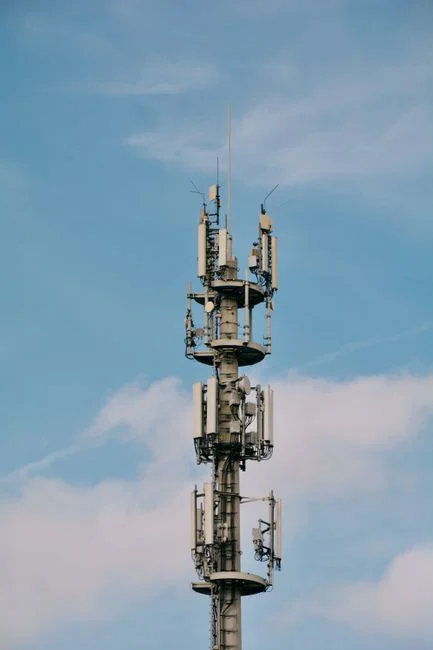
Network protocol selection depends on plant footprint, sensor count, and existing IT infrastructure. Below is the side-by-side comparison of the primary options.
| Protocol | Spectrum | Range / penetration | Node hardware cost (2026) | Recurring cost | Best fit |
|---|---|---|---|---|---|
| LoRaWAN (868/915 MHz) | Unlicensed | 2–10 km line-of-sight; weak indoor penetration | $80–$180/node + $600–$900 gateway per ~100 nodes | $0 data; gateway maintenance only | Multi-building mills, >20 nodes, single-site |
| NB-IoT (LTE Cat-NB1/NB2) | Licensed (operator) | 1–3 km; strong indoor + basement penetration | $120–$220/node (no gateway) | $1–$3/sensor/month SIM | Compact plants <5 ha, <20 nodes, no IT staff for gateways |
| 4G LTE Cat-1 | Licensed (operator) | Cell-tower coverage | $320–$700/node (integrated cellular router) | $2–$5/sensor/month | Scattered facilities, multi-site enterprise, retrofit where no gateway is acceptable |
For comparison, the 2024 Raditya et al. textile WSN benchmark used ESP32 + LoRa + an MQTT cloud backend and reported 1.3-second end-to-end latency for 5 nodes — adequate for alarm-only systems but tight for closed-loop dosing. If you plan to drive chemical pumps from sensor output in real time, prefer LoRaWAN at SF7 or NB-IoT with a dedicated APN. Decision rule: plant under 5 hectares and fewer than 20 sensors → NB-IoT; plant over 5 hectares or more than 20 sensors → LoRaWAN with one gateway; multi-site enterprise → 4G with a cellular router per site.
Where to Mount Sensors in a Textile Treatment Train
Sensor placement determines the ROI of an iot sensor for textile wastewater plant deployment. Each location should be tied to a specific control action on downstream equipment, not just a data log.
- Equalization tank inlet: pH and conductivity characterize the raw stream and trend salt loading. Alarm at pH >10 or conductivity >12,000 µS/cm to flag a reactive-dye batch before it hits the biological stage.
- Post-DAF outlet: mount turbidity and UV-color probes immediately after the DAF system. A well-tuned DAF cuts turbidity from 800–1,200 NTU to below 30 NTU; a rising trend tells operators the coagulant dose is drifting before color breaks through.
- MBR basin: DO, pH, and conductivity sensors feed the aeration blower VFD and trigger salt-stress warnings. Pairing with an integrated MBR system lets the PLC modulate air based on real load, not a fixed timer.
- Chemical dosing line: wire pH and color sensor outputs into the dosing pump PLC. Closed-loop trim on color typically cuts coagulant consumption 15–30% (mill case data) because the pump stops overdosing once Pt-Co drops below setpoint.
- Final effluent (pre-discharge or ZLD): redundant pH, conductivity, and UV-COD/color probes for compliance logging. Archive 5 years of 1–5 minute resolution data to satisfy ZLD, Bangladesh ECR, and EU IED audits without a paper trail.
CAPEX and OPEX Breakdown: 2026 Real Pricing
The following table provides 2026 quotes from mid-tier industrial vendors for a representative 50–200 m³/h textile plant. Procurement can use these figures for budget planning and board memos.
| Line item | Low (USD) | High (USD) | Notes |
|---|---|---|---|
| 10 multi-parameter sensor nodes | 2,000 | 4,500 | $200–$450 per probe; UV-COD unit at the high end |
| LoRaWAN gateway (1) | 600 | 900 | Outdoor IP67, 8-channel |
| SCADA / cloud platform (one-time setup + 1 yr license) | 5,000 | 12,000 | ThingsBoard / Node-RED open-source cuts the low end; commercial SaaS at the high end |
| PLC, cabinets, wiring, installation | 3,000 | 6,000 | Includes integration with PLC-controlled chemical dosing skids |
| Engineering, commissioning, training | 7,400 | 21,600 | ~30–40% of hardware |
| Total CAPEX (10-node system) | 18,000 | 45,000 | Excludes civil works |
| Annual OPEX (cloud, SIMs, probe cleaning, quarterly calibration) | 1,200 | 3,500 | Adds ~$100–$300/month at scale |
Payback runs 10–14 months when you stack three savings: lab sampling cut from daily to weekly ($8K–$15K/yr), avoided non-compliance fines (a single Bangladesh or India textile penalty event is $5K–$50K), and chemical savings of 15–30% on coagulant and polymer. For context, the broader smart water monitoring market 2026 drivers sit at $19.56B–$33.4B with a 10.4–13.36% CAGR, which is why sensor pricing has remained flat through 2025–2026 despite component inflation.
Integration with SCADA, PLCs, and Cloud Dashboards
Industrial probes in 2026 utilize open communication protocols for seamless integration. Specify sensors that output 4–20 mA, RS-485 Modbus RTU, or MQTT over IP, and reject any vendor that locks data behind a proprietary cloud login. The most common 2026 stack pairs a Modbus RTU probe with a gateway that publishes to MQTT, then into AWS IoT SiteWise, Azure Industrial IoT, or open-source ThingsBoard / Node-RED for textile-specific dashboards. Set alarm thresholds at pH >9 or <6, conductivity >10,000 µS/cm, and color >300 Pt-Co so shift supervisors get SMS or email before the regulator does. Log at 1–5 minute resolution and retain 5+ years to satisfy ZLD and EU IED audit requests without pulling paper. For plants still running 5-day BOD as the compliance anchor, the BOD online monitoring engineering guide explains where online BOD proxies fit and where they do not — useful reading before you sign a BOD probe spec sheet.
Frequently Asked Questions

Which IoT sensor works best for textile dye effluent?
A multi-wavelength UV-Vis probe at 254 / 436 / 525 / 62