Mexico's 2026 Phenol Discharge Limit Under NOM-001-SEMARNAT-2021
Under Mexico's NOM-001-SEMARNAT-2021, the 2026 total phenol discharge limit is 0.5 mg/L as a monthly average and 1.0 mg/L instantaneous for discharges to rivers and reservoirs, and 0.2 mg/L monthly average / 0.4 mg/L instantaneous for coastal waters and estuaries, measured by the 4-aminoantipyrine method per NMX-AA-050-SCFI-2007. Compliance is enforced by SEMARNAT through CONAGUA-issued discharge permits under the Ley de Aguas Nacionales. The norm also sets a 0.5 mg/L monthly average for soil-infiltration discharges, with hydraulic loading restrictions defined in Tabla 4 of the same standard.
Tabla 2 of NOM-001-SEMARNAT-2021 is the controlling reference for any compliance engineer. The 0.5 mg/L river value replaced the legacy 1.0 mg/L value from NOM-001-SEMARNAT-1996 when the new norm took effect in January 2023; any compliance memo still citing 1.0 mg/L is referencing a standard that has been superseded for three years. The receiving-body tiering is not discretionary: a facility discharging to a reservoir that feeds a potable aquifer (Río Lerma system, Santiago River basin) is held to the river column, while a facility discharging to the Gulf of Mexico coastline or a coastal lagoon system is held to the stricter 0.2 mg/L column.
The reference analytical method is the 4-aminoantipyrine (4-AAP) colorimetric method per NMX-AA-050-SCFI-2007, with a method detection limit of approximately 0.01 mg/L. For facilities that need isomer-specific resolution (cresols, xylenols, chlorophenols), gas chromatography per NMX-AA-097-SCFI-2010 is acceptable as a secondary method. Both methods must be run by an EMA-accredited laboratory; self-reported results from unaccredited in-plant labs are not defensible during a PROFEPA inspection.
The legal hierarchy runs as follows: Constitución Política Art. 4 (right to a healthy environment) → Ley de Aguas Nacionales (1992, last reformed 2024) Art. 119 → Reglamento de la LAN (DOF 2014) → NOM-001-SEMARNAT-2021 → CONAGUA-issued Título de Concesión or Permiso de Descarga → SEMARNAT enforcement through PROFEPA inspections under LPGGIREG. A compliance engineer defending a number to an auditor should be able to walk up this chain in under a minute.
| Receiving Body | Monthly Average (mg/L) | Instantaneous Maximum (mg/L) | Analytical Method |
|---|---|---|---|
| Rivers and reservoirs (Tabla 2, Column A) | 0.5 | 1.0 | NMX-AA-050 (4-AAP) |
| Coastal waters and estuaries (Tabla 2, Column B) | 0.2 | 0.4 | NMX-AA-050 (4-AAP) |
| Soil infiltration (Tabla 4) | 0.5 | 1.0 | NMX-AA-050 (4-AAP) |
| Legacy NOM-001-SEMARNAT-1996 (superseded) | 1.0 | 2.0 | NMX-AA-050 (4-AAP) |
Why Mexico Sets This Limit: Phenol Toxicity and Receiving-Body Logic
Phenol's 96-hour LC50 for rainbow trout falls in the 5–25 mg/L range, and the taste/odor threshold in finished drinking water is 0.001–0.01 mg/L — two orders of magnitude below the 0.5 mg/L river limit. The 0.2 mg/L coastal limit exists because marine food chains bioaccumulate substituted phenols at higher rates than freshwater systems, and because coastal discharges typically receive less dilution than river discharges. A facility that can meet 0.5 mg/L on a river outfall cannot assume the same treatment train will clear 0.2 mg/L on a coastal outfall without a polishing step.
Mexico's values sit in the middle of the international range. US EPA 40 CFR Part 430 sets pulp & paper phenolic effluent at 0.016–0.046 mg/L depending on subcategory — substantially tighter, reflecting the US preference for end-of-pipe BAT over dilution. EU Directive 2010/75/EU BAT-AEL for total phenols is 0.1–0.5 mg/L for the chemical sector. China GB 8978-1996 sets 0.3–1.0 mg/L depending on receiving body tier. A Mexican facility exporting to multiple jurisdictions should design to the tightest applicable value rather than maintain three separate effluent trains.
One operational note: chlorination of phenol-bearing wastewater forms chlorophenols (2-chlorophenol, 2,4-dichlorophenol, 2,4,6-trichlorophenol), which NOM-001-SEMARNAT-2021 regulates separately at much lower thresholds. Facilities that pre-treat with chlorine before discharge — historically common for cyanide and ammonia control — frequently fail chlorophenol limits on the back end. UV or sodium hypochlorite with controlled residual is the safer pattern where phenols are present.
Typical Industrial Phenol Influent Concentrations by Sector
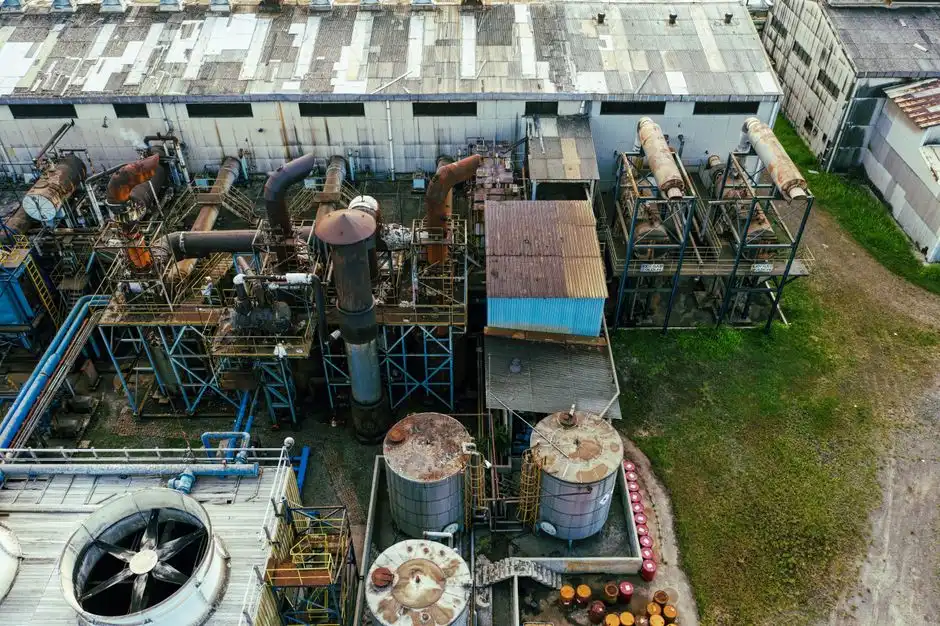
Before selecting a treatment train, the engineer needs to know the gap between raw influent and the 0.5 mg/L target. Influent phenol concentrations vary by roughly two orders of magnitude across Mexican heavy industry, and the required removal ratio drives both CAPEX and OPEX. A petroleum refinery desalter at 30 mg/L needs 98.3% removal to hit 0.5 mg/L; a phenolic resin reactor wash at 3,000 mg/L needs 99.98% removal, which rules out single-stage biology and forces Fenton or AOP pretreatment.
| Sector | Source Stream | Typical Total Phenol (mg/L) | Removal Required to Hit 0.5 mg/L |
|---|---|---|---|
| Petroleum refinery | Desalter, spent caustic, coker | 10–100 | 95.0–99.5% |
| Coke oven / integrated steel | Ammonia still, gas liquor | 200–1,500 | 99.7–99.96% |
| Phenolic resin / BPA | Reactor wash, precipitation | 500–5,000 | 99.9–99.99% |
| Pharma / agrochemical | Batch reactor discharge | 50–2,000 | 99.0–99.975% |
| Kraft pulp & paper | Post-evaporator condensate | 5–30 (spikes to 100+) | 90.0–99.5% |
The 99.95%+ removal ratios for resin and steel-mill streams are the engineering constraint that makes Fenton oxidation, AOP, or thermal destruction non-optional. Activated sludge alone will not hold 0.5 mg/L on a 1,000 mg/L influent; the biomass is overwhelmed and breakthrough occurs within hours of a loading spike.
Treatment Train Options to Reach Mexico's 0.5 mg/L Limit
Three trains cover roughly 90% of the Mexican industrial envelope. The choice is driven by influent phenol concentration, required effluent margin, and whether the facility already operates an activated sludge system.
Fenton oxidation (H2O2 1.0–3.0 g per g phenol, Fe2+ 0.05–0.1 mol/mol H2O2, pH 2.8–3.2, HRT 30–60 min) achieves 80–95% destruction on a single pass and takes a 1,000 mg/L resin plant influent to 50–200 mg/L. Iron sludge generation is 2–4 kg DS per kg H2O2 dosed, and the downstream biology must tolerate the residual H2O2 — usually a 30–60 min quench tank with sodium bisulfite handles this. Fenton-only effluent rarely clears 0.5 mg/L; the train should terminate in biology. Chemical dosing precision matters: an automatic chemical dosing skid for Fenton H2O2 and FeSO4 control typically recovers 8–12% on H2O2 consumption versus manual dosing.
Acclimated activated sludge running on phenol-degrading Pseudomonas putida and Acinetobacter spp. at 0.3–0.5 kg phenol/kg MLVSS/day consistently reaches <0.5 mg/L when fed Fenton effluent at 50–200 mg/L. Operating window: MLVSS 3,000–5,000 mg/L, HRT 18–36 h, DO 2–4 mg/L, pH 6.8–7.5, temperature 25–35°C. Acclimation takes 3–6 weeks after seeding; the biomass crashes if fed raw (un-Fentoned) high-strength phenol, so the upstream Fenton is a stability requirement, not an option. An MBR membrane bioreactor for acclimated-phenol biological polishing tightens the effluent TSS to <5 mg/L, which removes a downstream GAC-fouling risk.
Granular activated carbon (GAC) polishing with virgin coal-based carbon at 5–10 g treated per gram adsorbed handles the residual 1–2 mg/L down to <0.1 mg/L and provides margin against compliance excursions. Service life runs 6–18 months between thermal regenerations, depending on background COD. GAC alone will not economically polish Fenton effluent at 50+ mg/L — the carbon exhausts in days. The GAC step earns its place as the third stage of Fenton → biological → GAC, not as a standalone.
| Train | Achievable Effluent Phenol (mg/L) | CAPEX (USD per m³/day) | OPEX (USD per m³ treated) | Best Fit |
|---|---|---|---|---|
| Fenton only | 50–200 | 150–300 | 1.20–2.50 | Not compliant; pre-treatment only |
| Acclimated activated sludge only | 0.3–2.0 | 400–700 | 0.40–0.80 | Refinery desalter, low-strength streams |
| Fenton + biological | 0.2–0.8 | 600–1,000 | 1.50–2.80 | Resin, pharma, coker |
| Fenton + biological + GAC | <0.1 (detection-limited) | 800–1,400 | 2.00–3.50 | Coastal discharge, export-bound product |
For facilities already operating membrane pretreatment, ozone-based AOPs (O3/H2O2, O3/UV) at 2–5 g O3 per g phenol achieve 95–99% destruction with no iron sludge, but require corrosion-resistant 316L or FRP contactors and an off-gas ozone destruct unit. Reverse osmosis rejects 99%+ of phenols but generates a 20–30% concentrate stream that pushes the plant toward ZLD — typically only economic above 100 m³/day influent.
Monitoring, Permits, and PROFEPA Audit Readiness
NOM-001-SEMARNAT-2021 sets the minimum sampling cadence at monthly composite for phenols, but CONAGUA discharge permits for high-risk facilities (petrochemical, coking, resin) typically tighten this to weekly self-monitoring with quarterly third-party confirmation. On-line 4-AAP colorimetric auto-analyzers with a UV digestion front-end detect phenol at 0.05 mg/L with ±10% accuracy and feed SCADA — the instrumentation pattern is similar to a BOD online monitoring engineering guide for self-monitoring programs and can share the same sample conditioning panel.
The CONAGUA Título de Concesión is the controlling permit document. It lists the receiving body, permitted flow in L/s, and the applicable NOM-001 table. The first audit-readiness step is to confirm the permit cites NOM-001-SEMARNAT-2021, not the 1996 version. A facility operating under a permit that still references the 1996 norm can be cited for permit-condition ambiguity even when the effluent technically passes, because SEMARNAT's enforcement baseline shifted in January 2023. Engineers managing plant expansions or permit renewals should also reference the total nitrogen discharge limit guide for another LATAM-adjacent jurisdiction for cross-jurisdictional benchmarking of the Mexican regulatory pattern.
PROFEPA inspectors will request chain-of-custody records, the EMA accreditation certificate of the analytical lab, and the last 12 months of self-monitoring reports. A digital record-keeping system with timestamped sample logs, calibrated instrument certificates, and PDF lab reports prevents the most common audit finding — missing or inconsistent documentation on a specific sampling event. Compliance engineers in Mexican heavy industry should plan for at least one unannounced PROFEPA visit per 18-month period and treat the documentation stack as a continuous deliverable, not a renewal-cycle project.
Frequently Asked Questions
What is the 2026 phenol discharge limit for rivers in Mexico?
The river/reservoir limit under NOM-001-SEMARNAT-2021 Tabla 2 is 0.5 mg/L total phenols as a monthly average and 1.0 mg/L instantaneous, measured by the 4-aminoantipyrine method per NMX-AA-050-SCFI-2007. This replaced the legacy 1.0 mg/L value from NOM-001-SEMARNAT-1996 in January 2023.
What is the coastal water phenol limit in Mexico?
Discharges to coastal waters and estuaries face a tighter limit of 0.2 mg/L monthly average and 0.4 mg/L instantaneous, reflecting lower dilution capacity and higher marine food-chain bioaccumulation of substituted phenols.
Which analytical method is required for phenol compliance reporting in Mexico?
NMX-AA-050-SCFI-2007 (4-aminoantipyrine colorimetric) is the reference method, with a detection limit of approximately 0.01 mg/L. NMX-AA-097 gas chromatography is acceptable for isomer-specific work, and the lab must hold EMA accreditation for the report to be defensible.
Can activated sludge alone meet 0.5 mg/L phenol?
Acclimated activated sludge reaches <0.5 mg/L only on low-strength influent (under 100 mg/L) with 3–6 weeks of biomass acclimation. High-strength streams (resin, coker, pharma) require Fenton oxidation upstream; biology alone cannot hold compliance on a 1,000+ mg/L loading spike.
How often must a Mexican facility self-monitor phenol discharges?
NOM-001-SEMARNAT-2021 sets a monthly composite minimum, but CONAGUA permits for high-risk facilities typically require weekly self-monitoring with quarterly third-party confirmation via an EMA-accredited lab. PROFEPA expects 12 months of continuous records at any inspection.