What Is an Online Chlorine Residual Analyzer and Why It Matters in 2026
An online chlorine residual analyzer is an inline instrument that continuously measures free or total chlorine concentration in real time using amperometric, membrane-covered amperometric, DPD colorimetric, or optical/UV absorbance methods. Modern industrial units — including the Boqu CLG-6059DPD and Dongrun DRXD-002 — deliver RS485/Modbus RTU output for PLC/SCADA integration, with measurement ranges typically 0–10 mg/L and accuracies of ±2–5% of reading. The term residual refers to the free chlorine (HOCl/OCl−) or total chlorine (free plus combined chloramines) remaining after the disinfection contact time — the regulated parameter, not the dose applied.
Three forces are driving 2026 specification upgrades. First, the EPA's LT2ESWTR and Stage 2 Disinfection Byproduct Rules now require utilities to demonstrate continuous disinfectant residual control, not grab-sample compliance, across the distribution system. Second, the EU Drinking Water Directive 2020/2184 — in force since January 2023 with member-state transposition deadlines through 2026 — explicitly calls for continuous monitoring of disinfection efficacy in Annex II. Third, IIoT-enabled SCADA integration has moved from optional to expected in any new disinfection skid: a free chlorine monitor that cannot publish to a historian or push MQTT events is hard to justify on a 2026 bid sheet.
AWWA C670-15 (the revision of C670-09) is the governing North American standard for online chlorine analyzer operation and maintenance and is now routinely cited in US municipal tenders. The four application sectors where online monitoring is standard in 2026: drinking water treatment and distribution, industrial cooling water (once-through and recirculating), wastewater effluent for NPDES permit compliance, and marine ballast water treatment under IMO D-2. Operators in any of these segments who are still on weekly grab sampling are paying for it in chemistry over-feed, DBP excursions, and audit risk. For a deeper look at how online analyzers fit into a broader remote monitoring architecture for chemical wastewater plants, see the 2026 engineering guide.
How Online Chlorine Analyzers Work: Four Measurement Principles Compared
Residual chlorine is not a single chemical species, and the four dominant measurement principles each exploit a different physical or chemical property. The right choice depends on your water matrix, your tolerance for reagent logistics, and how fast your control loop needs to react.
DPD colorimetric. N,N-diethyl-p-phenylenediamine (DPD) is dosed into the sample stream; free chlorine oxidizes it to a magenta Würster dye measured at 515 nm. Total chlorine is determined by adding KI, which converts combined chlorine to I2, which then oxidizes DPD. The method is the laboratory gold standard and the basis of Palintest's Instachlor reagent platform, but in continuous-duty online service it carries a continuous reagent consumption cost, is sensitive to turbidity above ~10 NTU, and drifts with sample color. CAPEX runs $1,500–3,500; OPEX is reagent-dominated.
Membrane-covered amperometric. Chlorine diffuses through a gas-permeable membrane (typically PTFE or hydrophilic PVC) into an internal electrolyte, where it is reduced at a polarized cathode. The resulting current is proportional to concentration. The membrane isolates the electrodes from fouling, and the only consumables are the membrane cap and electrolyte. Dongrun's DRXD-002 uses a dual-channel "double-cleaning" arrangement that extends the maintenance interval to 30 days — at the favorable end of the 30–90 day range typical for this class. CAPEX $3,000–6,500.
Bare-electrode amperometric. No membrane; the working electrode is in direct contact with the sample. Response is fast (T90 under 30 s) and the sensor head is inexpensive, but the exposed electrode fouls rapidly in dirty water and is pH-dependent because the HOCl/OCl− ratio shifts above pH 7.5. Best deployed in clean process water — boiler feed, RO permeate, or low-TSS cooling water — where speed matters more than maintenance interval. CAPEX $2,500–5,000.
Optical/UV absorbance. A dual-wavelength photometer measures absorbance at the analyte's peak (360 nm for ClO2) and at a secondary reference wavelength used to compensate for window fouling, bubbles, and turbidity. This is the principle behind the optek inline ClO2 analyzer and the reagent-free, drift-stable alternative when the analyte is ClO2 or another colored species. CAPEX is higher ($8,000–15,000+) and the technique is limited to analytes with a usable absorbance band.
| Principle | Typical range (mg/L) | Accuracy | Response T90 | Reagent demand | Maintenance interval | 2026 CAPEX (USD) |
|---|---|---|---|---|---|---|
| DPD colorimetric | 0–10 | ±5% or ±0.05 mg/L | 60–120 s | High (DPD + buffer) | 7–14 days | $1,500–3,500 |
| Membrane amperometric | 0–20 | ±2% or ±0.02 mg/L | 30–60 s | None (electrolyte only) | 30–90 days | $3,000–6,500 |
| Bare-electrode amperometric | 0–10 | ±2–3% | <30 s | None | 7–21 days | $2,500–5,000 |
| Optical/UV absorbance | 0–200 (analyte-dependent) | ±1–2% | 2–10 s | None | 30–60 days | $8,000–15,000+ |
Interference profiles differ by principle. Amperometric sensors compensate for pH internally with a reference electrode, but still drift if sample pH swings more than ±1 unit between calibrations. DPD colorimetric methods are vulnerable to oxidant cross-sensitivity — ozone, ClO2, and peroxide all produce positive bias unless suppressed with glycine or thioacetamide. Optical units handle turbidity well by design (dual wavelength), but cannot distinguish free from combined chlorine without reagent addition. Plan your calibration verification around the dominant interference in your matrix, not around the lab method.
Key Specifications and Selection Criteria for Industrial Duty
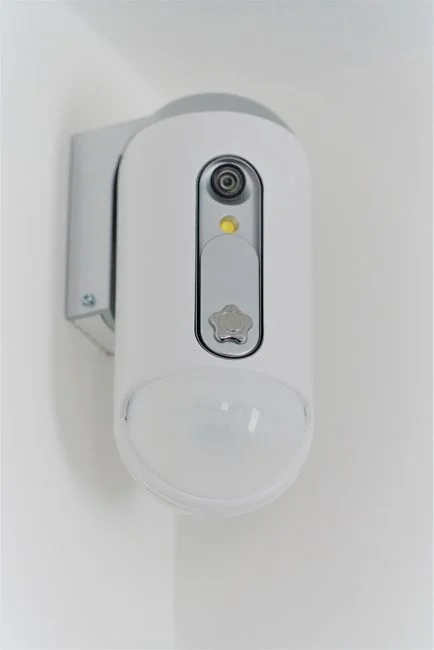
The spec sheet is where procurement and process engineering meet. Three numbers matter more than any other: measurement range, accuracy, and response time. Get these wrong and the analyzer is either blind to your operating window or too slow to close the control loop.
Most industrial free chlorine monitors cover 0–5 or 0–10 mg/L, which brackets the typical drinking-water target of 0.2–1.5 mg/L and most cooling-water setpoints of 0.5–1.0 mg/L. Food-process CIP wash water and some bleaching applications push into 0–200 mg/L territory and require a high-range optical or specialized amperometric cell — the EIT CL-2059A industrial residual chlorine analyzer is one example engineered for the higher-sensitivity end of this duty. Accuracy on industrial units is typically specified as ±2–5% of reading or ±0.02 mg/L, whichever is greater; tighten that to ±1% only if you have a stable matrix and disciplined calibration.
Response time (T90) must be matched to the control loop, not the bid sheet. Optical units hit T90 in 2–10 s and can be paired with fast PID on a sodium hypochlorite dosing pump. Amperometric units at 30–60 s are fine for trim chlorination where the setpoint changes slowly. DPD at 60–120 s belongs on monitoring and trending, not on a closed loop controlling stroke position. Environmental specs: IP65/NEMA 4X is the floor for plant-floor mounting; 0–50 °C operating temperature and 0.5–2 L/min sample flow are standard; sample conditioning (strainer, pressure regulator, flow switch) is not optional in raw water service.
| Parameter | Industrial spec | Notes |
|---|---|---|
| Range (free/total Cl) | 0–5 or 0–10 mg/L | High-range units 0–200 mg/L for CIP/ClO2 |
| Accuracy | ±2–5% of reading or ±0.02 mg/L | Whichever is greater |
| Repeatability | ±1% of reading | Driven by calibration discipline |
| Response T90 | 2–120 s (principle-dependent) | Match to control loop, not bid sheet |
| Sample flow | 0.5–2 L/min | Flow switch recommended |
| Enclosure | IP65 / NEMA 4X minimum | IP67 for washdown areas |
| Outputs | 4–20 mA + RS485/Modbus RTU | Ethernet/IP, Profinet, MQTT on newer units |
| Operating temp | 0–50 °C | Sample cooling above 50 °C |
Output and integration is the de facto industrial standard: 4–20 mA analog plus RS485/Modbus RTU. The Boqu CLG-6059DPD confirms this in its datasheet. Newer plants should look for Ethernet/IP, Profinet, or MQTT to drop directly into a modern SCADA or IIoT broker — flag this for the controls engineer before the PO, not during commissioning.
Standards and Compliance: AWWA C670, EPA 334.0, ISO 7393, and GB/T References
Specifying an analyzer without naming the standard it satisfies is a procurement mistake that surfaces during the next audit. Four standards cover most of the world's compliance reporting, and the analyzer you select must map cleanly to at least one of them.
| Standard | Scope | Region | Use case |
|---|---|---|---|
| AWWA C670-15 | Online chlorine analyzer operation and maintenance | North America | US municipal tenders, utility asset management |
| EPA Method 334.0 | Residual chlorine in drinking water using an on-line analyzer | USA (SDWA) | Required for US compliance reporting |
| ISO 7393 | Water quality — free and total chlorine (DPD methods) | Global | Method reference and inter-lab comparison |
| GB/T 5750.11-2023 | Drinking water disinfection by-product and residual chlorine testing | China | Chinese drinking water compliance |
For industrial discharge, online residual chlorine is typically reported under NPDES permits (USA), the EU Industrial Emissions Directive 2010/75/EU for cooling-water blowdown, or China GB 18918-2002 for municipal wastewater treatment plant effluent. Note that EPA Method 334.0 does not approve a specific manufacturer — it approves a method class — so a correctly specified amperometric or DPD analyzer installed per the standard is acceptable regardless of brand. The cross-reference into your discharge compliance framework is covered in the 2026 BOD and discharge limit compliance guide.
Integration with PLC, SCADA, and IIoT Platforms
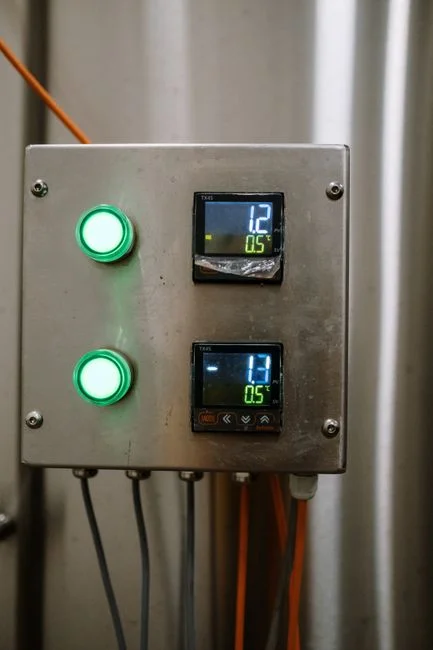
RS485/Modbus RTU over twisted pair is still the dominant fieldbus, typically at 9600 or 19200 baud with 8N1 framing. The standard register map on an industrial online analyzer exposes measured value, sample temperature, pH (if equipped), and a set of diagnostic flags — sensor OK, flow OK, membrane age, calibration due. A PLC master polls these registers on a 1–5 s cycle and maps the chlorine value into a PID loop that drives the stroke or speed of a chemical dosing pump. The Boqu CLG-6059DPD is a typical example, and the same protocol is supported across DPD, amperometric, and bare-electrode families.
SCADA trending pulls a 1-minute averaged value into the historian. Alarm thresholds for free chlorine in distribution water are typically set at 0.2 mg/L (low — triggers booster station investigation) and 1.5 mg/L (high — DBP formation risk). The same analyzer should also expose a "calibration due" flag that pages the maintenance team before the membrane or electrolyte expires.
For IIoT, the trend in 2026 is dual-protocol output: Modbus RTU to the local PLC plus MQTT or REST API to a cloud broker. On legacy installations where the analyzer only speaks Modbus, a Modbus-to-MQTT gateway is the standard retrofit — typically $400–800, no firmware change to the analyzer. The end-to-end architecture, from sensor to cloud historian, is laid out in the 2026 edge-computing engineering guide for wastewater monitoring.
Total Cost of Ownership: Purchase, Reagents, Membranes, and Calibration
CAPEX is the number on the quote; OPEX is the number that decides the project. For reagent-based analyzers, OPEX over a 5-year window can be 1.8–2.5× the purchase price, while reagent-free optical or properly maintained membrane amperometric units sit at 1.05–1.6× CAPEX. That ratio flips the procurement case for any site where reagent logistics are difficult — offshore platforms, remote mining camps, unmanned pump stations.
| Cost line | DPD colorimetric | Membrane amperometric | Bare-electrode amperometric | Optical/UV |
|---|---|---|---|---|
| CAPEX 2026 (USD) | $1,500–3,500 | $3,000–6,500 | $2,500–5,000 | $8,000–15,000+ |
| Reagent OPEX/year | $800–1,400 | $0 | $0 | $0 |
| pH buffer/year | $200–400 | $0 | $0 | $0 |
| Membrane/electrolyte/year | N/A | $400–700 | $200–400 | $0 |
| Calibration consumables/year | ~$300 | ~$150 | ~$150 | ~$100 |
| 5-year TCO multiplier of CAPEX | 1.8–2.5× | 1.3–1.6× | 1.2–1.4× | 1.05–1.2× |
Specific drivers. DPD reagent consumption depends on analysis frequency; a unit set to a 5-minute cycle uses roughly 8–12 L of DPD indicator per month at typical concentrations. Membrane and electrolyte replacement on amperometric units runs $400–700/year at the standard 60–90 day interval; Dongrun's 30-day claim extends the interval but does not eliminate the cost — it shifts it to fewer, slightly larger service events. Weekly DPD verification against a Palintest-type check standard adds about $300/year in lab consumables and technician time. For a site that already runs an automatic chemical dosing skid, pairing the analyzer with the dosing skid's existing maintenance route typically trims the OPEX by 15–25% through shared calibration visits. Full OPEX benchmarks for process plants are detailed in the 2026 food processing wastewater OPEX breakdown.
Selection Workflow: Matching the Analyzer to the Water Matrix
A 5-step decision flow that turns the spec sheet into a defensible shortlist:
- Define the analyte. Free chlorine is the most common (HOCl/OCl− after sodium hypochlorite or chlorine gas dosing). Total chlorine adds combined chloramines and matters in distribution systems that practice chloramination. ClO2 is a separate analyte entirely, common in pulp & paper bleaching, produce wash water, and some municipal installations using a Chlorine Dioxide Generator.
- Characterize the matrix. pH range, turbidity (NTU), temperature swing, and the presence of oxidant interferences (residual ozone, peroxide, chloramines). A pH above 8.0 biases free chlorine toward OCl−, which responds poorly to DPD — amperometric with pH compensation is the safer choice.
- Set the control loop. Response time must be at least 3× faster than the loop's time constant. Optical (2–10 s) and bare-electrode amperometric (<30 s) close trim chlorination loops; DPD (60–120 s) belongs on monitoring and trending only.
- Match to integration. Existing PLC/SCADA protocol, panel space, available power, and sample conditioning footprint. Modbus RTU is universal; Ethernet/IP, Profinet, or MQTT drop straight into modern systems without a gateway.
- Apply the TCO filter. Reagent logistics weigh heavily for unmanned or remote sites — penalize DPD-heavy systems there. Membrane amperometric and optical units carry higher CAPEX but lower ongoing attention. For sites tracking other organics and contaminants, the same selection framework used for an online monitoring system for industrial contaminants applies.
Frequently Asked Questions
What is the difference between free and total chlorine measurement? Free chlorine is the sum of HOCl and OCl− — the active disinfecting species. Total chlorine adds combined chlorine (chloramines formed by reaction with ammonia or organic nitrogen). DPD colorimetric analyzers measure both via a two-stage reagent addition; amperometric sensors with no membrane typically respond to free chlorine only, and total requires a separate channel or chemical conversion step.
How often should an online chlorine analyzer be calibrated? AWWA C670-15 recommends calibration verification at least weekly using a secondary standard (DPD photometer or amperometric reference), with full calibration adjustment monthly or whenever the verification exceeds the manufacturer's drift spec. Field practice on critical disinfection skids is daily verification at the start of shift.
Can one analyzer measure both chlorine and ClO2? No. Free/total chlorine and chlorine dioxide are different analytes with different optical absorbance and electrochemical signatures. Dual-parameter installations use two sensors, often in the same panel, with separate reagent streams (DPD) or separate optical heads (UV absorbance at 360 nm for ClO2 vs amperometric for free Cl).
What maintenance interval is realistic for an industrial online analyzer? DPD units: 7–14 days for reagent replenishment. Standard membrane amperometric: 60–90 days for membrane and electrolyte replacement. Dongrun DRXD-002 with double-cleaning: 30 days (favorable end of the range). Bare-electrode amperometric: 7–21 days for electrode cleaning or replacement. Optical/UV: 30–60 days for window wipe-down.
How do I integrate the analyzer with an existing Modbus PLC? Land the analyzer's RS485 output on a spare port (or add a serial module), configure baud rate and slave address to match the PLC project, and map the holding registers for measured value, temperature, and diagnostics. Most vendors publish the register map in the manual; if not, request it before PO. A 1–5 s poll cycle is standard, and the chlorine value is wired into a PID block driving the dosing pump.