Why Wastewater Heat Recovery Is a 2026 Industrial Priority
Wastewater heat recovery in 2026 is shifting from a building-scale (shower/drain) niche into a mainstream industrial energy lever, with the global waste heat recovery system market tracking roughly USD 54.3B (2019 baseline) at 8.8% CAGR into 2027. The Collins English Dictionary (2012) defines waste heat recovery as "the use of heat that is produced in a thermodynamic cycle, as in a furnace, combustion engine, etc, in another process, such as heating feedwater or air" — a definition written for power plants, not process lines, which is exactly the gap this article fills. For industrial buyers, the highest-ROI streams are evaporator condensate, MBR/biological-reactor feed, and ZLD vapor streams — typically recovering 60–80% of available Btu at 18–36 month payback.
Three policy regimes converge in 2026 to make heat recovery a capex line, not a sustainability gesture. The EU Corporate Sustainability Reporting Directive (CSRD, in force for FY2024 reporting onward) requires Scope 1+2 disclosure that directly penalizes thermal energy vented to drain under the EU Emissions Trading System, where CO₂ cleared at €70–€90/tonne in 2026. China's dual-carbon policy anchors a 30% emissions-reduction target by 2030 and carbon neutrality by 2060, with provincial industrial efficiency rebates stackable on federal programs. In the US, Inflation Reduction Act Section 45X advanced manufacturing credits cover up to 30% of qualifying heat-recovery CAPEX through 2032. Unlike the REHVA No. 34 framework (Instantaneous Wastewater Heat Recovery in Buildings, focused on shower-drain heat exchangers), the discussion below targets process wastewater at 15–100°C and Btu loads an order of magnitude larger per site.
Four Industrial Wastewater Streams With the Highest Recoverable Heat
Not every wastewater stream is a heat-recovery candidate; economics favor high temperature, high flow, and low fouling. Four streams consistently deliver 60–80% Btu recovery across food, textile, chemical, and semiconductor plants, and the table below maps each to its typical operating envelope. A stream that combines ≥40°C discharge with ≥50 m³/day flow almost always clears the screening threshold for direct plate exchange or heat-pump upgrade.
| Stream | Typical source | Temperature range | Daily flow range | Best-fit technology |
|---|---|---|---|---|
| High-temperature rinse water | Textile, metal finishing, food (CIP) | 40–70°C | 20–200 m³/day | Plate or shell-and-tube direct exchange |
| MBR / biological reactor feed | Pre-aeration equalization | 15–35°C | 100–2,000 m³/day | Plate pre-heater integrated to integrated MBR membrane bioreactor system |
| Evaporator / ZLD vapor & condensate | Forced-circulation crystallizer, MEE | 60–100°C (vapor), 55–85°C (condensate) | 50–500 m³/day | MVR or shell-and-tube vapor coupling |
| RO reject / cooling-tower blowdown | Concentrate stream, CT blowdown | 25–45°C | 200–5,000 m³/day | Wastewater-source heat pump (COP 3.0–4.5) |
Pre-heating MBR feed with warmer effluent is the most under-deployed opportunity in the list. Aeration energy typically accounts for 50–70% of a biological plant's electrical load, and a 10–12°C bump in influent temperature via waste-heat pre-heating cuts oxygen-transfer demand by 10–18% (HydropureWater field data, 2026). For ZLD streams, vapor-side heat recovery through mechanical vapor recompression is now the default 2026 retrofit because it pays back in 14–30 months at current electricity tariffs.
Technology Options Compared: Plate, Shell-and-Tube, Heat Pump, and MVR
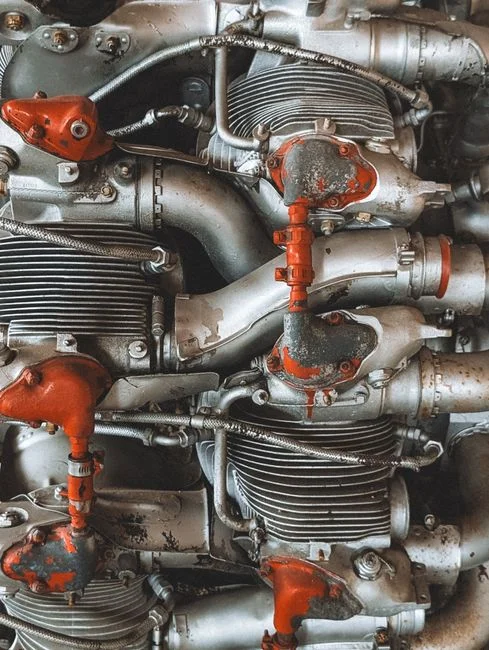
Four technology families dominate 2026 industrial deployments, and the choice is driven by stream temperature, fouling tendency, and target heat-outlet temperature rather than capital cost alone. The matrix below summarizes 2026 engineering estimates for installed cost, fouling tolerance, and typical application envelope; suppliers should be asked to quote against these baseline ranges.
| Technology | Stream temperature | 2026 installed cost | Fouling tolerance | Typical materials | Best application |
|---|---|---|---|---|---|
| Plate heat exchanger | 25–60°C | $80–$220/kWth recovered | Low–medium (clean streams) | 316L SS, titanium plates | Rinse water, MBR feed pre-heat, RO reject on clean side |
| Shell-and-tube | 30–180°C | $120–$280/kWth | High (fibrous, scaling) | 316L SS, duplex, graphite | Textile, pulp & paper, evaporator condensate with high TDS |
| Wastewater-source heat pump (WWHP) | 15–40°C source → 50–80°C output | $450–$900/kWth output | High (evaporator-recovery loop) | Titanium evaporator, scroll/screw compressor | Cooling-tower blowdown, low-grade effluent upgrade |
| Mechanical vapor recompression (MVR) | 60–90°C vapor | $600–$1,200/kWth vapor handled | Medium (vapor-side, scale-prone) | 316L SS, duplex compressor | ZLD crystallizer coupling, MEE retrofit, large vapor volumes |
Plate exchangers win on footprint (200–800 m²/m³) and capital cost but lose on fibrous or scaling streams where the tight gap geometry plugs. Shell-and-tube units tolerate 3–5× higher fouling factors (0.0002–0.0005 m²K/W vs 0.0001 m²K/W for gasketed plates) and remain the default in textile and pulp operations. For 2026 ZLD retrofits, MVR has effectively displaced thermal recompression: compressing 60–90°C vapor to 1.2–1.8 bar saves 60–70% of the electrical energy of a multi-effect evaporator baseline, and integration with a industrial RO system upstream reduces the vapor load that the MVR must handle. Where a plant's pre-treatment includes a high-efficiency sedimentation tank, the clarified overflow is often clean enough to feed a plate exchanger directly without intermediate filtration, which materially shifts the cost equation.
ROI and Payback: What 2026 Buyers Should Realistically Expect
Industrial energy pricing in 2026 sets the boundary for every payback calculation: natural gas runs $8–$14/MMBtu, electricity $0.08–$0.14/kWh, and steam $15–$30 per 1,000 lb depending on US/EU/China region. Against these baselines, plate and shell-and-tube installations on clean streams return capital in 24–48 months; wastewater-source heat pumps stretch to 36–60 months because compressor capex dominates; and MVR on ZLD vapor is the fastest at 14–30 months because the Btu throughput per square meter is roughly 10× that of a sensible-heat exchanger.
| Technology | Typical 2026 payback | Main value driver | Risk to payback |
|---|---|---|---|
| Plate / shell-and-tube | 24–48 months | Steam or natural-gas displacement | Fouling → unplanned CIP, heat-duty derate |
| Wastewater-source heat pump | 36–60 months | Elevating 15–40°C waste to 50–80°C usable | Compressor failure, refrigerant regulation |
| MVR on ZLD | 14–30 months | 60–70% electricity savings vs MEE | Scale buildup, vapor superheat control |
Worked example for a 500 m³/day food-processing effluent at 55°C discharging to drain at 25°C — a 30°C ΔT across a 2 MWth plate exchanger pre-heating boiler feedwater. At 0.86 MMBtu/MWh-thermal, the unit recovers ~41,400 MMBtu/year, displacing natural gas at $11/MMBtu and delivering ~$310K in annual fuel savings (2026 engineering estimate, before O&M and auxiliary pumping). Total installed CAPEX of ~$520K — $260/KWth at the low end of the plate range — produces a simple payback of ~20 months. Stack US IRA 45X (30% of CAPEX = $156K) on top, and the effective CAPEX falls to ~$364K, compressing payback toward 14 months; in the EU, avoided CO₂ at €70–€90/tonne (CSRD-disclosed, 2026 ETS pricing) adds another 5–8% to annual savings depending on the grid mix.
How to Select a 2026 Wastewater Heat Recovery Supplier
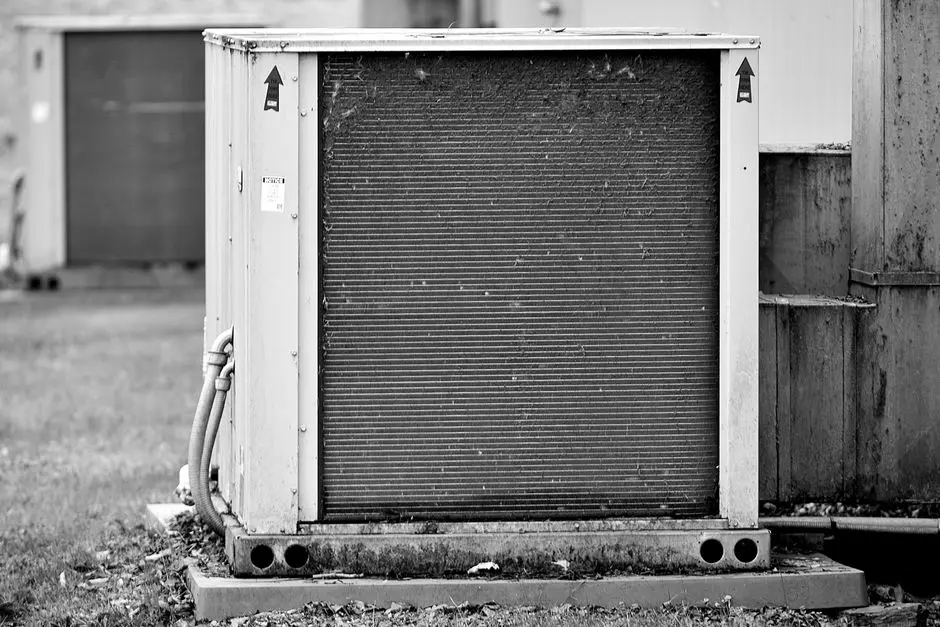
Selection criteria for a 2026 industrial heat-recovery supplier fall into five hard gates and one boundary spec, and any vendor that cannot answer all five on the first RFQ response should be downgraded. The boundary spec is the most overlooked: a supplier quoting a heat exchanger module alone is not quoting the same project as one offering a full skid with pumps, controls, and a turnkey heat-recovery loop integrated to the plant's boiler or CHP — the engineering effort on the latter is typically 25–40% of installed cost, and procurement must compare like-for-like.
- In-house thermal and biological process design. The vendor should run their own heat-and-mass balance, not just sell hardware — a plate exchanger sized by mass balance will outperform one sized by rule-of-thumb by 15–25% on fouling allowance.
- ASME U-stamp or PED/CE-PED fabrication. Mandatory for any heat exchanger operating above 0.5 bar saturated steam or 5 bar hot water; the certificate should be project-specific, not a generic shop certification.
- Fouling-tolerant geometry with documented CIP cycles. Ask for the design fouling factor in m²K/W, the CIP frequency at design duty, and a fouling-factor warranty — 12 months is now a 2026 industry standard after high-profile 2023–2024 failures in textile plants.
- Integration with existing MBR/ZLD/RO train. A heat-recovery module that fights the upstream biological or membrane system will be bypassed within 18 months; the supplier should accept interface responsibility, not push it back to the plant.
- Digital monitoring via SCADA. Inlet/outlet temperatures, ΔP across the exchanger, and thermal duty are the three signals that predict fouling and CIP demand; supplier should expose them via Modbus/OPC-UA, not a proprietary gateway.
Two final commercial points. First, specify a 24-month warranty on plates and gaskets and a 12-month fouling-factor performance guarantee — vendors that refuse this in 2026 are pricing the risk into their capex, not eliminating it. Second, the 2026 buyer is not just buying hardware; data on smart water monitoring 2026 outlook trends shows plants with closed-loop thermal monitoring recover 8–12% more useful Btu over equipment life than plants running on monthly manual readings. For food and slaughterhouse applications specifically, a vendor fluent in the upstream stream chemistry (covered in our slaughterhouse wastewater treatment 2026 engineering guide) will pre-empt fouling issues that a generalist will discover only after commissioning.
Frequently Asked Questions
What is wastewater heat recovery in industrial terms? It is the capture and reuse of thermal energy from process wastewater streams (rinse water, evaporator condensate, MBR feed, RO reject) typically at 15–100°C, with 60–80% Btu recovery and 18–36 month payback in 2026 industrial applications.
Which wastewater stream gives the fastest payback for heat recovery? ZLD evaporator vapor coupled to mechanical vapor recompression (MVR) returns capital in 14–30 months in 2026 because each kilogram of vapor carries ~540 kcal of latent heat and MVR displaces 60–70% of the electricity a thermal MEE would consume.
How much does a wastewater heat exchanger cost per kWth in 2026? Plate exchangers run $80–$220/kWth recovered, shell-and-tube units $120–$280/kWth, wastewater-source heat pumps $450–$900/kWth of output heat, and MVR systems $600–$1,200/kWth of vapor handled (2026 engineering estimates).
Does IRA Section 45X cover wastewater heat recovery in 2026? Yes — qualifying industrial heat-recovery installations can claim up to 30% of CAPEX as an advanced manufacturing tax credit through 2032, and a 500 m³/day food-processing plate-exchanger project at $520K CAPEX would net roughly $156K in 45X support.