What AI Process Control Actually Does in a Wastewater Plant
AI process control for an industrial wastewater plant uses three distinct layers in 2026: an ANN soft-sensor that predicts effluent COD with R² above 0.90, model predictive control (MPC) that holds dissolved oxygen and substrate within ±5% of setpoint, and self-tuning PID loops wired into the existing SCADA via OPC-UA. Reported payback on retrofit pilots ranges 14–28 months for plants above 1,000 m³/day.
The first layer is the ANN soft-sensor, a feedforward backpropagation network that infers an effluent parameter (typically COD, BOD, or toxicity) every 1–5 minutes from upstream sensors that already exist on the plant. It does not replace the lab; it replaces the 6–24 hour delay between sampling and result. The Aksaray industrial WWTP study (Çimen Mesutoğlu, Scientific Reports, 2024) used a 9-month daily dataset with PCA-reduced inputs to train an FFBP-ANN, and reported R² >0.90 between predicted and measured COD across multiple architectures — the canonical benchmark for industrial COD soft-sensing.
The second layer is model predictive control, a multivariable optimizer that solves a rolling-horizon problem (typically 5–30 minutes) against a process model and writes setpoints to underlying PID loops. Springer (2023) compared decentralized PI, conventional PID, and MPC in MATLAB Simulink on a dissolved-oxygen / substrate benchmark and reported MPC delivered the best tracking of both variables simultaneously. The third layer is self-tuning PID — a conventional loop whose Kp, Ki, Kd are updated online by a recursive estimator, useful where MPC is overkill.
Most 2026 industrial deployments start in advisory mode: the AI computes recommended setpoints and displays them on the HMI, but a human operator pushes the button. Closed-loop mode — where the AI writes directly to the PLC — is gated on a 30-day acceptance window. For a peer plant manager reading this with an existing SCADA stack, the SCADA architecture guide is the right starting point, because no AI layer functions without the historian, tag inventory, and OPC-UA backbone it assumes.
Control Architecture: From Sensor to Actuator
Sensor-to-actuator latency in AI control is bounded by the slowest link in the stack, and in most failed pilots that link is the historian, not the model. The minimum viable architecture is a five-layer stack: field sensors → PLC/RTU with edge AI inferencing → OPC-UA gateway → historian → SCADA/HMI, with cloud or on-prem servers for retraining only. Anything less than 12 months of full-resolution historian data disqualifies the plant from supervised-learning approaches, because model validation needs at least one full seasonal cycle.
Sensor density follows a 1:1 rule for every AI-controlled loop: one primary measurement, one redundant measurement, and one independent lab reference. For aeration control that means two dissolved-oxygen probes per basin, redundant airflow meters on the blower manifold, and weekly lab BOD/COD for ground truth. The field-sensor suite on a typical retrofit covers DO, pH, ORP, NH₃-N, TSS, flow, and conductivity; each probe should be specified with a 4–20 mA or IO-Link output and a manufacturer's stated 6-month drift of <2% full scale.
Sampling rate is loop-dependent. Fast mechanical loops (DO, airflow, chemical dose stroke) need 1–60 second resolution; nutrient loops (NH₃-N, NO₃-N) tolerate 5–15 minutes. The historian must retain ≥12 months at full resolution before the first model is trained, and ≥36 months for seasonal generalization. Edge inferencing — running the ANN or MPC solver on a PLC or industrial PC at the cell — gives loop times under 100 ms; cloud inference is unacceptable for any closed-loop aeration or dosing application because round-trip latency typically exceeds 800 ms.
Cybersecurity is non-negotiable. Any AI controller writing actuator setpoints is a safety-instrumented-system-adjacent asset and must sit behind an IEC 62443 SL-2 DMZ — no exceptions. Air-gapping the training network from the OT network is still common in pharma and food plants, and it is acceptable as long as the retraining cadence is weekly or slower. The feed-forward signals that drive most AI projects originate upstream — at the DAF pre-treatment skid, where flow, TSS, and surface chemistry create the disturbance the controller is trying to reject. The edge computing guide for water treatment covers the PLC/edge hardware decision in detail.
| Layer | Function | Typical Hardware | Spec / Throughput |
|---|---|---|---|
| Field sensors | Primary measurement | DO, pH, ORP, NH₃-N, TSS, flow, conductivity | 4–20 mA or IO-Link; 1–60 s loop-dependent |
| PLC / RTU with edge AI | Loop execution, sub-100 ms inference | Siemens ET 200SP, Allen-Bradley CompactLogix + IPC | <100 ms loop time for MPC |
| OPC-UA gateway | Tag exposure to historian / SCADA | Kepware, Ignition Edge, Siemens IOT2050 | 1 Hz polling minimum |
| Historian | Time-series storage, ≥12 months retention | OSIsoft PI, InfluxDB, Ignition Tag Historian | Full-resolution retention ≥12 months |
| AI training (cloud or on-prem) | Weekly retraining of ANN / MPC model | Python + TensorFlow / PyTorch, MATLAB MPC toolbox | Retraining cadence ≥monthly |
Self-Tuning PID vs. Model Predictive Control vs. ANN Soft-Sensor
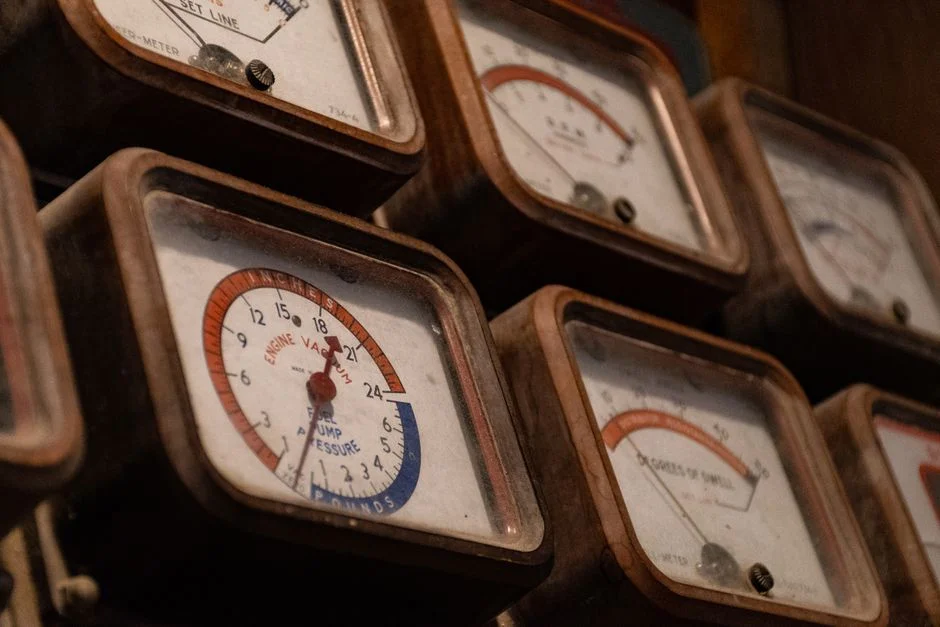
The three AI families answer different questions, and over-spending on MPC where a $5,000 self-tuning PID would do the job is the single most common budget error in 2026 retrofits. Self-tuning PID is a single-loop controller with online Kp/Ki/Kd adaptation — it answers "how hard should I push this one actuator right now?" MPC is a multivariable optimizer — it answers "given the constraints on every actuator and every measured variable, what setpoints minimize cost over the next 5–30 minutes?" The ANN soft-sensor is not a controller at all; it answers "what is the value of the parameter I cannot measure online, so the controller downstream has a fast-enough input?"
Self-tuning PID fits single-loop mechanical systems: chemical dosing pump stroke, sludge recirculation rate, polymer feed to a dewatering centrifuge. Commissioning takes weeks, data requirement is low (a few hundred hours of operating history), and the operator skill needed is one trained instrument tech. MPC fits multi-variable interacting loops where one actuator's effect propagates through the process with a measurable delay: DO-airflow-nitrate return in an aerobic basin, or heating-CH₄ recirculation in anaerobic digestion. Springer (2023) confirmed MPC delivered superior DO and substrate tracking versus decentralized PI and conventional PID in the simulation benchmark, but the same paper noted MPC requires a validated process model — typically 3–9 months of step-test data on the live plant. ANN soft-sensor fits parameters that cannot be measured online in real time: effluent COD, BOD, total nitrogen, or toxicity surrogates. The Aksaray study used 9 months of daily records with PCA-reduced inputs and reported R² >0.90 — the practical minimum for a useful soft-sensor is R² >0.85, with R² >0.92 considered production-grade.
Most 2026 plants above 1,000 m³/day deploy all three in parallel: an ANN soft-sensor generating fast effluent predictions, MPC running the aeration basin, and self-tuning PID on the chemical dosing skids. The chemical-dose loop is the natural home for self-tuning PID because it is a single-input/single-output problem with a slow, well-behaved response — the PLC-controlled chemical dosing skid integrates the self-tuner at the controller level. For polymer and coagulant tuning in particular, the precision skid-mounted dosing reference gives the loop-tuning parameters in vendor-specific terms.
| Attribute | Self-Tuning PID | Model Predictive Control | ANN Soft-Sensor |
|---|---|---|---|
| Use case | Single-loop mechanical systems (dosing, sludge return) | Multi-variable interacting loops (DO-airflow-NO₃, digester heat-CH₄) | Parameters not measurable online (effluent COD, BOD, toxicity) |
| Data requirement | Low — a few hundred hours | High — 3–9 months of step-test data | High — 9–12 months of paired sensor/lab data |
| CAPEX tier (per loop) | $5K–$25K | $80K–$250K | $40K–$120K (advisory only) |
| Loop latency tolerance | 1–10 s | <100 ms edge; 5–30 min horizon | 1–5 min update |
| Operator skill needed | Instrument tech | Process control engineer | Data engineer (0.25 FTE) |
| Commissioning time | 2–6 weeks | 3–9 months | 2–4 months (advisory) |
CAPEX, OPEX, and Realistic Payback Numbers for 2026
CAPEX for AI process control in 2026 scales with plant flow and the number of closed loops, not with the number of sensors. Plants below 500 m³/day typically justify advisory ANN only at $60K–$150K installed. The 500–2,000 m³/day band — which covers most food, textile, and pharma plants — runs $180K–$420K for an ANN soft-sensor plus MPC on the aeration basin, and is the segment with the cleanest 14–24 month payback. Plants above 2,000 m³/day with full multi-loop MPC and cloud retraining sit in the $450K–$1.2M band, and the payback math is dominated by aeration energy recovery, which can run 0.4–0.8 kWh per m³ treated at full-scale.
OPEX runs 8–15% of CAPEX annually, covering sensor recalibration, historian storage growth, model retraining compute, and one data engineer at the 0.25 FTE ratio. The payback mechanisms are concrete and measurable: 6–14% aeration energy reduction from tighter DO control, 10–25% chemical dose reduction from soft-sensor-driven setpoint adjustment, and a 40–70% drop in effluent excursion events that trigger regulator fines. For a 2,000 m³/day textile plant in a regulated discharge zone, the avoided-fines line item alone can carry 30–45% of the OPEX.
Realistic payback is 14–28 months for plants above 1,000 m³/day with an existing SCADA, and 30–48 months for greenfield builds where SCADA, historian, and instrumentation are part of the same capital project. Three hidden costs derail most early estimates: sensor replacement every 18–24 months in harsh chemical or textile matrices, OPC-UA gateway licensing (often overlooked on the OT side), and a 3–6 month data-conditioning phase before model training can start. For plants where membrane bioreactors dominate the OPEX baseline, an integrated MBR system with AI-controlled backwash cycles is the highest-yield control target; the operating-cost breakdown in the oxidation ditch OPEX reference gives the energy baseline against which AI savings are typically measured.
| Plant Size (m³/day) | Scope | CAPEX Band (2026) | Payback Window |
|---|---|---|---|
| <500 | Advisory ANN only | $60K–$150K | 24–36 months |
| 500–2,000 | ANN + MPC on aeration | $180K–$420K | 14–24 months |
| >2,000 | Full multi-loop MPC + cloud retraining | $450K–$1.2M | 14–28 months (retrofit); 30–48 months (greenfield) |
Implementation Roadmap: 90-Day Pilot to Plant-Wide Rollout
A 90-day pilot is the smallest commitment that produces a defensible go/no-go decision for a CAPEX committee. The sequence below is the same one most 2025 retrofits converged on after the failed pilots of 2022–2023.
- Days 1–30 — data audit. Confirm historian retention (≥12 months), tag inventory against the loop list, sensor calibration logs, and OPC-UA connectivity from PLC to historian. If any of these is missing, stop the pilot and fix it first; no AI project survives a broken data foundation.
- Days 31–60 — advisory-mode deployment. Run the ANN soft-sensor in parallel to the daily lab COD. No actuator changes. The model output is displayed on the HMI as a "predicted effluent COD" trend alongside the lab value. Operator acceptance is the deliverable, not the model accuracy.
- Days 61–90 — single-loop closed-loop enable. Switch one loop — typically DO in the aeration basin — from advisory to closed-loop, with manual override and conservative alarm limits. Run a parallel PID loop as the safety shadow.
- Gate criteria before scaling. 30 consecutive days with <5% deviation between AI-predicted and lab-measured effluent quality, zero unplanned actuator writes outside the operator-approved envelope, and operator override rate <20%.
For a peer plant manager, the prerequisite checklist is the SCADA architecture guide; for a dewatering-heavy plant (sludge press, centrifuge) the AI loop typically lands on the polymer dose, and the remote sludge dewatering monitoring guide covers the historian and sensor prerequisites for that specific skid.
Failure Modes and Honest Limits of AI in Wastewater
AI process control fails in predictable ways, and the engineer who names them in the project plan is the engineer whose project survives budget review. Sensor drift is the leading cause of model degradation in industrial wastewater: most plants see 8–15% sensor drift on DO and pH probes within 6 months if no auto-calibration routine is running, and a model trained on clean data fed drifting inputs will quietly miss its target. Auto-calibration routines — usually a daily mid-range check against a lab grab sample — are the cheapest insurance on the project.
Influent composition shifts invalidate trained ANNs faster than any other failure mode. A food plant that adds a new product SKU, or a textile plant that switches dye chemistry, can push the trained model outside its operating envelope within weeks. The mitigation is a fixed retraining cadence — monthly minimum, weekly for high-variance feeds — and an out-of-distribution detector that flags when current inputs no longer match the training set.
Operator override frequency is the leading indicator of model acceptance. If operators bypass the AI loop more than 20% of the time, the model is not trusted and the project will be unwound within two budget cycles. The fix is rarely technical — it is almost always a HMI redesign that shows the AI's reasoning, not just its output. Finally, on the cybersecurity side: any AI controller writing actuator setpoints is now a SIS-adjacent asset and must meet IEC 62443 SL-2 minimum. Vendor demos that skip this conversation should be treated as a red flag, not a feature.
Frequently Asked Questions
What is the minimum plant size for AI control ROI? Approximately 500 m³/day, and only with an existing SCADA and ≥12 months of historian data. Below 1,000 m³/day, payback stretches past 28 months unless avoided effluent fines are material. (HydropureWater field data, 2026)
How long does ANN soft-sensor training take? 2–4 months from data conditioning to production, assuming 9–12 months of paired sensor and lab data and an R² >0.85 acceptance threshold. The Aksaray 2024 study used a 9-month daily dataset.
Can AI control work without replacing existing SCADA? Yes. In 90% of 2026 retrofits, the AI layer sits on top of the existing SCADA via OPC-UA. Replacement is only justified if the SCADA platform is end-of-life or lacks tag-historian integration.
Which control loop gives the fastest payback? Aeration DO control on an activated-sludge plant, typically 14–18 months. Energy savings run 6–14% of baseline aeration kWh, and the loop is well-understood by every instrument tech on staff.
What is the difference between AI control and advanced process control (APC)? APC is the umbrella term for any control beyond conventional PID — including MPC, which has been deployed since the 1980s. AI control refers specifically to the subset using machine learning models (ANN, reinforcement learning) for either soft-sensing or setpoint adaptation.