What Drives Filter Press Cloth Replacement Cost in 2026
Filter press cloth replacement cost in 2026 runs $80–$1,200 per cloth piece depending on material (polyester, polypropylene, or monofilament) and plate size, plus $30 per plate in installation labor and 2–6 hours of press downtime per change-out. Total annual cloth OPEX typically lands at $0.04–$0.18 per kilogram of dry solids processed, making cloth selection the single largest variable maintenance line item on most filter press installations.
Buyers who budget against piece-price alone miss the real cost. The true spend splits into three buckets: cloth material ($80–$1,200 per piece), installation labor at roughly $30 per plate (source: Enviro Solutions FPC-I line item, 2026), and press downtime during the 2–6 hour change-out window. A $200 polyester cloth that lasts 2,000 cycles costs more per kilogram of dry solids than a $600 monofilament cloth lasting 8,000 cycles, because the cheaper cloth forces 3–4× more change-outs per year and accumulates labor and downtime overhead each time.
The metric operators should track is cost per kilogram of dry solids processed ($/kg DS), not cost per piece. A municipal plant running 2,000 tons DS/year at $0.10/kg DS spends $200,000 annually on cloth-related OPEX — a number that procurement will recognize, and that no vendor quote sheet on its own will surface. This framing also forces the conversation toward cloth lifespan, where the biggest savings live.
Cloth count scales with plate count, not press footprint alone. On a plate-and-frame filter press spanning 1 m² to 500 m² filtration area, a 40-plate 800mm press carries 41 cloths (one per chamber plus an end cloth), while a 100-plate 1500mm press carries 101. Doubling plate count roughly doubles total cloth spend, but the per-cycle cost depends entirely on how long each cloth survives in service.
Cloth Material Comparison: Polyester, Polypropylene, Monofilament & Multi-Layer
Polyester (PES), polypropylene (PP), monofilament, and multi-layer laminates cover roughly 90% of the 2026 industrial filter cloth market, and each carries a distinct cost-lifespan-chemistry profile. Entry-level polyester sits at $150 per piece at MOQ (source: Alibaba filter press cloth listing, 2026), extending upward to roughly $400 per piece for higher-grade weaves like the Sanin PES 4272 U, and reaching $800–$1,200 per piece for premium multi-layer laminates used in fine-particle clarification duty.
The trade-off is lifespan. Polyester typically delivers 1,500–3,000 cycles before blinding or mechanical wear forces replacement; polypropylene sits in a similar band but resists acid and caustic better; monofilament cloths — woven from single-filament yarns with smooth, non-fibrillating surfaces — routinely reach 4,000–8,000 cycles in biological sludge duty because they release cake cleanly and resist blinding. Multi-layer laminates, which combine a support scrim with a fine filtration face, push 5,000–10,000 cycles in fine-particle applications where filtrate clarity matters more than throughput.
| Cloth Type | Piece-Price Range (USD) | Typical Cycle Life | Best-Fit Sludge Chemistry |
|---|---|---|---|
| Polyester (PES) | $150–$400 | 1,500–3,000 | Neutral pH, abrasive mineral sludges, high cake solids |
| Polypropylene (PP) | $180–$500 | 1,500–3,000 | Acidic or caustic sludges, metal-finishing clarifier underflow |
| Monofilament (PA/PES mono) | $350–$800 | 4,000–8,000 | Biological / activated sludge, sticky organic cake, high cycle frequency |
| Multi-layer laminate | $600–$1,200 | 5,000–10,000 | Fine-particle cake, high-clarity filtrate, food & beverage polishing |
Match cloth to sludge chemistry first, then optimize for price. Spec'ing monofilament on an abrasive mineral sludge wastes budget — the smooth yarn surface wears fast under sharp particulate. Spec'ing standard polyester on an acidic metal-finishing clarifier underflow forces quarterly replacement, because the polymer hydrolyzes below pH 3. Operators running mixed chemistry should consider PP as the safer default and reserve monofilament or multi-layer for biological or fine-particle duty where the longer cycle life pays back the premium.
2026 Filter Press Cloth Cost Breakdown by Plate Size
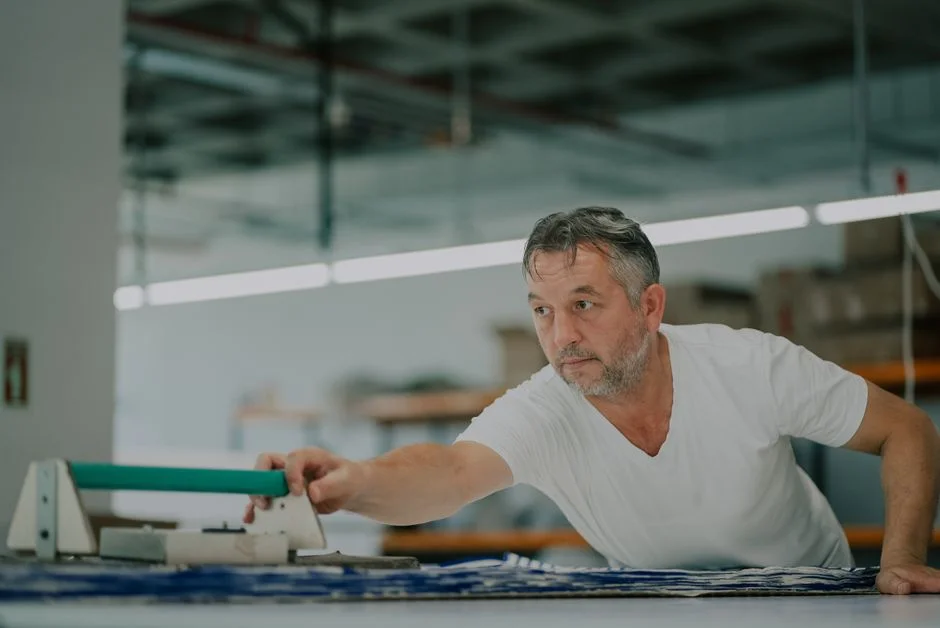
Plate size is the strongest single driver of per-cloth piece-price, because larger cloths use more yarn, more weave time, and stricter dimensional tolerances. A 630mm chamber cloth typically runs $80–$250 per piece; an 800mm cloth $150–$400; a 1000mm cloth $250–$600; and a 1500mm cloth $400–$1,200 depending on material grade. Multiply piece-price by plate count, and the per-press cloth spend becomes a six-figure number on any installation above 60 plates.
Labor and downtime scale with plate count too, but per-plate, not per-piece. The $30/plate installation figure (source: Enviro Solutions, 2026) covers safe fitting without plate damage, and a full change-out on a 40-plate press at 5 minutes per plate lands at roughly 3.3 hours of direct labor — well inside the 2–6 hour downtime window most plants plan around. Press downtime carries an opportunity cost most operators underestimate: a 100 m³/hr WWTP losing 4 hours of dewatering capacity at $300/hr loaded cost burns $1,200 in a single change-out before any cloth or labor is counted.
| Plate Size | Cloth Piece-Price (PES baseline) | Plates (worked example) | Total Cloth Cost per Press | Labor ($30/plate) | Downtime Cost (2–6 hr × $200–$800/hr) |
|---|---|---|---|---|---|
| 630 mm | $80–$250 | 30 | $2,400–$7,500 | $900 | $400–$4,800 |
| 800 mm | $150–$400 | 40 | $6,000–$16,000 | $1,200 | $400–$4,800 |
| 1000 mm | $250–$600 | 60 | $15,000–$36,000 | $1,800 | $400–$4,800 |
| 1500 mm | $400–$1,200 | 80 | $32,000–$96,000 | $2,400 | $400–$4,800 |
The 40-plate 800mm press is the most common municipal configuration and the easiest to budget against. At the polyester baseline ($200/piece × 40 = $8,000 cloth), plus $1,200 labor and $1,200 in downtime at a conservative $300/hr for 4 hours, each change-out lands at roughly $10,400. Operators who schedule three change-outs per year on that press are looking at $31,200 in annual cloth OPEX before accounting for wash water, polymer carryover, or cake-handling labor. Plate-and-frame installations in the 1–500 m² filtration area range follow the same logic — the cost curve is set by plate count × plate size, not by overall press footprint.
When to Replace vs. Clean: 7 Warning Signs
Premature replacement wastes budget; deferred replacement risks cake blow-by, filtrate turbidity excursions, and downstream compliance problems. Operators who run through a fixed checklist each shift catch the failures before they cascade. The seven signals below cover roughly 95% of cloth end-of-life events in municipal and industrial service (HydropureWater field data, 2026).
- Extended cycle time (≥15% over baseline): clean first — high-pressure wash at the recommended cycle; if no recovery after two wash cycles, replace.
- Rising filtrate turbidity (≥20 NTU above baseline): clean first; if turbidity remains high, run a pressure-decay test before ordering cloth.
- Wet or thin cake discharge (cake solids drop >3 percentage points): replace now — this is almost always blinding that washing will not reverse.
- Visible cloth blinding (glossy, plugged surface): clean first; consider rotating the cloth to a lower-duty chamber if the press has multiple positions.
- Frequent pressure spikes during fill (≥2 per cycle): clean first; if spikes persist, inspect plate gasketing alongside the cloth.
- Odor in wash water (sour, anaerobic): clean first and review upstream polymer dose; biological growth in the cloth signals under-washing.
- Physical wear at seams or gasketing edges (fraying,撕裂, hardening): replace now — no amount of washing restores mechanical integrity.
For ambiguous signals, the pressure-decay test is the cheapest tiebreaker. Isolate a single chamber, pressurize to operating pressure, and measure pressure loss over 60 seconds. A loss greater than 5% indicates cloth or gasketing failure and justifies replacement. Operators who skip this step often order cloth when the real problem is a degraded plate gasketing line item leaking past the seal — replacing the cloth does not fix a gasketing failure.
5 Ways to Cut Filter Press Cloth OPEX in 2026
The savings plan below targets the two biggest variables in cloth OPEX — premature replacement and avoidable downtime — and combines them into a 30–60% annual cost reduction in well-run programs (HydropureWater field data, 2026). None of these steps require capital; all five fit inside a 2026 OPEX line item.
- Specify cloth to sludge chemistry. Over-spec'd monofilament on abrasive mineral sludge burns budget because smooth yarns wear fast; under-spec'd polyester on acidic clarifier underflow forces quarterly replacement. Match the cloth to the chemistry first, then optimize price within the qualified material set.
- Optimize upstream polymer and coagulant dose. Overdosing polymer blinds cloth within a few hundred cycles and shows up as rising filtrate turbidity and extended cycle time. Tighten the dose with jar tests and an automatic polymer and coagulant dosing system; plants that move from manual to automated dosing routinely extend cloth life by 30–60%.
- Standardize wash-water pressure and frequency. A high-pressure wash cycle after every batch, run at the cloth manufacturer's recommended pressure, prevents the gradual blinding that forces early replacement. Track wash cycles per shift on the operator log sheet.
- Rotate cloths between presses and positions. On multi-press installations, rotating cloths between high-duty and low-duty chambers equalizes wear and lifts the average cloth lifespan by 10–20%. Track cloth position and cycle count on a simple spreadsheet.
- Budget in $/kg DS, not $/piece. Track the annualized cloth cost per kilogram of dry solids processed. This single metric forces conversations about lifespan and chemistry, and is the only number that survives a procurement review.
Worked Example: Annual Cloth Budget for a 40-Plate, 800mm Filter Press
A 40-plate 800mm filter press running two shifts and processing roughly 1,500–2,500 tons DS/year is the most common municipal configuration operators can adapt the math to in under 15 minutes. At 2,000 tons DS/year, the plant sets the denominator; the numerator falls out of the cloth, labor, and downtime buckets.
Assume polyester at $200 per piece, $30 per plate labor, and $300 per hour of downtime loaded cost:
- Cloth material per change-out: $200 × 40 = $8,000
- Labor per change-out: $30 × 40 = $1,200
- Downtime per change-out: 4 hours × $300 = $1,200
- Cost per change-out: $10,400
- Three change-outs per year: $31,200 total annual cloth OPEX
Divide by 2,000 tons DS/year and convert: $31,200 ÷ 2,000,000 kg = $0.0156/kg DS, or roughly $15.60/ton DS. This sits well below the $0.04–$0.18/kg DS benchmark from the opening, because the polyester baseline is the budget option. Now run the same math with monofilament at $500 per piece lasting 5,000 cycles instead of 2,000:
- Cloth material per change-out: $500 × 40 = $20,000
- Change-outs per year: drops from 3 to roughly 1.2 (cycles roughly double)
- Annual cloth material: ~$24,000
- Annual labor: ~$4,300
- Annual downtime: ~$4,300
- Annual total: ~$32,600
- Per kg DS: $32,600 ÷ 2,000,000 = $0.0163/kg DS
The dollar figure is similar, but the wear profile, cake release, and filtrate quality typically improve — and the operator trades four change-outs per year for one and a half. Plants that go further and combine monofilament with tighter polymer control routinely hit the 35–50% annual cloth OPEX reduction cited earlier. For a broader parts-and-consumables view, see the filter press spare parts and consumables cost in 2026 breakdown.
Frequently Asked Questions
How much does it cost to replace filter press cloth in 2026? Piece-price runs $80–$1,200 per cloth depending on material and plate size, installation labor is roughly $30 per plate, and change-out downtime runs 2–6 hours. Annualized across a typical municipal plant, the all-in cloth OPEX lands at $0.04–$0.18 per kilogram of dry solids processed.
How long does filter press cloth last? Polyester and polypropylene typically deliver 1,500–3,000 cycles, monofilament 4,000–8,000 cycles, and multi-layer laminates 5,000–10,000 cycles. At two cycles per day on a municipal press running 250 days per year, that translates to roughly 3–6 years for polyester, 6–10 years for monofilament, and 8–14 years for multi-layer — though chemical exposure and upstream polymer dose often shorten these ranges in practice.
Can filter press cloth be cleaned and reused? Yes for blinding and biological fouling, where a high-pressure wash at the manufacturer's recommended pressure and frequency restores most of the flow capacity. No for physical wear — fraying, seam failure, or hardening at the gasketing edge requires replacement regardless of cleaning effort.
Is monofilament worth the higher upfront cost? In biological sludge duty with high cycle frequency, yes. The payback math is: ($/piece premium) ÷ (extra cycles delivered) × (cost per change-out). When that number comes out below the per-cycle cost of the baseline cloth, monofilament wins on $/kg DS even before cake-release and filtrate-quality improvements are counted.
Does upstream polymer choice really affect cloth life? Yes — overdosing polymer blinds cloth within a few hundred cycles, while under-dosing forces higher cake pressure and mechanical stress on the weave. Plants that move from manual to automated polymer and coagulant dosing routinely extend cloth life by 30–60%, which translates directly into fewer change-outs and lower annualized $/kg DS.