Why Sugar Mill Wastewater Is Harder Than Municipal Effluent
A 2,500–10,000 TCD sugar mill generates four waste streams that no packaged municipal STP is sized to handle, and the combined effluent typically runs at COD 2,500–6,000 mg/L, BOD 1,500–4,500 mg/L, TSS up to 4,000 mg/L, pH 4–6, and 55–70 °C (CPCB sugar industry effluent characterization). For comparison, municipal sewage sits at COD 250–500 mg/L, BOD 100–300 mg/L, and 15–25 °C — the sugar mill stream is roughly 10× stronger in organics and 3–4× hotter, which collapses biological kinetics and strips dissolved oxygen before the water even reaches an aeration tank.
The four streams behave differently and must be characterized separately before any equipment is selected. Cooling tower blowdown carries high TDS (1,500–3,000 mg/L) but low COD (under 200 mg/L) and is the largest volumetric stream. Condenser bleed is low-volume, warm (45–55 °C), and moderately contaminated. Floor and imbibition wash water is the main COD/BOD load — 3,000–6,000 mg/L COD — and drags suspended bagasse fibers into the drain. Bagasse leachate and evaporator condensate are acidic (pH 3.5–5) and rich in BOD (2,000–4,500 mg/L) plus volatile fatty acids. Mixing all four without pre-segregation overwhelms equalization tanks and pushes the downstream biological stage outside its design window.
A 2015 lab study (Springer, Int. J. Environ. Sci. Technol.) reported 91% COD removal from sugar mill effluent using Spirulina secondary polishing — but only after 108 hours of treatment, with tightly controlled temperature and light. That result is useful as a ceiling for biological performance; it is not a basis for sizing a full-scale plant. Realistic full-scale biological trains target 85–92% overall COD removal across anaerobic + aerobic stages combined, and that figure only holds if pre-treatment, cooling, and pH correction are done correctly upstream.
What a Sugar Mill Wastewater Treatment Plant Manufacturer Should Deliver
A credible sugar mill wastewater treatment plant manufacturer must hand over an engineered package, not a catalog of generic STP skids. The minimum deliverable list is: influent and effluent characterization report with daily and seasonal flow profiles, P&ID, equipment list with make and model numbers, GA and civil foundation drawings, PLC scope with I/O list, O&M manual with chemical consumption rates, and a process guarantee tied to a liquidated-damages clause.
Three design moves are non-negotiable on every sugar mill project. First, the combined stream must be cooled to below 40 °C before any biological reactor — mesophilic anaerobes lose activity above 45 °C, and aerobic bacteria above 40 °C show steep oxygen-uptake and nitrification penalties. Plate or shell-and-tube cooling on the equalization tank recycles the heat back to imbibition water, which is a 3–5% sucrose recovery lever that finance teams respond to. Second, pH correction to 6.5–7.5 with NaOH or lime dosing protects methanogens from acid shock. Third, flow equalization for the 4–8 hour peak during cane crushing absorbs the slug load from batch wash cycles and keeps the UASB hydraulic residence time inside ±15% of design.
The compliance envelope against CPCB GSR 35(E) 2024 is COD ≤ 250 mg/L, BOD ≤ 30 mg/L, TSS ≤ 100 mg/L, O&G ≤ 10 mg/L for land disposal; many state boards tighten this to 100 mg/L COD for discharge to inland surface water, and ZLD feed typically needs ≤ 50 mg/L COD to protect RO membranes. Mills exporting equipment packages into Vietnam should anchor on QCVN 40-MT:2015/BTNMT (COD 80–100 mg/L, BOD 30–50 mg/L depending on receiver), Egyptian projects on Law 4/1994 Ministerial Decree 44/2000 (COD 1,100 mg/L max for industrial discharge to municipal sewer, 60 mg/L to surface water), and Brazilian projects on CONAMA 430/2011 (BOD ≤ 120 mg/L or 60 mg/L removal efficiency, whichever is tighter).
Treatment Train Options and Where Each Technology Fits
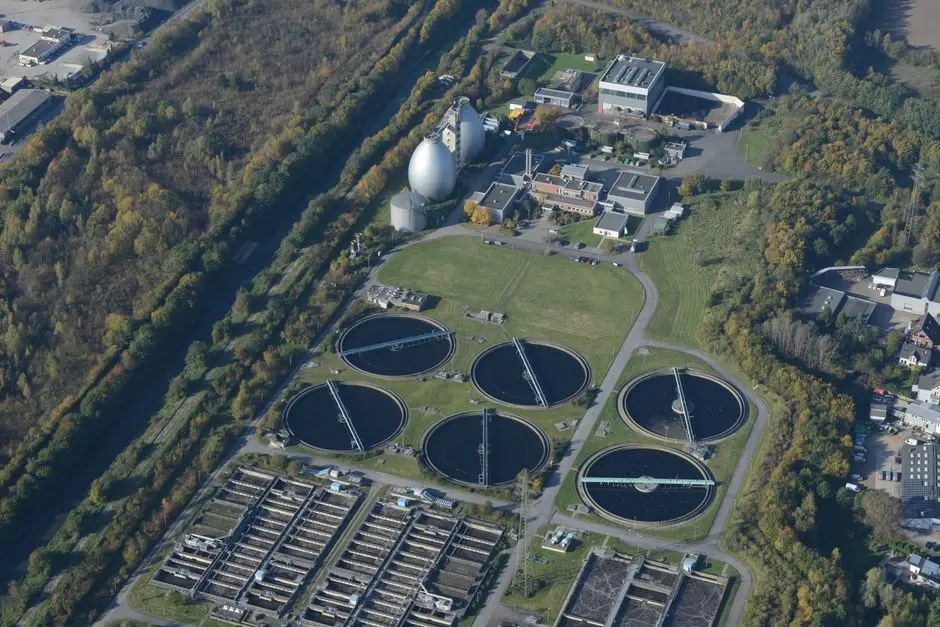
A 2026 treatment train for a 2,500–10,000 TCD mill is a four-stage sequence, and the RFQ must specify each stage by parameter — not by brand name. The first stage is pre-treatment: a rotary mechanical bar screen with 6–10 mm aperture to strip bagasse fiber (fiber loads of 200–600 mg/L are common), a grit chamber sized for 0.3 m/s horizontal velocity, and a DAF pre-treatment system for oil, grease, and colloidal TSS. DAF in this service typically removes 70–90% TSS and 50–80% O&G, dropping the TSS load on the anaerobic stage from 4,000 mg/L to 400–800 mg/L.
The second stage is anaerobic digestion in a UASB or EGSB reactor operated at 35–40 °C, hydraulic retention time 12–24 hours, and organic loading rate 8–15 kg COD/m³/day. For a 1,000 m³/day mill, that translates to a 500–800 m³ reactor producing 2,000–3,500 m³/day of biogas at 60–70% CH₄ — directly usable in the mill's boiler for steam generation. The third stage is aerobic polishing, almost always an MBR membrane bioreactor at HRT 8–12 hours followed by a submerged PVDF membrane at 0.1 μm nominal pore size. MBR reliably cuts effluent COD to 80–150 mg/L and TSS to under 10 mg/L, which is what makes the RO membrane in the next stage economically viable. A lamella clarifier inserted between the anaerobic and MBR stages is worth specifying on any mill with TSS above 2,000 mg/L after DAF — it cuts MBR fouling rate by roughly 30%.
The fourth stage splits into two paths depending on discharge rules. For land-discharge or surface-water-discharge mills, a sand filter plus activated carbon polisher brings the MBR effluent into reuse spec (TDS under 100 mg/L increment, COD under 50 mg/L) for boiler-feed or cooling-tower make-up. For ZLD sites — Maharashtra, Uttar Pradesh, Karnataka in India, plus most Vietnamese and Egyptian projects — the path runs RO concentrate to a mechanical vapor recompression (MVR) or multi-effect evaporator (MEE), then to a crystallizer for salt recovery. Mills crush only 150–200 days per year, so every tank and pipe in the train must be specified for idle-period preservation: sludge drawdown within 48 hours of the last crushing shift, membrane chemical preservation in 1% sodium bisulfite, and anaerobic reseeding protocol for the next season.
| Stage | Equipment | Design Parameter | Typical Performance |
|---|---|---|---|
| 1 — Pre-treatment | Bar screen + grit chamber + DAF | Screen 6–10 mm; DAF 25–40 m³/m²/h hydraulic | 70–90% TSS removal; 50–80% O&G removal |
| 2 — Anaerobic | UASB or EGSB | 35–40 °C; HRT 12–24 h; OLR 8–15 kg COD/m³/d | 60–80% COD removal; 2,000–3,500 m³ biogas/day (1,000 m³/d plant) |
| 3 — Aerobic / MBR | Activated sludge + PVDF membrane 0.1 μm | HRT 8–12 h; MLSS 8,000–12,000 mg/L | Effluent COD 80–150 mg/L; TSS under 10 mg/L |
| 4 — Polishing / ZLD | Sand + AC filter, or RO + MEE/crystallizer | RO recovery 65–75%; MEE steam 0.25–0.35 kg/kg water | Reuse-grade water; zero liquid discharge |
Technology Selection Matrix: DAF vs Anaerobic vs MBR vs ZLD
Procurement teams need a one-glance decision tool to match influent strength to the right technology stack, and the matrix below maps each stage against the parameters that actually drive capex and opex. None of these units stands alone on a sugar mill job — DAF is pre-treatment only, UASB handles the bulk organics, MBR polishes, and MEE only fires on the RO reject stream. The combination DAF + UASB + MBR is the default for discharge-compliant mills; add RO + MEE for ZLD sites.
| Technology | Influent COD range (mg/L) | Effluent COD (mg/L) | Footprint | Energy use (kWh/m³) | Indicative CAPEX (USD per m³/day) |
|---|---|---|---|---|---|
| DAF only | 500–6,000 | 400–1,500 (no BOD reduction) | Small (skid) | 0.05–0.10 | 40–80 |
| UASB / EGSB | 2,000–6,000 | 400–1,200 (60–80% removal) | Medium (tall reactor) | 0.05–0.15 (parasitic); net negative with biogas | 120–220 |
| MBR (post-anaerobic) | 100–800 | under 100 | Compact (60% smaller than CAS) | 0.40–0.80 | 180–320 |
| ZLD / MEE (RO reject) | Concentrate 5,000–15,000 | Zero liquid discharge | Large (evaporator + crystallizer) | 50–80 (thermal) | 250–450 per m³/day MEE capacity |
A lamella clarifier inserted before the MBR doubles as a TSS safety net and a sludge thickener, reducing MBR membrane cleaning frequency by 25–35% on high-TSS streams. For mills with seasonal crushing (150–200 days/year), the lamella also gives operators a place to dump wash-down surges without shocking the membranes.
2026 Cost Benchmarks: CAPEX, OPEX and ZLD Premium
2026 turnkey CAPEX for a sugar mill treatment train in India and Southeast Asia sits at USD 350–500 per m³/day for a baseline DAF + UASB + MBR configuration; adding a lamella clarifier and UF polishing pushes that to USD 600–900 per m³/day. These figures include civil, mechanical, electrical, instrumentation, and commissioning but exclude land and the in-mill piping tie-ins. A 2,500 TCD mill producing roughly 600–800 m³/day of effluent therefore lands at USD 210,000–720,000 for the biological train alone.
OPEX for a stable biological train runs USD 0.18–0.35 per m³ treated, dominated by aeration (45–55% of opex) and sludge handling (15–20%); chemical dosing, membrane cleaning, and labor make up the balance. The ZLD upgrade adds USD 250–450 per m³/day of MEE capacity and lifts opex by USD 0.40–0.80 per m³ because the multi-effect evaporator consumes 50–80 kWh of thermal energy per cubic meter of brine. The single biggest financial lever on a sugar mill project is anaerobic digester payback: biogas utilization at 6–8 kWh per kg of COD removed can offset 30–50% of total plant opex, and most Indian EPC contracts now require a boiler-fire guarantee on the biogas line.
Spare-parts cost is the line item procurement teams underestimate. DAF nozzles and recycle pumps typically need rebuild at 6,000–8,000 hours, MBR membrane replacement cycles 5–7 years on sugar mill duty (shorter if the pre-treatment is undersized), and MEE tube bundles scale out at 18–24 months without proper feed softening. The lamella clarifier OPEX guide and the broader 2026 industrial water reuse trends benchmark both contain cost data that should be in every sugar mill RFQ.
| Configuration | CAPEX (USD per m³/day) | OPEX (USD per m³) | Main OPEX driver |
|---|---|---|---|
| DAF + UASB + MBR (baseline) | 350–500 | 0.18–0.35 | Aeration 45–55% |
| DAF + UASB + MBR + lamella + UF | 600–900 | 0.25–0.45 | Membrane cleaning 20–30% |
| Baseline + RO + MEE (ZLD) | 850–1,200 | 0.60–1.10 | Thermal energy 55–65% |
How to Short-List a Sugar Mill Wastewater Treatment Plant Manufacturer
A five-point filter separates serious bidders from catalog resellers. First, the vendor must show at least three reference plants in sugar or distillery duty with operating data sheets — influent and effluent parameters, monthly biogas production, and membrane life history. Second, anaerobic and ZLD design must be in-house, not subcontracted to a third party that disappears after commissioning. Third, the vendor must commit to a pilot or jar test at the mill's actual 55–70 °C influent, not synthetic wastewater at 30 °C in a lab. Fourth, documented spare-parts logistics with a 48–72 hour response time SLA for critical items (DAF nozzles, MBR membrane modules, MEE tube bundles) and stocked spares within the country. Fifth, compliance certificates against CPCB, EPA, QCVN, or whichever standard the mill must meet — the certificate should name a specific consent order number, not a generic ISO 9001 claim.
Three warning signs disqualify a vendor fast: any proposal that offers only SBR or only conventional activated sludge for a 4,000+ mg/L COD stream (it will fail in the first week of crushing), any vendor who cannot produce a heat balance showing how the stream gets to under 40 °C, and any scope that excludes sludge dewatering — sugar mill biological sludge stabilizes at 1.5–2.5% solids and becomes an operational headache within a month if there is no dewatering unit. A plate and frame filter press cuts sludge volume by 80–85% to a 20–25% cake that can be co-fired in the bagasse boiler.
One practical step before signing any PO: require a 7-day on-site jar test and pilot at the actual influent. The cost is USD 2,000–5,000 and the test prevents the most common cause of budget overruns — equipment sized from a desktop characterization report that did not reflect real crusher-season swings. Pair the pilot with a chemical dosing trial using an automatic chemical dosing system sized for pH correction, coagulant, and antifoam — dosing accuracy directly determines whether the UASB granulates properly in the first 60 days.
Frequently Asked Questions
What is the typical COD of sugar mill wastewater? Combined effluent from a working sugar mill runs 2,500–6,000 mg/L COD and 1,500–4,500 mg/L BOD. The cooling tower blowdown stream alone is much weaker (COD 100–200 mg/L), and the imbibition and floor-wash stream is the strongest (COD 4,000–6,000 mg/L). Designing on the combined figure is correct, but the RFQ should require separate flow meters on each stream for the first 90 days of operation.
Can MBR alone treat sugar mill wastewater? No. An MBR rated for influent COD up to 800 mg/L will fail on a raw sugar mill stream above 2,500 mg/L because the membrane flux collapses under the solids and organic load. MBR is the right choice for the post-anaerobic polishing step, not the primary treatment. Standalone MBR is only viable on evaporator condensate or cooling-tower blowdown polishing.
What effluent COD limit applies to Indian sugar mills? CPCB GSR 35(E) 2024 sets 250 mg/L COD as the outer envelope for land disposal and 100 mg/L for discharge to inland surface water in most state boards; ZLD feed targets 50 mg/L COD to protect the RO membrane from organic fouling. Units in Maharashtra, Uttar Pradesh, and Karnataka already operate under consent orders that effectively mandate ZLD on new builds and major expansions.
Is ZLD mandatory for sugar mills? ZLD is mandatory in many Indian states for new distillery-adjacent sugar expansions and for any mill within a critical-pollution zone. It is voluntary but operationally recommended in Brazil (water-scarce regions like São Paulo state), Vietnam (QCVN enforcement is tightening on rice-and-sugar clusters), and Egypt (Law 4/1994 plus the 2025 cabinet ZLD roadmap for industrial clusters).
How much biogas does a sugar mill wastewater plant generate? A UASB reactor treating 1,000 m³/day of effluent at 4,000 mg/L COD generates 2,000–3,500 m³/day of biogas at 60–70% methane, which is roughly 12,000–22,000 kWh/day of thermal energy. Firing that into the mill's bagasse boiler offsets 30–50% of the wastewater plant's opex and reduces auxiliary diesel consumption during the crushing season.