Ultrafiltration System for Frozen Food Wastewater: 2026 Design Guide
Ultrafiltration (UF) systems for frozen food wastewater use 0.01–0.1 μm PVDF or PES membranes operated at 40–80 LMH flux with cross-flow velocities of 0.5–1.0 m/s, recovering 80–90% of feed as reusable process wash water while retaining proteins, emulsified oils and suspended solids. A properly designed UF train — preceded by dissolved air flotation (DAF) and followed by RO polishing — typically reduces COD by 85–95%, TSS to <5 mg/L and turbidity to <1 NTU, enabling compliance with China GB 18486, EU Regulation 852/2004 hygiene criteria, and US EPA 40 CFR Part 408 discharge limits.
Why Frozen Food Wastewater Defeats Conventional Treatment
Frozen vegetable, seafood and ready-meal effluent combines an organic load (BOD 800–3,500 mg/L, COD 1,500–6,000 mg/L) with operating temperatures of 5–15°C that suppress biological kinetics by roughly 50% compared to a 25°C mesophilic basin. Emulsified fats, oils and grease (FOG 100–600 mg/L) generated by defrosting, blanching and steam peeling form stable oil-in-water emulsions that resist gravity separation because droplet sizes sit in the 1–20 μm range — below the rise velocity threshold of API/CPI separators. Particulate and protein loading is highly seasonal, surging 3–5× during harvest campaigns for frozen pea, sweet-corn and berry lines, and again during white-fish and shrimp peaks for seafood processors.
Conventional primary clarification only removes 40–60% TSS in this matrix because the colloidal protein and emulsified oil fractions pass directly through the clarifier overflow (HydropureWater field data, 2026). Biological treatment downstream struggles to finish the job: low temperature cuts nitrification and COD removal rates, while emulsified FOG coats biomass and triggers foaming in aerobic basins. UF closes the gap by acting as a defined physical barrier — pore-size exclusion — rather than relying on settling velocity or biomass metabolism. The integrity of that barrier also has direct audit consequences: Antony et al. (Springer, 2019) showed that fiber breakage in UF modules directly reduces virus log-removal, which is the standard a food-grade UF system must defend in 2026 reuse-permit audits.
Ultrafiltration Mechanism and Membrane Selection for Food-Grade Effluent
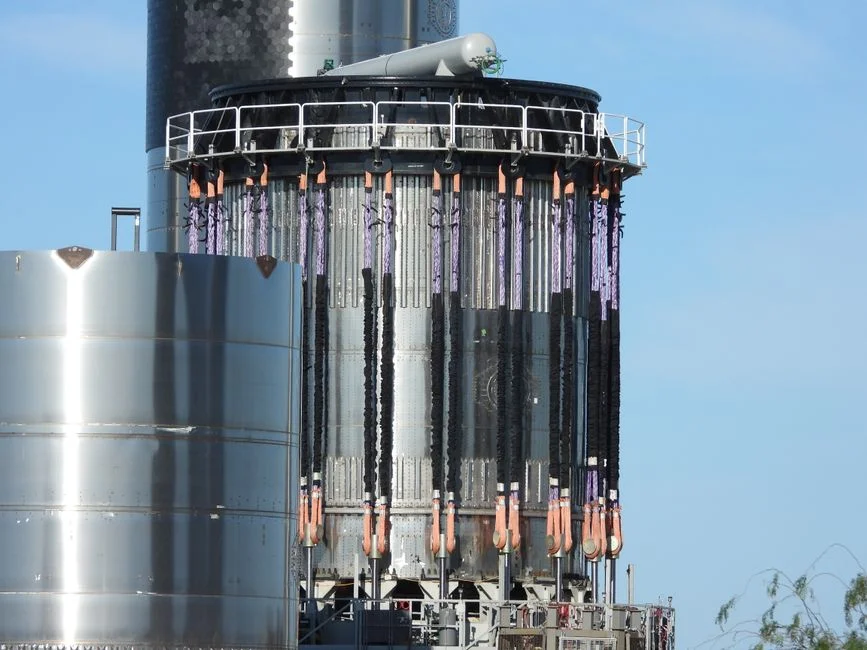
UF separates by size exclusion at 0.01–0.1 μm pore diameter, equivalent to roughly 10–300 kDa molecular weight cut-off (MWCO), with permeate driven by transmembrane pressure (TMP) of 0.5–2.0 bar across the membrane wall. Dissolved species below the MWCO pass with the permeate; proteins, emulsified oils, colloids and microorganisms are retained and concentrated in the reject stream.
PVDF hollow-fiber membranes are the 2026 default for food-grade UF installations: chlorine tolerance exceeds 50,000 ppm-hour, the operating pH window of 1–11 allows aggressive CIP chemistry, and continuous aeration scouring inside the fiber bundle controls fouling without chemical dosing. PES membranes offer tighter MWCO control (10–50 kDa) — useful when the design target is protein fractionation rather than bulk TSS removal — but PES is limited to roughly 2,000–5,000 ppm-hour chlorine tolerance, which caps CIP aggressiveness and shortens effective membrane life in high-fouling service. Hollow-fiber modules dominate frozen-food installations because of high packing density (up to 1,200 m² of membrane area per single skid) and the ability to backwash from the permeate side, which is essential for handling the 3–5× seasonal surges. Tubular UF (8–25 mm channel diameter) is reserved for effluent with FOG or fiber content above 500 mg/L TSS where hollow fibers would plug — this is the typical decision point for frozen seafood processors handling shrimp-shell fragments and fish-scale carryover.
| Membrane Type | Pore / MWCO | Chlorine Tolerance | pH Range | Best Fit in Frozen Food Service |
|---|---|---|---|---|
| PVDF hollow fiber | 0.02–0.1 μm / 100–300 kDa | >50,000 ppm·h | 1–11 | Frozen vegetable wash water; general FOG/TSS removal |
| PES hollow fiber | 0.01–0.05 μm / 10–50 kDa | 2,000–5,000 ppm·h | 2–10 | Protein recovery and tighter effluent polishing |
| PVDF tubular | 0.05–0.1 μm / 100–200 kDa | >50,000 ppm·h | 1–11 | Frozen seafood lines with shells, scales, fiber carryover |
| Ceramic UF | 0.01–0.05 μm | Unlimited (oxidizer-class) | 0–14 | High-temperature CIP (>80°C); premium CAPEX niche |
Feed Characterization and Pretreatment Chain for Frozen Food UF
The membrane datasheet only matters once the feed is characterized correctly. Required influent characterization covers TSS, FOG, BOD/COD, particle size distribution, temperature and pH — taken over at least one full production campaign so peak harvest loads and weekend clean-down spikes are captured, not just average weekday conditions. A frozen pea line that averages 1,200 mg/L COD at 12°C will hit 4,500 mg/L COD at 8°C during the August–September pea campaign, and the UF design must hold flux through both regimes.
The canonical pretreatment train in 2026 starts with a rotary bar screen for frozen food headworks — 2–3 mm aperture — to remove rags, fish scales, pea pods and vegetable debris that would puncture or blind UF fibers downstream. Dissolved air flotation ahead of UF is mandatory when FOG exceeds 100 mg/L: a well-tuned DAF removes 70–90% FOG and 60–80% TSS before the membrane, multiplying flux stability and extending CIP intervals from weeks to months. A DAF system for frozen food wastewater pretreatment also stabilizes the feed to UF, which is the single biggest lever for keeping TMP flat across a production shift. Equalization tanks sized for 24–48 h HRT dampen the 3–5× surge loads common in frozen vegetable and seafood plants, and inline basket strainers (500–1,000 μm) sit immediately upstream of the UF feed pump as the last line of defense against fiber carryover from the DAF stage. The full train in flow order: rotary screen → DAF → equalization → strainer → UF feed pump → UF module → backwash/CIP loop → permeate tank.
For readers sizing DAF on a comparable high-FOG food stream, the 2026 design logic for dairy effluent translates directly and is covered in detail in this DAF design for high-FOG food wastewater guide.
UF Process Design Parameters: Flux, Recovery, Backwash and CIP
Design flux for frozen-food UF sits in the 40–80 LMH envelope (liters per m² membrane area per hour). Operating above 80 LMH drives irreversible fouling within weeks, regardless of how aggressive the CIP program is; operating below 40 LMH over-sizes the skid and inflates CAPEX without proportional permeate quality gains. Cross-flow velocity is set to 0.5–1.0 m/s in the membrane loop — fast enough to scour the fiber surface, slow enough to stay inside the 0.3–0.6 kWh/m³ permeate specific-energy budget that determines OPEX. Recovery rate is held at 80–90% of feed as permeate; the 10–20% concentrate is bled to sludge handling or returned upstream for blending back into the equalization tank.
Backwash cycles run on a permeate + air-scour sequence every 20–60 minutes. Chemically enhanced backwash (CEB) with NaOCl at 100–500 ppm is triggered every 1–3 days to keep the membrane's normalized permeability inside ±10% of its clean-water baseline. Full CIP — NaOH at pH 11–12 followed by citric acid at pH 2, each soak 30–90 minutes at 30–35°C — is initiated every 1–3 months, or when normalized permeability drops 15–20% from baseline. The integrity test that defends the whole design is the pressure decay test (PDT) per module: a target of <0.1% pressure drop over 5 minutes at 0.2–0.3 bar. Antony et al. (Springer, 2019) showed that even small fiber breaches collapse virus log-removal, so PDT frequency should be weekly on food-grade reuse systems. Real-time TMP, flux and permeability trending — wired into the plant SCADA via the online monitoring for food wastewater UF systems stack — is what catches a 3% permeability drift before it becomes a CIP event.
| Parameter | Design Value | Operating Limit / Trigger |
|---|---|---|
| Design flux | 40–80 LMH | >80 LMH = irreversible fouling risk |
| Cross-flow velocity | 0.5–1.0 m/s | Specific energy 0.3–0.6 kWh/m³ permeate |
| Recovery | 80–90% | Concentrate bleed 10–20% |
| TMP | 0.5–2.0 bar | Clean baseline; >2.5 bar triggers CIP |
| Backwash cycle | Every 20–60 min (permeate + air) | CEB every 1–3 days, NaOCl 100–500 ppm |
| CIP frequency | Every 1–3 months | Trigger: normalized permeability −15–20% |
| Integrity (PDT) | <0.1% pressure decay / 5 min | Test weekly on reuse systems |
For the OPEX line items behind these parameters — chemical consumption, membrane replacement cadence and consumables pricing in 2026 — the UF membrane replacement and CIP cost benchmark article gives a full breakdown.
Compliance Targets: 2026 Discharge and Reuse Limits for Frozen Food Plants
The 2026 compliance envelope for a frozen food UF system depends on whether the permeate is discharged to sewer/water body or reused in-process. China GB 18486-2001 and updated 2026 provincial standards for food processing set direct-discharge limits at COD ≤100 mg/L, BOD₅ ≤30 mg/L, SS ≤70 mg/L and FOG ≤10 mg/L. EU Regulation (EC) 852/2004 on food hygiene plus 91/271/EEC on urban wastewater treatment require effluents from food-handling premises to be hygienically equivalent to municipal discharge standards before they enter the sewer — the practical reading is BOD₅ ≤25 mg/L, COD ≤125 mg/L and TSS ≤35 mg/L. US EPA 40 CFR Part 408, Subpart A (frozen fruits and vegetables) and Subpart B (frozen seafood), sets BOD₅ 26 mg/L daily max, TSS 27 mg/L daily max and pH 6.0–9.0 for direct discharge.
UF permeate quality — TSS <1 mg/L, turbidity <0.5 NTU, FOG below detection — clears all three direct-discharge bars without RO polishing. For in-plant reuse as wash water, UF permeate also cuts freshwater draw by 40–70%, and when reuse is the goal an RO stage after UF reduces SDI to <2 and pulls conductivity below 50 μS/cm for boiler feed or CIP make-up. The compliance snapshot:
| Parameter | China GB 18486 (direct) | EU 852/2004 + 91/271/EEC | US 40 CFR Part 408 | UF Permeate (typical) |
|---|---|---|---|---|
| COD | ≤100 mg/L | ≤125 mg/L | — | 30–90 mg/L |
| BOD₅ | ≤30 mg/L | ≤25 mg/L | 26 mg/L daily max | 5–15 mg/L |
| TSS | ≤70 mg/L | ≤35 mg/L | 27 mg/L daily max | <1 mg/L |
| FOG | ≤10 mg/L | — | — | <2 mg/L |
| pH | 6–9 | — | 6.0–9.0 | 6.5–7.5 |
2026 Cost Benchmark: CAPEX, OPEX and ROI for a Frozen Food UF System
Turnkey CAPEX for a 500 m³/day DAF + UF system in 2026 sits in the USD 380K–720K range including civil works, DAF, UF skid, dosing skids, automation and commissioning; the spread is driven mostly by automation level and whether the UF skid is pre-engineered or site-built. Membrane replacement cost is USD 35–60/m² for PVDF hollow fiber at 2026 pricing, with a 5–7 year service life — for a 600 m² system that works out to USD 21K–36K per replacement cycle. CIP chemical OPEX runs USD 0.04–0.08/m³ treated, dominated by NaOH, citric acid and NaOCl consumption; energy OPEX sits at 0.3–0.6 kWh/m³, which at 2026 industrial tariffs translates to roughly USD 0.03–0.07/m³.
The financial case for UF is built on water reuse. In-plant reuse of UF permeate typically saves USD 0.50–1.20/m³ of freshwater intake (HydropureWater field data, 2026), so a 500 m³/day plant operating 300 days/year can recover USD 75K–180K annually. Payback on the UF CAPEX lands at 2.5–4.5 years for plants running more than 300 days/year, which is the norm in frozen vegetable and seafood facilities with double-shift production. The hidden cost line item is labor: 0.5–1.0 FTE for monitoring, sampling and CIP cycles — in small plants without shift operators this can exceed the chemical OPEX line, which is why skid-mounted UF with automated CIP is worth the 10–15% CAPEX premium.
| Cost Line | 2026 Value (500 m³/day, DAF + UF) | Notes |
|---|---|---|
| Turnkey CAPEX | USD 380K–720K | Includes civil, DAF, UF, dosing, automation |
| Membrane replacement | USD 35–60/m² | 5–7 year PVDF hollow-fiber life |
| CIP chemical OPEX | USD 0.04–0.08/m³ | NaOH + citric acid + NaOCl |
| Energy OPEX | 0.3–0.6 kWh/m³ (USD 0.03–0.07/m³) | Cross-flow pump dominates |
| Freshwater savings | USD 0.50–1.20/m³ | Drives 2.5–4.5 yr payback |
| Labor | 0.5–1.0 FTE | Often exceeds chemical OPEX in small plants |
Frequently Asked Questions
What pore size UF membrane is best for frozen food wastewater?
A 0.02–0.05 μm PVDF hollow-fiber membrane (100–300 kDa MWCO) is the 2026 default — it removes >99% of TSS, turbidity to <0.5 NTU and all emulsified FOG, while tolerating the 50,000 ppm·h chlorine exposure of routine CIP. Tighter PES at 10–50 kDa is justified only when protein fractionation, not bulk TSS removal, is the design driver.
Can UF replace DAF in a frozen vegetable plant?
No. DAF removes 70–90% of FOG and 60–80% of TSS upstream, which keeps UF flux stable and extends CIP intervals from weeks to months. Skipping DAF forces the UF membrane to absorb the full oil and protein load, which collapses flux within one production shift and roughly doubles membrane replacement cost over the asset life.
How often should UF membranes be cleaned in a frozen seafood plant?
Backwash every 20–60 minutes, CEB with 100–500 ppm NaOCl every 1–3 days, and full CIP every 2–6 weeks — tighter than for frozen vegetable service because of fish-scale, shell fragment and blood-protein fouling. Trigger CIP when normalized permeability drops 15–20% from clean-water baseline.
What is the CAPEX of a 500 m³/day UF system for frozen food wastewater in 2026?
USD 380K–720K turnkey including DAF pretreatment, UF skid, dosing, automation and commissioning (HydropureWater field data, 2026). Adding RO polishing for closed-loop reuse adds roughly USD 180K–320K to the same envelope.
Is UF permeate safe for reuse as wash water in a food processing plant?
Yes — UF permeate at <1 mg/L TSS, <0.5 NTU turbidity and no detectable FOG meets hygienically-equivalent-to-municipal criteria under EU 852/2004 and exceeds US 40 CFR Part 408 and China GB 18486 discharge bars. Weekly pressure-decay testing per module is required to defend the log-removal credit in 2026 reuse-permit audits.