Why Hospital Wastewater in Douala Demands Specialized Treatment
Drug-resistant Pseudomonas aeruginosa has been isolated from hospital effluent in both Douala and Yaoundé and is reaching the shallow Wouri alluvial aquifer, according to the 2024 groundwater vulnerability study published in the Cameroon context. In parallel, the 2024 Acta Scientific assessment of Douala health facilities documented that 13.3% of facilities still practise uncontrolled decentralised incineration of infectious solid hospital waste (ISHW), while only 0.8% operate controlled incineration — a clear signal that the liquid waste stream is being handled with the same level of informality. Treating hospital sewage as ordinary domestic wastewater is therefore a documented public-health risk, not a theoretical one.
Typical Douala hospital influent runs much hotter and more concentrated than domestic sewage: COD 400–1 500 mg/L, BOD₅ 150–600 mg/L, TSS 200–600 mg/L, NH₃-N 20–80 mg/L, and fecal coliforms at 10⁶–10⁸ CFU/100 mL. The pharmaceutical load is equally distinctive: the 2019 Springer survey of Central and Eastern European hospital wastewaters measured cotinine up to 6 700 ng/L and sulfamethoxazole up to 1 500 ng/L — representative concentration bands that any Douala teaching hospital will match or exceed given comparable prescribing patterns. The equatorial climate adds two opposing effects: influent at 26–32 °C accelerates biological kinetics, but the same temperature window favours pathogen survival, and rainy-season surges routinely push hydraulic loading to 2–3× the daily average. Compliance is anchored in Article R.111-2 of Law 96/12 and MINEPD Order No. 00005/MINEPD, which set binding discharge limits for healthcare facilities. For engineers retrofitting existing plants or sizing new ones, the same tropical-climate hospital wastewater design constraints that shape Malaysian hospital plants apply — high temperature, monsoon surges, and intermittent grid power — but with the added burden of groundwater contamination risk.
Douala and Cameroonian Discharge Standards for Medical Effluent
MINEPD Order No. 00005 and the MOH health-facility sanitation code set the following binding effluent limits for any hospital discharging to surface water, a stormwater drain, or an on-site soakaway in Cameroon: BOD₅ ≤ 50 mg/L, COD ≤ 120 mg/L, TSS ≤ 50 mg/L, pH 6.0–9.0, NH₃-N ≤ 10 mg/L, total residual chlorine 0.5–1.5 mg/L, and fecal coliform ≤ 1 000 CFU/100 mL. These limits are noticeably more permissive than the older GB18466-2005 thresholds cited in the Scientific.Net hospital wastewater studies (BOD₅ 30 mg/L, COD 60 mg/L, SS 20 mg/L), but they are also incomplete: there is no numerical limit for pharmaceutical residues or antibiotic-resistant bacteria. Because the Douala/Yaoundé groundwater study showed resistant organisms reaching shallow wells, designers should target a 3-log reduction of indicator bacteria and explicit removal of resistant P. aeruginosa rather than relying on a coliform count alone.
WHO's 2006 Safe Management of Wastes from Health-Care Activities guidance is the second reference frame, recommending a multi-barrier approach (pretreatment → biological → disinfection) for any facility generating > 50 L/day of infectious wastewater. Section 7 of MINEPD Order 00005 reinforces this by requiring that infectious waste streams (pathology, isolation wards, CSSD condensate) be pretreated before combining with general hospital sewage. The table below sets the Cameroonian limits next to the Chinese GB18466-2005 and WHO values so the design engineer can see where local regulation is tighter and where it is silent.
| Parameter | MINEPD/MOH (Cameroon) | GB18466-2005 (China) | WHO 2006 guidance |
|---|---|---|---|
| BOD₅ | ≤ 50 mg/L | ≤ 30 mg/L | Site-specific, target ≤ 50 mg/L |
| COD | ≤ 120 mg/L | ≤ 60 mg/L | — |
| TSS / SS | ≤ 50 mg/L | ≤ 20 mg/L | — |
| NH₃-N | ≤ 10 mg/L | ≤ 15 mg/L | — |
| pH | 6.0–9.0 | 6.0–9.0 | — |
| Fecal coliform | ≤ 1 000 CFU/100 mL | ≤ 500 CFU/L (total coliform) | Drinking-source protection: 0 CFU/100 mL |
| Total residual chlorine | 0.5–1.5 mg/L | — | ≥ 0.5 mg/L after 30 min contact |
| Pharmaceutical residues / ARB | Not numerically limited | Not limited | Recommend ≥ 3-log ARB reduction |
The Process Train: Equalization → Biology → MBR → Disinfection
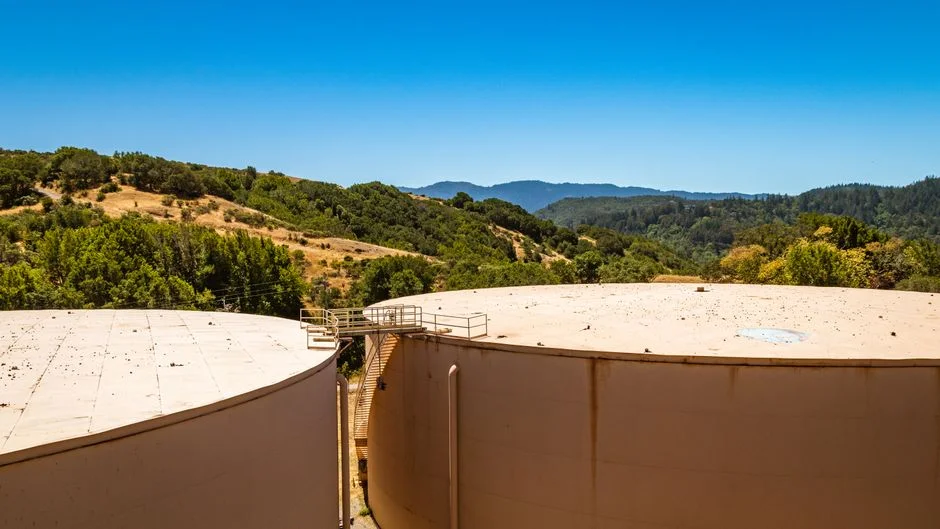
A four-barrier train — fine screening, equalization, biological treatment (A/O or MBR), and chlorine-dioxide disinfection — covers roughly 95% of Douala hospital plants between 20 and 500 beds. The first barrier is a GX rotary bar screen at 3–5 mm aperture to strip gauze, swabs, and CSSD lint before they enter the biology; downstream of the screen, an equalization tank at 8–12 h HRT absorbs the spikes from surgical suites, laundry discharge, and the morning outpatient surge. Without equalization, the biological stage will be under-fed at noon and over-loaded at 07:00 — a common cause of permit excursions in Cameroonian district hospitals.
Stage 2 is the A/O (anoxic–aerobic) biological step, typically delivered as a buried WSZ underground A/O package plant for sites with limited footprint. Design parameters that consistently clear the MINEPD BOD₅ and NH₃-N limits are HRT 6–10 h, SRT 15–25 d, MLSS 3 000–5 000 mg/L, dissolved oxygen 1.5–2.5 mg/L in the aerobic zone, and F/M 0.08–0.15 kg BOD/kg MLSS·d. With these settings the A/O stage removes 90–95% of BOD₅ and 80–90% of COD, which is sufficient for district hospitals discharging to a municipal sewer.
For facilities above 200 beds — and for any hospital discharging to a surface water body or near the Wouri alluvial zone — Stage 3 adds an MBR. The reference Scientific.Net study of a 200 m³/d Chinese hospital plant (biological contact oxidation + MBR + NaOCl) reported COD < 50 mg/L, NH₃-N < 10 mg/L, and no detectable total or fecal coliform in the permeate. Translating that to a Douala design, an integrated MBR system with DF series PVDF flat-sheet MBR modules at 0.1 μm rating, flux 15–25 L/m²·h, and mixed-liquor SS 8 000–12 000 mg/L will produce a filtrate with SS < 5 mg/L and turbidity < 1 NTU. The MBR also removes the secondary clarifier, which is a significant footprint saving on tight Douala hospital sites.
Stage 4 is disinfection, and for hospital effluent the choice is not "to chlorinate or not" but "which oxidant." Sodium hypochlorite works but forms trihalomethanes and other chlorinated by-products when it contacts pharmaceutical residues. A chlorine dioxide generator dosed at 1.5–3.0 mg/L active ClO₂ with 30–60 min contact time inactivates antibiotic-resistant bacteria more effectively at equal dose and oxidises sulfamethoxazole, tramadol, and ranitidine-type residues without generating the same chlorinated by-product spectrum. The 2019 Springer study confirmed that all AOPs tested (modified Fenton, BDDE, ferrate(VI)) achieved complete removal of resistant bacteria; ClO₂ sits in the same oxidant class for this duty. Sludge is wasted from the MBR or A/O tank to a plate-and-frame filter press for dewatering to ≥ 22% DS before disposal. The full flow is therefore: raw sewage → bar screen → equalization → anoxic zone → aerobic zone → MBR tank (optional) → ClO₂ contact tank → discharge chamber → sludge holding → filter press.
| Stage | Equipment | Key design parameter | Target removal |
|---|---|---|---|
| 1. Screening | GX rotary bar screen, 3–5 mm | Headloss ≤ 0.3 m at peak | Solids, lint, gauze |
| 2a. Equalization | Buffer tank, mixer | HRT 8–12 h | Flow & load dampening |
| 2b. A/O biology | WSZ package, buried | HRT 6–10 h, SRT 15–25 d, MLSS 3 000–5 000 mg/L | BOD₅ 90–95%, COD 80–90% |
| 3. MBR (optional) | DF PVDF 0.1 μm flat sheet | Flux 15–25 L/m²·h, MLSS 8 000–12 000 | SS < 5 mg/L, no detectable coliform |
| 4. ClO₂ disinfection | ClO₂ generator | Dose 1.5–3.0 mg/L, contact 30–60 min | ARB inactivation, micro-pollutant oxidation |
| 5. Sludge | Plate-and-frame press | Cake ≥ 22% DS | Class B biosolids for co-disposal |
Matching the System to Hospital Size in Douala
The right configuration in Douala is set by bed count, water-use per bed, available footprint, and discharge destination. The Cameroonian water-use benchmark is 250–400 L/bed·d for general wards and up to 600 L/bed·d when surgical theatre, CSSD, and laundry are included, with a peak factor of 1.8–2.2 over the 24-hour average. Apply that multiplier before sizing equalization, otherwise the morning peak will scour biology and the evening trough will starve it.
A small clinic (10–30 beds, 5–10 m³/d) is best served by the medical wastewater system for small Douala clinics: a self-contained cabinet with built-in ozone, roughly 0.5 m² footprint, no chemical dosing, and a plug-and-play install. It suits dental clinics, veterinary hospitals, and polyclinics with no on-site operator. A district hospital of 50–150 beds (20–60 m³/d) sits in the sweet spot for the WSZ-A/O package plant: a single buried unit, fully automatic, no dedicated operator, optional solar/battery buffer for the frequent Douala grid outages, and a civil-works footprint that fits inside most existing hospital service yards. A regional or teaching hospital of 200–500 beds (80–200 m³/d) needs containerized MBR plus ClO₂, with two parallel MBR trains for redundancy during membrane CIP, a multi-media pre-filter ahead of the membranes, and a plate-and-frame sludge dewatering line. Hospitals in this bracket are the ones that should also budget for AOP polishing — the Springer (2019) finding that combined AOP or BDDE can remove > 90% of micropollutants and all resistant bacteria is most relevant where the plant is within 1 km of a shallow well or discharges toward the Wouri alluvial zone. The table below summarises the three tiers with their reference equipment and CAPEX envelope.
| Hospital tier | Beds | Flow (m³/d) | Recommended system | Footprint (m²) | Operator |
|---|---|---|---|---|---|
| Small clinic / polyclinic | 10–30 | 5–10 | Compact medical wastewater system with built-in ozone | ~ 0.5 | None |
| District hospital | 50–150 | 20–60 | WSZ-A/O package, buried | 15–40 | Part-time / duty |
| Regional / teaching hospital | 200–500 | 80–200 | Containerized MBR + ClO₂ + filter press | 80–200 (containers + civil) | 1 shift operator, 24/7 |
Douala-Specific Design Considerations
Douala imposes four operational constraints that a generic tropical design does not capture. First, grid instability: ENEO outage data and operator surveys in the Littoral region put average mains failure at 4–8 hours per week, with longer events during the March–May rainy season. Specify the biological blower, dosing pumps, MBR permeate pumps, and PLC on a UPS with auto-restart, and size the standby generator to 15–20 kVA at running load (not peak) for a 100-bed class plant. Second, salinity intrusion: Douala's coastal aquifers push influent chloride to 250–500 mg/L in dry-season low-flow periods. Specify 316L stainless for the bar screen frame and fasteners, and select brackish-rated MBR membranes if total dissolved solids exceed 1 500 mg/L — standard PVDF tolerates this but its lifespan drops from 5–7 years to 3–4 years. Third, hospital biosolids are class B under MINEPD terms and must be stabilised before co-disposal with municipal sludge or on-site incineration; the sludge dewatering cost strategies reference applies directly, with a plate-and-frame press to ≥ 22% DS the standard target. Fourth, operator capacity is thin: a 24/7 hospital plant in Douala typically runs on a single trained shift operator, so the PLC must run unattended, log trends, and push SMS alarms over the local mobile network. Sampling for compliance follows MINEPD practice: monthly composite at the discharge chamber plus quarterly groundwater monitoring at the nearest shallow well, both required under Article R.111-2 of the Environment Law.
CAPEX and OPEX Estimates for Douala Hospital Plants
Budget envelopes for Douala in 2026, anchored to factory FOB pricing with CEMAC-region delivery markup: small clinic 5–10 m³/d at equipment CAPEX 8 000–18 000 USD (≈ 4.8–10.8 million XAF) and OPEX 0.6–1.0 USD/m³; district hospital 20–60 m³/d at 35 000–90 000 USD (≈ 21–54 million XAF) and OPEX 0.4–0.7 USD/m³; regional/teaching hospital 80–200 m³/d at 150 000–400 000 USD (≈ 90–240 million XAF) and OPEX 0.3–0.6 USD/m³ with MBR membrane replacement amortized over 5–7 years. Civil works in Douala typically add 30–50% of equipment CAPEX for district plants and 40–60% for MBR plants because of the container plinths, sludge tank, and discharge chamber; local EPC delivery adds another 18–25% over factory FOB for transport, customs (CEMAC duty regime), installation, and commissioning. The three OPEX cost drivers that dominate the 10-year lifecycle are membrane module replacement (counted as OPEX per O&M industry standard), ClO₂ precursor chemical, and standby power fuel; for MBR plants the membrane replacement line alone can be 25–35% of annual OPEX, so a realistic 10-year LCC should be requested from any bidder. A useful cross-check is the UF/MBR cost sizing guide for 2026 economics, plus a vendor commitment on membrane module unit price over the 5–7 year horizon.
| Plant size | Flow (m³/d) | Equipment CAPEX (USD) | Equipment CAPEX (XAF, million) | OPEX (USD/m³) | Civil & EPC adders |
|---|---|---|---|---|---|
| Small clinic | 5–10 | 8 000–18 000 | 4.8–10.8 | 0.6–1.0 | 20–30% of CAPEX |
| District hospital | 20–60 | 35 000–90 000 | 21–54 | 0.4–0.7 | 30–50% of CAPEX |
| Regional / teaching | 80–200 | 150 000–400 000 | 90–240 | 0.3–0.6 | 40–60% of CAPEX |
Compliance Checklist and Decision Framework
Decision rule for the procurement team: fewer than 30 beds and below 10 m³/d → compact medical wastewater system with built-in ozone; 30–150 beds → WSZ-A/O package plant (buried) with ClO₂ polishing; more than 150 beds, or any plant discharging to a surface water body or within 1 km of a shallow well → containerized MBR plus ClO₂. Add AOP polishing if the hospital is in the Wouri alluvial zone, within 1 km of a shallow drinking-water well, or has confirmed multiresistant organisms in its effluent (Springer 2019 and the Douala/Yaoundé groundwater study are the two references behind this trigger). The pre-handover checklist is short and absolute: MINEPD discharge permit certificate, operator HSE training certificate, calibration certificate for online pH and residual chlorine meters, sludge disposal contract with a licensed hauler, MOH sanitation sign-off, and a baseline groundwater survey at the nearest shallow well.
| Bed count | Flow (m³/d) | Recommended configuration | AOP polishing needed? |
|---|---|---|---|
| < 30 | < 10 | Compact medical wastewater system with ozone | No |
| 30–150 | 20–60 | WSZ-A/O package + ClO₂ | Only if within 1 km of shallow well |
| 150–500 | 60–200 | Containerized MBR + ClO₂ + filter press | Yes if Wouri alluvial zone or surface-water discharge |
Frequently Asked Questions
What does a MINEPD discharge permit cost for a hospital in Douala? Permit fees for healthcare-facility discharge in Cameroon are set by MINEPD Order and scale with the design flow; for a 50–150 bed district hospital, budget 1.5–3.0 million XAF (≈ 2 500–5 000 USD) for application, site inspection, and the first-year certificate, with annual renewal at roughly 30% of the initial fee.
When should a Douala hospital choose MBR over a conventional A/O package? Above 150 beds, or whenever the plant discharges to a surface water body or sits within 1 km of a shallow well — the 0.1 μm MBR membrane delivers SS < 5 mg/L and complete coliform capture, which the A/O alone cannot meet consistently under MINEPD Order 00005.
Does chlorine dioxide actually remove antibiotic-resistant bacteria better than NaOCl? At equal active dose (1.5–3.0 mg/L) and 30–60 min contact, ClO₂ achieves higher inactivation of resistant P. aeruginosa and avoids the trihalomethane and chloramine by-products that NaOCl forms when it contacts pharmaceutical residues like sulfamethoxazole and ranitidine.
What is the realistic 2026 CAPEX for a 100-bed Douala hospital plant? Equipment CAPEX of 35 000–90 000 USD (≈ 21–54 million XAF) for an A/O package with ClO₂, plus 30–50% civil works and 18–25% local EPC markup under the CEMAC duty regime, giving an all-in delivered cost in the 55 000–130 000 USD range.