Why Chittagong Buyers Need a Specialist Sewage Treatment Plant Supplier in 2026
Bangladesh Department of Environment (DoE) Schedule-10 industrial discharge limits — BOD ≤30 mg/L, COD ≤250 mg/L, TSS ≤100 mg/L, pH 6–9, oil & grease ≤10 mg/L (per ECR 1997 with 2022 amendments) — define a compliance floor that no Chittagong factory can ignore, and the supplier that engineers the plant determines whether the floor is met or breached. A failed DoE inspection triggers a Section 6 shutdown order under ECR 1997, immediate export-buyer audit risk for H&M, Inditex, and other ZDHC-mandated brands, and a re-commissioning cycle that typically costs 2–3× the original CAPEX. The compliance risk is the dominant variable, not the equipment sticker price.
Chittagong's wastewater is unusually demanding. Karnaphuli river tidal saline intrusion pushes influent chloride to 500–3,000 mg/L during the dry season (per 2024–2025 BWDB salinity monitoring transects), which kills standard MBR biofilms and corrodes stainless diffusers in months. Monsoon peak flow runs 3–4× design average from June to September. CEPZ and Karnaphuli Export Processing Zone plants stack garment, textile, steel, and tannery loads into a single outfall, so the STP must absorb BOD swings of 600–2,400 mg/L and intermittent heavy-metal slugs. Per Flottweg's published sizing logic, aerobic activated sludge remains suited to municipal-scale plants up to 30,000 PE, but most Chittagong industrial buyers sit at 10–2,000 m³/day, where MBR or MBBR train on a smaller footprint and a tighter effluent envelope. Selecting a wastewater treatment plant supplier in Saudi Arabia buyer's guide benchmark applied to a port city like Chattogram is useful only as a reference; the saline, monsoon, and DoE overlay is Chittagong-specific.
5 Supplier Archetypes Serving the Chittagong Market Today
Chittagong buyers in 2026 typically shortlist across five vendor archetypes, and each archetype fits a different plant size, compliance burden, and CAPEX ceiling. Mapping the field up front saves 4–6 weeks of wasted RFQ cycles.
| Archetype | Typical Strength | Typical Weakness | Best Fit in Chittagong |
|---|---|---|---|
| Local Bangladeshi EPCs (e.g., Desh Upodesh, Thermax-BD partners) | Civil works, regulatory paperwork, local workforce | Limited membrane or advanced-aeration engineering | Concrete-tank CAS, 500–5,000 m³/day municipal-style industrial plants |
| Indian OEMs exporting via Petrapole/Benapole | Competitive MBBR pricing, 8–12 week lead time | Weak Chittagong port logistics, often no saline-tolerance data | Small/medium garment and food plants 20–500 m³/day |
| Chinese OEMs shipping containerized plants via Chattogram | Skid-mounted MBR/MBBR, 6–10 week lead time, factory FAT documented | Variable after-sales presence in BD | 10–2,000 m³/day mid-market industrial STP, the dominant Chittagong segment |
| European turnkey (Veolia, SUEZ regional partners) | H&M/Inditex Tier-1 audit-ready, ZDHC compliance | Premium CAPEX, 4–6 month lead time | Tier-1 brand suppliers with full ZDHC MRSL requirements |
| Local system integrators reselling imported components | Lowest bid price, fast response | No engineering team, no performance guarantee | Generally disqualified — high risk on 5-year lifecycle |
The mid-market segment (10–2,000 m³/day) where most Chittagong factories sit maps directly to Chinese-OEM containerized plants such as the WSZ series underground integrated sewage treatment plant in the 1–80 m³/h (24–1,920 m³/day) range. Indian exporters like Neotech Water Solutions cover MBBR, portable, and containerized formats, useful for small buyers, but few publish saline-tolerance data. Bangladesh bank-import LC requirements (per Bangladesh Bank FE Circular 32, 2024) now favor suppliers with documented Chattogram Port clearance history, so filter by shipping track record before catalog.
Process Technology Comparison: MBR vs MBBR vs SBR vs Conventional Activated Sludge for Chittagong Influent
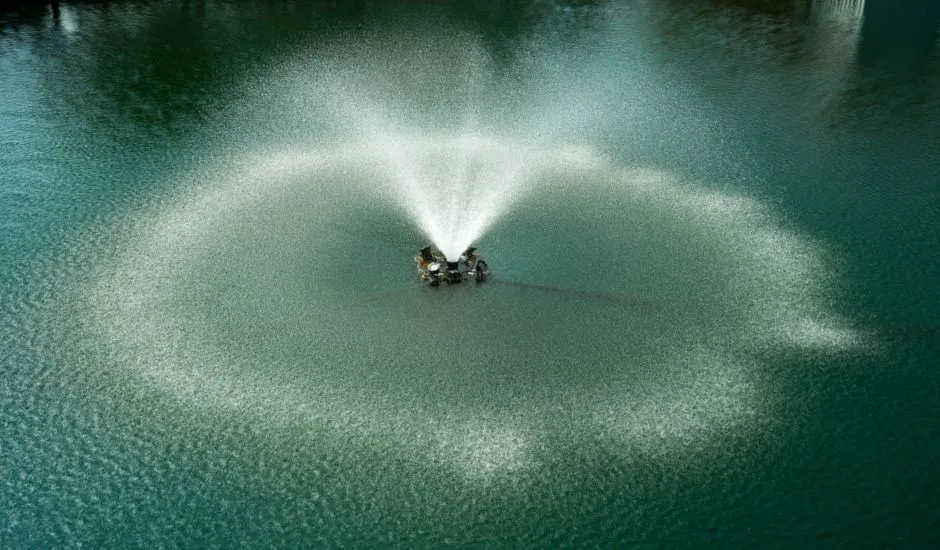
The single biggest procurement mistake is letting the supplier pick the process train. Chittagong's saline, high-temperature, variable-strength influent punishes a generic CAS specification, so the buyer should fix the process first and the vendor second.
| Parameter | MBR (Membrane Bio-Reactor) | MBBR (Moving Bed Biofilm Reactor) | SBR (Sequencing Batch Reactor) | Conventional Activated Sludge (CAS) |
|---|---|---|---|---|
| Influent COD tolerance | Up to 8,000 mg/L (with equalization) | Up to 5,000 mg/L | Up to 4,000 mg/L | Up to 2,500 mg/L |
| Effluent BOD / COD / TSS | <5 / <30 / <2 mg/L | <10 / <60 / <15 mg/L | <15 / <80 / <20 mg/L | <20 / <100 / <30 mg/L |
| Saline tolerance (Cl⁻ mg/L) | <2,000 without RO pre-treatment | 1,500–3,000 mg/L well tolerated | <1,500 mg/L | <1,000 mg/L |
| Footprint vs CAS | 40% (60% smaller) | 50–70% | 80% | 100% (baseline) |
| CAPEX (USD/m³/day, 2026) | $450–$900 containerized | $300–$650 containerized | $400–$750 | $350–$700 concrete-tank |
| OPEX (USD/m³ treated, 2026) | $0.18–$0.35 (membrane-driven) | $0.08–$0.18 | $0.12–$0.22 | $0.10–$0.20 |
| Operator skill required | Medium (membrane CIP, MLSS control) | Low–Medium | High (cycle timing, decanters) | Medium (sludge wasting, RAS) |
For Chittagong garment and textile plants, the HydropureWater MBR membrane bioreactor wastewater treatment system is best specified with chloride pre-treatment (sea-water-resistant diffusers, dose-controlled anti-scalant) and a flat-sheet MBR module. Flat-sheet modules such as the DF series deliver 0.1 μm nominal pore, 32–135 m³/day per module, and 10–20× lower energy than cross-flow tubular designs (per HydropureWater 2026 module datasheet) — quantified specs a buyer should demand in writing. MBBR is the default for saline Chittagong influent because biofilm carriers handle 1,500–3,000 mg/L chloride without membrane fouling. SBR fits <500 m³/day batch-dye CEPZ loads where the operator can run timed cycles. CAS remains a budget option for large municipal-style plants only.
Bangladesh DoE Schedule-10 Compliance Checklist Every Chittagong Bid Must Meet
Attach this checklist verbatim to your RFQ. Any supplier that hesitates on third-party lab verification is automatically down-scored in the matrix.
| Parameter | DoE Schedule-10 Limit (Industrial Discharge) | Test Method | Supplier Must Guarantee? |
|---|---|---|---|
| BOD (3-day, 27°C) | ≤30 mg/L | APHA 5210 B | Yes |
| COD | ≤250 mg/L | APHA 5220 B (closed reflux) | Yes |
| TSS | ≤100 mg/L | APHA 2540 D | Yes |
| pH | 6.0–9.0 | APHA 4500-H⁺ | Yes |
| Oil & Grease | ≤10 mg/L | APHA 5520 B | Yes |
| Total Nitrogen | ≤50 mg/L (amended 2022) | APHA 4500-N | Yes |
| Total Phosphorus | ≤10 mg/L (amended 2022) | APHA 4500-P | Yes |
| Fecal Coliform (food/bev only) | ≤100 MPN/100 mL | APHA 9221 | Conditional |
| Total Chromium | ≤0.5 mg/L (2022 amend.) | APHA 3111 B | Yes (tannery/steel) |
| Cr⁶⁺ | ≤0.1 mg/L (2022 amend.) | APHA 3500-Cr | Yes (tannery/steel) |
Require a 7-day composite sampling protocol post-commissioning, with verification from a DoE-recognized third-party lab (SGS Chattogram, Bureau Veritas Bangladesh, or Intertek Dhaka). The DoE 2022 amendment tightened chromium to 0.5 mg/L total Cr and 0.1 mg/L Cr⁶⁺, plus stricter lead and cadmium — directly relevant for Chittagong tannery zones and steel-pickling lines. H&M, Inditex, and Higg FEM 4.0 audits additionally require ZDHC MRSL-compliant discharge; suppliers unfamiliar with ZDHC should be down-scored. Plants equipped with WSZ-series PLC automation can push remote effluent logs to a compliance dashboard — a feature increasingly demanded by overseas buyer auditors and discussed in regional compliance guides such as the BOD discharge limit compliance guide for South and Southeast Asia.
7-Criterion Vendor Scoring Matrix: How to Compare Chittagong STP Suppliers in 2026
A weighted matrix removes price-only bias and produces an auditable shortlist that survives board or compliance-team review. Score every supplier 1–5 on each criterion, multiply by the weight, and rank.
| # | Criterion | Weight | What 5/5 Looks Like | What 1/5 Looks Like |
|---|---|---|---|---|
| 1 | Technical compliance (process fit, effluent guarantee) | 25% | Saline-tested MBR/MBBR, COD influent up to 5,000 mg/L, full Schedule-10 guarantee in writing | Catalogue spec only, no influent tolerance data |
| 2 | Bangladesh DoE track record | 15% | ≥2 reference plants in BD with 3rd-party lab reports dated within 18 months | No BD references, only India/UAE installs |
| 3 | CAPEX competitiveness | 15% | Within ±10% of the 2026 benchmark for the chosen process | >30% above benchmark without engineering justification |
| 4 | OPEX (5-year lifecycle) | 15% | Itemized membrane, chemical, energy, sludge, labor; membrane life ≥5 yr | Vague OPEX line, no membrane-replacement schedule |
| 5 | Local service in Chittagong | 10% | BD service engineer in Chittagong, 48-hr response SLA, local spares warehouse | Remote-only support, no BD presence |
| 6 | Lead time (FAT to site delivery) | 10% | 6–10 weeks confirmed, with FAT video and Chattogram port clearance history | >16 weeks or no shipping track record |
| 7 | Warranty & spare parts | 10% | 2-year comprehensive + 5-year membrane life guarantee + 10-yr critical spares | 1-year limited, no spares commitment |
Worked example: a 200 m³/day garment-finishing plant in the Karnaphuli EPZ should weight Criteria 1 and 4 highest (25% and 15% — total 40%), because the buyer cannot afford Schedule-10 breach or membrane OPEX blow-out. A 50 m³/day tannery should weight Criteria 2 and 7 highest, because DoE track record and ZDHC capability are the deciding risks. Run a 2-round shortlist: 5 suppliers in Round 1 (RFQ + compliance doc review), 3 suppliers in Round 2 (site visit or video FAT), 1 award. Treat these as automatic disqualifications: no Bangladesh reference, no saline-tolerance test data, no Chattogram port delivery history, or third-party reseller without an in-house engineering team.
2026 CAPEX and OPEX Benchmarks for Chittagong Sewage Treatment Plants
These 2026 USD/m³/day ranges reflect containerized, skid-mounted, and concrete-tank plants sized 50–1,000 m³/day, FOB plus Chattogram drayage. Anything outside ±25% of these ranges needs written engineering justification.
| Process / Format | CAPEX (USD/m³/day, 2026) | OPEX (USD/m³ treated, 2026) | Civil Works | Install Time |
|---|---|---|---|---|
| Containerized MBR | $450–$900 | $0.18–$0.35 | 20–30% of CAS | 4–8 weeks |
| Containerized MBBR | $300–$650 | $0.08–$0.18 | 20–30% of CAS | 4–8 weeks |
| Skid-mounted MBBR | $250–$550 | $0.08–$0.18 | 30–40% of CAS | 6–10 weeks |
| Concrete-tank CAS | $350–$700 | $0.10–$0.20 | 100% (baseline) | 4–6 months |
| Containerized SBR | $400–$750 | $0.12–$0.22 | 25–35% of CAS | 6–10 weeks |
Containerized plants cut on-site civil works by 70–80% and compress install to 4–8 weeks versus 4–6 months for concrete tank — that schedule delta is often worth more than the CAPEX premium on a board P&L. The 2026 ranges above already include a Chittagong-specific 8–15% freight premium over Dhaka-bound shipments, reflecting port congestion and drayage (per Chattogram Port Authority 2025 throughput data). For oil/grease-laden food or steel wastewater in CEPZ plants, the HydropureWater dissolved air flotation system (4–300 m³/h, 13 standard models) is a relevant pre-treatment line item — add it as a separate cost line, not inside the STP package.
Your 3-Step Roadmap to Selecting the Right Sewage Treatment Plant Supplier in Chittagong
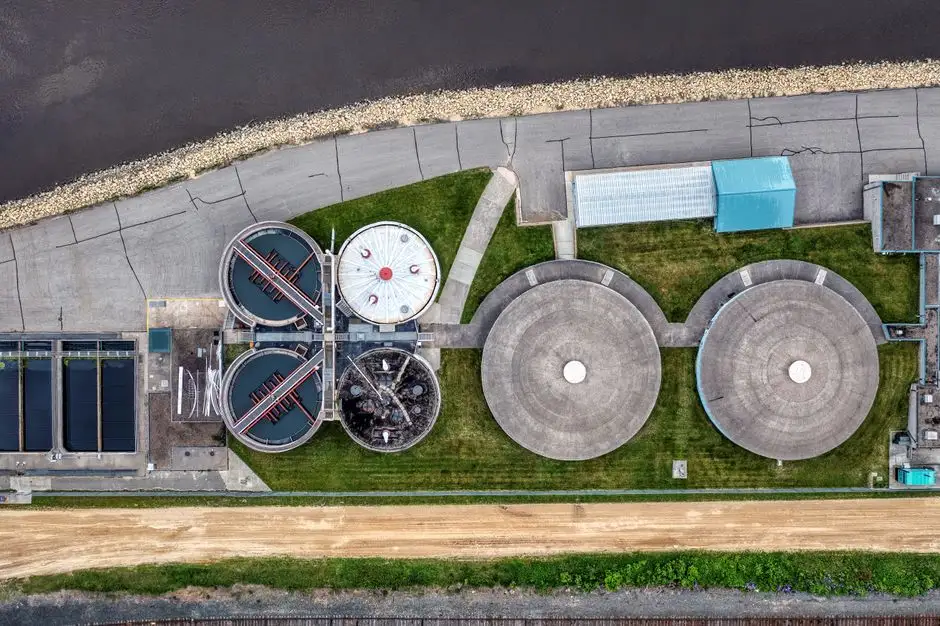
A 60–90 day procurement cycle is achievable if you run the following three steps in parallel rather than sequentially.
- Step 1 — Weeks 1–2: Define the influent and target effluent. Run 7-day composite sampling at peak monsoon and again in dry season. Lock the target effluent against Bangladesh DoE Schedule-10 plus buyer-specific ZDHC limits. Without this, every quote is an apples-to-oranges comparison.
- Step 2 — Weeks 3–6: Issue RFQ to 5 shortlisted suppliers. Attach the compliance checklist and the 7-criterion matrix. Require Bangladesh reference plants with third-party lab reports, saline-tolerance test data, and a documented Chattogram port clearance track record. Reject any bid missing these three documents.
- Step 3 — Weeks 7–10: Two-round evaluation and award. Round 1 scores the 7-criterion matrix and narrows to 3. Round 2 is a site visit or video FAT for the top 3. Negotiate warranty and spares — target 2-year comprehensive plus 5-year membrane life guarantee on MBR. Contract FAT, third-party inspection at the supplier facility before Chattogram port shipment, and DoE pre-commissioning coordination as post-award actions.
A pre-engineered mid-market option such as the WSZ series underground integrated sewage treatment plant typically fits this 60–90 day window with documented FAT and port clearance; anchor your final award to evidence, not brochure claims. Also cross-check the demand outlook in the MBR market growth forecast to 2030 to confirm membrane pricing remains competitive through your lifecycle horizon.
Frequently Asked Questions
What is the typical 2026 CAPEX range for a 200 m³/day STP in Chittagong? Containerized MBR at $450–$900 per m³/day totals $90,000–$180,000, while containerized MBBR at $300–$650 totals $60,000–$130,000, before Chittagong-specific freight and drayage (per 2026 benchmark data, this article).
Which effluent parameters does Bangladesh DoE Schedule-10 enforce for industrial discharge in 2026? BOD ≤30 mg/L, COD ≤250 mg/L, TSS ≤100 mg/L, pH 6–9, oil & grease ≤10 mg/L, total chromium ≤0.5 mg/L, Cr⁶⁺ ≤0.1 mg/L, per ECR 1997 with 2022 amendments.
Can MBR handle Karnaphuli saline influent above 2,000 mg/L chloride? Standard MBR biofilms lose activity above 2,000 mg/L Cl⁻; MBBR handles 1,500–3,000 mg/L without membrane fouling, which is why most Chittagong garment and textile buyers default to MBBR or MBR-with-RO-pre-treatment.
How long does a containerized STP take from purchase order to commissioning in Chittagong? 10–14 weeks total: 6–10 weeks factory FAT plus ocean transit via Chattogram Port, then 4–8 weeks on-site install and commissioning — roughly 4× faster than a concrete-tank CAS build.
Which third-party labs verify DoE compliance in Chittagong? SGS Chattogram, Bureau Veritas Bangladesh, and Intertek Dhaka are the three labs most commonly accepted by DoE for 7-day composite sampling verification post-commissioning.