Daegu Industrial Wastewater Treatment 2026 Compliance: The Baseline
Daegu industrial wastewater treatment in 2026 hinges on three compliance anchors. National effluent ceilings apply under Korea's Water Environment Conservation Act, tighter site-specific limits apply across the Geumho River watershed, and pretreatment rules govern plants discharging to municipal works. Most mid-size plants meet these targets with DAF clarification, MBR biological treatment, and RO polishing.
The regulatory net is wide. According to Korea's Ministry of Environment, effluent discharged from industrial and wastewater treatment plants is managed with stringent standards for 51 parameters, and the ministry keeps adopting new parameters over time. A 2018 overhaul of the national water management system gave the environment ministry sole water authority. For Daegu plant owners, permits, monitoring duties, and enforcement now flow from one ministry.
Enforcement carries real consequences. Under the Act, an operator exceeding its allocated pollution load can be ordered to fully or partially suspend operations. The suspension period is prescribed by regulation and may not exceed six months (Korea Law Translation Center). Penalty surcharges are calculated from the benefits earned by discharging pollutants in excess of the load, so compliance engineering starts with the permit, not the equipment.
Why Daegu Is a Strategic Hub for Industrial Wastewater Treatment in 2026
The Daegu National Water Industry Cluster, located inside the Daegu National Industrial Park, provides shared test-bed facilities for water and wastewater treatment — a structure no other Korean industrial city currently offers at this scale. For plants in the Daegu-Gyeongbuk corridor, this means pilot-scale validation can be completed in weeks rather than months, with shared R&D incentives attached to cluster membership.
Daegu-Gyeongbuk's industrial base concentrates four wastewater-intensive sectors. Textile dyeing carries high color, sulfate, and COD 800–2,500 mg/L. Electronics and semiconductor back-end plants discharge COD 200–600 mg/L with fluoride and ammonia.
Metal finishing generates Cu, Ni, Zn, and Cr-bearing rinse water, while food processing — noodles, dairy, beverage — produces BOD 1,500–5,000 mg/L with oils. Each profile demands a different primary treatment step, but all four converge on one secondary and tertiary challenge: meeting KMOE effluent limits while recovering enough water to offset intake costs.
The 2026 strategic advantage is concrete. Cluster membership shortens pilot validation timelines and unlocks shared R&D incentives for water-reuse projects, which KMOE increasingly prioritizes under the Geumho River watershed protection framework. Plants located inside the cluster boundary can typically access shared pilot rigs, joint funding applications, and faster permit reviews through the Daegu Metropolitan City environmental division.
2026 Korean Discharge Limits You Must Meet
KMOE administers the Water Environment Conservation Act, which sets the baseline for industrial discharge nationwide, with site-specific ceilings applied at the metropolitan-city level. Daegu Metropolitan City Hall's environmental division can impose stricter limits along the Geumho River watershed, particularly for total nitrogen and heavy metals.
| Parameter | KMOE 2026 Typical Limit (Discharge to Water Body) | Notes for Daegu-Gyeongbuk Plants |
|---|---|---|
| BOD | ≤ 120 mg/L | Tighter ceilings common in food and textile sub-basins |
| COD | ≤ 160 mg/L | Color-bearing textile effluent often needs tertiary polishing |
| SS | ≤ 120 mg/L | DAF effluent typically 10–30 mg/L before biological step |
| T-N | ≤ 60 mg/L | Geumho watershed may require ≤ 40 mg/L site-specific |
| T-P | ≤ 8 mg/L | A2O/MBR can drive T-P to ≤ 1 mg/L |
| pH | 5.8–8.5 | Metal finishing often requires in-line neutralization |
| F⁻ (electronics) | ≤ 15 mg/L site-specific | Calcium precipitation pretreatment typically required |
| Cu / Ni / Zn / Cr | ≤ 1–3 mg/L per metal | Chemical precipitation + ion exchange train |
What Are the KMOE Discharge Limits for the Geumho Watershed in 2026?
The binding KMOE discharge limits for the Geumho watershed in 2026 are the national ceilings plus locally tightened values for nitrogen, phosphorus, and heavy metals. According to Korea's Ministry of Environment, the Total Water Pollution Load Management System has operated at river basin level since 2004, with new water quality goals for four major river basins announced from 2019. The Act also lets local governments set permissible discharge limits more stringent than the national ones by municipal ordinances (Korea Law Translation Center). This is the legal root of the tighter T-N ceilings Daegu plants report along Geumho tributaries.
Point sources draw the regulator's sharpest attention even though they are the minority of the load. According to the Ministry of Environment, 66.4% of pollution in Korea's four major rivers comes from diffuse sources other than the industrial and sewage effluent from point sources. Industrial dischargers remain the most measurable, permit-anchored lever, so ceilings and monitoring duties keep tightening. Plants near Geumho tributaries should therefore design to the tighter value, not the national default.
Plants discharging to a Daegu municipal WWTP fall under the NPS pretreatment framework (NPS: National Pretreatment Standards, 상수·폐수공동처리시설 방류수 수질기준). The framework generally allows higher influent ceilings but enforces stricter BOD/COD removal ratios at the receiving plant. For any project targeting ≥ 80% water recovery, RO polishing is required even when basic discharge limits are met. Secondary biological effluent alone will not reach RO feed specs (typically SDI < 3, COD < 30 mg/L).
Matching Your Influent to the Right Process Train
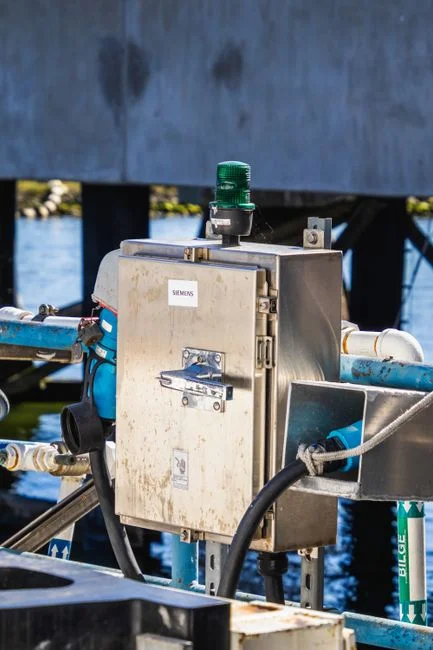
Process selection starts with influent characterization, not with a preferred technology. The four Daegu-Gyeongbuk sectors below have radically different treatment priorities, and each profile maps to a distinct train.
Textile Dyeing Wastewater
Textile dyeing wastewater carries COD 800–2,500 mg/L, intense color, high sulfate, and reactive dye residues. The proven train is DAF for suspended solids and colloidal dye, followed by A2O or MBR for organics, with ozone or RO polishing for color and salt removal. A DAF system sized 4–300 m³/h typically handles the primary clarification step across textile plants in this corridor.
Electronics and Semiconductor Back-End Wastewater
Electronics and semiconductor back-end effluent runs COD 200–600 mg/L with fluoride (often 20–100 mg/L), ammonia, and trace solvents. Equalization is critical to smooth diurnal pH swings, followed by MBR for organics and RO with fluoride-selective pretreatment (calcium chloride or activated alumina) to bring F⁻ below 15 mg/L. CIP (clean-in-place) loops must be corrosion-resistant because of the chloride residual from regeneration.
Metal Finishing Wastewater
Metal finishing wastewater is low in BOD/COD but heavy-metal rich — Cu, Ni, Zn, and Cr are the four most common, each typically 10–200 mg/L in concentrated rinse streams. The train is chemical precipitation at pH 9–10, lamella clarifier for sludge thickening, sand filter for residual TSS, and selective ion exchange for the last 1–3 mg/L to meet KMOE ceilings. Sludge is coded as a special waste under the Korea Waste Control Act and must be handled separately.
Food Processing Wastewater
Food processing — noodles, dairy, beverage — generates BOD 1,500–5,000 mg/L with high oils, fats, and grease (FOG). A rotary screen for solids, DAF for FOG and colloidal organics, then A/O MBR for nitrogen and residual organics, is the standard configuration. Anaerobic pretreatment (UASB) is worth evaluating when BOD exceeds 3,000 mg/L and biogas capture is feasible.
How Does Water Reuse With Reverse Osmosis Work for Daegu-Gyeongbuk Electronics Plants?
Water reuse at Daegu-Gyeongbuk electronics plants routes MBR effluent through reverse osmosis at ≥ 80% recovery, because RO alone strips dissolved salts and fluoride to ultrapure-adjacent feed quality. Fluoride-selective pretreatment protects the membranes, and calcium precipitation typically precedes the RO block. K-water, the national water agency, already lists industrial park wastewater treatment among its operating project lines, a signal that centralized reuse infrastructure is normal practice. With public water supply covering 99.1% of Korea's population (Ministry of Environment), new industrial demand is increasingly met by reuse rather than new intake.
Process-Train Comparison: MBR vs SBR vs A2O vs DAF + RO
The four trains below are the most common configurations Korean engineering firms evaluate for industrial plants in the 100–2,000 m³/day range. Each has a distinct cost, footprint, and reuse-readiness profile.
| Criterion | MBR | SBR | A2O | DAF + RO |
|---|---|---|---|---|
| Effluent COD / BOD | ≤ 30 / ≤ 5 mg/L | ≤ 40 / ≤ 10 mg/L | ≤ 40 / ≤ 10 mg/L | ≤ 10 / ≤ 5 mg/L (post-RO) |
| Footprint vs. CAS (CAS: conventional activated sludge) | ~40% of CAS | ~70% of CAS | ~70% of CAS | ~50% of CAS (no biological) |
| T-N removal | Up to 80% | Up to 70% | Up to 80% | Not targeted (RO removes salts, not T-N) |
| T-P removal | ≤ 1–2 mg/L with chemical P precipitation | ≤ 2 mg/L | ≤ 1 mg/L (biological) | ≤ 1 mg/L |
| Energy kWh/m³ | 0.6–1.2 | 0.4–0.8 | 0.5–1.0 | 1.5–2.5 (RO high-pressure pump) |
| CAPEX tier (500 m³/day) | Mid | Low | Mid-High | High (membrane replacement) |
| OPEX tier | Mid (membrane cleaning) | Low | Mid | High (energy + CIP) |
| Water recovery | Zero liquid discharge (ZLD) not achievable; reuse possible after RO | Discharge-grade only | Discharge-grade only | Up to 95% recovery |
| Best-fit industries | Electronics, food, textile | Small-flow food, textile (< 200 m³/day) | Municipal-style industrial parks | Any plant with reuse mandate |
For plants where the discharge ceiling is the binding constraint and reuse is optional, an MBR membrane bioreactor typically delivers the most stable effluent at the lowest lifecycle cost. Where reuse is mandatory, common for electronics fabs in the Daegu-Gyeongbuk corridor, the DAF + RO configuration is the only path to ≥ 80% recovery without a thermal brine concentrator. Pair it with an industrial RO system engineered for fluoride service.
Recommended 2026 Train for Daegu Industrial Plants: DAF + MBR + RO
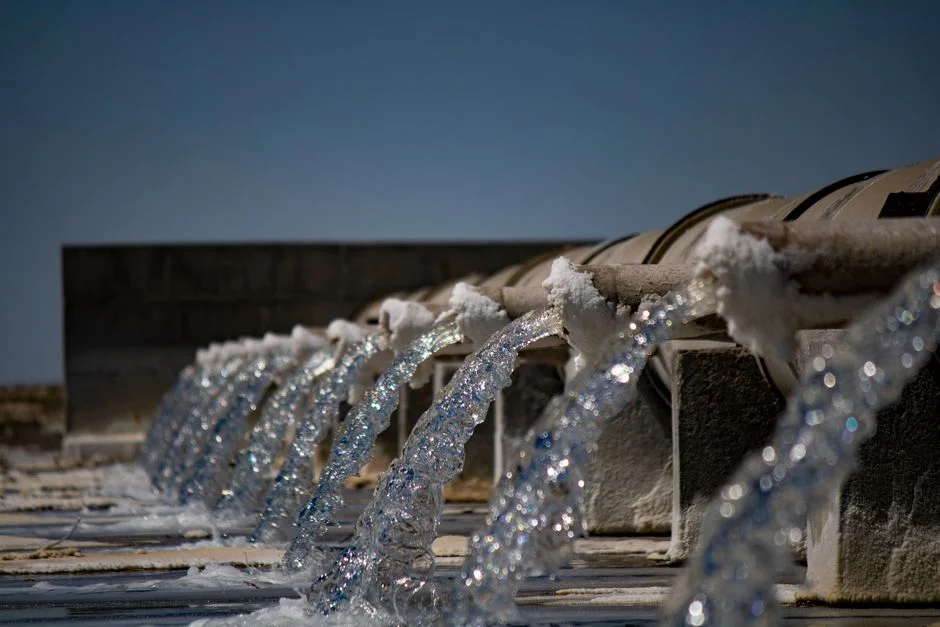
The DAF + MBR + RO sequence covers roughly 70% of the influent profiles seen in the Daegu-Gyeongbuk corridor. It handles textile, food, and most electronics effluent with the same unit operations, varying only in chemical pretreatment.
| Step | Unit Operation | Typical Parameter / Range | Function |
|---|---|---|---|
| 1. Headworks | Rotary bar screen | Gap 2–5 mm; flow 50–500 m³/h | Rags, fibrous debris, large solids |
| 2. Primary | DAF (dissolved air flotation) | 4–300 m³/h; recycle ratio 20–30% | FOG, suspended solids, colloids |
| 3. Biological | MBR (membrane bioreactor) | 0.1 μm PVDF (polyvinylidene fluoride) flat-sheet; MLSS (mixed liquor suspended solids) 8,000–12,000 mg/L | COD/BOD/T-N removal; 60% footprint cut vs. CAS |
| 4. Tertiary | RO (reverse osmosis) | Recovery 70–95%; feed SDI (silt density index) < 3 | Salt removal; reuse-grade water |
| 5. Chemical dosing | Automatic dosing skid | pH adjustment, antiscalant, CIP chemicals | RO membrane protection |
| 6. Disinfection | ClO₂ generator or ozone | Residual 0.2–0.5 mg/L ClO₂ | Microbial control before reuse/discharge |
For textile and food plants, the GX series rotary bar screen handles fibrous debris that would otherwise foul DAF nozzles. The DAF stage using a DAF system typically drops TSS (total suspended solids) to 10–30 mg/L — within RO feed tolerance if the biological step is correctly sized.
The MBR stage with an MBR membrane bioreactor delivers the < 1 μm particulate cut that protects RO membranes. RO polishing via an industrial RO system then pushes recovery to 70–95%.
An automatic chemical dosing skid handles antiscalant and CIP chemistry. A chlorine dioxide generator provides residual disinfection before reuse or discharge.
For deeper engineering on COD-removal process selection, the 2026 COD removal technology guide provides additional process-flow detail. Most Daegu reuse projects we see lock the RO block only after the COD profile stays stable across seasons.
2026 CAPEX and OPEX Benchmarks for a 500 m³/day Plant
Budget framing below assumes a 500 m³/day plant operating 24/7, with civil works excluded and containerized skid-mounted equipment delivered EXW (EXW: Ex Works — buyer assumes freight and insurance from the supplier's facility) China. The ranges draw on aggregated industrial wastewater treatment equipment pricing for the Korean import market in early 2026.
- CAPEX range: ₩350M–₩900M for a complete DAF + MBR + RO skid. The range varies with automation level (manual valve manifold vs. PLC + SCADA), material of construction (SS304 vs. SS316L wetted parts), and RO staging (single-pass vs. two-pass).
- OPEX range: ₩120–₩310 per m³ treated. The dominant items are membrane replacement (every 5–7 years, MBR + RO combined ≈ 15–25% of OPEX) and RO high-pressure pump energy (typically 0.8–1.5 kWh/m³ at 60–80% recovery). Chemical dosing (antiscalant, CIP, pH adjustment) and sludge hauling for the DAF float fill out the stack.
- ROI frame: Closed-loop reuse at 80% recovery cuts freshwater intake by roughly 146,000 m³/year at a 500 m³/day plant. Even at conservative Daegu industrial water tariffs, that freshwater savings alone typically pays back the CAPEX premium over a once-through system within 24–36 months. Permitting timelines and KMOE compliance risk accelerate this payback for plants in watershed-sensitive sub-basins.
For regional CAPEX/OPEX benchmarking outside Korea, the 2026 water reuse regional analysis covers comparable plant sizes across other Asian markets.
How to Qualify a Chinese Equipment OEM for the Daegu Market
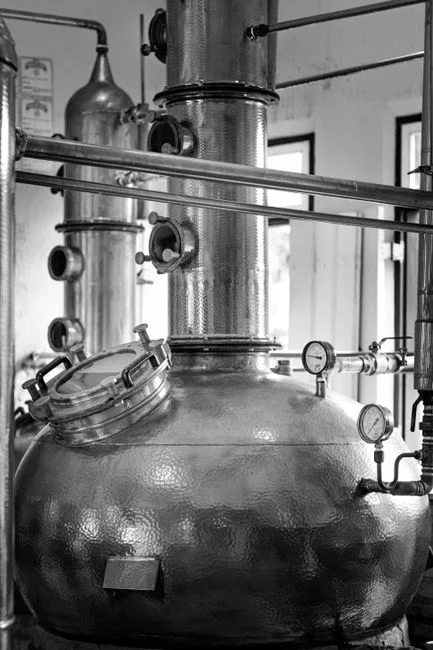
Selecting an overseas OEM for a Korean project is a five-point verification process. Each item below maps to a specific import, commissioning, or operational risk that has caused delivery delays or warranty disputes on past Daegu-bound projects.
- KC/KCS electrical certification. Control panels, motors, and VFDs (variable-frequency drives) shipped into Korea require KC (Korea Certification) marking under the Electrical Appliances Safety Control Act, and KCS (Korea Construction Specification) acceptance for plant-level installations. Confirm the OEM has shipped KC-marked panels before — this is the single most common customs-hold cause.
- Material traceability for wetted parts. Daegu textile and electronics wastewater carry chloride, fluoride, and sulfate that pit SS304. Require SS316L or higher wetted parts, with mill certificates traceable to the heat number.
- Documented FAT (factory acceptance test) and reference list. Request FAT video for the actual unit being shipped, plus a minimum of three operating references in similar climates. Cold-region or high-humidity experience is a plus given Daegu's summer monsoon.
- Korean-language O&M (operation and maintenance) manuals and remote monitoring. The OEM should provide Korean-translated O&M manuals and a remote-monitoring gateway (Modbus/4G/ethernet) for after-sales support. This is essential because most Korean plant staff will not read Chinese or English manuals during a night-shift alarm.
- Containerized skid packaging. Daegu industrial sites are typically space-constrained, and Korean civil contractors charge premium rates for poured foundations. Containerized or skid-mounted equipment with pre-tested piping reduces on-site work to inter-skid connections and final electrical termination.
For a parallel reference on Pacific-region compliance frameworks, see the Honolulu 2026 compliance guide. For a Middle East comparable plant size and supplier-qualification logic, the Nizwa 2026 buyer's guide walks through a similar five-step checklist adapted to a different regulatory environment.
Daegu industrial wastewater treatment 2026 compliance planning should end with a permit-mapped equipment scope, not a generic plant layout. Send your influent analysis, discharge point, and target recovery ratio through the inquiry page for a sized Daegu proposal. Most plants we scope for this corridor settle on DAF + MBR first, then stage RO when the reuse mandate lands.
Frequently Asked Questions
What is the binding KMOE BOD limit for industrial discharge in Daegu in 2026?
The KMOE baseline is BOD ≤ 120 mg/L for discharge to a water body, but Daegu Metropolitan City can impose tighter site-specific ceilings along the Geumho River watershed. Values down to BOD ≤ 40 mg/L are documented in sensitive sub-basins. Confirm the specific ceiling at your plant address before finalizing process design, because the local ordinance prevails over the national table.
Does my plant need RO if we are only meeting discharge limits and not reusing water?
Generally no — a well-sized DAF + MBR train alone meets the standard KMOE discharge ceilings. RO becomes necessary once reuse mandates apply, typically at ≥ 80% recovery targets, or when the influent carries salts or fluoride that biological treatment cannot remove. Most Daegu textile and food plants run discharge-only trains, while electronics fabs almost always add RO.
What is the Geumho River watershed context for Daegu discharge permits?
The Geumho River flows through Daegu into the Nakdong and sits inside a basin managed under the Total Water Pollution Load Management System, in place at river basin level since 2004. That framework tightens nitrogen and phosphorus limits relative to the national baseline. Plants near tributaries may face site-specific T-N ceilings of ≤ 40 mg/L versus the standard ≤ 60 mg/L.
What KMOE rules govern metal finishing wastewater heavy metals removal?
Metal finishing effluent falls under the same Water Environment Conservation Act ceilings, with Cu, Ni, Zn, and Cr each held to roughly ≤ 1–3 mg/L at the discharge point. The standard train is chemical precipitation at pH 9–10, lamella clarification, sand filtration, and selective ion exchange for the final 1–3 mg/L. Precipitated sludge is coded as special waste under the Korea Waste Control Act.
How long does it take to ship a containerized wastewater skid from China to Daegu?
Plan on 4–6 weeks from purchase order to on-site delivery, before installation and commissioning. Sea freight from major Chinese ports to Busan runs 3–5 days, plus 1–2 days of inland trucking to a Daegu industrial site. Customs clearance for KC-marked equipment usually takes 5–10 working days, so documentation quality drives the schedule more than the voyage does.
What is the realistic OPEX per cubic meter for a 500 m³/day Daegu plant?
OPEX for a DAF + MBR + RO train at 500 m³/day runs ₩120–₩310 per m³ treated in early 2026, dominated by energy and membrane replacement. The spread reflects influent fouling load, RO recovery setpoint, and whether CIP chemicals are bought retail or through OEM service contracts. Plants at the low end typically operate near design flux rather than pushing margins.