Introduction to Industrial Wastewater Treatment in Northern Ireland, UK
Industrial wastewater treatment in Northern Ireland, UK, demands rigorous adherence to environmental standards, with benchmarks like the EPA 2024 guidelines mandating 92-97% Chemical Oxygen Demand (COD) removal efficiency. The investment in robust treatment systems can range significantly, typically between £10,000 and £50,000, reflecting the complexity and scale of operations. Effective wastewater management is not merely a regulatory obligation but a fundamental component of environmental stewardship and public health protection for industries across the region. Northern Ireland's unique industrial profile necessitates tailored approaches to effluent management, ensuring compliance with national and regional regulations while minimising ecological impact. Understanding these challenges and the available solutions is paramount for industrial operators aiming for sustainable and responsible practices.
Treatment Solutions and Technologies
A multi-stage approach is typically employed in industrial wastewater treatment to address diverse contaminants. Physical-chemical methods form the initial barrier, employing processes like coagulation and flocculation to destabilise suspended solids and dissolved pollutants, followed by sedimentation or flotation to remove them. These methods are effective for removing larger particles and certain chemical species. For organic load reduction, biological treatment is paramount. Technologies such as activated sludge processes, where microorganisms consume organic matter in an aerated tank, and trickling filters, where wastewater trickles over a media colonized by microbes, are widely adopted. These biological systems are highly effective in reducing BOD and COD. For more stringent discharge limits or to remove recalcitrant compounds, advanced treatment technologies are indispensable. Membrane Bioreactors (MBRs) integrate biological treatment with membrane filtration, offering superior effluent quality and a smaller footprint. UV disinfection offers a chemical-free method for pathogen inactivation. Understanding the specific characteristics of industrial effluent is key to selecting the most appropriate combination of these technologies.
| Treatment Stage | Primary Technologies | Typical Applications | Key Pollutants Removed |
|---|---|---|---|
| Primary Treatment (Physical-Chemical) | Coagulation, Flocculation, Sedimentation, Flotation | Pre-treatment, removal of gross solids and suspended matter | Suspended solids, some heavy metals, oils and greases |
| Secondary Treatment (Biological) | Activated Sludge, Trickling Filters, Membrane Bioreactors (MBR) | Reduction of organic load (BOD/COD) | Dissolved organic matter, nutrients (nitrogen, phosphorus) |
| Tertiary Treatment (Advanced) | Membrane Filtration (Ultrafiltration, Reverse Osmosis), UV Disinfection, Activated Carbon Adsorption | Polishing, removal of specific contaminants, disinfection | Recalcitrant organics, micropollutants, pathogens, dissolved salts |
Learn more about advanced MBR treatment systems, which offer high-quality effluent and a compact design suitable for various industrial applications.
Regulations and Compliance Requirements
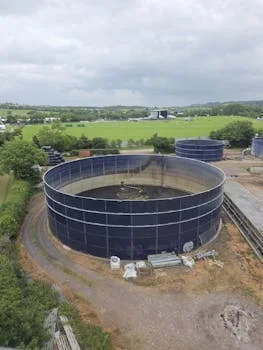
Compliance with environmental regulations is a critical aspect of industrial wastewater management in Northern Ireland, UK. The Environmental Protection Agency (EPA) 2024 benchmarks set stringent targets, notably requiring a 92-97% COD removal efficiency for many industrial discharges. These benchmarks are underpinned by broader UK-wide legislation, including the Water (Northern Ireland) Order 1999, which governs water pollution and trade effluent discharges. Northern Ireland Water (NIW) plays a key role in regulating discharges to public sewers, setting specific consent conditions based on the type and volume of effluent. Industrial operators must obtain consent to discharge trade effluent, which details acceptable pollutant concentrations, flow rates, and treatment requirements. Failure to comply can result in significant penalties, including fines and operational restrictions. Regular monitoring, reporting, and adherence to discharge limits are therefore non-negotiable for maintaining operational continuity and environmental responsibility.
Selecting the Most Suitable Treatment Solution
The selection of an industrial wastewater treatment solution in Northern Ireland, UK, is a complex decision driven by several critical factors. The influent wastewater characteristics, including its chemical composition, concentration of pollutants (such as COD, BOD, suspended solids, heavy metals, and specific organic compounds), and flow rate, are primary determinants. The desired effluent quality, dictated by regulatory discharge limits and any potential for water reuse, also plays a crucial role. Operational considerations like energy consumption, chemical usage, sludge production and disposal, space availability, and capital and operational expenditure (CAPEX/OPEX) must be thoroughly evaluated. For instance, industries with high organic loads might benefit from advanced biological treatment, while those with complex chemical constituents may require a combination of physical-chemical and advanced oxidation processes. Understanding these interdependencies allows for the selection of a robust, cost-effective, and compliant treatment system.
| Factor | Consideration | Impact on Technology Choice | Example Industries |
|---|---|---|---|
| Influent Pollutant Concentration (COD/BOD) | High organic loads require robust biological or advanced oxidation processes. | Higher CAPEX/OPEX for advanced systems, but better compliance. | Food & Beverage, Pulp & Paper, Chemical Manufacturing |
| Flow Rate and Variability | Consistent, high flow rates may favour larger, continuous process systems; intermittent flows might suit modular or batch systems. | System sizing and flexibility are key. | Textiles, Metal Finishing, Pharmaceutical |
| Specific Contaminants (e.g., Heavy Metals, Nutrients) | Specialised treatment steps like ion exchange, precipitation, or nutrient removal processes are necessary. | Increased system complexity and cost. | Electroplating, Mining, Agri-food |
| Effluent Reuse Potential | Requires higher treatment standards, potentially including membrane filtration or advanced disinfection. | Higher CAPEX for polishing stages, but potential OPEX savings through water recycling. | Manufacturing, Power Generation, Agriculture |
| Space Constraints | Compact technologies like MBRs are advantageous where land is limited. | Trade-off between footprint and potentially higher energy consumption or maintenance. | Urban manufacturing, Food processing plants |
Discover how to optimise your operations and potentially reduce costs through effective energy recovery from wastewater, a critical consideration for long-term sustainability.
Frequently Asked Questions
What are the most common treatment technologies used in Northern Ireland, UK?
Common technologies include physical-chemical processes like sedimentation and filtration, biological treatments such as activated sludge, and increasingly, advanced systems like Membrane Bioreactors (MBRs) for higher effluent quality. The choice depends heavily on the specific industrial effluent and regulatory requirements.
How much does a treatment system typically cost?
Industrial wastewater treatment system costs in Northern Ireland, UK, can range from £10,000 for smaller, simpler systems to over £50,000 for larger, more complex installations, depending on the scale, technology, and specific contaminants to be treated.
What are the regulatory requirements for wastewater discharge and treatment?
Key requirements include achieving specific COD removal efficiencies, often between 92-97% as per EPA 2024 benchmarks, and adhering to consent conditions set by Northern Ireland Water for discharges to public sewers. This involves detailed monitoring and reporting of effluent quality.