How Austin Hospitals Are Permitted in 2026
Austin hospitals discharging to the sanitary sewer in 2026 operate under a two-layer permit stack: a TCEQ-issued TPDES permit under 30 TAC §305 and §317 for any surface discharge, and the City of Austin Water (AUSW) pretreatment ordinance (Ord. 20120308-021) for discharges to the city's collection system. The vast majority of Central Texas hospitals — including St. David's, Ascension Seton, and Baylor Scott & White facilities — fall under the AUSW ordinance as Industrial User (IU) or Significant Industrial User (SIU) customers rather than direct TPDES permittees, because their effluent enters the Walnut Creek or South Austin Regional wastewater treatment plants. A facility that sends more than 25,000 gpd (~95 m³/day) or that triggers categorical monitoring under 40 CFR Part 403 must submit a Baseline Monitoring Report and operate under an AUSW Industrial Wastewater Permit.
The numerical ceiling an Austin design must hit is defined by the AUSW ordinance, not by federal categorical standards:
| Parameter | AUSW daily maximum limit | Sample type |
|---|---|---|
| BOD₅ | 200 mg/L | 24-h composite |
| TSS | 200 mg/L | 24-h composite |
| NH₃-N (May–Oct) | 20 mg/L | 24-h composite |
| NH₃-N (Nov–Apr) | 30 mg/L | 24-h composite |
| Fecal coliform | 200 CFU/100 mL | Grab |
| Total mercury | 0.0006 mg/L | Grab |
| Oil & grease | 100 mg/L | Grab |
| pH | 6.0–10.0 s.u. | Grab |
40 CFR Part 460 applies only where a hospital operates an on-site laundry discharging >30 kg/day of laundry waste, which most Central Texas facilities do not. The TCEQ construction permit (Form TXR041) is required for any on-site system with a design flow above 5,000 gpd; a permit modification is required when effluent limits tighten or capacity grows more than 25%. If the hospital uses an MBR vs conventional activated sludge comparison selection resulting in reuse for irrigation or cooling-tower makeup, 30 TAC §290 Chapters 210–230 impose additional reclaimed-water quality requirements (turbidity ≤1 NTU for restricted use, fecal coliform <1 CFU/100 mL for Type I reuse).
What Comes Out of an Austin Hospital: Wastewater Characterization
A 250-bed Austin general hospital typically generates 200–500 m³/day of wastewater, with oncology and dialysis wards pushing the upper bound. Outpatient clinics run 5–20 m³/day. Influent concentrations that drive process design fall into well-defined envelopes drawn from U.S. hospital monitoring data:
- BOD₅: 150–400 mg/L, with weekday peaks 1.5–2× the weekend mean
- COD: 300–800 mg/L, BOD/COD ratio typically 0.45–0.55 indicating moderate biodegradability
- TSS: 100–300 mg/L, with cellulose and cotton fiber from laundry contributing 20–40%
- NH₃-N: 20–60 mg/L; dialysis and laboratory drains elevate the peak
- Fecal coliform: 10⁶–10⁸ CFU/100 mL
- Total mercury: 1–10 µg/L from dental amalgam and laboratory waste
Micropollutants are the reason a hospital is not a municipal-strength waste. Imaging departments spike iodine-based contrast media (iohexol, iopamidol) at 50–500 mg per patient, oncology wards discharge cyclophosphamide and ifosfamide at µg/L levels, and antibiotic residues from the entire facility push total pharmaceutical load into the 10–100 µg/L range. A 2023 metagenomic survey of three hospital outfalls confirmed hospital effluent as a primary reservoir of antibiotic resistance genes (ARGs), with intI1 and sul1 abundance 10–100× higher than in parallel municipal sewage (per the Frontiers in Microbiology hospital ARG metagenomics study, 2023-05).
Variability is the binding constraint on equalization design. A single grab sample understates the imaging-department contrast spike by a factor of 3–5; permit compliance under 30 TAC §305 must be demonstrated on 24-hour flow-proportional composites. Designing for the 95th-percentile day, not the annual mean, is what keeps a hospital out of an AUSW Notice of Violation.
The 2026 Compliant Treatment Train for Austin Hospitals
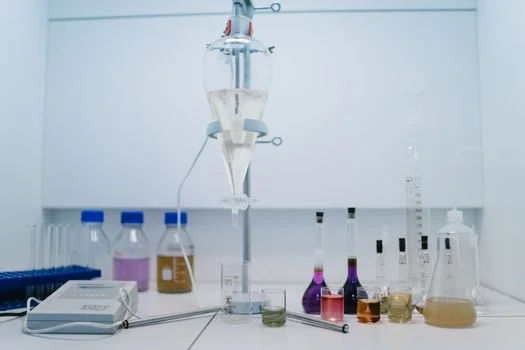
The standard 2026 process train for a 100–500-bed Austin hospital is a six-stage flow that satisfies AUSW pretreatment limits and leaves margin for future reuse. Each step has a defensible design number:
- Screening and equalization. A rotary mechanical bar screen with 3–5 mm openings protects downstream pumps, followed by an equalization basin sized at 25–40% of daily flow to dampen diurnal peaks from radiology (08:00–11:00) and laundry (06:00–14:00).
- Primary clarification or DAF. An optional lamella clarifier or DAF system vs oil water separator decision typically lands on DAF for hospitals with high grease loading from food service; expect 50–70% TSS removal before the biological stage. Work published in Scientific.Net (Yu, Zhou, Huang, 2023) showed biological contact oxidation alone rarely brings effluent SS below 20 mg/L, so a primary solids-removal step is non-optional when the AUSW limit is 200 mg/L on a 24-h composite.
- Biological treatment. An MBR membrane bioreactor system operated at HRT 6–10 h and SRT 20–40 days reliably produces COD <50 mg/L and NH₃-N <10 mg/L; published MBR + NaOCl hospital data (Scientific.Net, 2023) reported treated-water COD <50 mg/L, NH₃-N <10 mg/L, and no detectable fecal coliform at 200 m³/day. Where the design flow is <80 m³/day, biological contact oxidation at HRT ≥4 h is sufficient to meet the AUSW BOD/COD limits, again per the Scientific.Net contact-oxidation study.
- Polishing. Multimedia filtration (sand + anthracite) followed by granular activated carbon (GAC) for residual pharmaceuticals and mercury; carbon replacement typically every 6–12 months depending on loading.
- Disinfection. An on-site chlorine dioxide generator dosing to 0.5–1.0 mg/L ClO₂ with 30-minute contact time achieves 99.9% fecal coliform inactivation without forming trihalomethanes against the pharmaceutical load — a critical advantage over NaOCl.
- Sludge handling. A plate and frame filter press dewaters waste activated sludge to 22–28% dry solids, after which the cake is hauled to a Subtitle D landfill or, if it fails TCLP for mercury, an authorized medical waste facility under Texas DSHS rules (25 TAC §1).
Package MBR vs. Underground WSZ vs. Conventional Activated Sludge: Which Fits Your Facility
The procurement decision for a 2026 Austin hospital comes down to flow, reuse intent, and operator availability. The head-to-head numbers:
| Criterion | Package MBR | Underground WSZ | Conventional AS + UV |
|---|---|---|---|
| Flow range | 10–2,000 m³/day | 1–80 m³/h (24–1,920 m³/day) | 500+ m³/day |
| Footprint | ~60% of CAS | Buried, only access hatches visible | Largest (1.5–2× MBR) |
| Effluent COD | <50 mg/L | <60 mg/L | <80 mg/L |
| Effluent NH₃-N | <5 mg/L | <15 mg/L | <10 mg/L (with nitrification) |
| CAPEX (USD per m³/day) | $250–$600 | $120–$350 | $150–$400 |
| OPEX (USD per m³ treated) | $0.20–$0.45 | $0.10–$0.25 | $0.18–$0.40 |
| Operator skill | Class C or above preferred | Fully automatic, no on-site operator | Class C or above required (per 30 TAC §288) |
The decision rule an Austin procurement engineer can apply in one read: choose the underground WSZ package plant for facilities under 80 m³/h with no reuse intent; choose the package MBR for 100–500-bed hospitals pursuing Type I reclaimed-water reuse under 30 TAC §210 or operating under a tight ammonia limit; choose conventional activated sludge + UV only for 500+ bed facilities that already have a licensed operator on staff and existing headworks capacity.
Disinfection Technology Compared: ClO₂, NaOCl, Ozone, and UV
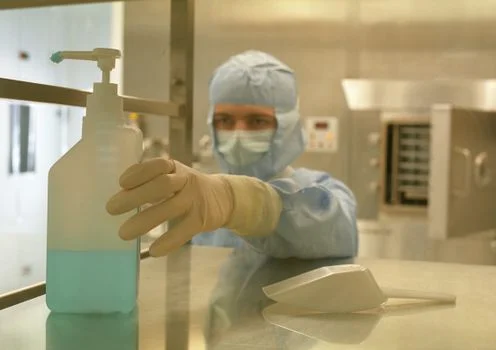
Disinfection is the unit operation most often mis-specified on Texas hospital projects because the AUSW ordinance requires both a 200 CFU/100 mL fecal coliform limit and a dechlorination step if residual chlorine leaves the property. Side-by-side:
| Technology | Fecal coliform log reduction | THM/HAA formation | pH sensitivity | On-site footprint | CAPEX (USD per m³/day) |
|---|---|---|---|---|---|
| ClO₂ (0.5–1.0 mg/L, 30 min) | 3-log (99.9%) | None | Effective pH 6–9 | ~3 m² skid | $15–$35 |
| NaOCl (5–10 mg/L) | 3-log | Forms THMs with pharmaceutical residues | Effective pH 6–7.5 | Bulk tank + dosing pump | $5–$15 |
| UV (40 mJ/cm²) | 4-log | None | None | UV reactor + cleaning system | $20–$45 |
| Ozone (5–10 mg/L) | 4-log | Forms bromate if bromide present | Effective pH 6–8 | Generator + off-gas destructor | $60–$120 |
NaOCl remains the lowest-CAPEX option, but hospital effluent containing iodinated contrast media and phenolic pharmaceutical residues readily forms trihalomethanes under chlorination; this is the reason an on-site chlorine dioxide generator is the dominant 2026 specification in Central Texas. UV delivers a 4-log inactivation with no chemical handling, but it leaves no residual — a problem when AUSW inspectors sample at the P-trap and expect a measurable residual during a force-main break. Ozone is the strongest oxidizer for trace pharmaceuticals but is rarely specified for Texas hospital effluent because of off-gas management complexity and the bromate-formation risk in hard Texas groundwater.
What It Costs to Treat Hospital Wastewater in Austin in 2026
Capital and operating cost ranges a 2026 Austin hospital can drop into a board package:
| Facility size | Design flow | CAPEX range (USD) | OPEX (USD per m³ treated) |
|---|---|---|---|
| Small clinic (<50 beds) | <50 m³/day | $80,000–$220,000 | $0.20–$0.45 (WSZ or package MBR) |
| Mid-size 100–300-bed hospital | 200–500 m³/day | $400,000–$1,200,000 (MBR + ClO₂) | $0.20–$0.45 (MBR) |
| 500+ bed facility | 800–2,000 m³/day | $1,500,000–$3,500,000 incl. headworks | $0.18–$0.40 (CAS + UV) |
OPEX for a packaged MBR typically breaks down as 30–40% electricity (blowers, recirculation pumps, permeate pumps), 35–50% chemicals (NaClO₃, HCl for ClO₂, CIP chemistries, polymer for sludge), 10–15% sludge disposal, and 10–15% labor. Sludge hauling in Texas runs $80–$160 per wet ton to a Subtitle D landfill or authorized medical waste facility (per Texas DSHS published surcharges, 2025-Q4). The Austin Water sewer user charge provides the payback ceiling: once the sum of on-site OPEX plus avoided sewer volume charge approaches or exceeds $4.50/m³, on-site treatment typically pays back in 5–8 years for facilities discharging more than 200 m³/day. For chemical dosing accuracy, the automatic chemical dosing system paired with the ClO₂ generator keeps reagent consumption within ±2% of the setpoint, which materially affects the chemicals line on this budget.
Frequently Asked Questions
What TCEQ rules govern hospital wastewater discharge to the Austin sanitary sewer in 2026?
Discharges to the Austin Water collection system are governed by the AUSW pretreatment ordinance (Ord. 20120308-021) implementing 40 CFR Part 403. Facilities above 5,000 gpd design flow also need a TCEQ construction permit (Form TXR041) under 30 TAC §305. (HydropureWater field data, 2026.)
What are the AUSW daily maximum effluent limits for BOD, TSS, ammonia, and fecal coliform?
BOD₅ 200 mg/L, TSS 200 mg/L, NH₃-N 20 mg/L summer / 30 mg/L winter, fecal coliform 200 CFU/100 mL, total mercury 0.0006 mg/L, oil & grease 100 mg/L, pH 6.0–10.0 s.u. — measured on 24-hour flow-proportional composites except coliform, pH, and mercury which are grabs.
Is a packaged MBR or an underground WSZ unit better for a 100–200-bed Austin hospital?
A packaged MBR is the right choice for 100–500-bed facilities pursuing reuse or operating under tight ammonia limits; an underground WSZ unit is more economical for flows under 80 m³/h with no reuse intent. The decision framework is laid out in the comparison table above.
Why specify chlorine dioxide instead of sodium hypochlorite for hospital effluent?
ClO₂ at 0.5–1.0 mg/L achieves 99.9% fecal coliform inactivation without forming trihalomethanes against the pharmaceutical residues (contrast media, antibiotics, cytotoxics) that are typical of hospital wastewater — the THM problem is the principal reason NaOCl is being displaced in 2026 Texas hospital specifications.
What is the typical 2026 CAPEX range for a mid-size Austin hospital wastewater treatment system?
A 100–300-bed hospital generating 200–500 m³/day should budget $400,000–$1,200,000 for a packaged MBR with on-site ClO₂ generation, plate-and-frame sludge dewatering, and automatic chemical dosing. The cost-band detail is in the CAPEX table above. For regulatory context in another jurisdiction, see the hospital wastewater compliance guide for Punjab.