Why Punjab Hospitals Face a New Compliance Pressure in 2026
The Bio-Medical Waste Management Rules 2016, amended in 2018 and again in 2022, brought hospital liquid waste — effluent from ICUs, pathology labs, laundry, and CSSD washouts — squarely under BMW oversight for the first time. Prior to the 2016 notification, most Indian hospitals only managed solid BMW through yellow-bin contractors, while sewage went straight to the municipal drain. Under the 2022 amendment, liquid effluent from diagnostic and treatment areas carrying chemical disinfectants, cytotoxic drug residues, and radioisotopes from nuclear medicine wards is treated as a controlled waste stream. PPCB enforces this through consent-to-establish (CTE) and consent-to-operate (CTO) orders issued under the Water (Prevention and Control of Pollution) Act 1974, with the Air Act 1981 covering incinerator and boiler stack emissions from on-site BMW treatment.
A 2024 review (Concerns with Hospital Waste Water Management in India, 12 July 2024) found that the majority of Indian hospitals still release untreated or partially treated wastewater to municipal sewers or surface drains, often without a valid CTO. In 2024 PPCB conducted a hospital-sector inspection drive, issuing a wave of closure notices to Punjab facilities for non-compliant effluent and missing BMW manifests. The same year CPCB issued a hospital-sector advisory that moved scrutiny beyond BOD/COD: monitoring now extends to antibiotic resistance genes (ARGs) and pharmaceutical residues for hospitals above 100 beds, and total residual chlorine (TRC) is capped at 1 mg/L at the discharge point. For a biomedical engineer in 2026, the compliance baseline is no longer BOD ≤30 mg/L — it is a multi-parameter consent that includes ARG and TRC reporting.
Punjab Pollution Control Board Effluent Limits for Hospital Discharge
The PPCB consent schedule for hospital effluent discharging to surface water sets the headline parameters most procurement officers will see on their CTO: pH 6.5–8.5, BOD ≤30 mg/L, COD ≤250 mg/L, TSS ≤100 mg/L, oil & grease ≤10 mg/L, and fecal coliform ≤100 MPN/100 mL. Hospitals discharging to a municipal sewer under a signed NOC from the local municipal board operate under relaxed inlet conditions — typically BOD ≤350 mg/L, TSS ≤600 mg/L — because the downstream STP is expected to polish further, but the sewer NOC is a separate approval that must accompany the CTO file.
The 2024 CPCB advisory overlays two additional requirements on hospitals above 100 beds: TRC ≤1 mg/L at outlet (a 30-minute contact-time endpoint), and pharmaceutical-residue monitoring on a quarterly basis for at least four marker compounds (ciprofloxacin, amoxicillin, diclofenac, and a contrast-media agent). Hospitals with on-site pathology, dialysis, or dental chairs need pre-treatment units upstream of the main ETP: amalgam traps for dental chairs, and neutralization tanks (pH 6–9) for dialysis reject, which is typically acidic and high in Total Dissolved Solids.
The consent process itself is now digital. CTE is filed before civil construction, CTO before commissioning, and both are valid for 5 years. Self-monitoring returns are filed quarterly through PPCB's OCEMS portal, and for hospitals above 100 beds OCEMS-compatible 4–20 mA signals from the ETP must be wired to a PPCB server. A 30-day trial run report from an NABL-accredited lab is mandatory before CTO is granted.
| Parameter | Surface water discharge | Municipal sewer (with NOC) | 2024 CPCB overlay (>100 beds) |
|---|---|---|---|
| pH | 6.5–8.5 | 6.5–9.0 | — |
| BOD | ≤30 mg/L | ≤350 mg/L | — |
| COD | ≤250 mg/L | — | — |
| TSS | ≤100 mg/L | ≤600 mg/L | — |
| Oil & grease | ≤10 mg/L | ≤20 mg/L | — |
| Fecal coliform | ≤100 MPN/100 mL | — | — |
| TRC | — | — | ≤1 mg/L |
| Pharma residues | — | — | Quarterly monitoring |
Note: confirm the latest PPCB schedule (PPCB/EHS-Hosp/2024) before filing, as limits tighten every 2–3 years.
How Hospital Wastewater Differs From Municipal Sewage
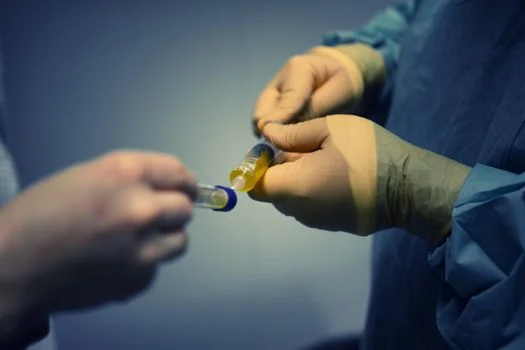
A hospital ETP is not a smaller municipal STP with a different sticker on the door. Hospital effluent typically carries BOD 250–800 mg/L, COD 500–1,500 mg/L, and TSS 200–600 mg/L — two to five times stronger than domestic sewage at the same hydraulic load. Beyond organics, the pollutant mix includes pathogens (E. coli, Pseudomonas aeruginosa, Mycobacterium), pharmaceutical residues (antibiotics, cytotoxics, iodinated contrast media), aldehyde-based disinfectants (glutaraldehyde 1–2%, formaldehyde), and radioisotopes (Tc-99m, I-131) from nuclear medicine wards. The combination is a design problem municipal STPs are not built to handle.
Antibiotic resistance gene removal is now a regulatory issue. Conventional activated sludge removes only 0.5–1.5 log of ARGs; the 2024 CPCB benchmark is >2.5 log. MBR followed by UV or ozone polishing is currently the only packaged configuration that reliably meets this on hospital feed, and it is also the configuration that handles the 40–45°C hot discharge from CSSD and laundry better than conventional ASP because MLSS is held in a fully enclosed aeration tank. Flow variability is the third issue: hospital hydraulics swing 3–5× between day and night shifts, with peaks during outpatient hours. Any packaged plant without a 6–8 hour equalization basin upstream will fail on BOD during morning peaks.
Process Comparison: MBR vs SBR vs WSZ Packaged Plant for Punjab Hospitals
Three packaged process trains dominate Punjab hospital tenders in 2026. MBR (Membrane Bioreactor) uses submerged PVDF flat-sheet or hollow-fiber modules at 0.1–0.4 μm pore size, achieving BOD/COD removal of 95–98% and TSS <2 mg/L. Footprint is 60% smaller than SBR, but CAPEX runs 20–30% higher and OPEX 10–15% higher because of membrane aeration and periodic chemical cleaning (typically 1× CIP per 3–6 months with NaOCl + citric acid). SBR (Sequencing Batch Reactor) is a single-tank fill-react-settle-decant cycle with no membranes, simpler PLC controls, and BOD/COD removal of 90–95%. It is appropriate for 50–150 bed hospitals with stable influent and no reuse target.
WSZ is a buried A/O contact oxidation + sedimentation + disinfection unit, fully automatic, with capacity 1–80 m³/h. It is the most space-efficient option and the right choice for Punjab hospitals with a small footprint and no civil-works budget. The trade-off is lower ARG removal and limited reuse potential without a downstream polish. MBR effluent meets WHO 2006 reuse guidelines for toilet flushing and landscape irrigation after UV or ClO2 polishing; SBR effluent typically needs sand filtration + disinfection to reach the same bar.
Decision rule of thumb: under 50 beds, specify the WSZ underground packaged sewage treatment plant; 50–200 beds, SBR or MBR depending on space and reuse targets; above 200 beds, MBR is mandatory to meet ARG and reuse requirements without oversizing downstream polish.
| Parameter | MBR | SBR | WSZ |
|---|---|---|---|
| BOD/COD removal | 95–98% | 90–95% | 85–92% |
| TSS outlet | <2 mg/L | ≤30 mg/L | ≤30 mg/L |
| Footprint (relative) | 0.4× | 1.0× | 0.6× (buried) |
| ARG removal | >2.5 log with UV/ozone | 0.5–1.5 log | 1.0–1.5 log |
| CAPEX (relative) | 1.2–1.3× | 1.0× | 0.7–0.9× |
| Reuse-ready effluent | Yes (WHO 2006) | Needs sand filter + ClO2 | Needs polish |
| Best fit | ≥200 beds, reuse target | 50–150 beds, discharge-only | ≤50 beds, space-constrained |
Recommended Process Flow for a 100-Bed Punjab Hospital
A 100-bed Punjab hospital generating 40–60 m³/day of effluent is the most common bid size, and the process train below is bid-ready. Stage 1 is fine screening with a rotary mechanical bar screen at 5 mm aperture to remove rags, cotton swabs, and pathology solids — specify a GX rotary mechanical bar screen sized for peak flow with auto-cleaning. Stage 2 is equalization with 6–8 hours retention and coarse-bubble aeration to dampen the BOD, pH, and temperature shock from CSSD and laundry discharge. Stage 3 is the biological step: anoxic + aerobic chambers with submerged PVDF flat-sheet membranes, MLSS held at 8,000–12,000 mg/L, HRT 8–12 hours — the HydropureWater MBR integrated wastewater treatment system with DF series PVDF flat-sheet MBR membrane modules is the standard reference configuration.
Stage 4 is disinfection. Specify a chlorine dioxide generator sized for 1–2 mg/L residual with 30 minutes contact, which delivers a 99.9% fecal coliform kill and contributes to ARG reduction; chlorine gas or hypochlorite is no longer the right primary disinfectant under the 2024 CPCB TRC cap. Stage 5 is sludge handling: a plate-and-frame filter press producing <60% moisture cake for off-site disposal through an authorized common BMW treatment facility under BMW Rules 2016 manifesting. Stage 6, optional, is reuse polish: ultrafiltration or RO to recover cooling-tower make-up or toilet-flush water; for hospitals not pursuing reuse, discharge to the municipal sewer with PPCB consent closes the loop.
CAPEX and OPEX in INR for Punjab Hospital ETP Projects
The figures below are 2026 indicative ranges for Punjab installations including civil works, equipment, plumbing, and a 30-day trial run, but excluding land and the BMW sludge disposal fee. The single largest CAPEX lever is the membrane sourcing decision: imported PVDF flat-sheet modules run 1.6–1.8× the price of HydropureWater domestic equivalents of the same pore size and flux, with comparable 5-year service life in hospital duty.
For a 50-bed hospital at 20–30 m³/day, a packaged WSZ plant runs INR 12–22 lakh CAPEX and INR 1.2–1.8 lakh/year OPEX. A 100-bed hospital at 40–60 m³/day on MBR runs INR 28–45 lakh CAPEX and INR 2.5–3.8 lakh/year OPEX including membrane cleaning chemicals. A 250-bed hospital at 100–150 m³/day on MBR runs INR 55–90 lakh CAPEX and INR 5–7.5 lakh/year OPEX. A 500-bed hospital at 200–300 m³/day with MBR plus a reuse polishing train runs INR 1.2–2.0 crore CAPEX and INR 11–18 lakh/year OPEX. The reuse train alone — UF or RO polishing for toilet flush and cooling-tower make-up — pays back in 12–24 months at Punjab municipal freshwater tariffs of INR 35–55/kL post the 2024 tariff revision, displacing 30–60% of hospital consumption.
| Hospital size | Flow (m³/day) | Process | CAPEX (INR) | OPEX (INR/year) | Payback (reuse train only) |
|---|---|---|---|---|---|
| 50 beds | 20–30 | WSZ | 12–22 lakh | 1.2–1.8 lakh | — |
| 100 beds | 40–60 | MBR | 28–45 lakh | 2.5–3.8 lakh | 18–24 months |
| 250 beds | 100–150 | MBR | 55–90 lakh | 5–7.5 lakh | 14–20 months |
| 500 beds | 200–300 | MBR + reuse | 1.2–2.0 crore | 11–18 lakh | 12–18 months |
Cost levers that move the final number by 15–25%: containerized skid delivery versus full civil construction (skid is faster but costs more for the same flow); membrane origin (domestic vs imported); and the civil contractor (Punjab district-to-district variation is around 30%, with Mohali and Ludhiana on the higher side, Patiala and Amritsar lower).
Vendor Selection Checklist for Indian Hospital ETP Procurement
Most failed Punjab hospital ETP tenders in 2024–2025 traced back to one of three causes: a generic imported skid sized for municipal sewage, no PPCB commissioning certificate, and no in-state service engineer. Specify that the vendor must produce a PPCB commissioning certificate from at least one Punjab-based hospital installation in the last 36 months, and a 30-day trial run dataset from an NABL-accredited lab covering BOD, COD, TSS, fecal coliform, and pH at inlet and outlet.
Require a minimum 3-year warranty on PVDF membrane modules with a replacement cost cap, and confirm a local service engineer within 200 km of site — HydropureWater partner coverage spans Ludhiana, Mohali, Amritsar, Jalandhar, and Patiala. The PLC must provide OCEMS-ready 4–20 mA outputs wired to PPCB's online continuous effluent monitoring system; this is mandatory in the 2024 CTO conditions for hospitals above 100 beds. Finally, the vendor should provide a BMW Rules 2016 compliance package: sludge manifest format, MoU template with an authorized BMW transporter, and a yearly audit calendar covering BMW returns and OCEMS data uploads. For a deeper technology cross-check on the disinfection step, see the ozone vs UV disinfection buyer's guide; for sludge dewatering, the filter press vs belt filter press comparison is the right reference.
Frequently Asked Questions
Q: What is the PPCB consent limit for hospital wastewater in Punjab?
A: For surface water discharge, the headline limits are BOD ≤30 mg/L, COD ≤250 mg/L, TSS ≤100 mg/L, fecal coliform <100 MPN/100 mL, and pH 6.5–8.5. Confirm against the latest PPCB schedule (PPCB/EHS-Hosp/2024) before filing the CTO.
Q: Which wastewater treatment technology is best for a 100-bed hospital?
A: MBR is preferred for 95–98% BOD removal, compact footprint, and ARG reduction >2.5 log. SBR is acceptable if the budget is constrained and reuse is not planned.
Q: How much does a hospital ETP cost in Punjab?
A: From INR 12 lakh for a 50-bed packaged WSZ plant up to INR 2 crore for a 500-bed MBR with a reuse polishing train, including civil works and commissioning.
Q: Can hospital wastewater be reused for gardening or toilet flushing?
A: Yes, after MBR + UV or ClO2 polishing meeting WHO 2006 reuse guidelines, with explicit PPCB written permission in the CTO.
Q: Is chlorine sufficient for hospital effluent disinfection in 2026?
A: No. CPCB's 2024 advisory caps TRC at 1 mg/L and chlorine alone removes <1 log of ARGs. Use ClO2 or ozone for the primary disinfection step, with chlorine only as a polishing residual.
Related Equipment
- Medical and hospital wastewater treatment system — specifications, capacity range, and technical data