Bilbao’s Industrial Wastewater Challenge: URA Standards, Sector Pollutants & Compliance Risks
Bilbao’s industrial facilities face a critical 2026 deadline to upgrade sewage treatment equipment, ensuring compliance with the Basque Water Agency’s (URA) stringent effluent standards. These standards mandate discharge limits of less than 30 mg/L for Total Suspended Solids (TSS) and less than 125 mg/L for Chemical Oxygen Demand (COD). Sector-specific pollutants require tailored solutions: food processing plants must manage Fats, Oils, and Grease (FOG), manufacturing operations contend with heavy metals, and port facilities often experience high flow rates and oil contamination. Suppliers must provide robust solutions, such as Dissolved Air Flotation (DAF) systems capable of 92–97% TSS removal, or Membrane Bioreactor (MBR) systems that can achieve COD levels below 50 mg/L. Local compliance documentation, timely delivery within 4–6 weeks, and CAPEX ranging from €80,000 for compact DAF units to €3 million for extensive MBR plants are crucial procurement considerations.
The Galindo Wastewater Treatment Plant (WWTP) processes approximately 21,600 m³/h of stormwater, achieving an 82.5% TSS removal rate. Industrial facilities are responsible for pre-treating their wastewater to meet URA’s specific discharge parameters, thereby avoiding surcharges or potential legal repercussions. Non-compliance, particularly FOG violations in the food processing sector, accounted for 70% of URA fines issued in 2024, highlighting the urgent need for effective treatment systems. Manufacturing facilities frequently exceed heavy metal limits, while port operations grapple with managing significant flow surges and oil/grease contamination.
| Industrial Sector | Primary Pollutants | Average TSS (mg/L) | Average COD (mg/L) | URA Discharge Limit (Example) |
|---|---|---|---|---|
| Food Processing | FOG, High BOD, Organic Load | 150-500 | 500-2000 | <30 mg/L TSS, <125 mg/L COD, <50 mg/L FOG |
| Manufacturing | Heavy Metals, Erratic pH, Solvents | 100-400 | 200-800 | <30 mg/L TSS, <125 mg/L COD, <0.5 mg/L Cd (example metal) |
| Port Operations | High Flows, Oil/Grease, Sediments | 50-200 | 100-300 | <30 mg/L TSS, <125 mg/L COD, <20 mg/L Oil/Grease |
Sewage Treatment Technologies for Bilbao: DAF vs MBR vs Underground WSZ Systems
Selecting the appropriate sewage treatment technology is paramount for Bilbao’s industrial sector to meet URA standards while managing operational constraints such as space, labor, and water reuse objectives. Dissolved Air Flotation (DAF) systems are highly effective for removing suspended solids and FOG, achieving 92–97% TSS removal. DAF systems are particularly well-suited for food processing and port operations, with a typical CAPEX range of €80,000 to €500,000 and OPEX between €0.15 and €0.30 per cubic meter. For advanced treatment and potential water reuse, MBR bioreactors offer superior effluent quality, consistently achieving COD levels below 50 mg/L and TSS below 10 mg/L. MBR systems represent a higher CAPEX investment, ranging from €1.2 million to €3 million, with OPEX between €0.40 and €0.70 per cubic meter, making them ideal for manufacturing facilities aiming for high-purity effluent. Underground WSZ plants provide a compact and automated solution, ideal for space-constrained sites, offering capacities from 1 to 80 m³/h. These systems boast a 60% smaller footprint and require no dedicated operator, with CAPEX typically between €100,000 and €1.5 million.
The choice of technology must align with specific industrial needs.For manufacturing sectors pursuing water reuse, MBR systems offer the necessary effluent quality. Food processing industries will find DAF systems to be the most cost-effective solution for managing FOG. In port operations, DAF systems can efficiently pre-treat stormwater and oily wastewater before discharge or further treatment. For facilities where space is at a premium, underground WSZ plants present an integrated and efficient option. Understanding the performance characteristics of each technology in relation to URA’s effluent parameters is crucial for informed decision-making.
| Technology | TSS Removal (%) | COD Removal (%) | FOG Removal (%) | Heavy Metal Removal (%) | CAPEX Range (€) | OPEX Range (€/m³) | Footprint | Maintenance |
|---|---|---|---|---|---|---|---|---|
| DAF Systems | 92–97 | 40–70 | 85–95 | 20–50 (if flocculated) | 80K–500K | 0.15–0.30 | Moderate | Moderate |
| MBR Bioreactors | >99 | >95 | >95 | >80 (depending on membrane) | 1.2M–3M | 0.40–0.70 | Compact | High (membrane care) |
| Underground WSZ Plants | 90–98 | 85–95 | 80–90 | 30–60 | 100K–1.5M | 0.20–0.40 | Very Compact | Low (automated) |
For tailored solutions addressing specific industrial needs in Bilbao, consider DAF systems for Bilbao’s food processing and port operations, MBR systems for near-reuse-quality effluent in Bilbao, and space-saving WSZ plants for Bilbao’s constrained sites.
Bilbao Sewage Treatment Equipment Suppliers: Zero-Risk Selection Framework
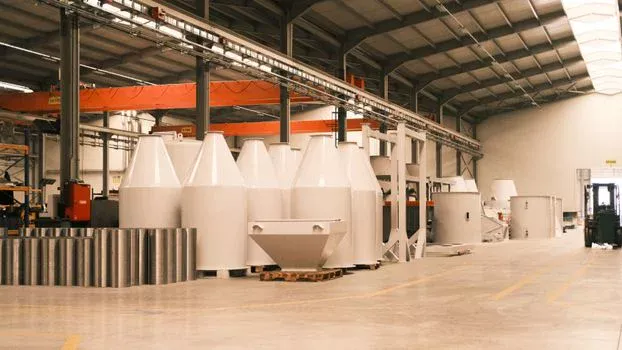
Assess the supplier's local support network; prioritize vendors offering Bilbao-based installation, commissioning, and 24/7 after-sales service to avoid extended downtime and logistical challenges associated with overseas-only providers. Reviewing sector-specific case studies—demonstrating successful deployments of DAF for food processing or MBR for manufacturing reuse—provides crucial validation of their expertise.
Crucially, compare CAPEX and OPEX models that accurately reflect Bilbao-specific costs. This includes factoring in the 12% import duties on water treatment equipment, estimated 4–6 week shipping timelines from international manufacturers, and local installation labor rates, which typically range from €40 to €60 per hour. Finally, evaluate the supplier's capabilities in automation and remote monitoring. URA may mandate real-time data logging for compliance reporting, making advanced control systems a key consideration. A structured approach to supplier selection ensures that the procured equipment not only meets current URA standards but also provides a reliable and cost-effective solution for years to come.
Bilbao Sewage Treatment CAPEX & OPEX: 2026 Cost Models for Industrial Buyers
Accurate budgeting for industrial wastewater treatment equipment in Bilbao necessitates a clear understanding of both Capital Expenditure (CAPEX) and Operational Expenditure (OPEX), factoring in local economic conditions. For DAF systems, CAPEX typically ranges from €80,000 to €500,000, while MBR bioreactors represent a higher investment, from €1.2 million to €3 million. Underground WSZ plants fall within a €100,000 to €1.5 million CAPEX range. These figures are significantly influenced by local cost factors, including a 12% import duty on water treatment equipment and shipping costs from international manufacturers, which can add 4–6 weeks to delivery times and substantial freight charges. Local installation labor, at an estimated €40–€60 per hour, also contributes to the initial CAPEX.
Operational expenditures vary by technology: DAF systems incur OPEX of €0.15–€0.30 per cubic meter, primarily for chemicals and energy. MBR systems have higher OPEX at €0.40–€0.70 per cubic meter, driven by energy consumption, membrane replacement, and specialized chemicals. WSZ plants offer a moderate OPEX of €0.20–€0.40 per cubic meter. For a practical illustration, consider a Bilbao food processor implementing a DAF system. By effectively reducing FOG discharges by an estimated 78%, such a system can achieve a return on investment (ROI) within approximately 2.5 years, primarily through the avoidance of URA surcharges.
| Technology | CAPEX Range (€) | Capacity Range (m³/h) | Cost per m³/h (€) | OPEX Range (€/m³) |
|---|---|---|---|---|
| DAF Systems | 80K–500K | 5–100 | 800–5,000 | 0.15–0.30 |
| MBR Bioreactors | 1.2M–3M | 10–200 | 6,000–15,000 | 0.40–0.70 |
| Underground WSZ Plants | 100K–1.5M | 1–80 | 1,250–18,750 | 0.20–0.40 |
Frequently Asked Questions
What are the primary URA effluent standards for industrial discharge in Bilbao?
URA's standards generally require less than 30 mg/L TSS and less than 125 mg/L COD for industrial discharge into the Estuary of Bilbao. Sector-specific limits for pollutants like FOG and heavy metals also apply.
Which technology is best for FOG removal in food processing wastewater?
DAF systems are highly effective for FOG removal, achieving 85–95% reduction, making them a prime choice for food processing plants in Bilbao.
Can MBR systems be used for industrial water reuse in Bilbao?
Yes, MBR systems produce high-quality effluent (TSS ≤10 mg/L, COD ≤50 mg/L) suitable for industrial water reuse, a critical consideration for manufacturing facilities aiming for water conservation.
What are the typical delivery timelines for sewage treatment equipment to Bilbao?
From international suppliers, delivery timelines typically range from 4 to 6 weeks, not including potential customs delays.
How do import duties affect the cost of sewage treatment equipment in Bilbao?
Import duties for water treatment equipment into Spain are generally around 12%, which must be factored into the total CAPEX.
Is local installation and maintenance support critical when selecting a supplier?
Yes, local support is crucial for timely installation, commissioning, and essential 24/7 maintenance to ensure continuous compliance and minimize operational disruptions.
What is the CAPEX range for an underground WSZ plant in Bilbao?
Underground WSZ plants in Bilbao typically have a CAPEX ranging from €100,000 to €1.5 million, depending on the required capacity.
How can a food