Entebbe wastewater treatment plant cost runs UGX 1.2B–12B in CAPEX by capacity and technology, with OPEX near UGX 1,500–3,000 per m³ for industrial loads. NEMA 2023 effluent limits and peninsula land prices drive the spread.
Why Entebbe's Wastewater Treatment Costs Are Higher Than Regional Averages
Entebbe plant budgets run above regional averages for three stacked reasons: peninsula land at UGX 50M–150M per acre, NEMA 2023 limits of COD below 50 mg/L, and NWSC connection fees and tariffs. Compliance-driven technology, not equipment alone, sets the budget.
In Entebbe, wastewater treatment plant costs vary widely by capacity and technology. For example, a 500 m³/day municipal plant using pond systems costs UGX 1.2B–2.5B (EUR 280K–580K) in CAPEX, while a 5,000 m³/day MBR system ranges from UGX 8B–12B (EUR 1.9M–2.8M). OPEX for industrial plants (e.g., food processing) averages UGX 1,500–3,000/m³, driven by energy and sludge disposal. These estimates include NEMA-compliant equipment, local permitting, and NWSC connection fees—critical factors often omitted in generic CAPEX and OPEX guides.
Land scarcity in the Entebbe peninsula drives CAPEX for traditional treatment methods 20–30% higher than in rural Uganda. Land prices range from UGX 50M to UGX 150M per acre according to Uganda Investment Authority 2024 data. This premium on space effectively penalizes high-footprint solutions like stabilization ponds, pushing industrial facility owners toward compact technologies.
Meanwhile, the National Environment Management Authority (NEMA) 2023 effluent standards—requiring Chemical Oxygen Demand (COD) levels below 50 mg/L and Total Suspended Solids (TSS) under 30 mg/L—necessitate advanced biological or mechanical treatment. For industrial plants, meeting these strict limits typically adds UGX 1.5B–3B to the initial CAPEX compared to basic primary treatment setups.
Operational costs are similarly influenced by local regulatory structures. National Water and Sewerage Corporation (NWSC) connection fees range from UGX 200,000 to UGX 500,000 per household equivalent, while annual sewerage tariffs for industrial discharge can reach UGX 1.2M–2.4M per hectare. Entebbe's specific influent characteristics also play a role; the high organic load from the hospitality sector (hotels and resorts) combined with variable flows from fish processing and food manufacturing requires robust systems. These high-strength wastes demand higher aeration energy and precise chemical dosing to prevent process upsets and ensure NEMA compliance.
NWSC itself, formed by Decree No. Its published tariff guide notes that water and sewerage rates are subject to annual indexation effective 1st July of every year (NWSC), which is why fixed-price OPEX models drift off within a few years.
Entebbe Wastewater Treatment Plant Cost Breakdown: CAPEX by Plant Size and Technology
Capital expenditure for wastewater infrastructure in Entebbe is primarily dictated by the required effluent quality and the physical footprint available for construction. While a compact underground sewage treatment system for Entebbe's urban projects offers a lower civil works cost by utilizing vertical space, larger municipal projects often face high structural costs due to Entebbe's sandy-loam soil profiles. The following table provides a breakdown of CAPEX ranges based on plant capacity and technology type, incorporating equipment procurement, civil works, and a 15% contingency fund.
Wastewater Treatment Plant CAPEX Uganda: Entebbe Benchmarks
| Plant Capacity (m³/day) | Technology Type | Civil Works (UGX) | Equipment & Tech (UGX) | Permitting & Fees (UGX) | Total Estimated CAPEX (UGX) |
|---|---|---|---|---|---|
| 50 (Small Industrial) | DAF Pre-treatment | 150M - 250M | 400M - 600M | 50M - 80M | 600M - 930M |
| 500 (Medium Industrial) | Activated Sludge | 800M - 1.2B | 1.5B - 2.2B | 120M - 200M | 2.42B - 3.6B |
| 500 (Municipal) | Pond Systems | 1.0B - 1.8B | 100M - 300M | 100M - 150M | 1.2B - 2.25B |
| 1,000 (Large Hotel/Resort) | MBR System | 1.2B - 2.0B | 3.5B - 5.0B | 250M - 400M | 4.95B - 7.4B |
| 5,000 (Municipal/Large Industrial) | MBR System | 2.5B - 4.5B | 5.0B - 7.0B | 500M - 800M | 8.0B - 12.3B |
Pond systems remain the lowest CAPEX option at approximately UGX 1.2B–2.5B for a 500 m³/day plant. They are increasingly unviable in Entebbe due to land requirements and inability to meet 2023 NEMA standards for industrial discharge. Conversely, an MBR system for Entebbe's reuse-quality effluent needs represents the high end of the spectrum, with costs for a 5,000 m³/day facility reaching up to UGX 12B. However, MBR technology provides the highest effluent quality, making it the preferred choice for facilities aiming for water reuse to offset NWSC water bills. For industrial plants dealing with high fats, oils, and grease (FOG), installing DAF pre-treatment for Entebbe's industrial wastewater (FOG/oil removal) is a necessary CAPEX investment of UGX 2B–4B for 500 m³/day plants. It protects downstream biological processes from FOG shock loads.
Municipal buyers can also benchmark against municipal wastewater treatment plant cost data compiled for Australia, where land and energy lines are itemized the same way.
MBR System Cost Entebbe Industrial Buyers Face
The MBR system cost Entebbe industrial buyers face falls between UGX 4.95B and 7.4B at the 1,000 m³/day hotel-resort scale, and reaches up to UGX 12B at 5,000 m³/day municipal scale. Membrane stacks, automation cabinets, and enclosed building volume drive the premium over pond or activated-sludge builds. The ROI table below shows why buyers still commit: reuse-quality water offsets NWSC water bills worth UGX 2,500–4,000 per m³.
OPEX in Entebbe: Energy, Sludge, and Labor Costs You Can’t Ignore

Operating expenses for Entebbe wastewater plants are heavily influenced by Uganda's industrial electricity tariffs and the logistical costs of sludge management. Energy consumption is the most significant OPEX variable; MBR systems typically consume between 0.8 and 1.2 kWh/m³ of treated water. Conventional activated sludge systems range from 0.3 to 0.5 kWh/m³, according to Uganda Electricity Transmission Company 2024 rates. For a plant processing 1,000 m³/day, this difference can amount to tens of millions of Shillings annually.
Wastewater Treatment OPEX Uganda per m3: Four Technology Bands
| OPEX Component | Pond Systems (UGX/m³) | Activated Sludge (UGX/m³) | MBR Systems (UGX/m³) | DAF Pre-treatment (UGX/m³) |
|---|---|---|---|---|
| Energy Consumption | 50 - 100 | 300 - 500 | 800 - 1,200 | 400 - 700 |
| Chemicals (PAC/PAM) | 0 - 50 | 200 - 400 | 250 - 500 | 500 - 800 |
| Sludge Disposal | 100 - 200 | 250 - 450 | 150 - 300 | 300 - 600 |
| Labor & Maintenance | 100 - 200 | 200 - 400 | 300 - 500 | 200 - 400 |
| Total OPEX/m³ | 250 - 550 | 950 - 1,750 | 1,500 - 2,500 | 1,400 - 2,500 |
Chemical costs are another critical factor, especially for industrial influent with fluctuating pH and high solids. Utilizing a precise chemical dosing for Entebbe's variable industrial influent can optimize the use of coagulants like Polyaluminum Chloride (PAC), which costs UGX 200–300/kg, and flocculants like polyacrylamide (PAM), priced at UGX 400–600/kg.
Sludge disposal in Entebbe involves landfill fees of UGX 50,000–100,000 per ton. To mitigate these costs, many operators invest in a plate and frame filter press to reduce sludge volume by up to 75%, significantly lowering transportation and tipping fees. Labor requirements also scale with technology. A pond system may only require one part-time attendant per 2,000 m³/day. An MBR or DAF plant requires at least one skilled operator per 500 m³/day to manage membrane cleaning cycles and dosing calibration.
Tech Comparison: Pond vs. Activated Sludge vs. MBR vs. DAF for Entebbe's Wastewater
Choosing the correct technology for an Entebbe-based project requires balancing the high cost of local land against the stringent effluent requirements set by NEMA. While pond systems are historically common in Uganda, their 2–4 m²/m³ footprint makes them increasingly expensive in Entebbe's tight real estate market. In contrast, MBR technology offers a footprint as low as 0.2 m²/m³, allowing industrial facilities to maximize their productive land area. The following matrix compares these technologies across performance and compliance metrics relevant to the Entebbe context.
| Metric | Pond Systems | Activated Sludge | MBR Systems | DAF Systems |
|---|---|---|---|---|
| CAPEX (UGX/m³) | ~2,400,000 | ~6,000,000 | ~16,000,000 | ~4,000,000 |
| Footprint (m²/m³) | 2.0 - 4.0 | 0.5 - 1.0 | 0.1 - 0.3 | 0.2 - 0.4 |
| Effluent COD (mg/L) | 100 - 200 | 50 - 80 | < 30 | 100 - 150 (Pre-treat) |
| NEMA Compliance | No (Industrial) | Borderline | Yes (Full) | Requires Bio-step |
| Ideal Use Case | Rural Municipal | Urban Municipal | Hotels/Food Processing | Fish/Oil Processing |
For municipal projects, a compact underground sewage treatment system for Entebbe's urban projects based on activated sludge variants provides a middle ground, offering NEMA-compliant effluent for domestic sewage at a moderate cost. However, for the industrial sector, particularly fish processing plants along the lake, an MBR system for Entebbe's reuse-quality effluent needs is often the only way to consistently meet the COD < 50 mg/L threshold.
If the influent contains high concentrations of lipids, a DAF pre-treatment for Entebbe's industrial wastewater (FOG/oil removal) must be integrated to prevent biological membranes from fouling. Skipping it would otherwise triple the OPEX through frequent membrane replacements. Cross-market specs for industrial wastewater treatment in Auckland show the same sequencing under strict discharge rules.
NEMA Effluent Compliance Uganda Cost: Standards, Fines, and NWSC Requirements
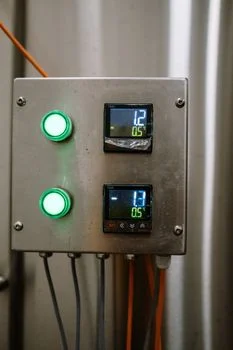
NEMA effluent limits for Entebbe in 2024 are among the strictest in East Africa to protect the Lake Victoria ecosystem, mandating COD < 50 mg/L and BOD < 25 mg/L. Failure to meet these standards results in penalties ranging from UGX 10M to UGX 100M per violation. Beyond NEMA, any facility connecting to the municipal grid or discharging into public water bodies must coordinate with the National Water and Sewerage Corporation (NWSC) to ensure hydraulic capacity and obtain necessary discharge permits.
- Effluent Quality Limits: COD < 50 mg/L, BOD < 25 mg/L, TSS < 30 mg/L, pH 6.0–9.0, and Fecal Coliform < 1,000 CFU/100mL.
- Permitting Timeline: Allow 3–6 months for the Environmental Impact Assessment (EIA) and 2–4 months for NWSC hydraulic approval.
- Disinfection Requirements: All treated water intended for discharge near residential areas must be disinfected. A chlorine dioxide generator is a standard requirement for ensuring pathogen-free effluent.
- Sector-Specific Rules: Facilities such as clinics or small hospitals must adhere to specialized standards, often requiring a medical wastewater treatment system to handle hazardous pathogens.
- Approved Testing Labs: Effluent must be tested at NEMA-certified laboratories, such as the NWSC Central Laboratory in Bugolobi or the Makerere University Water Lab, to maintain legal compliance.
A common compliance pitfall in Entebbe is underestimating the impact of NWSC's tariff escalation clauses. Industrial users often find that their discharge costs increase annually, making on-site treatment and reuse a more attractive financial strategy. For more details on regional standards, refer to this Kampala's NEMA compliance guide for industrial wastewater, which mirrors many of the requirements found in Entebbe. Multinational owners also benchmark against the EU Urban Wastewater Treatment Directive: Compliance, Deadlines & Tech overview when parent-company policies follow European practice.
ROI Calculator: How to Justify Your Entebbe Wastewater Treatment Investment
Return on Investment (ROI) for wastewater treatment in Entebbe is primarily driven by the high cost of NWSC water, which currently ranges from UGX 2,500 to UGX 4,000 per m³ for industrial and commercial users. By implementing a high-recovery treatment system, businesses can reuse treated effluent for non-potable applications like cooling towers, irrigation, and floor washing, effectively slashing their monthly water bills by up to 70%. For a hotel or food processing plant, the payback period for an advanced treatment system can be as short as four years when factoring in avoided NEMA fines and water savings.
| Investment Factor | MBR System (500 m³/day) | Activated Sludge (500 m³/day) |
|---|---|---|
| Total CAPEX (UGX) | 8.0 Billion | 3.5 Billion |
| Annual OPEX (UGX) | 365 Million | 250 Million |
| Annual Water Savings (UGX) | 1.2 Billion | 400 Million (Limited reuse) |
| Fines Avoided (UGX/yr) | 500 Million | 200 Million |
| Net Annual Benefit (UGX) | 1.335 Billion | 350 Million |
| Payback Period | ~6.0 Years | ~10.0 Years |
While the CAPEX for MBR is higher, the ability to produce "reuse-quality" water significantly accelerates the ROI. In many cases, adding a reverse osmosis system as a tertiary step allows for even higher-grade water recovery, suitable for sensitive industrial processes. Beyond direct financial metrics, Entebbe businesses often find that sustainable wastewater management is a prerequisite for green financing from international lenders or for meeting the corporate sustainability mandates of multinational partners. For a comparative look at similar high-cost environments, see Bali's cost breakdown for hotel wastewater treatment.
For a sized Entebbe package, send peak flow, COD/TSS/FOG ranges, and the target reuse or discharge limit through our request a project quote form. The engineering team returns a CAPEX/OPEX split by technology within the NEMA and NWSC constraints above.
Frequently Asked Questions
What is the average cost per m³ for a wastewater treatment plant in Entebbe?
CAPEX ranges from UGX 2,400/m³ for basic pond systems to UGX 16,000/m³ for advanced MBR systems. OPEX typically averages between UGX 1,500 and UGX 3,000 per m³ annually, depending on energy rates and influent strength. Ponds sit at the bottom of both ranges; MBR sits at the top with reuse-grade effluent as the payoff.
How much land is needed for a 1,000 m³/day wastewater treatment plant in Entebbe?
Pond systems require 2,000–4,000 m² of land, while activated sludge systems need 500–1,000 m². MBR systems are the most compact, fitting within 200–400 m². Confirm plot dimensions before selecting technology, because peninsula plots under 500 m² rule out ponds outright.
What are the NEMA effluent limits for industrial wastewater in Entebbe?
According to the 2023 standards, limits are COD < 50 mg/L, BOD < 25 mg/L, TSS < 30 mg/L, pH 6.0–9.0, and fecal coliform < 1,000 CFU/100mL. Testing must run through NEMA-certified laboratories to stay legally defensible. Hotels and fish processors face the tightest scrutiny because their discharge reaches Lake Victoria.
Can I reuse treated wastewater in Entebbe?
Yes. However, only MBR or tertiary-treated effluent meets NEMA's reuse standards (TSS < 1 mg/L, COD < 30 mg/L). NWSC also charges a fee of UGX 1,200–2,000/m³ for non-potable reuse monitoring. Cooling towers and irrigation are the off-takes that pay back fastest at Entebbe water prices.
How long does it take to build a wastewater treatment plant in Entebbe?
Small plants (<500 m³/day) take 6–12 months, while large municipal or industrial plants (>2,000 m³/day) take 12–24 months, including the time required for EIA and NWSC permitting. Start permitting in parallel with detailed design, because approvals sit on the critical path.
What DAF pre-treatment cost Uganda food processing plants should budget?
Budget UGX 2B–4B in CAPEX for DAF pre-treatment at a 500 m³/day food processing site, and UGX 1,400–2,500 per m³ in OPEX once chemicals and sludge are counted. DAF protects downstream biology from FOG shock loads. Most fish and food plants pair it with an aerobic or MBR stage to hold NEMA COD limits.