Hospital Wastewater Treatment in Manama: 2026 Engineering Specs, Bahrain Compliance & Zero-Risk Equipment Guide
In Manama, hospital wastewater treatment must address Bahrain EPA’s strict discharge limits (e.g., COD ≤50 mg/L, fecal coliform ≤1,000 CFU/100 mL) while removing antibiotic-resistant genes (ARGs) and pharmaceutical residues. Advanced systems like membrane bioreactors (MBRs) achieve 99.9% pathogen removal and <10 mg/L COD, but activated sludge with extended aeration (97.5% COD removal at 3 L/s) remains cost-effective for smaller facilities. Local projects must account for high salinity (TDS up to 45,000 mg/L in Bahrain’s groundwater) and space constraints—underground or containerized systems are increasingly common.Why Hospital Wastewater in Manama Requires Specialized Treatment
Hospital wastewater in Manama contains a complex mixture of contaminants, posing a significant public health and environmental risk if not adequately treated. Its composition typically includes antibiotics such as ciprofloxacin (observed up to 150 μg/L in global studies), antibiotic-resistant genes (ARGs) like bla_KPC and vanA, various pathogens (including norovirus and SARS-CoV-2), and heavy metals such as mercury from dental amalgam. The intrinsic toxicity of hospital effluent can be 5–15 times greater than urban wastewater, per a PubMed study, further complicated by persistent organic pollutants (POPs) like diclofenac. Bahrain’s healthcare sector is experiencing rapid expansion, with a 12% Compound Annual Growth Rate (CAGR) projected for 2020–2025 and three new hospitals slated for Manama between 2023 and 2026. This growth is anticipated to increase overall hospital wastewater volume by approximately 2,500 m³/d. For instance, a typical 300-bed hospital in Manama generates around 120 m³/d of wastewater (at 400 L/bed/day), often with Chemical Oxygen Demand (COD) levels reaching up to 800 mg/L. This significantly exceeds Bahrain EPA’s discharge limit of 50 mg/L for COD, necessitating robust on-site treatment to prevent non-compliance and protect the environment.Bahrain EPA Discharge Limits for Hospital Wastewater: 2026 Compliance Checklist
| Parameter | Bahrain EPA Discharge Limit (2026) | Notes |
|---|---|---|
| Chemical Oxygen Demand (COD) | ≤50 mg/L | Key indicator for organic pollution. |
| Biochemical Oxygen Demand (BOD₅) | ≤20 mg/L | Measures biodegradable organic content. |
| Total Suspended Solids (TSS) | ≤30 mg/L | Particulate matter that can settle out. |
| Fecal Coliform | ≤1,000 CFU/100 mL | Indicator of pathogenic bacteria. |
| Ammonia (NH₃-N) | ≤10 mg/L | Nutrient that can lead to eutrophication. |
| Total Phosphorus (TP) | ≤2 mg/L | Another key nutrient pollutant. |
| Antibiotic-Resistant Genes (ARGs) | No explicit limit | Global concern; future regulation anticipated. |
| Pharmaceuticals | No explicit limit | Emerging contaminants; future regulation anticipated. |
Treatment Technology Comparison: MBR vs. Activated Sludge vs. DAF for Manama Hospitals
Selecting the appropriate hospital wastewater treatment technology in Manama requires a careful evaluation of removal efficiency, footprint, capital expenditure (CAPEX), operational expenditure (OPEX), and resilience to local climate conditions. Three primary technologies are viable: Membrane Bioreactors (MBR), Activated Sludge with Extended Aeration, and Dissolved Air Flotation (DAF).MBR (Membrane Bioreactor) systems for hospital wastewater in Manama offer superior treatment performance, achieving 95–99% COD removal and 99.99% fecal coliform removal. Their compact design means they require approximately 60% less footprint than conventional activated sludge systems, making them ideal for space-constrained urban hospitals like Salmaniya Medical Complex. MBRs are highly effective at removing pathogens, antibiotics, and ARGs, often reducing them to below detectable limits. However, the high CAPEX, ranging from ₹1.2M–₹2.5M per 100 m³/d capacity, and the risk of membrane fouling in Manama's high-TDS (Total Dissolved Solids) water are significant considerations. HydropureWater offers robust MBR systems for hospital wastewater in Manama designed to mitigate these challenges.
Activated Sludge with Extended Aeration provides a more cost-effective solution with a lower CAPEX (₹800K–₹1.5M per 100 m³/d). This technology achieves 92–97% COD removal and 99.99% fecal coliform removal when coupled with 0.5 ppm chlorine disinfection (per a top-ranking study). Its primary drawbacks include a larger footprint compared to MBRs and limited effectiveness in removing ARGs and pharmaceuticals, with removal rates often below 50% without advanced tertiary treatment. Activated sludge systems are also more sensitive to Manama’s high temperatures (optimal range: 20–30°C) than MBRs or DAF.
DAF (Dissolved Air Flotation) excels in removing Total Suspended Solids (TSS) by 90–95% and Fats, Oils, and Grease (FOG) by 98%. While not a standalone solution for comprehensive hospital wastewater treatment, DAF systems are highly effective as a pre-treatment step, especially for high-solid effluents from areas like dialysis centers or laundries. They typically require pre-treatment with coagulants. The CAPEX for DAF systems ranges from ₹600K–₹1.2M per 100 m³/d. HydropureWater also provides Dissolved Air Flotation (DAF) machines, often integrated into hybrid systems to optimize overall treatment efficiency.
All three technologies must be designed with climate resilience in mind for Manama. MBR and DAF systems generally tolerate high ambient temperatures (up to 50°C) better than activated sludge. Given Bahrain’s high TDS levels (up to 45,000 mg/L in groundwater), all equipment, including piping and tanks, must utilize corrosion-resistant materials such as duplex stainless steel or High-Density Polyethylene (HDPE) to ensure long-term operational integrity.
| Feature | MBR (Membrane Bioreactor) | Activated Sludge (Extended Aeration) | DAF (Dissolved Air Flotation) |
|---|---|---|---|
| COD Removal Efficiency | 95–99% | 92–97% | Minimal (primary/pre-treatment) |
| Fecal Coliform Removal | 99.99% | 99.99% (with 0.5 ppm Cl₂) | Low (primary/pre-treatment) |
| ARG/Pharmaceutical Removal | High (>90%) | Low (<50%) | Negligible |
| Footprint (vs. Activated Sludge) | 60% smaller | Standard (largest) | Moderate (pre-treatment) |
| CAPEX (per 100 m³/d) | ₹1.2M–₹2.5M | ₹800K–₹1.5M | ₹600K–₹1.2M |
| OPEX (Relative) | Moderate-High | Low-Moderate | Moderate (chemicals) |
| Climate Resilience (50°C) | High tolerance | Sensitive (optimal 20-30°C) | High tolerance |
| High-TDS (45,000 mg/L) Impact | Membrane fouling risk | Corrosion, efficiency impact | Corrosion, chemical demand |
Manama-Specific Cost Breakdown: CAPEX, OPEX, and Hidden Expenses
CAPEX ranges per 100 m³/d capacity:
- MBR systems: ₹1.2M–₹2.5M
- Activated Sludge systems: ₹800K–₹1.5M
- DAF systems: ₹600K–₹1.2M
OPEX breakdown (annual, per 100 m³/d capacity):
- Energy: ₹250K–₹400K. While Bahrain’s electricity costs (BHD 0.025/kWh) are lower than in the EU or US, they are experiencing an annual rise of approximately 5%.
- Chemicals: ₹100K–₹200K. This includes coagulants, flocculants, and disinfectants. HydropureWater provides reliable automatic chemical dosing systems to optimize chemical usage.
- Membrane Replacement (MBR only): ₹150K–₹300K, typically occurring every 5–8 years depending on water quality and maintenance.
- Labor: ₹120K–₹200K for operational staff and routine maintenance.
Hidden costs specific to Manama:
High TDS levels (up to 45,000 mg/L) in Bahrain’s water sources significantly increase chemical consumption, particularly for coagulants, by 20–30% compared to global averages. This is crucial for primary treatment stages and for mitigating membrane fouling in MBR systems. the corrosive nature of high-TDS water necessitates the use of more expensive, corrosion-resistant materials (e.g., duplex stainless steel, HDPE), adding to both CAPEX and long-term maintenance costs.ROI calculation:
For a 200-bed hospital generating approximately 80 m³/d of wastewater, investing in an MBR system can yield a return on investment (ROI) within 5–7 years. This is achieved through significant savings from avoided Bahrain EPA fines (BHD 10,000 per quarter for non-compliance) and the value of reclaimed water. Treated effluent meeting discharge standards can be reused for irrigation or cooling tower makeup, generating savings of approximately BHD 3.5/m³. This dual benefit of compliance and resource recovery makes advanced treatment a financially sound decision. HydropureWater also offers chlorine dioxide generators for hospital effluent, which are key for effective disinfection and enabling safe water reuse.| Cost Category | MBR System (per 100 m³/d) | Activated Sludge System (per 100 m³/d) | Notes for Manama |
|---|---|---|---|
| CAPEX (Equipment, Civil Works, Installation) | ₹1.2M–₹2.5M | ₹800K–₹1.5M | Manama labor: BHD 15–25/hour |
| Annual Energy OPEX | ₹300K–₹400K | ₹250K–₹350K | Bahrain electricity: BHD 0.025/kWh (5% YoY increase) |
| Annual Chemical OPEX | ₹150K–₹200K | ₹100K–₹150K | High TDS increases consumption by 20–30% |
| Membrane Replacement (MBR only) | ₹150K–₹300K (every 5–8 years) | N/A | Cost dependent on membrane type and water quality |
| Annual Labor OPEX | ₹120K–₹180K | ₹150K–₹200K | Automated systems reduce labor needs |
| Sludge Disposal OPEX | ₹50K–₹100K | ₹80K–₹150K | BHD 50–100/ton in Bahrain |
Equipment Selection Framework: 5 Critical Factors for Manama Hospitals
Selecting the optimal hospital wastewater treatment equipment in Manama demands consideration of five critical factors, tailored to local climate, space, and regulatory conditions.1. Footprint: Space is a premium for urban hospitals in Manama, such as the American Mission Hospital. MBR systems require approximately 60% less space than conventional activated sludge systems, making them highly advantageous. For retrofits or facilities with limited surface area, underground sewage treatment for Manama hospitals, like HydropureWater’s WSZ Series, or containerized systems are ideal, minimizing disruption and maximizing land use.
2. Automation: Given Manama’s labor costs (BHD 15–25/hour), PLC-controlled and highly automated systems are essential for reducing operational expenses and minimizing human error. Look for systems with remote monitoring capabilities, such as SCADA integration, to ensure 24/7 compliance and proactive maintenance. HydropureWater offers compact medical wastewater treatment for clinics and hospitals that integrate advanced automation.
3. Climate Resilience: Manama’s extreme temperatures (up to 50°C) and high TDS levels (45,000 mg/L) necessitate robust equipment design. Treatment systems must feature corrosion-resistant materials like duplex stainless steel or HDPE. Energy-efficient aeration systems, such as turbo blowers, are crucial for maintaining biological activity in high temperatures while managing energy consumption.
4. Disinfection: Effective disinfection is paramount for hospital wastewater, particularly for inactivating ARGs and pathogens. Chlorine dioxide (ClO₂) is 2.5 times more effective than sodium hypochlorite for ARG removal, as per 2023 WHO guidelines. Critically, ClO₂ does not form harmful trihalomethanes (THMs) in high-TDS water, unlike chlorine, making it a safer and more efficient choice for Manama’s conditions.
5. Maintenance: Long-term operational costs are heavily influenced by maintenance requirements. MBR membranes typically require chemical cleaning every 3–6 months, costing approximately ₹50K–₹100K per 100 m³/d. Activated sludge systems, on the other hand, incur costs for periodic sludge disposal, which can range from BHD 50–100/ton in Bahrain. Understanding these recurring costs is vital for accurate budgeting and ensuring sustained performance.
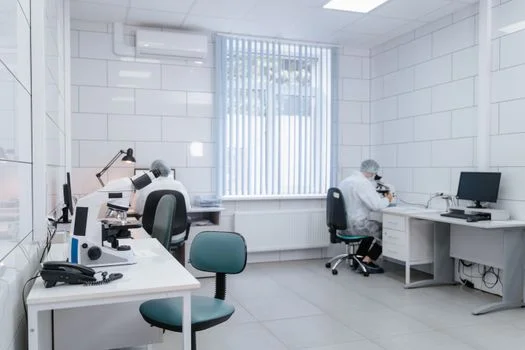
Case Study: 300-Bed Hospital in Manama Achieves 99.9% Pathogen Removal with MBR
Frequently Asked Questions
Q: What are Bahrain EPA’s discharge limits for hospital wastewater in 2026?
A: Bahrain EPA’s discharge limits for hospital wastewater are COD ≤50 mg/L, BOD ≤20 mg/L, TSS ≤30 mg/L, fecal coliform ≤1,00