Hospital wastewater treatment in Rajasthan must deliver CPCB compliance against BOD ≤30 mg/L, COD ≤250 mg/L, and TSS ≤100 mg/L, from raw effluent running 800–1500 mg/L COD — a gap only MBR or DAF-based trains close reliably.
Hospital Wastewater Treatment in Rajasthan: CPCB Compliance and the Enforcement Shift
Rajasthan hospitals must treat effluent to CPCB general standards — BOD ≤30 mg/L, COD ≤250 mg/L, TSS ≤100 mg/L — before any discharge, with RSPCB consent to operate riding on consistent compliance. MBR and DAF-based trains close the gap from raw COD of 800–1500 mg/L. Enforcement now carries real money: a 200-bed Jodhpur hospital recently drew RSPCB penalties exceeding ₹5 lakhs.
The regulatory machinery behind those numbers is worth understanding. The Central Pollution Control Board, established in 1974 under the Water (Prevention and Control of Pollution) Act 1974, is India's apex pollution-control body and coordinates the State Pollution Control Boards (Wikipedia). The Bio-Medical Waste Management Rules, notified 28 March 2016, put day-to-day enforcement with each state board (Wikipedia) — in Rajasthan, that board is the RSPCB. Hospital engineers must therefore navigate high salinity, temperature-driven biological swings, and multi-drug-resistant organisms that conventional STPs were never designed to eliminate.
Why Hospital Wastewater in Rajasthan Requires Specialized Treatment
Hospital effluent in Jaipur and surrounding districts carries a matrix of disinfectants, heavy metals, and pharmaceutical residues that inhibit the microbial activity conventional biology depends on. A 2017 seasonal investigation of three major Jaipur hospitals measured untreated COD from 800 mg/L to 1500 mg/L depending on season. Summer evaporation and reduced water use push Total Dissolved Solids from 1200 mg/L to over 2000 mg/L — a level that can induce osmotic shock in standard activated sludge bacteria.
Antibiotic-resistant bacteria such as MRSA and VRE appear in roughly 40% of Jaipur hospital effluents, a public health risk when discharge reaches the Aravalli-linked groundwater basins. Hospital wastewater also carries recalcitrant pharmaceuticals like diclofenac and ciprofloxacin at detectable levels, which need advanced oxidation or membrane filtration to stop environmental accumulation. The pathogen load runs 10 to 100 times higher than domestic sewage, so a multi-barrier disinfection approach protects Rajasthan's scarce water resources.
| Parameter | Municipal Sewage (Rajasthan) | Hospital Wastewater (Jaipur/Jodhpur) | Impact on Treatment Design |
|---|---|---|---|
| COD (mg/L) | 250–500 | 800–1500 | Requires higher aeration/HRT |
| BOD₅ (mg/L) | 150–300 | 300–600 | High organic loading rate |
| E. coli (CFU/100mL) | 10⁴–10⁵ | >10⁶ | Advanced disinfection (ClO₂) required |
| TDS (mg/L) | 500–800 | 1200–2000 | Anti-scalant dosing needed for membranes |
| Pharmaceuticals | Trace | Significant (μg/L to mg/L) | Conventional STP fails to remove |
RSPCB Discharge Limits for Hospital Effluent in India
RSPCB discharge limits for hospital effluent in India run stricter than CPCB general standards because Rajasthan depends on groundwater and has few perennial rivers. Under the Water (Prevention and Control of Pollution) Act 1974, the board issues Consent to Operate only to facilities demonstrating consistent compliance with numeric effluent limits. RSPCB's 2023 guidelines add quarterly monitoring of pharmaceutical residues for hospitals above 100 beds — a requirement not yet standardized across all Indian states.
Non-compliance carries heavy financial and legal exposure. In 2022, three private Jaipur hospitals received closure notices for discharging untreated effluent into municipal drains, and penalties for continued non-compliance range from ₹10,000 to ₹50,000 per day. For new hospital wings, the gap between CPCB general standards and site-specific RSPCB requirements drives equipment selection — the same dynamic visible in cost models for wastewater treatment in North India.
Two backgrounders help procurement teams align the paperwork. Our companion article on india cpcb wastewater treatment guidlines tabulates the national baseline limits, while Wastewater Treatment Regulations India 2026: CPCB & State STP Norms tracks how state boards layer stricter norms on top. Buy against the stricter column of the two, always.
| Parameter | CPCB General Standards (Schedule VI) | RSPCB Specific Limits (Hospital) | Monitoring Frequency |
|---|---|---|---|
| pH | 5.5–9.0 | 6.5–8.5 | Daily (Online) |
| BOD (3 days, 27°C) | ≤30 mg/L (to inland water) | ≤20 mg/L (for reuse) | Weekly |
| COD | ≤250 mg/L | ≤150 mg/L | Weekly |
| TSS | ≤100 mg/L | ≤30 mg/L | Weekly |
| TDS | Not Specified | ≤2100 mg/L | Monthly |
| Oil & Grease | ≤10 mg/L | ≤5 mg/L | Monthly |
Hospital Wastewater Treatment Technologies: MBR vs DAF vs Conventional STP
MBR System for Hospital Wastewater in Rajasthan
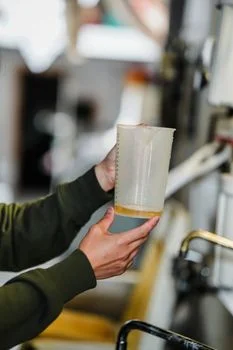
An MBR system for hospital wastewater in Rajasthan wins on effluent quality and footprint. Submerged PVDF membranes with a 0.1 μm pore size physically screen out 99.99% of pathogens while cutting pharmaceutical residues — MBR systems for hospital wastewater in Rajasthan hold MLSS at 8,000–12,000 mg/L, and that biomass concentration degrades complex organics a clarifier-based plant cannot. The approach matches treating high-COD hospital effluent with hybrid systems, where biology and membranes share the load.
DAF earns its place upstream where kitchens and laundries dominate loading. Micro-bubbles float suspended solids and grease to the surface, and cost-effective DAF systems for Rajasthan hospitals achieve 92–97% TSS removal in that role. Conventional STPs (A/O plus clarifier) install cheaper but fail CPCB limits for roughly 70% of hospitals in the state, because toxicity spikes from disinfectant-heavy cleaning cycles upset them repeatedly.
| Feature | MBR (Membrane Bioreactor) | DAF (Dissolved Air Flotation) | Conventional STP (ASP) |
|---|---|---|---|
| Effluent Quality (COD) | ≤50 mg/L | 30–40% removal (primary) | 150–200 mg/L |
| Pathogen Removal | 99.99% (Physical barrier) | Low (requires secondary) | 90–95% |
| Footprint | Very Small (60% reduction) | Medium | Large |
| Energy Use (kWh/m³) | 0.8–1.2 | 0.3–0.5 | 0.4–0.6 |
| Resistance to Toxins | High (due to high MLSS) | N/A (Physical process) | Low (easily upset) |
Cost of a Hospital Wastewater Treatment Plant in Rajasthan
The cost of a hospital wastewater treatment plant in Rajasthan is set by how the chosen technology handles salinity and pharmaceutical load. At 50 m³/day, an MBR system typically costs ₹15–20 lakh while a DAF-based primary system runs ₹8–12 lakh. MBR's higher ticket pays back within 3–5 years through reuse of treated effluent for cooling towers and landscaping, cutting freshwater procurement costs by 30–40%.
ClO₂ Disinfection for Hospital Wastewater in India
ClO₂ disinfection for hospital wastewater in India addresses the organism conventional plants leave behind: antibiotic-resistant bacteria. CPCB-approved ClO₂ generators for hospital effluent hold disinfection performance better than sodium hypochlorite at high temperature, which matters through a Rajasthan summer. The generators add ₹2–3 lakh of CAPEX but carry lower chemical costs over time thanks to higher oxidation potential. Anti-scalant dosing for Jaipur's high-salinity groundwater adds roughly ₹50,000 per year on top.
| Cost Component (50 m³/day) | MBR System | DAF + Conventional | Conventional STP |
|---|---|---|---|
| Initial CAPEX | ₹15–20 Lakh | ₹12–16 Lakh | ₹6–10 Lakh |
| Annual OPEX (Chemicals/Power) | ₹0.5–0.8 / m³ | ₹0.4–0.6 / m³ | ₹0.2–0.4 / m³ |
| Membrane/Media Replace. | Every 5–7 years | N/A | Every 10 years |
| Sludge Disposal Cost | Lower (highly stabilized) | High (chemical sludge) | Medium |
| Water Reuse Savings | High (₹3–5 Lakh/year) | Medium | Low (quality issues) |
Hospital STP Design for Arid Climate Regions of India
Hospital STP design for arid climate regions of India starts with heat. Ambient temperatures reaching 45°C in Rajasthan summers reduce oxygen solubility and inhibit nitrifying bacteria, and CPCB 2020 guidance indicates biological activity in conventional STPs can drop by 30% under extreme heat. MBR builds for the state therefore specify cooling loops or increased aeration to hold dissolved oxygen above 2.0 mg/L. The same engineering logic appears in how Morocco's arid climate compares to Rajasthan's challenges — temperature management, not just biology, decides compliance.
Salinity management is the second pillar. TDS in Jaipur hospital effluent peaks near 2000 mg/L, raising inorganic scaling risk on membrane surfaces, so design specs include polyacrylic acid anti-scalant dosing or a post-treatment RO system where reuse targets boiler feed quality. High-salinity sludge dries poorly in open beds during monsoon, so sludge dewatering for Rajasthan's high-salinity hospital effluent on a plate and frame filter press cuts disposal volume at Rajasthan's typical ₹2000–3000 per tonne rate.
Step-by-Step: Selecting a Hospital Wastewater Treatment System for Rajasthan
- Characterize the influent: Run a comprehensive lab panel for COD, BOD, TSS, TDS, and pathogens. In Jaipur, professional labs charge ₹15,000–20,000 for a full panel including pharmaceutical screening.
- Determine compliance goals: Identify whether treated water goes to a sewer (RSPCB general standards) or to landscaping and cooling-tower reuse (RSPCB reuse standards). Reuse demands much lower COD (<50 mg/L) and fecal coliform counts.
- Size for peak load: Rajasthan hospitals generate 400–600 liters per bed per day, so a 200-bed facility needs capacity near 120 m³/day to absorb laundry and visitor surges.
- Select technology on footprint and budget: Choose MBR where space is tight and reuse quality matters; choose DAF as a primary stage where kitchen grease dominates influent loading.
- Evaluate vendor service capability: Require RSPCB-approved designs and 24/7 annual maintenance contracts. AMCs for 50 m³/day systems in Rajasthan typically cost ₹2–3 lakh per year and prevent most membrane fouling events.
Next Steps for Rajasthan Hospital Engineering Teams
Facilities under RSPCB notice or planning new wards can shorten the selection cycle by anchoring on a proven train. The Medical & Hospital Wastewater Treatment System is built against hospital discharge norms, with disinfection and reuse options matched to CPCB and RSPCB limits. Pair it with the influent panel from Step 1 before sizing anything.
Send your bed count, flow estimate, and target discharge or reuse standard through our quotation desk for a technology-matched budget under Rajasthan conditions.
Frequently Asked Questions
Common questions from hospital engineers and facility directors in Jaipur, Jodhpur, and Udaipur.
Can we discharge treated hospital wastewater into municipal sewers in Rajasthan?
Only if the receiving municipal STP has tertiary treatment capability, which is rare across much of Rajasthan. RSPCB typically mandates that hospitals treat effluent to CPCB standards — BOD ≤30 mg/L — before it enters any public drainage system. In practice, most cities require full on-site treatment to general standards regardless of sewer availability, so plan the plant, not just the connection.
What's the best disinfection method for antibiotic-resistant bacteria in hospital wastewater?
Chlorine dioxide (ClO₂) is the most effective CPCB-approved disinfection route for antibiotic-resistant bacteria. It achieves a 99.99% kill rate for MRSA and VRE, whereas UV disinfection often fails in hospital settings due to high turbidity and shielding by suspended particles. ClO₂ also holds its performance at high temperature, which matters through a Rajasthan summer.
How much does a hospital wastewater treatment plant cost in Jaipur?
For 50–100 m³/day capacity in Jaipur, CAPEX ranges from ₹8 lakh for a conventional STP to ₹20 lakh for an MBR system. OPEX runs between ₹0.3 and ₹0.8 per cubic meter treated. Reuse savings of ₹3–5 lakh per year on freshwater procurement push most 200-bed facilities toward MBR despite the higher initial spend.
What are the common failure modes for hospital STPs in Rajasthan?
The most common failure modes are membrane scaling from TDS above 2000 mg/L, biological kill-off from excessive disinfectant discharge, and mechanical failure of aerators during summer heatwaves. Each maps to a counter: anti-scalant dosing, equalization of cleaning-waste streams, and heat-rated aeration equipment. Most RSPCB violations trace back to one of these three causes.
Can we reuse treated hospital wastewater for irrigation in Rajasthan?
Yes, treated hospital wastewater can be reused for irrigation provided it meets RSPCB 2023 guidelines — COD ≤50 mg/L and pathogens ≤100 CFU/100mL. MBR systems meet those limits naturally, while conventional STPs usually need additional RO or ultrafiltration stages to be safe. Given the state's water scarcity, reuse-grade design typically pays for its polishing stage inside the 3–5-year ROI window.
What is the cost of a hospital wastewater treatment plant in Rajasthan?
The cost of a hospital wastewater treatment plant in Rajasthan spans ₹6–10 lakh for a conventional STP, ₹12–16 lakh for DAF-based trains, and ₹15–20 lakh for MBR at 50 m³/day scale. Add AMC contracts of ₹2–3 lakh per year and anti-scalant dosing near ₹50,000 annually at high-salinity sites. MBR's reuse savings typically close the CAPEX gap within 3–5 years.