Why Iowa Hospitals Need Specialized Wastewater Treatment
Iowa’s 118 hospitals generate between 15 and 50 gallons per bed per day (GPB) of high-strength effluent, characterized by Biological Oxygen Demand (BOD) levels ranging from 200 to 600 mg/L and Total Suspended Solids (TSS) between 150 and 400 mg/L. These concentrations significantly exceed standard municipal sewage strengths, necessitating specialized on-site pretreatment or full-scale treatment systems to comply with the Iowa Department of Natural Resources (IDNR) Chapter 61 regulations. Under these rules, hospitals discharging directly or to sensitive watersheds must meet strict effluent limits: 30 mg/L for BOD, 30 mg/L for TSS, and a fecal coliform limit of 200 CFU/100mL.
The regulatory stakes for Iowa facility engineers were underscored by a 2023 IDNR enforcement report detailing a violation at MercyOne Des Moines. The facility exceeded BOD limits, resulting in a $45,000 fine and a mandated system upgrade to stabilize effluent quality. Beyond traditional organic loads, pathogens represent a critical public health concern. Data from the University of Iowa State Hygienic Laboratory (SHL) in 2023 indicated that influenza and RSV were detected in 87% of hospital wastewater samples across Iowa’s 99 counties. This high viral load requires robust tertiary disinfection to prevent community transmission, especially in facilities located near recreational water bodies or those utilizing groundwater sources.
| Parameter | IDNR Chapter 61 Limit (Secondary) | Typical Raw Hospital Effluent | Required Removal Efficiency |
|---|---|---|---|
| BOD5 (5-Day Demand) | 30 mg/L | 200–600 mg/L | 85–95% |
| TSS (Suspended Solids) | 30 mg/L | 150–400 mg/L | 80–92% |
| Fecal Coliform | 200 CFU/100mL | 10^5–10^7 CFU/100mL | 99.99% (4-Log) |
| Ammonia (as N) | Site-Specific (1–5 mg/L) | 20–50 mg/L | 90%+ |
EPA 40 CFR Part 460 standards for healthcare facilities are increasingly focused on pharmaceutical residuals. Emerging contaminants like carbamazepine, antibiotics, and endocrine disruptors are not typically removed by standard activated sludge processes. For Iowa hospitals, this means evaluating advanced treatment technologies that can address both traditional pollutants and the complex chemical profiles of medical waste streams.
Iowa Hospital Wastewater: Contaminants, Flow Rates, and Treatment Goals
Hospital effluent flow rates in Iowa range from 10–20 GPB for outpatient facilities to 25–50 GPB for inpatient hospitals, according to 2024 ASHRAE engineering standards. Sizing a treatment system requires precise quantification of these flows, as peak events—such as morning surgical preparations or heavy laundry cycles—can create hydraulic surges that overwhelm undersized equipment. A 100-bed inpatient facility, for example, typically produces an average daily flow of 15,000 to 25,000 gallons, but must be designed to handle peak hourly flows of 1.5 to 2.0 times the average.
Technical selection of equipment begins with rotary mechanical bar screens for hospital influent to remove non-biodegradable solids, such as medical plastics and wipes, which frequently cause pump failure. Following screening, equalization tanks are mandatory for Iowa hospitals to buffer pH swings from laboratory waste and temperature spikes from sterilization units. In rural Iowa, high nitrate levels in source water (often exceeding 10 mg/L as N per IDNR 2024 reports) add a layer of complexity; treatment systems must often incorporate a dedicated denitrification stage to ensure the combined effluent does not contribute to further watershed degradation.
| Facility Type | Avg. Flow (GPB) | Peak Factor | Primary Contaminant Concerns |
|---|---|---|---|
| Acute Care Hospital | 35–50 | 1.5 | Pathogens, Pharmaceuticals, High BOD |
| Outpatient/Surgical Clinic | 10–20 | 2.0 | Disinfectants, High pH, Blood-borne pathogens |
| Long-Term Care/Nursing | 20–30 | 1.2 | Nutrients (Nitrogen/Phosphorus), TSS |
| Psychiatric/Rehab Center | 15–25 | 1.3 | Pharmaceutical residuals, BOD |
Treatment goals are divided into three tiers: primary removal of solids, secondary biological stabilization of organic matter, and tertiary polishing for pathogen and pharmaceutical reduction. To achieve these goals, facility managers must understand the differences between primary and secondary treatment for hospitals to ensure the selected equipment matches the specific influent profile of their facility. For instance, laboratories and oncology wards may require localized pH adjustment and carbon filtration before their waste ever reaches the main treatment plant.
Treatment Process Options for Iowa Hospitals: MBR vs. DAF vs. Chlorine Dioxide
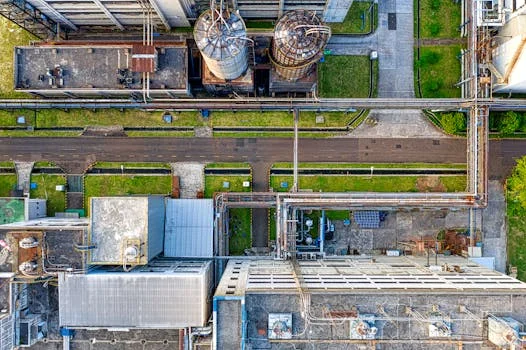
Membrane Bioreactor (MBR) and Dissolved Air Flotation (DAF) systems represent the two primary technological paths for Iowa hospitals to achieve 95% or higher removal efficiencies for suspended solids and pathogens. MBR technology combines biological treatment with ultrafiltration membranes, typically with a pore size of 0.03 to 0.1 microns. This process eliminates the need for secondary clarifiers and provides a 6-log reduction in pathogens. For urban facilities like UnityPoint in Cedar Rapids, where land is at a premium, MBR systems for hospital wastewater offer a compact footprint and effluent quality suitable for non-potable reuse in cooling towers or irrigation.
In contrast, Dissolved Air Flotation (DAF) is highly effective for hospitals with high fats, oils, and grease (FOG) or those requiring rapid removal of chemically precipitated solids. When paired with coagulation and flocculation, DAF systems for BOD/TSS removal can achieve 90–95% TSS reduction. This is frequently the preferred choice for rural Iowa hospitals, such as Clarke County Hospital, where the system can be followed by a chlorine dioxide generator for final disinfection. Chlorine dioxide (ClO2) is superior to traditional chlorine gas or bleach because it does not produce harmful trihalomethanes (THMs) and remains effective across a wide pH range, which is common in medical environments.
| Feature | MBR (Membrane Bioreactor) | DAF + Disinfection | Chlorine Dioxide (Standalone) |
|---|---|---|---|
| BOD Removal | 95–99% | 85–90% | 0% |
| TSS Removal | 99%+ | 90–95% | 0% |
| Pathogen Kill | 6-Log (Ultrafiltration) | 3-Log (with ClO2) | 4 to 5-Log |
| Footprint | Very Small | Moderate | Small (Equipment only) |
| Pharma Removal | High (Long SRT) | Moderate (with Carbon) | Low/Oxidation only |
For facilities seeking a balance between cost and performance, compact hospital wastewater treatment systems integrate multiple stages—screening, aerobic digestion, and disinfection—into a single skid-mounted unit. This modular approach is particularly beneficial for Iowa’s regional medical centers that need to scale capacity as they add new wings or specialized departments. The process flow for a modern Iowa hospital typically involves: Mechanical Screening → Equalization → Anoxic Denitrification (for nitrate control) → Aerobic Digestion → Membrane Filtration or DAF → chlorine dioxide disinfection for hospitals.
Cost Breakdown: Hospital Wastewater Treatment Systems in Iowa (2025 Data)
Capital investment for Iowa hospital wastewater systems in 2025 ranges from $80,000 for standalone disinfection to over $1.2 million for full-scale MBR installations for 200-bed facilities. These costs are driven by the required effluent quality and the volume of water processed. According to RSMeans 2024 data and current vendor quotes, MBR systems carry the highest initial cost but offer the lowest long-term risk regarding compliance violations. For a mid-sized facility (25,000 GPD), an MBR system typically costs between $800,000 and $1.1 million, including installation and commissioning.
Operating and Maintenance (O&M) costs are a recurring budget line item that facility managers must justify. Chlorine dioxide systems are the most economical to operate, averaging $0.80–$1.20 per 1,000 gallons, primarily covering chemical precursors. MBR systems average $2.00–$2.50 per 1,000 gallons due to the energy requirements for membrane scouring and the eventual cost of membrane replacement (typically every 5–8 years). However, the ROI for these systems is often found in the avoidance of IDNR fines—which can reach $10,000 per day per violation—and the potential for water reuse. Iowa hospitals can also leverage the IDNR State Revolving Fund (SRF), which provides low-interest loans (often near 2%) for water quality projects, significantly reducing the debt service on capital upgrades.
| System Type | Capital Cost (25k GPD) | O&M Cost / 1k Gal | Primary ROI Driver |
|---|---|---|---|
| Chlorine Dioxide | $80,000 – $250,000 | $0.80 – $1.20 | Pathogen compliance/Low Capex |
| DAF + Disinfection | $250,000 – $600,000 | $1.50 – $2.00 | BOD/TSS compliance for rural discharge |
| MBR System | $800,000 – $1,200,000 | $2.00 – $2.50 | Water reuse & future pharma limits |
A case study of a 150-bed Iowa hospital demonstrated the financial benefits of upgrading legacy systems. By switching from outdated chlorine gas systems to a chlorine dioxide generator, the facility reduced its annual O&M costs by 30% while eliminating the safety risks and insurance premiums associated with pressurized chlorine gas storage. For those evaluating high-strength waste, reviewing MBR system selection for high-strength wastewater provides further clarity on how these investments scale with contaminant load.
Sizing and Selecting a System: A Decision Framework for Iowa Hospitals
Sizing an on-site treatment system requires a peak flow factor of 1.5 applied to the average daily flow rate to ensure compliance during high-use surgical and laundry cycles. For an Iowa hospital with 200 beds, the calculation begins with the ASHRAE benchmark of 30 GPB, resulting in 6,000 GPD average flow. Applying a 1.5 peak factor and accounting for laboratory and cafeteria contributions, the system should be rated for a minimum of 10,000 to 12,000 GPD to maintain the necessary hydraulic retention time (HRT) for biological processes.
The selection process should follow a four-step framework. First, calculate the facility-specific flow rate. Second, perform a comprehensive influent characterization, testing for BOD, TSS, pH, and specific pathogens; IDNR’s 2024 sampling program often provides assistance for facilities in sensitive watersheds. Third, match the system type to the compliance goal—select MBR for high-purity reuse or DAF for robust solids removal. Finally, evaluate vendors based on their experience with Iowa-specific regulations and their ability to provide 24/7 technical support. To understand how regional variations impact these choices, engineers can compare how other regions handle hospital wastewater compliance to see global best practices in action.
Iowa Hospital Vendor Evaluation Checklist:
- Does the vendor provide a written guarantee that the effluent will meet IDNR Chapter 61 limits?
- What is the system’s documented removal efficiency for pharmaceuticals like carbamazepine?
- Can the system handle pH swings from 4.0 to 11.0 without biological upset?
- Are there local Iowa installations (e.g., University of Iowa Hospitals) available for reference?
- Does the O&M estimate include membrane replacement and chemical escalation costs?
- Is the controls system compatible with existing hospital SCADA or Building Automation Systems (BAS)?
- What is the lead time for critical spare parts (pumps, sensors, membranes)?
- Does the vendor offer remote monitoring to alert facility staff of potential limit excursions?
- Is the system modular to allow for future bed capacity expansion?
- What is the energy consumption per 1,000 gallons treated?
Frequently Asked Questions
What are the current IDNR discharge limits for Iowa hospitals?
Under Chapter 61, most Iowa hospitals must meet secondary treatment standards of 30 mg/L BOD and 30 mg/L TSS. Fecal coliform must be below 200 CFU/100mL. However, facilities discharging into "protected" or "impaired" waters may face stricter limits for ammonia, phosphorus, and nitrogen, requiring advanced tertiary treatment processes like MBR or chemical precipitation.
How much does it cost to install a wastewater system in a 100-bed Iowa hospital?
For a 100-bed facility, capital costs typically range from $400,000 for a DAF-based pretreatment system to $850,000 for a full MBR system. Total project costs including engineering, permitting, and site work often add 20-30% to the equipment price. Financing via the IDNR SRF loan program can mitigate the immediate budget impact.
Can MBR systems remove pharmaceuticals from hospital sewage?
MBR systems are highly effective at removing pharmaceuticals due to their high sludge age (SRT) and the physical barrier of the ultrafiltration membrane. Studies show MBRs can remove 80-99% of common medical residuals, whereas traditional activated sludge systems often achieve less than 50% removal for complex compounds like antibiotics and anti-seizure medications.
Is chlorine dioxide better than UV for hospital wastewater disinfection?
Chlorine dioxide is often preferred for hospital wastewater because it provides a residual disinfectant that prevents pathogen regrowth in piping and is not affected by the high turbidity or "shading" that can render UV systems ineffective. ClO2 is specifically potent against Legionella and viral pathogens frequently found in medical waste streams.
Does the IDNR provide grants for hospital wastewater upgrades?
While direct grants are competitive, the IDNR's State Revolving Fund (SRF) provides low-interest loans specifically for wastewater infrastructure. Additionally, rural hospitals may qualify for USDA Rural Development grants and loans if they serve communities with populations under 10,000, significantly lowering the total cost of ownership for new treatment installations.
Related Equipment
The following HydropureWater products are engineered for the wastewater challenges discussed above:
- DAF systems for BOD/TSS removal — view specifications, capacity range, and technical data
Need a customized solution? Request a free quote with your specific flow rate and pollutant parameters.