Why Wastewater Treatment Costs in Scotland Are Different: 4 Key Drivers
In Scotland, industrial wastewater treatment plant costs in 2025 range from £50,000 for a 50 m³/day DAF system to £10M+ for a 5,000 m³/day MBR plant with tertiary polishing. CAPEX varies by technology: activated sludge (£1,200–£2,500/m³/day), DAF (£1,500–£3,000/m³/day), and MBR (£2,000–£4,000/m³/day). OPEX averages £2–£20/m³, driven by energy (29p/kWh), sludge disposal (£80–£150/tonne), and Scottish Water discharge fees (£0.50–£2.50/m³). Compliance with Scottish Water’s 2025 standards (e.g., BOD ≤25 mg/L, TSS ≤35 mg/L) adds 10–20% to CAPEX for advanced filtration or disinfection.
Consider a typical mid-sized distillery in Speyside. Facing a 15% year-on-year increase in Scottish Water trade effluent charges and stricter limits on copper and phosphorus, the facility operators are forced to transition from basic primary settlement to advanced biological treatment. In Scotland, this transition is influenced by unique regional variables that do not apply to projects in the south of England or mainland Europe. Industrial wastewater treatment plant cost in Scotland UK is fundamentally shaped by four localized drivers: energy pricing, geotechnical conditions, regulatory rigor, and logistics.
First, energy costs in Scotland currently sit at approximately 29p/kWh, compared to a UK average of 24p/kWh, which increases the OPEX of aeration-heavy systems like activated sludge or MBR by 15–25%. Second, the prevalence of peat soil, particularly in the Highlands and Islands, significantly complicates civil works. Peat’s low load-bearing capacity often necessitates piling or the installation of raft foundations, adding £10–£30/m³ to the total CAPEX. Third, Scottish Water’s 2025 discharge standards are increasingly stringent. For industrial plants in "sensitive areas," limits of BOD ≤25 mg/L and TSS ≤35 mg/L are now the baseline, often requiring tertiary treatment that adds 20% to the initial investment. Finally, remote logistics play a massive role; sludge disposal costs in the Highlands can reach £150/tonne due to transport distances, compared to £80/tonne in the Central Belt, while equipment lead times can extend by 4-6 weeks due to limited regional haulage availability (HydropureWater field data, 2025).
CAPEX Breakdown: Wastewater Treatment Plant Costs in Scotland by Technology and Flow Rate
Capital expenditure for Scottish industrial wastewater plants scales non-linearly, with a 500 m³/day plant typically costing 30% less per cubic meter than a 50 m³/day unit due to economies of scale in tankage and control systems. For procurement managers, selecting the right technology is a balance between the initial price tag and the required effluent quality. Activated sludge systems remain the baseline for high-volume, lower-strength organic waste, typically costing between £1,200 and £2,500 per m³/day of capacity. However, these systems require significant land area, which can be a hidden cost if site expansion is required.
Dissolved Air Flotation (DAF) systems are the preferred choice for food and beverage plants dealing with high fats, oils, and grease (FOG). A high-efficiency DAF system for Scottish food and beverage plants typically ranges from £1,500 to £3,000 per m³/day. While the footprint is smaller than activated sludge, the CAPEX increases if high-efficiency models (achieving 95%+ TSS removal) are required to meet 2025 discharge permits. For sites with extreme space constraints or those requiring the highest possible effluent quality, Membrane Bioreactors (MBR) are the gold standard. MBR systems for zero-discharge compliance in Scotland’s sensitive areas command a premium CAPEX of £2,000 to £4,000 per m³/day, largely due to the cost of the membrane modules and the sophisticated automated cleaning systems required to prevent fouling.
| Technology | Flow Rate (m³/day) | Estimated CAPEX Range (£) | Cost per m³/day (£) |
|---|---|---|---|
| Activated Sludge | 500 - 1,000 | £600,000 - £1,500,000 | £1,200 - £1,500 |
| DAF System | 100 - 500 | £150,000 - £750,000 | £1,500 - £2,500 |
| MBR System | 50 - 500 | £150,000 - £1,200,000 | £2,500 - £4,000 |
| WSZ Integrated | 10 - 100 | £45,000 - £180,000 | £1,800 - £2,200 |
For remote sites, such as island-based distilleries or small municipal projects, a compact underground sewage treatment for remote Scottish sites offers a cost-effective alternative to custom civil builds. These modular systems reduce onsite civil works, which in Scotland can account for 25–40% of CAPEX compared to just 15–20% in more accessible UK regions. Tertiary treatment, such as UV disinfection or sand filtration, is an additional layer often mandated by Scottish Water for pharmaceutical or food processing effluents, adding anywhere from £50,000 to £500,000 depending on flow volumes.
OPEX in Scotland: Energy, Chemicals, Sludge, and Hidden Costs
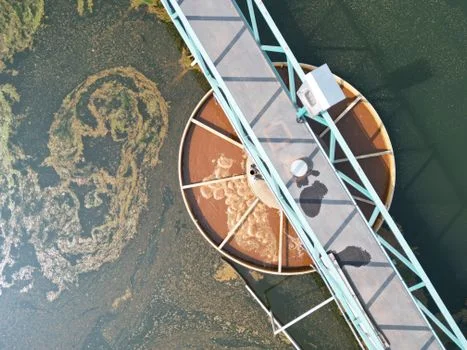
Operating expenditure for Scottish industrial plants is dominated by energy and sludge management, which together can account for over 60% of the annual budget. Biological systems like activated sludge and MBR are energy-intensive due to the constant need for aeration. In Scotland’s 29p/kWh environment, an MBR system consuming 1.0 kWh/m³ will cost £0.29 per cubic meter treated in electricity alone. Conversely, a DAF system uses less energy for aeration but significantly more in chemical coagulants and polymers, with typical chemical costs ranging from £0.10 to £0.50/m³ depending on the influent's chemical oxygen demand (COD).
Sludge disposal is the most volatile OPEX variable. In central Scotland, dewatered sludge (20–30% dry solids) costs approximately £80/tonne to remove. However, for facilities in the Highlands or Islands, transport surcharges can push this to £150/tonne. Implementing a high-performance plate and frame filter press can mitigate these costs by increasing dry cake solids to 35%, effectively reducing the volume of waste hauled off-site. an automatic chemical dosing system can reduce polymer waste by 20%, providing a direct reduction in both chemical spend and sludge volume.
| OPEX Category | Unit Cost (Scotland 2025) | Typical Range per m³ | Primary Driver |
|---|---|---|---|
| Electricity | £0.29 / kWh | £0.09 - £0.35 | Aeration intensity |
| Chemicals | Variable | £0.10 - £0.50 | Influent TSS/FOG |
| Sludge Disposal | £80 - £150 / tonne | £0.50 - £2.00 | Geographic location |
| Discharge Fees | Scottish Water Tariff | £0.50 - £2.50 | Effluent strength |
| Maintenance | Annual Contract | £0.05 - £0.15 | Mechanical complexity |
Maintenance costs also vary by technology. MBR systems require 30–50% more specialized maintenance than activated sludge due to membrane cleaning cycles and eventual replacement. To ensure compliance with microbial limits, many Scottish plants also integrate a chlorine dioxide generator for industrial disinfection, which adds a small but necessary chemical and maintenance overhead to the annual OPEX.
MBR vs DAF vs Activated Sludge: Which Technology Fits Your Scottish Plant?
The choice between MBR, DAF, and activated sludge is dictated by the specific "Mogden formula" requirements of the facility and the physical constraints of the Scottish site. MBR systems provide the highest quality effluent (BOD ≤5 mg/L, TSS ≤1 mg/L), making them the only viable choice for plants discharging into ultra-sensitive salmon-fishing rivers or those aiming for water reuse. While MBR has a higher energy demand (0.8–1.2 kWh/m³), its footprint is 60% smaller than traditional activated sludge because it eliminates the need for large secondary clarifiers.
DAF systems excel in pre-treatment, particularly for the food and beverage sector where high levels of suspended solids and fats would otherwise overwhelm a biological system. DAF is 20–40% cheaper in CAPEX than MBR for high-TSS applications but requires significant chemical inputs. For plants struggling with high nitrogen levels, specific ammonia removal strategies for Scottish distilleries and chemical plants must be integrated, often involving multi-stage anoxic/aerobic zones within an MBR or activated sludge framework.
| Feature | MBR | DAF | Activated Sludge |
|---|---|---|---|
| Effluent Quality | Ultra-High (Reuse ready) | Moderate (Pre-treatment) | High (Standard discharge) |
| Footprint | Minimal (0.5-1.0 m²/m³) | Moderate (2.0-3.0 m²/m³) | Large (1.5-2.0 m²/m³) |
| Energy Use | High (0.8-1.2 kWh/m³) | Low (0.1-0.3 kWh/m³) | Medium (0.3-0.5 kWh/m³) |
| Chemical Need | Low (Cleaning only) | High (Coagulants) | Low (Nutrients) |
| Sludge Type | Biological (Stable) | Chemical/Oily (Thick) | Biological (Variable) |
For industrial buyers, the trade-off is clear: MBR offers long-term regulatory security and space savings at the cost of higher energy bills, while DAF offers lower initial costs but higher chemical dependency. Activated sludge remains a middle-ground solution for sites where land is plentiful and discharge limits are standard. Many Scottish operators are now opting for MBR systems for zero-discharge compliance in Scotland’s sensitive areas to future-proof their operations against tightening 2030 environmental targets.
Scottish Water Compliance: Discharge Limits, Permits, and Cost Implications

Regulatory compliance in Scotland is governed by Scottish Water and the Scottish Environment Protection Agency (SEPA), with 2025 marks a significant tightening of industrial discharge limits. While the EU Urban Waste Water Directive 91/271/EEC provides a baseline, Scottish Water often imposes stricter local limits to protect the country’s high-quality water sources. Standard industrial limits for 2025 are typically set at BOD ≤25 mg/L, TSS ≤35 mg/L, and Phosphorus ≤2 mg/L. Exceeding these limits triggers heavy surcharges, often ranging from £0.50 to £2.50 per m³ of non-compliant effluent.
The permitting process itself is a cost and time factor. A new industrial discharge permit can take 6 to 12 months to secure, with application fees ranging from £1,500 for small sites to over £15,000 for large-scale chemical or food processing facilities. Monitoring is another critical cost; Scottish Water requires continuous online monitoring for pH and flow, and often quarterly lab testing for COD and ammonia. For facilities requiring ultra-pure discharge, a multi-media filter for industrial effluent polishing is often the most cost-effective way to ensure TSS compliance without a full system overhaul. Additionally, the use of a chlorine dioxide generator for industrial disinfection ensures that any bacterial limits in the permit are consistently met, avoiding the £10,000+ fines associated with single-incident breaches.
How to Reduce Wastewater Treatment Costs in Scotland: 5 Proven Strategies
Reducing the total cost of ownership for a Scottish wastewater plant requires a focus on energy efficiency and waste volume reduction. The first strategy is the implementation of Variable Frequency Drives (VFDs) on all blowers and pumps. Given Scotland's 29p/kWh electricity rate, a VFD that reduces blower speed by just 20% during low-flow periods can save upwards of £8,000 per year for a mid-sized plant, often paying for itself within 18 months.
The second strategy involves optimizing sludge dewatering. Using a high-performance plate and frame filter press instead of a traditional centrifuge can increase cake dryness from 20% to 30%. In a remote Scottish location where disposal costs are £120/tonne, this 10% improvement in dryness can save a facility £15,000–£25,000 annually in transport costs. Third, automation is key. A PLC-controlled chemical dosing system prevents the "over-dosing" common in manual systems, reducing chemical spend by 15-20%.
Fourth, consider modularity. For many Scottish projects, modular wastewater treatment solutions for Scotland’s remote locations reduce installation time by 50% and civil works by 40%. These skid-mounted systems are pre-tested, reducing the risk of expensive onsite delays caused by Scotland’s unpredictable weather. Finally, water reuse is becoming a viable ROI driver. By combining an MBR with reverse osmosis for industrial water recovery, plants can recycle up to 80% of their process water, drastically reducing both incoming water costs and Scottish Water discharge fees.
Frequently Asked Questions
What is the average payback period for a wastewater treatment plant in Scotland?For most industrial plants, the payback period ranges from 3 to 7 years. DAF systems typically see a faster ROI (3–5 years) due to lower CAPEX and immediate reduction in TSS-related discharge surcharges. MBR systems have a longer payback (5–7 years) but offer higher long-term value through water reuse and total regulatory compliance.
How do Scottish Water’s discharge limits compare to the rest of the UK?Scottish Water limits are generally aligned with England and Wales for BOD and TSS (25/35 mg/L), but they are often stricter regarding ammonia (≤5 mg/L) and phosphorus (≤2 mg/L) in sensitive catchments. Scotland also has more rigorous monitoring requirements for remote industrial sites to protect local lochs and rivers.
What are the hidden costs of wastewater treatment in Scotland?The primary hidden costs include peat soil remediation (£10–£30/m³ for foundations), remote location logistics surcharges for sludge and chemicals (£50–£150 per delivery/pickup), and the "Mogden" surcharges applied by Scottish Water for effluents that exceed agreed COD or TSS strengths.
Can I use a septic tank for my industrial plant in Scotland?No. Under Scottish Building Standards (Section 3.9), septic tanks are only permitted for domestic properties with a population equivalent (PE) of 20 or less. Industrial facilities must use Scottish Water-approved secondary or tertiary treatment systems like DAF, MBR, or activated sludge to ensure compliance.
What are the most reliable wastewater treatment equipment suppliers in Scotland?While several local firms handle domestic systems, industrial-scale projects are typically served by specialist manufacturers. HydropureWater provides industrial MBR and DAF systems, while other providers like WTE Ltd focus on domestic units, and Klargester or GRAF offer solutions for small-to-medium commercial applications.