Why Indore Factories Are Facing MPPCB Shutdowns Over Wastewater
MPPCB issued 47 closure notices to Indore industries in 2023 for exceeding COD/TSS limits (MPPCB Annual Report 2024). These enforcement actions primarily targeted textile and pharmaceutical factories in Pithampur and Sanwer Road, which are recognized as high-risk sectors due to raw effluent organic loads ranging from 1,500 to 3,000 mg/L. For plant managers, the risk is not merely operational but legal; under the Water (Prevention & Control of Pollution) Act 1974, directors face criminal liability alongside environmental compensation penalties that can reach ₹1L per day for continued non-compliance.
The transition from conventional treatment to advanced systems is no longer optional for Indore’s industrial corridor. Many legacy systems, designed for lower production volumes, fail to handle current hydraulic surges or complex chemical compositions. For instance, a textile factory in Pithampur recently faced a shutdown order when its secondary clarifier failed to settle biological solids, leading to TSS levels 400% above the permissible limit. This scenario is common where factories rely on outdated activated sludge processes that cannot handle the high-dye concentration of modern textile processing.
To mitigate these risks, industries are shifting toward high-efficiency technologies. A recent implementation of a ₹2.8Cr MBR system saved a local dyeing unit from permanent closure by reducing its effluent COD from 2,200 mg/L to 180 mg/L, comfortably below the MPPCB threshold. By integrating MBR systems for Indore’s high-COD effluents, plants achieve consistent compliance regardless of influent fluctuations, effectively eliminating the threat of regulatory shutdowns.
MPPCB Effluent Standards for Indore: 2025 Limits and Compliance Steps
The MPPCB Notification 2024 mandates specific effluent discharge limits for Indore's industrial clusters, including a maximum COD of 250 mg/L and BOD of 30 mg/L. These standards apply to all units discharging into inland surface waters or public sewers. Failure to maintain these parameters triggers immediate show-cause notices. Beyond organic loads, the board has tightened limits on heavy metals (Cr, Pb, Cd) to 0.1–2.0 mg/L depending on the specific industry category, and oil and grease must remain below 10 mg/L.
| Parameter | MPPCB Limit (2025) | Typical Raw Effluent (Indore) | Required Removal Efficiency |
|---|---|---|---|
| Chemical Oxygen Demand (COD) | ≤ 250 mg/L | 1,500 – 3,500 mg/L | 83% – 93% |
| Biochemical Oxygen Demand (BOD) | ≤ 30 mg/L | 400 – 1,200 mg/L | 92% – 97% |
| Total Suspended Solids (TSS) | ≤ 100 mg/L | 300 – 800 mg/L | 66% – 88% |
| pH Value | 6.5 – 8.5 | 4.0 – 11.0 | Neutralization Required |
| Oil & Grease | ≤ 10 mg/L | 50 – 200 mg/L | 80% – 95% |
Compliance in Indore follows a rigorous Consent-to-Establish (CTE) and Consent-to-Operate (CTO) process. The procedure begins with the submission of a Detailed Project Report (DPR) featuring effluent quality projections and hydraulic calculations. A critical pitfall for procurement teams is underestimating hydraulic loading; the MPPCB currently requires systems to be designed for 1.5× peak flow capacity to prevent bypass during monsoon seasons or production spikes. Following DPR submission, a 30-day public notice period is mandatory, followed by an MPPCB technical inspection.
Post-installation, industries must engage third-party NABL-accredited labs, such as SGS or TÜV, to conduct pre-compliance testing. The MPPCB requires three consecutive compliant samples before granting a CTO. For plants in water-scarce zones like Pithampur, the board increasingly mandates solar-powered wastewater treatment systems for Indore’s industrial zones to reduce the carbon footprint of Zero Liquid Discharge (ZLD) operations.
Engineering Specs for 5 Wastewater Treatment Technologies in Indore
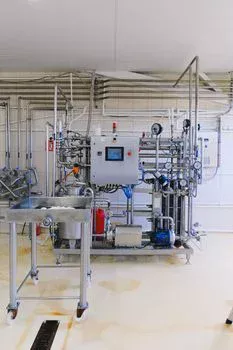
Membrane Bioreactor (MBR) technology achieves up to 95% COD removal and 99% TSS reduction, significantly outperforming conventional activated sludge systems in footprint efficiency (HydropureWater field data, 2025). MBR is particularly suited for Indore’s pharmaceutical and textile sectors where space is at a premium and high-quality permeate is required for reuse. The following table outlines the engineering specifications for the five primary technologies utilized in the region.
| Technology | COD Removal | Footprint (m²/m³/h) | Energy Use (kWh/m³) | Primary Application |
|---|---|---|---|---|
| MBR | 90% – 95% | 0.5 – 0.8 | 0.8 – 1.2 | Textile, Pharma, Food |
| DAF | 40% – 60%* | 1.2 – 2.0 | 0.4 – 0.6 | Dairy, Metalworking |
| RO | 98% (TDS) | 0.8 – 1.5 | 1.5 – 3.0 | ZLD, Water Reuse |
| Chemical Dosing | 30% – 50% | 0.4 – 0.6 | 0.1 – 0.2 | Pre-treatment, pH Control |
| Filter Press | N/A (Sludge) | 0.6 – 1.0 | 0.3 – 0.5 | Sludge Management |
*DAF COD removal is primarily associated with insoluble organics and FOG.
For high-fat and oil content effluents, such as those from dairy or metalworking plants in Sanwer Road, DAF systems for FOG and TSS removal in Indore are the industry standard. These systems operate at hydraulic loading rates of 4–8 m/h and require precise chemical dosing of polyaluminum chloride (PAC) at 50–150 mg/L to ensure flocculation. To maintain consistent pH levels between 6.5 and 8.5 as required by MPPCB, automated chemical dosing systems for pH adjustment and coagulation are integrated to eliminate human error in reagent application.
Finally, the management of solid waste is critical for compliance. MPPCB assesses heavy penalties for improper sludge handling. Utilizing sludge dewatering filter presses for Indore factories allows plants to achieve a solids content of 25–35%. This significantly reduces the volume of hazardous waste, lowering disposal costs which currently range from ₹1,200 to ₹2,500 per ton in the Indore region.
Cost Breakdown: CAPEX and OPEX for Wastewater Treatment Plants in Indore
The CAPEX for a 50 m³/h effluent treatment plant in Indore ranges from ₹60L for basic chemical dosing to ₹3.2Cr for integrated MBR and RO systems (2024 market benchmarks). These costs include civil works, mechanical equipment, and automation. While chemical precipitation systems offer the lowest entry cost, their high sludge production and chemical consumption often result in higher long-term OPEX compared to membrane-based systems. For a detailed comparison of costs in other regions, see the Odisha’s OPCB compliance guide for industrial wastewater.
| System Type (50 m³/h) | CAPEX Range (INR) | OPEX (per m³) | Typical ROI (Years) |
|---|---|---|---|
| Physico-Chemical | ₹60L – ₹90L | ₹0.5 – ₹2.0 | 5.0 – 6.0 |
| DAF + Biological | ₹1.2Cr – ₹1.8Cr | ₹1.0 – ₹1.8 | 4.0 – 5.0 |
| MBR (Advanced) | ₹1.8Cr – ₹2.5Cr | ₹1.2 – ₹2.5 | 3.5 – 4.5 |
| ZLD (MBR + RO + MEE) | ₹3.2Cr – ₹5.0Cr | ₹2.5 – ₹4.5 | 3.0 – 4.0* |
*ROI for ZLD is accelerated by water reuse savings and avoidance of high non-compliance penalties.
Industry-specific drivers significantly influence these budgets. For example, a pharmaceutical unit in Indore must account for heavy metal precipitation, adding ₹15L–₹30L to the CAPEX for specialized reaction tanks and dosing pumps. Hidden costs often overlooked by procurement teams include MPPCB consent renewal fees (₹50K–₹2L/year) and membrane cleaning downtime. For MBR systems, planned maintenance typically requires 2–4 days per year, during which the plant must have adequate buffer storage or redundant treatment capacity.
The ROI calculation for a 100 m³/h textile plant illustrates the financial benefit of advanced treatment. At a fresh water cost of ₹60/m³, reusing 80% of treated effluent via MBR saves approximately ₹12L per month. When combined with the avoidance of potential MPPCB penalties (averaging ₹3L/month for non-compliant units), a ₹1.8Cr investment pays back in less than 4 years, providing long-term operational stability.
Which Wastewater Treatment Technology Fits Your Industry? A Decision Framework
The selection of wastewater treatment technology in Indore is primarily dictated by the specific chemical characteristics of the influent, such as high organic loads in textiles versus heavy metal concentrations in pharmaceutical waste. A mismatch between technology and effluent type is the leading cause of ETP failure in the Pithampur industrial area. For instance, conventional activated sludge processes often struggle with the toxicity of pharmaceutical intermediates, leading to biomass "washout" and MPPCB violations.
| Industry Sector | Recommended Technology Stack | Key Compliance Focus |
|---|---|---|
| Textile & Dyeing | MBR + Color Removal + RO | COD < 250 mg/L, Color removal |
| Pharmaceutical | Chemical Precipitation + MBR | Heavy Metals (Cr < 0.1 mg/L) |
| Food & Dairy | DAF + Biological Treatment | Oil & Grease < 10 mg/L |
| Hospitals | MBR + Disinfection | Fecal Coliform < 1,000 MPN |
| Metalworking | DAF + Chemical Dosing | pH 6.5–8.5, Oil removal |
In the healthcare sector, MBR systems for medical wastewater treatment are mandatory for modern Indore hospitals to meet the BOD limit of 30 mg/L and ensure 99.9% pathogen kill rates. Similarly, food processing units must prioritize FOG removal; if fats enter a biological reactor without pre-treatment via DAF, they coat the microbial floc, preventing oxygen transfer and causing the system to turn anaerobic, which results in foul odors and regulatory complaints from neighboring units.
For large-scale municipal projects or mixed-use industrial parks, comparing regional standards is helpful. You may reference Uttar Pradesh’s sewage treatment compliance guide to understand how different states manage high-volume organic loads and the evolving standards for nutrient removal (Nitrogen and Phosphorus).
Step-by-Step: How to Install a Compliant Wastewater Treatment Plant in Indore
Installing a compliant wastewater treatment plant in Indore begins with a comprehensive influent quality analysis at a NABL-accredited laboratory to establish the baseline for engineering design. This data is the foundation of the entire project; errors here lead to undersized equipment and permanent compliance risk. Follow these six steps to ensure a zero-risk installation:
- Influent Characterization: Collect composite samples over 24 hours to account for production cycles. Test for COD, BOD, TSS, pH, and industry-specific toxins. Cost: ₹20K–₹50K.
- Technology Selection & DPR: Use the decision framework to select a technology stack. Prepare a Detailed Project Report (DPR) including hydraulic flow diagrams and mass balance calculations (ensure 1.5× peak flow capacity).
- MPPCB CTE Application: Submit the DPR and site plan via the MPPCB online portal. Pay the requisite fee (approx. ₹10K for small/medium units). Expect a 30-day public notice period and subsequent technical audit.
- Procurement: Select equipment from manufacturers with proven MPPCB-compliant designs. Lead times for MBR and RO systems typically range from 8 to 12 weeks, while DAF and dosing systems take 4 to 6 weeks.
- Commissioning & Testing: After installation, the system must be stabilized. MPPCB requires three consecutive weeks of compliant lab results before you can apply for the Consent-to-Operate (CTO).
- CTO & Annual Audit: Apply for the CTO (fee ₹20K–₹50K). Once granted, establish a schedule for annual audits and sensor calibration to ensure continuous compliance.
Case Study: How a Pithampur Textile Factory Avoided ₹1.2Cr in Penalties with MBR

A 100 m³/h textile dyeing unit in the Pithampur Industrial Area successfully avoided a permanent closure order by implementing an MBR system that reduced effluent COD from 2,200 mg/L to 180 mg/L. The facility was facing an MPPCB shutdown notice due to its inability to meet TSS and color standards using a traditional multi-grade filter and activated sludge process. The legacy system occupied 150 m² but failed to handle the high organic surges from the dyeing vats.
The solution involved installing an integrated MBR system for Indore’s textile effluents, which required only 60 m² of space—a 60% reduction in footprint compared to the previous setup. This was critical as the factory had no room for expansion. The automated PLC-controlled system adjusted chemical dosing in real-time based on influent turbidity, ensuring that the biological membranes were protected from fouling during high-load periods.
Within 45 days of commissioning, the factory received its Consent-to-Operate. The results were measurable: TSS was reduced to 20 mg/L (well below the 100 mg/L limit), and the permeate was clear enough to be reused in the boiler feed and fabric rinsing stages. This water reuse strategy saved the factory ₹12L per month in water procurement costs, totaling ₹1.44Cr annually. More importantly, the investment of ₹2.8Cr effectively neutralized a potential ₹1.2Cr in environmental compensation penalties and lost production revenue.
Frequently Asked Questions
What are the MPPCB penalties for non-compliance in Indore?
Under the 2024 guidelines, the MPPCB imposes a penalty of ₹1L per day for exceeding effluent limits. directors and plant managers can face criminal prosecution under the Water Act 1974, which may result in imprisonment for persistent violations.
How much does a 50 m³/h ETP cost in Indore?
CAPEX ranges from ₹60L for basic chemical treatment to ₹3.2Cr for advanced MBR+RO systems. OPEX varies from ₹0.5/m³ for simple dosing to ₹4.5/m³ for full Zero Liquid Discharge (ZLD) systems involving evaporators.
Which industries in Indore are required to implement Zero Liquid Discharge (ZLD)?
MPPCB increasingly mandates ZLD for textile, pharmaceutical, and large-scale food processing units located in water-stressed zones like Pithampur. These systems typically require a combination of MBR, RO, and Multi-Effect Evaporators (MEE).
How long does it take to get MPPCB Consent-to-Establish (CTE)?
The process typically takes 60 to 90 days. This includes a 30-day statutory public notice period followed by technical review and site inspection by MPPCB officials.
Can treated wastewater be reused for industrial processes in Indore?
Yes, provided it undergoes tertiary treatment (MBR or RO). MPPCB encourages reuse for cooling towers, boilers, and floor washing, but requires a separate consent and dedicated piping to prevent cross-contamination with potable water.