Hospitals in Vadodara generate 50–500 m³/day of high-risk wastewater containing pathogens (E. coli >10^6 CFU/mL), pharmaceuticals (diclofenac up to 12 µg/L), and heavy metals (mercury 0.05–0.5 mg/L). The Central Pollution Control Board (CPCB) mandates effluent limits of BOD ≤30 mg/L, COD ≤250 mg/L, and fecal coliform ≤100 MPN/100mL (CPCB 2023). Non-compliance risks fines up to ₹15 lakh/day under the Water Act 1974. This guide provides 2025 engineering specs, compliance checklists, and cost-optimized equipment selection for zero-risk hospital wastewater treatment in Vadodara.
Why Vadodara Hospitals Need Specialized Wastewater Treatment
Hospital wastewater in Vadodara contains 10–100× higher pathogen loads than domestic sewage, often reaching E. coli concentrations of 10^6–10^8 CFU/mL compared to the 10^4–10^6 CFU/mL typically found in municipal influent. This high concentration of enteric pathogens, combined with multi-drug resistant bacteria, requires a treatment approach that exceeds the capabilities of standard urban drainage systems. While the Vadodara Municipal Corporation (VMC) operates 6 major Sewage Treatment Plants (STPs) with a total capacity of 309.5 MLD, these municipal facilities are designed for domestic organic loads and are not equipped to neutralize specialized medical contaminants such as diagnostic reagents, disinfectants, and radioactive isotopes.
The environmental impact of inadequate treatment is already documented in local water bodies. Pharmaceutical residues, specifically diclofenac and ciprofloxacin, have been detected in Vadodara’s Vishwamitri River at concentrations of 5–12 µg/L, significantly exceeding the EU Environmental Quality Standards (2023 GPCB report). This contamination originates from healthcare facilities that lack robust on-site pretreatment. the 2023 CPCB mandates dictate that any hospital with more than 100 beds must implement tertiary treatment stages to ensure that zero-liquid discharge (ZLD) or high-quality effluent standards are met. Under Section 15 of the Water Act 1974, failure to meet these standards can result in immediate operational suspension and environmental compensation fines of up to ₹15 lakh per day.
Beyond legal risks, the presence of heavy metals such as mercury (0.05–0.5 mg/L) and chromium in hospital effluent poses a long-term threat to Vadodara’s groundwater. Traditional activated sludge processes used in many older package STP engineering specs and cost breakdowns often fail to sequester these metals, leading to bioaccumulation in the local ecosystem. Consequently, hospitals must transition to specialized systems that incorporate advanced oxidation or membrane separation to ensure safety and regulatory alignment.
Regulatory Compliance: CPCB vs GPCB vs WHO Hospital Wastewater Standards
The CPCB 2023 standards for hospital effluent mandate a BOD limit of ≤30 mg/L and fecal coliform levels below 100 MPN/100mL, but local enforcement by the Gujarat Pollution Control Board (GPCB) often introduces stricter regional requirements. For instance, while CPCB allows mercury concentrations up to 0.05 mg/L, GPCB enforces a more stringent limit of ≤0.01 mg/L for facilities discharging into sensitive inland water bodies. Hospitals must navigate these overlapping regulations to avoid "Closure Notices" which are increasingly common in the Vadodara industrial belt.
The World Health Organization (WHO) 2024 guidelines provide a benchmark for hospitals aiming for water reuse. WHO recommends a 99% pathogen removal rate and a 95% reduction in COD if the treated water is to be used for non-potable purposes such as cooling tower make-up or landscape irrigation. In Vadodara, a 2024 GPCB audit revealed that 50% of audited hospitals suffered from pharmaceutical residue carryover, and 30% were in violation of odor control standards, highlighting a gap between installed equipment and actual compliance performance.
| Parameter | CPCB 2023 Limits | GPCB (Vadodara) Limits | WHO 2024 (Reuse) |
|---|---|---|---|
| pH Value | 6.5–8.5 | 6.5–8.5 | 6.0–9.0 |
| BOD (mg/L) | ≤ 30 | ≤ 20 | ≤ 10 |
| COD (mg/L) | ≤ 250 | ≤ 150 | ≤ 50 |
| TSS (mg/L) | ≤ 50 | ≤ 30 | ≤ 10 |
| Fecal Coliform (MPN/100mL) | < 100 | < 50 | Not Detectable |
| Mercury (mg/L) | ≤ 0.05 | ≤ 0.01 | ≤ 0.001 |
Effective compliance in Vadodara requires a hospital wastewater treatment solutions in Surat-style rigorous monitoring approach. This includes the installation of Online Continuous Effluent Monitoring Systems (OCEMS) for hospitals exceeding 100 beds, providing real-time data to GPCB servers. Non-compliance is often traced back to improper sludge disposal (20% of cases), where biological sludge contaminated with pathogens is not treated as bio-medical waste as required by the Bio-Medical Waste Management Rules.
Hospital Wastewater Treatment Technologies: MBR vs SBR vs Conventional Systems
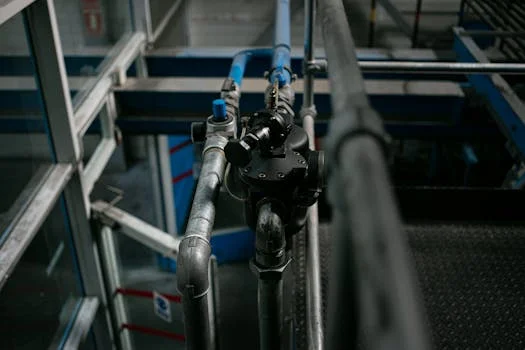
Membrane Bioreactor (MBR) technology achieves 99% pathogen removal and 95% COD reduction, making it the primary choice for hospitals requiring high-quality reuse water. The process flow for MBR systems for hospital wastewater treatment in Vadodara typically involves an anoxic tank for denitrification, an aerobic tank for carbonaceous removal, and a membrane filtration module that replaces the secondary clarifier. This configuration allows for a high Mixed Liquor Suspended Solids (MLSS) concentration (8,000–12,000 mg/L), which facilitates the breakdown of complex pharmaceutical compounds that conventional systems miss.
Sequencing Batch Reactor (SBR) systems offer a robust alternative for hospitals with fluctuating occupancy rates. Unlike continuous flow systems, SBR operates in cycles: Fill, React, Settle, Decant, and Idle. This batch processing allows for excellent control over the hydraulic retention time (HRT), which is critical for treating high-strength hospital sewage. While SBR has a lower CAPEX than MBR, it typically requires a larger footprint and more intensive chemical dosing for phosphorus and pathogen removal to meet the same effluent quality.
| Feature | MBR (Membrane Bioreactor) | SBR (Sequencing Batch) | Conventional (ASP) |
|---|---|---|---|
| Pathogen Removal | 99.9% (Ultrafiltration) | 90–95% | 80–85% |
| Footprint | Ultra-Compact (Low) | Moderate | Large |
| Effluent Quality (BOD) | < 5 mg/L | < 15 mg/L | < 30 mg/L |
| CAPEX | Higher (20–30%) | Baseline | Lower (15–20%) |
| OPEX | Moderate (Membrane cleaning) | Moderate (Aeration) | High (Sludge handling) |
For smaller clinics or facilities with limited budgets, compact medical wastewater treatment units for Vadodara clinics utilizing conventional aerobic treatment followed by intensive disinfection are available. However, these systems require tertiary filtration (Sand + Carbon) and a high-capacity chlorine dioxide disinfection for hospital effluent in Vadodara to ensure that antibiotic-resistant bacteria are neutralized before discharge. Detailed engineering insights on these processes can be found in our guide on detailed MBR system engineering process and efficiency data.
Engineering Specs for Hospital STPs in Vadodara: Design Parameters and Performance Metrics
Typical influent for Vadodara hospitals presents a Chemical Oxygen Demand (COD) range of 500–1500 mg/L and Total Suspended Solids (TSS) between 200–500 mg/L. Designing an effective system requires accounting for "shock loads" during peak hospital hours (typically 10 AM to 2 PM). Engineers must specify an equalization tank capacity of at least 25–30% of the daily flow to buffer these surges and maintain a consistent feed to the biological reactor.
For MBR-based designs, the design flux of the membrane is a critical performance metric. HydropureWater MBR Series specifications recommend a flux rate of 15–25 Liters per Square Meter per Hour (LMH) to prevent premature fouling while maintaining high throughput. The Sludge Retention Time (SRT) should be maintained between 20–30 days to encourage the growth of nitrifying bacteria and the degradation of recalcitrant organic molecules found in medical detergents.
| Design Parameter | MBR Specification | SBR Specification |
|---|---|---|
| MLSS (mg/L) | 8,000 – 12,000 | 3,000 – 5,000 |
| HRT (Hours) | 4 – 8 | 6 – 12 |
| SRT (Days) | 20 – 30 | 10 – 20 |
| F/M Ratio (kg BOD/kg MLSS/d) | 0.05 – 0.10 | 0.05 – 0.15 |
| Disinfection Method | ClO₂ or UV | Chlorine or ClO₂ |
Disinfection requirements for hospital wastewater are significantly higher than for municipal sewage. To achieve a 99.9% pathogen kill rate, an EPA-aligned dose of 2–5 mg/L of Chlorine Dioxide (ClO₂) is required with a contact time of 30–60 minutes. ClO₂ is preferred over standard liquid chlorine because it does not produce carcinogenic trihalomethanes (THMs) when reacting with the high organic matter typical of hospital effluent. For facilities with high oil and grease content from hospital kitchens or laundry, DAF pretreatment for hospital wastewater oil/grease removal is recommended to protect downstream biological processes.
Cost Breakdown: CAPEX, OPEX, and ROI for Hospital STPs in Vadodara
Capital expenditure (CAPEX) for hospital STPs in Vadodara ranges from ₹0.8 lakh to ₹3.5 lakh per m³/day depending on the selected technology and the degree of automation. MBR systems occupy the higher end of this range due to the cost of high-grade PVDF membranes and advanced control systems, but they provide the lowest total cost of ownership over a 10-year horizon by eliminating the need for tertiary clarifiers and multi-grade filters.
Operating expenditure (OPEX) is dominated by energy consumption for aeration (40–60%) and chemical costs for disinfection and pH adjustment (15–25%). In Vadodara, where industrial electricity tariffs apply, optimizing the blower efficiency in an MBR or SBR system can save a 200-bed hospital up to ₹3 lakh annually. Maintenance costs for MBR systems include periodic Membrane Quality Cleaning (CIP) at ₹0.5–1.0 lakh per month, whereas SBR systems incur higher costs in sludge disposal and chemical dosing for phosphorus removal.
| Cost Component | MBR (₹/m³/day) | SBR (₹/m³/day) | Conventional (₹/m³/day) |
|---|---|---|---|
| Initial CAPEX | 1.5L – 3.5L | 1.0L – 2.5L | 0.8L – 2.0L |
| Annual OPEX | Moderate | Moderate-High | High (due to failures) |
| Membrane Life | 5–8 Years | N/A | N/A |
| ROI (Penalty Avoidance) | 18–24 Months | 24–30 Months | 36+ Months |
The Return on Investment (ROI) for a modern STP is primarily driven by the avoidance of GPCB penalties. A 300 m³/day facility at a 200-bed hospital can save between ₹12–18 lakh per year in potential fines by maintaining consistent compliance. When factoring in the potential for water reuse—where treated effluent replaces freshwater for gardening and flushing at a rate of ₹60/kL—the system often pays for itself within the first two years of operation (HydropureWater field data, 2025).
Zero-Risk Equipment Selection: Decision Framework for Vadodara Hospitals
A zero-risk equipment selection framework for Vadodara hospitals begins with a precise assessment of daily wastewater volume and peak flow variations. Hospitals must determine if their primary goal is simple discharge compliance or high-value water reuse, as this dictates the choice between SBR and MBR technologies. For facilities with severe space constraints—common in urban Vadodara—MBR is often the only viable choice as it requires 60% less footprint than conventional systems.
- Step 1: Flow Analysis: Calculate the average daily flow (ADF) and peak hourly flow. Ensure the equalization tank is sized for 6-8 hours of storage.
- Step 2: Compliance Target: If aiming for WHO reuse standards for landscaping, select MBR. If meeting basic CPCB discharge limits for municipal sewers, SBR is sufficient.
- Step 3: Footprint Evaluation: Measure available land. If the area is <100 sqm for a 100 KLD plant, MBR or a compact medical wastewater treatment units for Vadodara clinics is mandatory.
- Step 4: Lifecycle Costing: Compare the 10-year CAPEX + OPEX. MBR usually wins on ROI due to lower labor and chemical costs over time.
- Step 5: Disinfection Strategy: Select ClO₂ generators for superior removal of antibiotic-resistant bacteria (ARB) and viruses, ensuring 100% compliance with fecal coliform limits.
By following this framework, procurement teams can move away from "lowest bid" selections that often lead to system failure and regulatory fines. Instead, focus on technical specifications that guarantee long-term performance under the specific conditions of Vadodara’s healthcare sector.
Troubleshooting Common Hospital STP Failures in Vadodara
Pharmaceutical residue carryover, resulting in COD levels exceeding 250 mg/L, is frequently caused by insufficient Hydraulic Retention Time (HRT) or Sludge Retention Time (SRT) in the biological reactor. If the bacteria do not have enough "contact time" with the complex molecules found in medicines, they cannot break them down. The fix involves increasing the HRT to 8–12 hours for SBR systems or ensuring the MLSS in MBR systems remains above 8,000 mg/L to provide a higher density of specialized microbes.
Odor complaints from surrounding residential areas are a common issue for Vadodara hospitals. This is typically caused by anaerobic conditions in the equalization tank or sludge holding areas where hydrogen sulfide (H₂S) builds up. The immediate solution is to add coarse bubble aeration to the equalization tank to maintain a Dissolved Oxygen (DO) level >2 mg/L, or to dose small amounts of chlorine dioxide disinfection for hospital effluent in Vadodara to neutralize odor-causing compounds at the source.
Pro-Tip: Membrane fouling in MBR systems is often misdiagnosed as "old membranes." In reality, it is usually caused by high MLSS concentrations (>15,000 mg/L) or excessive oil and grease from the laundry. Maintain MLSS between 8,000–10,000 mg/L and use a DAF pretreatment for hospital wastewater oil/grease removal to extend membrane life to 8+ years.
Sludge bulking, where the sludge fails to settle in an SBR or conventional clarifier, is often caused by a low Food-to-Microorganism (F/M) ratio or the growth of filamentous bacteria. Operators should increase the F/M ratio by decreasing the sludge wasting rate or, in emergency cases, dose 5–10 mg/L of chlorine to the return activated sludge (RAS) line to selectively kill filamentous organisms without harming the floc-forming bacteria.
Frequently Asked Questions
What is the most common reason for GPCB penalties for Vadodara hospitals?
Most penalties arise from high fecal coliform counts and pharmaceutical residue carryover (COD violations). These are typically caused by undersized disinfection systems or biological reactors that cannot handle the complex chemical load of hospital waste.
Is MBR better than SBR for a 100-bed hospital?
Yes, for hospitals in Vadodara, MBR is generally superior because it provides a physical barrier (membranes) against pathogens and requires significantly less space. It also produces effluent high enough in quality for reuse in cooling towers and gardening.
How much does a 100 KLD hospital STP cost in Vadodara?
A 100 KLD MBR system typically costs between ₹25 lakh to ₹35 lakh (CAPEX), while an SBR system may cost ₹18 lakh to ₹25 lakh. However, the MBR system offers better long-term ROI through reduced penalty risks and water reuse savings.
How often should hospital STP membranes be cleaned?
Maintenance cleaning (backwashing) happens automatically every few minutes. Intensive chemical cleaning (CIP) should be performed every 3–6 months depending on the influent quality and flux rates to maintain optimal permeability.
Does a hospital STP require a full-time operator?
Modern MBR and SBR systems are highly automated with PLC controls, requiring only 1–2 hours of daily supervision for chemical refilling and sensor calibration, rather than 24/7 manual intervention.