Rio Grande do Sul’s Municipal Sewage Crisis: Why 74% of Wastewater Goes Untreated
Rio Grande do Sul’s municipal sewage treatment plants face a 74.39% untreated discharge gap (DMAE 2024 data), with only 25.61% of collected sewage receiving treatment. The state’s 275 CORSAN-served municipalities require scalable solutions—from stabilization ponds (used in 11 of Porto Alegre’s WWTPs) to advanced MBR systems—with CAPEX ranging from R$500–R$2,500/m³ and OPEX of R$0.80–R$2.10/m³. Compliance with CONAMA Resolution 430/2011 (BOD < 120 mg/L, TSS < 150 mg/L) demands tailored engineering specs for rural vs. urban plants.
For a municipal engineer in Caxias do Sul, the technical challenge is often visceral. During heavy rain events, the sight of untreated sewage overflowing into local watercourses highlights a systemic failure in infrastructure capacity. While Porto Alegre maintains an 86.5% urban sewage service index for collection, the actual treatment rate remains alarmingly low at 25.61%, meaning the vast majority of effluent is discharged directly into Guaíba Lake. This discrepancy creates a massive environmental burden; 2023 state environmental reports indicate that Guaíba Lake’s E. coli levels exceed CONAMA limits by over 300% in specific monitoring zones.
The crisis is compounded in the 275 municipalities served by CORSAN, representing 55% of the state. In these areas, particularly in rural and urban fringe zones, the lack of centralized collection networks forces a reliance on individual septic tanks and cesspits. The SAMAE project in Caxias do Sul has set aggressive targets to achieve 100% fecal sludge collection for homes without sewer connections by 2026, yet the bottleneck remains the secondary treatment capacity. A transition from simple containment to advanced biological processing is necessary to address the state’s "sanitation gap" and impede economic development and public health.
Engineering Specs for Rio Grande do Sul Municipal Sewage Treatment Plants
The average influent BOD in Rio Grande do Sul ranges from 250 to 450 mg/L based on DMAE 2024 operational data.Engineering teams must design systems capable of handling significant fluctuations in organic load, particularly in regions with mixed sanitary and pluvial networks. In Porto Alegre, the influent COD typically fluctuates between 400 and 800 mg/L, while Total Suspended Solids (TSS) range from 200 to 400 mg/L.
To achieve compliance with CONAMA Resolution 430/2011, equipment must be sized to reduce BOD to below 120 mg/L and TSS to below 150 mg/L. For rural municipalities where land is available, stabilization ponds remain a standard choice due to their low mechanical complexity. However, for urban areas facing land scarcity, an MBR system for urban sewage reuse in Porto Alegre offers a footprint reduction of up to 70% compared to conventional activated sludge. Sludge production rates must be factored into the design; typical benchmarks for the region suggest 0.1–0.3 kg TSS produced per kg of BOD removed.
| Parameter | Typical Influent (RS) | CONAMA 430/2011 Limit | Advanced Reuse Target |
|---|---|---|---|
| BOD (Biochemical Oxygen Demand) | 250–450 mg/L | < 120 mg/L | < 10 mg/L |
| COD (Chemical Oxygen Demand) | 400–800 mg/L | None (State dependent) | < 50 mg/L |
| TSS (Total Suspended Solids) | 200–400 mg/L | < 150 mg/L | < 5 mg/L |
| pH | 6.5–8.0 | 5.0–9.0 | 6.0–8.0 |
| Fecal Coliforms | 10^6 - 10^8 MPN/100ml | Varies by Class | < 10 MPN/100ml |
For decentralized applications, such as small housing clusters or rural schools, an underground package sewage treatment plant for rural municipalities provides a localized solution that avoids the high cost of extending CORSAN’s main sewer lines. These systems are engineered to handle the specific fecal sludge characteristics identified in SuSana case studies, ensuring that even remote areas can meet state environmental standards.
Treatment Technology Comparison: Stabilization Ponds vs. MBR vs. DAF for Municipal Plants

In contrast, Membrane Bioreactors (MBR) and Dissolved Air Flotation (DAF) represent the technological shift toward intensification. MBR systems combine biological treatment with 0.1 μm membrane filtration, achieving 98% BOD removal and producing effluent suitable for non-potable reuse. For municipalities dealing with high grease or industrial influxes, such as the leather and footwear clusters, a DAF system for industrial pre-treatment in Novo Hamburgo is essential for removing suspended solids and fats before the sewage enters the biological stage. Engineers should consult a aerobic vs. anaerobic treatment comparison for municipal applications to determine the most energy-efficient configuration for their specific influent profile.
| Technology | CAPEX (R$/m³) | OPEX (R$/m³) | BOD Removal % | Typical Footprint |
|---|---|---|---|---|
| Stabilization Ponds | R$ 500 – 800 | R$ 0.80 – 1.20 | 85 – 90% | Very Large |
| MBR System | R$ 2,000 – 2,500 | R$ 1.50 – 2.10 | 98 – 99% | Very Small |
| DAF (Pre-treatment) | R$ 1,200 – 1,800 | R$ 1.00 – 1.60 | 95% (TSS) | Medium |
| Activated Sludge | R$ 1,200 – 1,600 | R$ 1.30 – 1.80 | 90 – 95% | Large |
Cost Breakdown: CAPEX and OPEX for Rio Grande do Sul Municipal Sewage Plants
Municipal sewage treatment CAPEX in Rio Grande do Sul fluctuates between R$500 and R$2,500 per cubic meter depending on the complexity of the biological process and filtration requirements.Budgetary planning must account for the high OPEX associated with chemical dosing and sludge disposal. For a detailed analysis of financial modeling, planners should refer to the detailed cost breakdown and ROI calculator for Rio Grande do Sul projects. Currently, BNamericas reports that approximately 2 billion reais (US$370 million) in financing has been earmarked for sanitation projects in the state, providing a significant window for municipalities to upgrade from stabilization ponds to MBR or DAF systems. The ROI for MBR systems in urban settings is typically realized within 7 to 12 years, primarily through the avoidance of environmental fines and the potential sale of reclaimed water for industrial use.
| Cost Component | Stabilization Ponds | MBR Systems | DAF Systems |
|---|---|---|---|
| Civil Works | 70% of CAPEX | 30% of CAPEX | 40% of CAPEX |
| Electromechanical | 10% of CAPEX | 50% of CAPEX | 45% of CAPEX |
| Energy (Monthly) | Low (Solar/Gravity) | High (Aeration/Pumping) | Moderate |
| Maintenance | Minimal | Membrane Replacement | Skimmer/Pump Service |
Compliance Requirements: CONAMA vs. EU Standards for Municipal Sewage Discharge
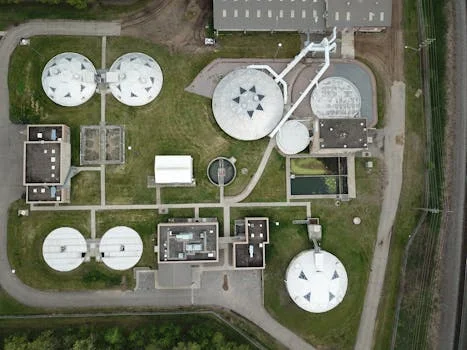
One of the most frequent compliance failures in Porto Alegre occurs during the rainy season, where TSS limits are exceeded by up to 20% due to pluvial infiltration. To mitigate pathogen risks, the use of chlorine dioxide disinfection for CONAMA 430/2011 compliance has become the preferred method, offering a 99.9% pathogen kill rate without the harmful byproducts associated with traditional chlorination. This level of disinfection is also a prerequisite for hospital wastewater treatment systems for healthcare facilities in Brazil, which must meet even stricter microbial limits before discharging into municipal sewers.
| Parameter | CONAMA 430/2011 | EU Directive 91/271/EEC | Compliance Strategy |
|---|---|---|---|
| BOD5 | < 120 mg/L | < 25 mg/L | Secondary Biological |
| TSS | < 150 mg/L | < 35 mg/L | Tertiary Filtration/MBR |
| Total Phosphorus | None (specific cases) | < 2 mg/L | Chemical Precipitation |
| Total Nitrogen | None (specific cases) | < 15 mg/L | Nitrification/Denitrification |
Procurement Checklist: 7 Steps to Selecting a Municipal Sewage Treatment Plant in Rio Grande do Sul
Effective procurement of municipal sewage infrastructure requires a multi-stage technical validation process that aligns influent characterization with regional environmental discharge permits.- Step 1: Define Influent/Effluent Parameters: Establish a baseline using DMAE’s 250–450 mg/L BOD data. Account for seasonal variations in flow.
- Step 2: Match Technology to Use Case: Utilize stabilization ponds