Two-Stage Chemical Precipitation for Texturing Wastewater: 2025 Engineering Specs, 99.9% Fluoride Removal & Cost-Optimized Compliance
Two-stage chemical precipitation achieves 99.9% fluoride removal in texturing wastewater by sequentially adjusting pH and reagent dosing—first with calcium hydroxide (Ca(OH)₂) at pH 9.5 to precipitate CaF₂, then with sodium sulfide (Na₂S) at pH 7.0 to target residual metals. This method reduces sludge volume by 40% compared to single-stage precipitation and meets EPA fluoride discharge limits (<4 mg/L), making it ideal for semiconductor, solar panel, and metal finishing industries. Typical CapEx ranges from $120,000–$350,000 for a 50 m³/h system, with OPEX of $0.80–$1.50/m³ treated.
Why Texturing Wastewater Demands Two-Stage Chemical Precipitation
Texturing processes in the semiconductor and solar panel industries utilize concentrated hydrofluoric acid (HF) and nitric acid (HNO₃) to create microscopic textures on silicon wafers. This generates wastewater with fluoride concentrations typically ranging from 500 to 5,000 mg/L. These levels far exceed the EPA’s 40 CFR Part 469 discharge limit of 4.0 mg/L and the even more stringent local limits often found in industrial zones. For EHS managers, the challenge is that fluoride at these concentrations exists in both ionic and complexed forms, making standard treatment methods insufficient for consistent compliance.
Single-stage precipitation using only hydrated lime (Ca(OH)₂) generally achieves 85% to 92% removal efficiency. While this may reduce 1,000 mg/L to roughly 80 mg/L, it leaves the effluent well above regulatory thresholds. Reaching compliance with a single stage often requires massive reagent overdosing, which leads to excessive sludge production and scaling issues in downstream piping. To bridge this gap, engineers often turn to costly post-treatment options like reverse osmosis or ion exchange resins. However, two-stage chemical precipitation for hydrofluoric acid wastewater offers a more robust primary solution by adding a second polishing stage (typically using Na₂S or FeCl₃) to target residual metals and fluoride, reducing effluent fluoride to <1.5 mg/L, satisfying the EU Industrial Emissions Directive 2010/75/EU.
Consider the case of a solar panel manufacturer in Malaysia. The facility was struggling with influent fluoride levels of 1,200 mg/L and was facing $250,000 per year in environmental fines due to effluent exceeding 20 mg/L. By implementing a PLC-controlled chemical dosing system for two-stage precipitation, they successfully reduced effluent fluoride to 1.2 mg/L. The transition not only ensured compliance but also reduced their annual chemical spend by 15% through more precise pH control and reagent utilization.
How Two-Stage Chemical Precipitation Works: Process Physics and Reagent Chemistry
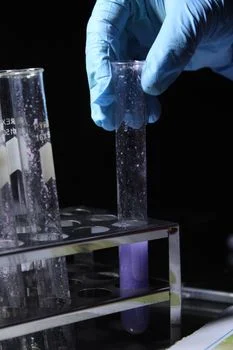
The efficiency of two-stage precipitation is rooted in the solubility product constant (Ksp) of calcium fluoride and the subsequent stabilization of residual ions. The process is divided into two distinct chemical environments, each optimized for a specific removal mechanism.
Stage 1: Primary Fluoride Precipitation. In the first reactor, calcium hydroxide (Ca(OH)₂) is dosed to raise the pH to an optimal range of 9.0–10.0. The primary reaction is Ca²⁺ + 2F⁻ → CaF₂. At a pH of 9.5, the solubility of CaF₂ is at its theoretical minimum (Ksp = 3.9 × 10⁻¹¹ at 25°C). According to 2024 EPA benchmarks, maintaining this precise pH is critical; if the pH exceeds 10.5, the excess hydroxide ions can actually begin to interfere with the stability of the precipitate, leading to "carryover" of fine particles.
Stage 2: Secondary Polishing and Metal Removal. The effluent from the first stage clarifier still contains residual fluoride and dissolved metals like Aluminum (Al³⁺) or Iron (Fe³⁺) used in texturing additives. In the second stage, the pH is adjusted back down to 6.5–7.5. Reagents such as sodium sulfide (Na₂S) or ferric chloride (FeCl₃) are added. Na₂S is particularly effective for precipitating metal sulfides, while FeCl₃ acts as both a secondary precipitant and a coagulant. This stage captures the "polishing" fluoride that was either complexed or remained in solution due to the common-ion effect in Stage 1.
Engineering the mixing environment is as vital as the chemistry. Stage 1 requires rapid mixing (G = 800–1,000 s⁻¹) for approximately 2–5 minutes to ensure reagent dispersion, followed by slow mixing (G = 50–100 s⁻¹) for 20–30 minutes to facilitate floc growth. CaF₂ sludge is notably dense, with a specific gravity of 2.5–3.0, allowing for rapid settling in a lamella clarifier for two-stage precipitation effluent polishing. Conversely, the Stage 2 sludge is more gelatinous and typically requires a 0.5–1.0 mg/L dose of anionic polymer to ensure effective dewatering.
| Process Parameter | Stage 1 (Primary) | Stage 2 (Polishing) |
|---|---|---|
| Target Reagent | Ca(OH)₂ (Hydrated Lime) | Na₂S or FeCl₃ |
| Optimal pH Range | 9.0 – 10.0 (Target 9.5) | 6.5 – 7.5 (Target 7.0) |
| Retention Time | 30 – 45 Minutes | 30 – 60 Minutes |
| Mixing Intensity (G) | 800 (Rapid) / 60 (Slow) | 600 (Rapid) / 40 (Slow) |
| Sludge Characteristics | Crystalline, High Density | Flocculent, Gelatinous |
Engineering Specs for Two-Stage Precipitation: pH, Reagent Dosages, and Removal Efficiencies
Designing a system for texturing wastewater requires precise reagent ratios based on the stoichiometric requirements of the influent. For high-fluoride loads (1,000+ mg/L), the theoretical ratio for Stage 1 is roughly 2.0 kg of Ca(OH)₂ per 1.0 kg of fluoride, but in practice, a ratio of 1.2–1.8 kg/m³ of wastewater is standard to account for alkalinity and competing ions. To understand the broader application of these parameters, engineers should review engineering specs for two-stage precipitation in fluoride wastewater across different industrial sectors.
The removal efficiencies of a well-designed two-stage system are significantly higher than traditional methods. While Stage 1 removes 90–95% of the fluoride, Stage 2 brings the total removal efficiency to 99.5–99.9%. the co-precipitation effect helps reduce Total Suspended Solids (TSS) by 92–97% and Chemical Oxygen Demand (COD) by 60–80%, as organic complexes like EDTA or citric acid (common in texturing baths) are swept away by the calcium and iron hydroxides.
| Contaminant | Influent Conc. (mg/L) | Effluent Conc. (mg/L) | Removal Efficiency |
|---|---|---|---|
| Fluoride (F⁻) | 500 – 5,000 | < 1.5 | 99.9% |
| TSS | 200 – 800 | < 10 | 97.0% |
| COD | 300 – 1,200 | 80 – 150 | 75.0% |
| Aluminum (Al) | 50 – 200 | < 0.5 | 99.7% |
Reagent consumption costs are the primary driver of OPEX. Based on 2025 market rates, Ca(OH)₂ costs approximately $0.15–$0.25/kg, while Na₂S is more expensive at $1.20–$1.80/kg. However, because Na₂S is only used in the second "polishing" stage at low dosages (0.1–0.3 kg/m³), the overall cost remains competitive. Implementing a precise how lime dosing systems optimize Stage 1 precipitation strategy is the most effective way to control these costs and prevent reagent wastage.
Two-Stage vs. Single-Stage Precipitation vs. Reverse Osmosis: Cost-Benefit Comparison
When evaluating treatment technologies, procurement teams must look beyond initial CapEx to the total cost of ownership (TCO). While single-stage precipitation has the lowest entry cost, its inability to meet strict fluoride limits often necessitates expensive secondary polishing or results in high non-compliance fines. Reverse Osmosis (RO) provides excellent water quality but suffers from high membrane fouling rates when treating high-fluoride texturing wastewater directly.
| Metric (for 50 m³/h) | Single-Stage | Two-Stage Precipitation | Reverse Osmosis (RO) |
|---|---|---|---|
| CapEx Range | $80k – $200k | $120k – $350k | $250k – $600k |
| OPEX (per m³) | $0.50 – $1.00 | $0.80 – $1.50 | $1.50 – $3.00 |
| Fluoride Effluent | 15 – 40 mg/L | < 1.5 mg/L | < 1.0 mg/L |
| Sludge Volume | High (100%) | Reduced (60%) | Low (Concentrate) |
| Compliance Risk | High | Very Low | Low (Fouling Risk) |
Two-stage precipitation is the "Goldilocks" solution for texturing wastewater. It offers 40% less sludge volume than single-stage treatment because the second stage allows for more efficient chemical use rather than relying on "brute force" lime dosing. This reduction in sludge volume can save a facility $0.20–$0.40/m³ in disposal costs alone. For high-fluoride loads (>500 mg/L), two-stage precipitation is consistently 30–50% cheaper than RO when accounting for membrane replacement and energy consumption. To handle the resulting solids, a high-efficiency filter press for two-stage precipitation sludge is essential to achieve a dry cake (25% solids) and minimize disposal weight.
Compliance Checklist: Meeting EPA, EU, and Industry-Specific Discharge Limits
To ensure your facility remains within legal boundaries, engineers should utilize a standardized compliance checklist during the design and auditing phases. Two-stage precipitation is one of the few technologies that can reliably meet the <1.5 mg/L fluoride limit set by the EU Industrial Emissions Directive without the need for tertiary polishing.
- Verify Influent Characteristics: Ensure the system is sized for peak fluoride loads (500–5,000 mg/L) and account for temperature fluctuations, as CaF₂ solubility increases with temperature.
- Reagent Selection: Confirm the availability of high-purity Ca(OH)₂ (90%+) and select a Stage 2 reagent (Na₂S or FeCl₃) based on the specific heavy metal profile of the wastewater.
- Retention Time Validation: Size reactors for a minimum of 30 minutes in Stage 1 and 45 minutes in Stage 2 to allow for complete chemical equilibrium.
- Dewatering Capability: Integrate a filter press or centrifuge capable of handling the specific gravity of calcium fluoride sludges.
- Effluent Monitoring: Install continuous pH and turbidity sensors, with weekly lab testing for fluoride (Ion Selective Electrode method) to verify compliance with EPA 40 CFR Part 469.
For specialized applications, such as the semiconductor industry (SEMI S23-0718), effluent may need to reach <1 mg/L for reuse applications. In these cases, the two-stage system acts as an essential pre-treatment for RO or resin polishing. Even in medical or laboratory environments, similar principles apply to ensure that hazardous waste is neutralized before entering municipal sewers, as seen in medical wastewater treatment solutions.
Common Pitfalls and Troubleshooting Guide for Two-Stage Precipitation Systems
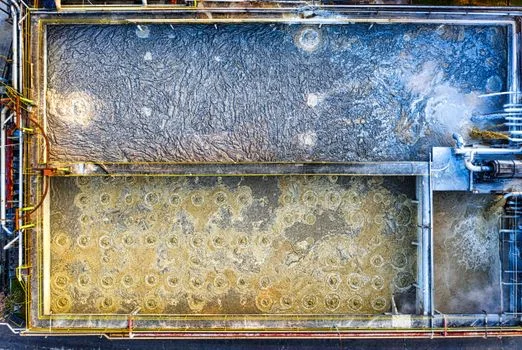
Even a perfectly designed system can fail if operational nuances are ignored. Scaling is the most common issue in Stage 1. Because the process involves high calcium concentrations, calcium fluoride (CaF₂) and calcium carbonate (CaCO₃) scale can build up rapidly on reactor walls, pH probes, and piping. To prevent this, engineers should use soft water for reagent preparation and consider adding an antiscalant (0.5–1.0 mg/L). Automated acid washing of pH probes every 24 hours is also recommended to maintain dosing accuracy.
Fluoride Rebound: A frustrating phenomenon where effluent fluoride levels appear low immediately after treatment but increase 24–48 hours later. This is usually caused by the dissolution of CaF₂ micro-particles that were not properly settled or stabilized. The solution is to ensure the Stage 2 pH is maintained strictly between 6.5 and 7.5, which stabilizes the precipitates and prevents them from re-entering the ionic state.
Troubleshooting Flowchart:
- Symptom: High Effluent Fluoride (>5 mg/L).
- Check: Is Stage 1 pH between 9.3 and 9.7? If not, adjust the lime dosing pump.
- Check: Is the lime slurry concentration correct? Verify the batching tank.
- Symptom: Poor Sludge Settling in Clarifier.
- Check: Is the polymer dose too high? Over-flocculation can lead to "fluffy" flocs that carry over.
- Check: Verify the G-value in the flocculation tank; ensure slow mixing is not too aggressive.
- Symptom: Rapid Filter Press Blinding.
- Check: Is Stage 2 sludge being mixed with Stage 1? Metal sulfide sludges are gelatinous and may require more anionic polymer before dewatering.
Frequently Asked Questions
What is the optimal pH for Stage 1 precipitation with Ca(OH)₂?
The optimal pH is 9.5, where CaF₂ solubility is minimized (Ksp = 3.9 × 10⁻¹¹). pH <9.0 reduces fluoride removal efficiency, while pH >10.5 increases reagent consumption without improving removal and can lead to precipitate instability.
Can two-stage precipitation remove other contaminants besides fluoride?
Yes. Stage 1 effectively removes fluoride, phosphates, and certain heavy metals (Cu²⁺, Zn²⁺). Stage 2 targets residual metals like Aluminum (Al³⁺) and Iron (Fe³⁺). The process typically achieves 92–97% TSS removal and up to 80% COD removal through co-precipitation.
How much sludge does two-stage precipitation generate?
Two-stage precipitation reduces sludge volume by approximately 40% compared to single-stage methods. For a 50 m³/h system with 1,000 mg/L influent fluoride, you can expect 0.8–1.2 m³/day of dewatered sludge at 20–25% solids.
What is the cost difference between two-stage precipitation and reverse osmosis?
Two-stage precipitation is significantly more cost-effective for high-fluoride loads. It features an OPEX of $0.80–$1.50/m³ and CapEx of $120k–$350k. RO costs $1.50–$3.00/m³ in OPEX and up to $600k in CapEx, primarily due to the high cost of membrane maintenance in harsh chemical environments.
Does two-stage precipitation work for low-fluoride wastewater (<100 mg/L)?
Generally, no. For fluoride concentrations below 100 mg/L, the chemical equilibrium makes two-stage precipitation less efficient. In these cases, single-stage precipitation followed by a defluoridation resin is usually more cost-effective. Two-stage is specifically optimized for loads between 500 and 5,000 mg/L.