In Barcelona, industrial wastewater treatment plant costs in 2025 range from €5–€12/m³ for dedicated pre-treatment systems such as DAF or MBR to €0.80–€2.50/m³ for municipal connections. For a 100 m³/h leather tannery plant, CAPEX typically falls between €800,000–€1.5M, with OPEX at €0.40–€0.70/m³. Catalonia's current sanitation programme is PGSAC 2022–2033 (ACA), succeeding earlier PSARU plans; urban WWTP effluent still tracks RD 509/1996 limits of 125 mg/L COD and 25 mg/L BOD5. Compliant systems commonly recover capital in 3–5 years. The cost calculators and equipment matrices below help align projects with Barcelona's regulatory path.
How much does a wastewater treatment plant cost in Barcelona?
In Barcelona, industrial wastewater treatment plant costs in 2025 range from €5–€12/m³ for dedicated pre-treatment (DAF or MBR) and €0.80–€2.50/m³ for municipal connections. CAPEX for a 100 m³/h leather tannery system runs €800,000–€1.5M, with OPEX of €0.40–€0.70/m³. Meeting Catalan discharge quality (125 mg/L COD; BOD5 25 mg/L for urban WWTP effluent under RD 509/1996) compresses payback to 3–5 years.
Why Barcelona's 2025 Wastewater Costs Are Rising: Regulatory and Market Pressures
Catalonia's Agència Catalana de l'Aigua now runs the PGSAC 2022–2033 programme for public sanitation works, with about €613 million planned for 2022–2027. Earlier industry briefs still say "PSARU 2025"; PSARU named prior urban sanitation programmes, not the current ACA plan. Urban WWTP effluent must meet RD 509/1996 and Directive (EU) 2024/3019 values: 125 mg/L COD and 25 mg/L BOD5. Earlier draft wording used less than 50 mg/L BOD; the statutory BOD5 figure is 25 mg/L. Industrial permits also push total chromium control, commonly briefed at less than 10 mg/L for tannery pre-treatment.
The Leather Cluster Barcelona, comprising 28 tanneries, shows the cash impact. Many sites face retrofit costs above €200,000 each to hit chromium targets, mainly via chemical precipitation and sludge dewatering. Enforcement penalties in local Catalan sewer ordinances can reach from a few hundred euros to several thousand per violation; briefs often quote €500 to €5,000 post-2025. That pressure makes Barcelona industrial wastewater treatment cost 2025 a live budgeting item.
The Port of Barcelona's wastewater infrastructure is expanding too. The TMA Port WWTP is adding about 450 m³/h to handle rising industrial flows from port manufacturing and logistics. Operators expect a 10–15% rise in industrial wastewater flow over five years. Municipal connection fees of €0.80–€2.50/m³ are projected to climb 8–12% a year, above Madrid's €0.60–€1.80/m³ band.
Barcelona Wastewater Treatment Plant Costs 2025: CAPEX and OPEX Breakdown by Plant Size
Capital spend for an industrial wastewater treatment plant in Barcelona in 2025 spans about €450,000 for a 50 m³/h system to over €3.5 million for a 500 m³/h facility. Civil works—reinforced concrete tanks and foundations—usually take 30–40% of CAPEX. Local concrete tank costs run €120–€180/m². Equipment (pumps, filters, membranes, dosing) takes 40–50%. Automation adds 10–15%, and permitting plus engineering take 5–10%.
The following table provides an estimated CAPEX breakdown for typical industrial wastewater treatment plants in Barcelona:
| Cost Item | 50 m³/h Plant (Approx. CAPEX) | 200 m³/h Plant (Approx. CAPEX) | 500 m³/h Plant (Approx. CAPEX) |
|---|---|---|---|
| Total Estimated CAPEX | €450,000 - €750,000 | €1,200,000 - €1,800,000 | €2,800,000 - €3,800,000 |
| Civil Works (30-40%) | €135,000 - €300,000 | €360,000 - €720,000 | €840,000 - €1,520,000 |
| Equipment (40-50%) | €180,000 - €375,000 | €480,000 - €900,000 | €1,120,000 - €1,900,000 |
| Automation & Control (10-15%) | €45,000 - €112,500 | €120,000 - €270,000 | €280,000 - €570,000 |
| Permitting & Engineering (5-10%) | €22,500 - €75,000 | €60,000 - €180,000 | €140,000 - €380,000 |
Operating spend also shapes the total wastewater treatment plant cost in Barcelona. Energy usually sits at €0.10–€0.20/m³ when Barcelona power is about €0.18/kWh versus an EU average near €0.15/kWh. Chemicals add €0.15–€0.30/m³. Labor for operation and monitoring adds €0.05–€0.10/m³. Annual maintenance averages 2–4% of initial CAPEX. Hidden items still inflate budgets: soil remediation (€50–€150/m³), odor control (€200–€500 per odor unit), and 24-hour emergency storage (€100–€300/m³).
For a 200 m³/h leather tannery needing MBR and DAF pre-treatment for chromium and COD targets, CAPEX may sit near €1.2M. At €0.55/m³ OPEX and 8,000 h/year, annual operating cost is 200 m³/h × 8,000 h/year × €0.55/m³ = €880,000. With CAPEX amortized over 15 years, total annual cost can exceed €963,600. Most plants we size for tanneries run closer to the lower OPEX band when dosing is tuned, but electricity at €0.18/kWh keeps pushing that number upward.
Technology Cost Comparison: MBR vs DAF vs Conventional Systems for Barcelona's Industrial Effluents
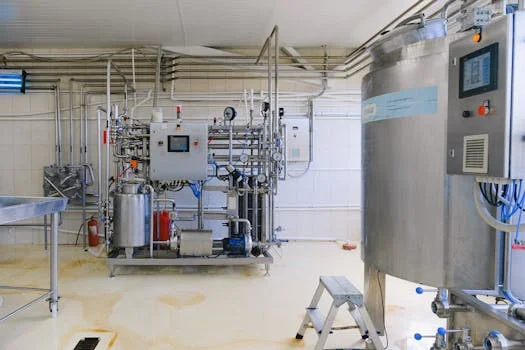
Choosing treatment for Barcelona industrial effluent means weighing CAPEX, OPEX, footprint, and removal against Catalan discharge quality. Leather tanneries and port plants often carry high COD, TSS, and chromium. Each process trades cost for compliance margin.
Membrane Bioreactor (MBR) Systems: CAPEX typically runs €1,500–€2,500/m³/h of capacity. MBRs deliver 95–99% COD removal and strong TSS removal, which suits tight urban sites and Barcelona-compliant MBR systems for high-COD industrial effluents in port facilities. OPEX is higher at €0.60–€0.90/m³ from aeration, scouring, and membrane replacement (€80–€120/m² every 5–7 years).
Dissolved Air Flotation (DAF) Systems: DAF CAPEX sits at €800–€1,500/m³/h. Units reach 85–92% TSS removal and support chromium precipitation for tanneries. OPEX for DAF pre-treatment for Barcelona's leather and manufacturing sectors is usually €0.30–€0.50/m³, offset by sludge disposal at €150–€300/ton in Barcelona. Coagulant and flocculant chemicals cost about €2.50–€4.00/kg.
Conventional Activated Sludge Systems: CAPEX is lower at €600–€1,200/m³/h. They reach 80–85% COD removal but often need tertiary steps for chromium, adding €300–€600/m³/h. Larger footprints fit poorly on constrained urban lots. OPEX is close to DAF, yet weak metal removal without tertiary treatment limits direct use for many Barcelona industries.
The following table summarizes the key comparison points for these technologies:
| Technology | CAPEX (€/m³/h) | OPEX (€/m³) | Footprint (m²/m³/h) | Removal Efficiency (COD/TSS/Cr) | Barcelona PSARU 2025 Suitability |
|---|---|---|---|---|---|
| MBR Systems | €1,500 – €2,500 | €0.60 – €0.90 | 0.5 – 1.0 | 95-99% COD, 98-99% TSS, Good Cr (with pre-treatment) | Excellent (High compliance, small footprint; high energy cost) |
| DAF Systems | €800 – €1,500 | €0.30 – €0.50 | 1.5 – 2.5 | 70-85% COD (pre-treatment), 85-92% TSS, 90-95% Cr (with chemicals) | Good (Cost-effective pre-treatment, strong Cr removal for tanneries) |
| Conventional Activated Sludge | €600 – €1,200 | €0.25 – €0.45 | 3.0 – 5.0 | 80-85% COD, 80-90% TSS, Poor Cr (without tertiary) | Limited (Requires tertiary for PSARU compliance, large footprint) |
Local vs. Imported Equipment: Cost, Lead Time, and Compliance Trade-offs
Sourcing from Catalan suppliers versus international makers changes CAPEX, lead time, and compliance risk. Local suppliers often price 10–20% lower on standard DAF or MBR packages, at €800–€1,500/m³/h. International vendors typically land at €1,200–€2,000/m³/h for more specialized designs.
Lead times diverge. Local shops often deliver and install in 8–12 weeks. International vendors supplying an MBR Membrane Bioreactor Wastewater Treatment System or a Dissolved Air Flotation (DAF) System usually need 16–24 weeks. Barcelona port congestion can add another 4–6 weeks on 2024 authority patterns.
Alignment with Catalan discharge quality still matters. Local vendors often pre-configure for regional permits, cutting redesign risk. International packages may need customization for Barcelona discharge parameters, adding €50,000–€100,000. Warranties differ: local suppliers commonly offer 24 months with on-site support; international makers often give 12 months with slower physical response.
The following table summarizes the trade-offs between local and international equipment sourcing:
| Factor | Local Suppliers (e.g., Catalan-based manufacturers) | International Vendors (e.g., HydropureWater) |
|---|---|---|
| CAPEX (€/m³/h) | €800 – €1,500 (10-20% lower for standard systems) | €1,200 – €2,000 (Potentially higher for advanced/specialized systems) |
| Lead Times | 8 – 12 weeks | 16 – 24 weeks (plus 4-6 weeks for port congestion) |
| PSARU 2025 Compliance | Often pre-configured for local limits | May require customization (€50K-€100K additional cost) |
| Warranty & Service | 24-month warranty, on-site support | 12-month warranty, often remote diagnostics |
| Typical Project Sizes | Small to medium industrial (50-300 m³/h) | Medium to large industrial (100-1000+ m³/h) |
For plants weighing compact WWTP solutions for Barcelona's small industrial facilities, local options can deploy faster. Large or highly specialized duties still favor international vendors with broader proven trains and global engineering depth.
How to justify your Barcelona WWTP investment in 3–5 years
A well-scoped industrial WWTP in Barcelona can pay back in 3–5 years through lower municipal surcharges and avoided fines. Use (Annual Savings + Avoided Fines) / (CAPEX + Annual OPEX). Barcelona inputs matter: municipal surcharges run €0.80–€2.50/m³ by effluent quality, and compliance fines are often briefed up to €5,000 per violation. Price MBR-heavy energy at €0.18/kWh.
Take a 100 m³/h leather tannery now discharging non-compliant flow to the municipal system. A pre-treatment train at €900,000 CAPEX and €0.50/m³ OPEX over 8,000 h/year costs 100 × 8,000 × €0.50 = €400,000 a year to run. With CAPEX amortization, effective annual cost sits near €460,000. Avoided surcharges of €300,000 plus €50,000 in avoided fines yield (€300,000 + €50,000) / (€900,000 + €400,000) = 0.269, or about a 3.7-year payback (1 / 0.269).
Run sensitivity on ±20% CAPEX, ±15% OPEX, and ±10% fine exposure. OPEX swings usually move lifecycle cost the most; historical reviews show operating costs can be understated by 30–40% over a plant life if scoping is thin. Pairing treatment with Barcelona's PSARU-compliant disinfection solutions for industrial WWTPs can lock long-term compliance. To size against Catalan limits and get a cost curve, request a Barcelona WWTP sizing and quote.
Who this is for and next steps
This guide is for plant engineers, EPC contractors, and procurement managers sizing greenfield or retrofit WWTPs in the Barcelona industrial corridor—leather, port, and general manufacturing at 50–500 m³/h. Flows below 20 m³/h or sites outside Catalonia should use a municipal-rate model instead of the Catalan thresholds here. Projects above 1,000 m³/h need a custom HydropureWater feasibility study.
Selection checklist for a Barcelona WWTP
- Confirm discharge targets: less than 125 mg/L COD; BOD5 25 mg/L for urban WWTP effluent under RD 509/1996 (earlier briefs used less than 50 mg/L BOD); less than 10 mg/L total chromium where the permit requires it.
- Match influent profile to technology: DAF for high TSS and chromium, MBR for tight footprints and high COD.
- Budget CAPEX across civil works (30–40%), equipment (40–50%), automation (10–15%), and engineering (5–10%).
- Lock in OPEX assumptions: electricity at €0.18/kWh, chemical dosing at €0.15–€0.30/m³, labor at €0.05–€0.10/m³.
- Validate supplier lead times: 8–12 weeks local versus 16–24+ weeks international.
- Run a payback sensitivity covering ±20% CAPEX and ±15% OPEX.
- Reserve budget for hidden items: soil remediation (€50–€150/m³), odor control (€200–€500/unit), emergency storage (€100–€300/m³).
Frequently Asked Questions
What is the average cost per m³ for a 200 m³/h industrial WWTP in Barcelona?
The average cost per m³ for a 200 m³/h industrial wastewater treatment plant in Barcelona, including CAPEX amortization and OPEX, typically ranges from €8–€12/m³ for dedicated pre-treatment such as DAF or MBR. After pre-treatment, municipal connection costs fall to €0.80–€2.50/m³ when effluent meets Catalan quality rules. Most sites we model land closer to €9–€10/m³ once electricity at €0.18/kWh is included.
How much does it cost to upgrade a leather tannery WWTP to meet PSARU 2025 chromium limits?
Upgrading a 50 m³/h leather tannery wastewater treatment plant for Catalan chromium targets typically costs €150,000–€300,000. That covers chemical precipitation and stronger sludge handling. Payback is usually 3–4 years from avoided fines, often briefed at €500–€5,000 per violation, plus lower surcharge exposure on cleaner effluent.
What are the lead times for WWTP equipment in Barcelona?
Lead times for wastewater treatment plant equipment in Barcelona depend on the supplier. Catalan local suppliers typically deliver in 8–12 weeks. International vendors such as HydropureWater generally need 16–24 weeks. Add 4–6 weeks if Barcelona port congestion delays inbound crates on the schedule used in 2024 port patterns.
Can I connect my industrial WWTP to Barcelona's municipal system?
Yes, industrial plants in Barcelona can connect to the municipal system when pre-treatment meets permit limits. Urban WWTP effluent standards under RD 509/1996 use 125 mg/L COD and 25 mg/L BOD5; industrial sewer permits set site-specific metal and organic caps. Municipal surcharges run €0.80–€2.50/m³ by pre-treated effluent quality.
What are the most cost-effective WWTP technologies for Barcelona's industrial sectors?
For Barcelona's industrial sectors, DAF systems are cost-effective for leather tanneries at €800–€1,500/m³/h CAPEX and 85–92% TSS removal, which supports chromium precipitation. MBR systems fit port sites and high-purity duties at €1,500–€2,500/m³/h CAPEX with 95–99% COD removal where footprint and effluent quality drive the choice.