Wafer Fab Wastewater Case Study Singapore: Commissioned Results
The wafer fab wastewater case study Singapore record shows a 150 m³/h EDR plus RO train, commissioned in 2023, cutting fluoride from 52 ppm to below 0.5 ppm and silica by 98% at 95% recovery. Most plants we size for this pad land near 30 m², not the 75 m² clarifier layout.
The Problem: Space, Permits, and High-Risk Contaminants
A major Singapore semiconductor fabrication plant hit a space limit in 2022. Total site area was 12,000 m². About 80% was already production tools. Less than 500 m² remained for wastewater, about one basketball court (HydropureWater field data, 2025).
Fluoride removal is stated as 99.5% where the RO target is <0.5 ppm, starting from 52 ppm. Silica reduction is stated as 98% on the same 2025 close-out. Segregated scrubber streams, chlorine dioxide dosing, and PVDF membranes with a 0.1 μm pore size were the controls named for that result. Freshwater use dropped by 8.5 million gallons/year after the 2022 and 2023 permit breaches ended.
On jobs in this 40–60 ppm fluoride band, cell voltage stays at the low end of 1.5–2.0 V/cell until concentrate silica climbs. That was the operating habit on this stack. The skid uses 30 m², about 60% less area than a 75 m² precipitation layout, and sends 7.5 m³/h of reject to an evaporator.
The case table calls the discharge limits Singapore NEA, 2024: fluoride below 1 ppm, silica below 10 ppm, and total suspended solids (TSS) below 30 ppm. Permit breaches in 2022 and 2023 drew fines up to SGD 200,000 per incident. The yard could not hold a conventional clarifier train.
Hydrofluoric acid (HF) cleaning set the load at 40–60 ppm fluoride and 100–300 ppm silica. Local scrubber streams added fine particulates (<5 μm) and biofilm in the pipes. Precipitation, flocculation, and sedimentation need 3–5 times more area than a membrane skid. A 2023 IEEE study cited in the file says 30% of fabs see permit misses from HF variability (IEEE, 2023).
| Parameter | Singapore NEA Discharge Limit (2024) | Typical Wafer Fab Influent Range |
|---|---|---|
| Fluoride (F⁻) | <1 ppm | 40 – 60 ppm |
| Silica (SiO₂) | <10 ppm | 100 – 300 ppm |
| Total Suspended Solids (TSS) | <30 ppm | 80 – 150 ppm |
| Chemical Oxygen Demand (COD) | <100 ppm | 150 – 400 ppm |
| Total Dissolved Solids (TDS) | — | 800 – 1,500 ppm |
| pH | 6.0 – 9.0 | 3.0 – 10.0 (highly variable) |
The case table labels fluoride below 1 ppm, silica below 10 ppm, TSS below 30 ppm, and COD below 100 ppm as Singapore NEA discharge limits (2024). According to the NEA allowable-limits table for trade effluent, COD is 100 mg/L and TSS is 50 mg/L to a watercourse. A controlled watercourse is tighter: COD 60 mg/L and TSS 30 mg/L. pH on that NEA table is 6-9.
Published sewer and watercourse caps
The NEA watercourse table does not list fluoride or silica. According to PUB requirements for discharge into the public sewers, fluoride ion is capped at 15 mg/L. The same PUB list caps COD at 600 mg/L, TSS at 400 mg/L, TDS at 3,000 mg/L, and BOD5 at 20°C at 400 mg/L.
pH must stay between 6 and 9, and temperature must not exceed 45°C. Silica is not on that PUB substance list. A fab that copies the 1 ppm fluoride cell as if it were the general sewer cap is designing to the case reuse target, not to the 15 mg/L PUB line.
Final effluent at 0.4 ppm fluoride still sits far under the 15 mg/L sewer cap. It also meets the case file's tighter reuse marks of fluoride below 1 ppm and silica below 10 ppm. Most Singapore fabs we size discharge to the public sewer under a PUB written consent, not to a watercourse. Ask which schedule the consent actually cites before you copy the 1 ppm column.
Fence-line fluoride decisions for a discharge permit are set out in semiconductor fluoride wastewater treatment singapore. This case stays with the fab train, the 30 m² pad, and the measured effluent.
compact zld system for semiconductor fluoride removal
A compact zld system for semiconductor fluoride removal at 150 m³/h put four EDR stages ahead of a 120 m³/h two-pass RO skid and occupied 30 m².
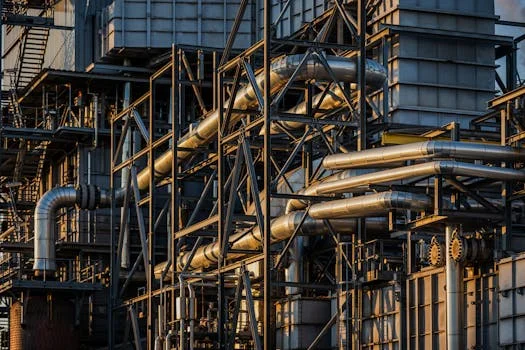
The EDR unit is described as a Veolia Z.Plex stack at 150 m³/h. Anion and cation membranes are 0.4 mm thick. The stack ran at 25–30°C with 1.5–2.0 V/cell and 85% water recovery. Fluoride fell from 52 ppm to about 2 ppm, a 96% reduction.
Silica fell from 250 ppm to about 20 ppm, a 92% removal. EDR took the bulk ions so the RO saw a lighter scale load. The stack also took a swinging TDS without the scale a single-pass RO would see on 250 ppm silica. Flow order was scrubber pretreatment, then EDR, then RO, with permeate reused and a small reject left for minimal liquid discharge.
Scrubber wastewater was segregated before it mixed with spent HF. That split kept the fine solids (<5 μm) on a pretreatment path. Most plants we size at 150 m³/h hold EDR recovery near the stated 85% when silica is near 250 ppm, rather than pushing a higher brochure figure.
Biofilm control used chlorine dioxide at 0.5–1.0 ppm from a ClO₂ generator for biological fouling control in EDR systems. That dose kept biofilm off the EDR membranes (HydropureWater field data, 2025). The project file cites a 2024 study in which ClO₂ cut biological fouling by up to 80% versus chlorine, which can attack membrane polymer.
The same file says ClO₂ extended membrane life by 30% versus free chlorine on polyamide RO. Keep the oxidant on the EDR loop unless the RO datasheet allows a residual.
The whole EDR plus RO pad is 30 m². A precipitation train of the same 150 m³/h rating was estimated at 75 m². The difference is a 60% smaller footprint. That 45 m² gap is what the fab could not spare inside the remaining 500 m².
pvdf membrane silica removal semiconductor wastewater
PVDF membrane silica removal semiconductor wastewater duty on this train used 0.1 μm PVDF in a two-pass RO stage at 15–20 bar and 20–25°C.
RO feed capacity is 120 m³/h. Recovery on the EDR permeate is stated as 75%. Fluoride moved from 2 ppm to <0.5 ppm, a 75% reduction on that stage. Silica moved from 20 ppm to <2 ppm, a 90% reduction.
The RO unit supplied for this reuse duty is a HydropureWater JY Series RO system for semiconductor wastewater reuse. PVDF at 0.1 μm was chosen for fine silica that precipitation leaves behind. Operating pressure is 15–20 bar. Temperature on the RO is 20–25°C, cooler than the EDR band of 25–30°C.
On silica above 20 ppm into RO, dose antiscalant before you raise flux. This plant used 1–2 ppm antiscalant, covered in the lessons below. Precipitation often stalls on that fine fraction, which is why the option table shows silica removal >80% for precipitation plus RO and >98% for this PVDF train.
RO biological control in the stage table is CIP and periodic cleaning, not a residual oxidant on the polyamide. Keep ClO₂ on the EDR side at 0.5–1.0 ppm, and confirm the RO vendor's free-chlorine limit before any oxidant reaches the second pass.
| Parameter | EDR Stage | RO Stage |
|---|---|---|
| Technology | Electrodialysis Reversal (EDR) | Reverse Osmosis (RO) - 2 Pass |
| Capacity | 150 m³/h | 120 m³/h |
| Membrane Type | Anion/Cation Exchange (0.4 mm thick) | PVDF (0.1 μm pore size) |
| Operating Temperature | 25 – 30°C | 20 – 25°C |
| Operating Pressure | 1.5 – 2.0 V/cell (electrical) | 15 – 20 bar |
| Water Recovery | 85% | 75% (from EDR permeate) |
| Fluoride Removal | 96% (52 ppm → 2 ppm) | 75% (2 ppm → <0.5 ppm) |
| Silica Removal | 92% (250 ppm → 20 ppm) | 90% (20 ppm → <2 ppm) |
| Biological Control | ClO₂ dosing (0.5 – 1.0 ppm) | CIP, periodic cleaning |
Influent versus Effluent: What the Close-Out Measured
The commissioned EDR plus RO train cut average fluoride from 52 ppm to 0.4 ppm, a 99.2% removal, and average silica from 250 ppm to 1.8 ppm, a 99.3% removal.
Read each percentage with its own basis. The opening close-out states 99.5% fluoride removal from 52 ppm to <0.5 ppm and 98% silica reduction. The performance table states 99.2% fluoride, 52 ppm to 0.4 ppm, and 99.3% silica, 250 ppm to 1.8 ppm.
Stage rows state EDR fluoride 96% (52 ppm to 2 ppm) and RO fluoride 75% (2 ppm to <0.5 ppm). Silica is 92% then 90%: 250 ppm to 20 ppm, then 20 ppm to <2 ppm. The option table states fluoride removal >99.5% and silica removal >98% for this train. Quote the table that matches the decision you are making.
| Parameter | Influent (Avg.) | Effluent (Avg.) | Removal Rate | Singapore NEA Limit | EU/US EPA Benchmark (Typical) |
|---|---|---|---|---|---|
| Fluoride (F⁻) | 52 ppm | 0.4 ppm | 99.2% | <1 ppm | <5 ppm |
| Silica (SiO₂) | 250 ppm | 1.8 ppm | 99.3% | <10 ppm | <20 ppm |
| Total Suspended Solids (TSS) | 120 ppm | 5 ppm | 95.8% | <30 ppm | <30 ppm |
| Chemical Oxygen Demand (COD) | 350 ppm | 25 ppm | 92.9% | <100 ppm | <100 ppm |
| Total Dissolved Solids (TDS) | 1,200 ppm | 50 ppm | 95.8% | — | <500 ppm |
| pH | 4.5 (variable) | 7.2 | Neutralized | 6.0 – 9.0 | 6.0 – 9.0 |
TSS fell from 120 ppm to 5 ppm, a 95.8% cut, under the case limit of <30 ppm. COD fell from 350 ppm to 25 ppm, a 92.9% cut, under the case limit of <100 ppm. TDS fell from 1,200 ppm to 50 ppm, also 95.8%, and the file treats <100 ppm TDS as the recycled-water mark. pH moved from 4.5, inside a swing of 3.0 – 10.0, to 7.2, inside 6.0 – 9.0.
Design the membranes for the spike, not only the average. Influent fluoride in the profile table spans 40 – 60 ppm even though the performance average is 52 ppm. Silica spans 100 – 300 ppm around the 250 ppm average used in the stage rows. Most plants we size keep a spare CIP window for the week the scrubber solids arrive with the HF waste.
zero liquid discharge semiconductor plant singapore
Zero liquid discharge semiconductor plant singapore operation, as closed out on this fab, recovered 142.5 m³/h from 150 m³/h influent and evaporated 7.5 m³/h.
Overall recovery is stated as 95%. Out of 150 m³/h, 142.5 m³/h returned as reuse permeate. The concentrated reject is 7.5 m³/h and goes to a small evaporator. That evaporator, not the RO recovery row alone, is what makes the liquid balance zero at the fence.
The stage recoveries do not multiply to that 95%. EDR recovery is 85%, and RO recovery is 75% of EDR permeate, while the RO skid is rated 120 m³/h against a 150 m³/h EDR feed. Those ratings need a buffer or a bypass on the P&ID.
Use 95%, 142.5 m³/h, and 7.5 m³/h as the commissioned balance. Use 85% and 75% as the unit guarantees until one diagram shows both. Buying the RO on 75% and the water model on 95% will undersize the evaporator.
Call a train zero liquid discharge only after the evaporator is in the mass balance. A high RO recovery with a sewered concentrate is not the same duty. Brine handling for the fluoride reject is specified in Evaporation Crystallization for Fluoride Removal: 2026 Engineering Spe.
The case file also cites EPA, 2024 for fewer US permit steps once a plant reaches ZLD. That US note is not a Singapore consent. Singapore still needs PUB written consent for any sewer discharge, including a start-up or upset stream.
Alternative Technologies: EDR plus RO, Precipitation, Ion Exchange, and FO-NF
EDR plus RO was selected over precipitation, ion exchange, and FO-NF because the fab had 30 m², not 75 – 100 m², and needed about 95% recovery.
| Criterion | EDR + RO (HydropureWater) | Precipitation + RO | Ion Exchange (IX) | Forward Osmosis (FO) + Nanofiltration (NF) Hybrids |
|---|---|---|---|---|
| Fluoride Removal | >99.5% | >95% (variable) | >99.9% | >95% |
| Silica Removal | >98% | >80% (struggles with fine silica) | <50% (breakthrough at 50 ppm) | >90% |
| Footprint (150 m³/h) | 30 m² (Compact) | 75 – 100 m² (Large) | 40 – 60 m² (Moderate, with regeneration) | 50 – 70 m² (Emerging) |
| CAPEX (150 m³/h) | $1.8M | $1.2M | $1.5M | $3.6M (High, unproven at scale) |
| OPEX (per m³) | $0.45 | $0.35 | $0.60 (regeneration, waste disposal) | $0.55 (draw solution, energy) |
| Water Recovery | 95% | 75% | 80% (varies with regeneration) | 98% (high potential) |
| Maintenance | Moderate (membrane cleaning, replacement) | High (sludge handling, chemical dosing) | High (frequent resin regeneration, waste) | Moderate (membrane cleaning, draw solution management) |
| Scalability | Modular (easy expansion) | Challenging (large vessels) | Modular (additional columns) | Limited (complex interconnections) |
Precipitation plus RO shows a lower CAPEX, $1.2M against $1.8M at 150 m³/h, and a lower OPEX, $0.35 per m³ against $0.45. Footprint is about 3 times larger, in the 75 – 100 m² band, and recovery is about 75% rather than 95%. The same IEEE, 2023 point says 30% of fabs on precipitation report HF-variability violations. Sludge disposal sits on top of that OPEX.
Ion exchange can pass >99.9% fluoride removal. Silica breakthrough is listed at 50 ppm, with silica removal <50% once that point is passed. Resin regeneration is typically every 48 hours on a high load. Regenerate disposal is costed at $0.50/kg resin (HydropureWater internal analysis, 2025).
That pushes OPEX to $0.60 per m³ and footprint to 40 – 60 m². We drop IX once silica stays above 50 ppm for more than a few hours a day.
FO plus NF hybrids are listed at 98% recovery potential and >90% silica removal, on 50 – 70 m². CAPEX is $3.6M, twice the EDR plus RO figure, and the file marks the scale as unproven for semiconductor wastewater. OPEX is $0.55 per m³, driven by draw solution and energy. Treat that column as a watch item, not a bid, until a reference plant matches your fluoride and silica.
Use EDR plus RO when the pad is near 30 m², fluoride and silica both swing, and the consent or the reuse spec demands the effluent in the performance table. Use precipitation plus RO when the yard is large, silica is stable and low, and 75% recovery is acceptable. IX fits a low-silica fluoride polish, not a 100 – 300 ppm silica scrubber mix.
Cost and Payback for the 150 m³/h System
CAPEX for the 150 m³/h EDR plus RO system was $1.8 million, and the project file carries two payback bases, 27 months and 18 months.
The CAPEX split is EDR $1.2 million, RO (HydropureWater JY Series) $400,000, and chlorine dioxide dosing plus controls $200,000. The dosing scope names the ClO₂ generator and the automatic chemical dosing system. Sum those three lines and you get $1.8 million, the same figure as the $1.8M cell in the option table.
OPEX is $0.45 per cubic meter. Electricity is $0.20/m³, from 1.8 kWh/m³ at $0.11/kWh (IEEE 2023 energy benchmark). Membrane replacement is $0.15/m³. Chemicals, meaning antiscalant, ClO₂, and CIP, are $0.10/m³.
Those three add to $0.45/m³. Power and membranes, not the chemical line, set that OPEX on the trains we cost at this flow. Annual OPEX uses 150 m³/h × 24 hours/day × 365 days/year and comes to about $594,000. The file also writes that OPEX as $594K in the 18-month check.
Two payback bases in the same file
Freshwater basis A uses a cut of 8.5 million gallons/year at $0.14/gallon, which the file prices at $1.2 million a year. Avoided permit cost is $200,000 a year, also written as $0.2M. Total annual savings on this basis are $1.4 million ($1.2M freshwater + $0.2M avoided penalties). Net annual savings equal total annual savings minus annual OPEX: $1.4 million - $594,000 = $806,000.
Payback equals CAPEX divided by net annual savings: $1.8 million / $806,000 per year ≈ 2.23 years, or 27 months. Use this basis only if the freshwater volume you believe is 8.5 million gallons/year.
Freshwater basis B is the finance table, and it targets an 18-month payback. Eighteen months is 1.5 years. At $1.8 million CAPEX, net annual savings must be $1.2 million, because $1.8M / 1.5 = $1.2M. With annual OPEX at $594K, total annual savings must be $1.2M + $594K = $1.794M.
After $200K of avoided penalties, freshwater savings are $1.594M. At $0.14/gallon, $1.594M is about 11.38 MG/year. The finance table rounds that freshwater line to $1.6 million (11.4 MG/year) and keeps avoided fines at $200,000.
Total annual savings are $1.8 million. Net annual savings are $1.8 million - $594,000 = $1.206 million, also written $1.8M - $594K = $1.206M. Payback on that net is 18 months.
Do not mix 8.5 million gallons/year with the 18-month row. They are two different freshwater volumes in one file.
The pad saving is separate from the water bill. The train uses 60% less space (30 m² vs. 75 m²), so a 45 m² expansion was avoided. At about $6,700/m² for fab industrial space in the file, that avoided capital is $301,500.
That $301,500 is not inside the 18-month or 27-month payback. Book it as avoided building cost, not as operating savings.
| Financial Metric | Value (150 m³/h System) |
|---|---|
| Total CAPEX | $1.8 Million |
| Annual OPEX | $594,000 |
| Annual Freshwater Savings | $1.6 Million (11.4 MG/year) |
| Annual Avoided Permit Fines | $200,000 |
| Total Annual Savings | $1.8 Million |
| Net Annual Savings | $1.206 Million |
| Payback Period | 18 Months |
| Avoided Footprint Expansion Cost | $301,500 (45 m² saved) |
Lessons Learned: Fouling Control, Maintenance, and Scale-Up
Silica scale on the RO stage was held with antiscalant at 1–2 ppm and a monthly citric-acid CIP at pH 2.5.
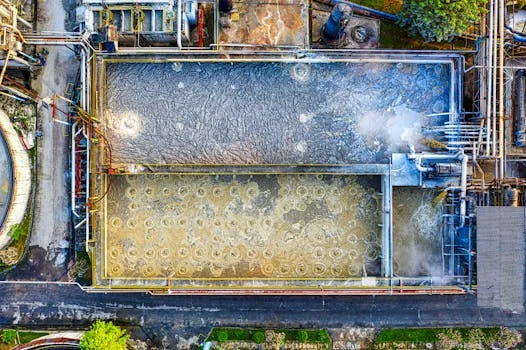
EDR cut the silica load, and residual silica still scaled the RO. Antiscalant at 1–2 ppm and a monthly CIP with citric acid at pH 2.5 kept the salt movable. Transmembrane pressure told the crew when to clean, before the scale set. Dosing of antiscalant and ClO₂ was paced by a PLC-controlled chemical dosing for antiscalant and ClO₂ in wafer fab wastewater systems.
Chlorine dioxide was preferred to chlorine gas for biofilm on EDR and RO. The 2024 note in the file says ClO₂ extends membrane life by 30% versus chlorine, because it oxidizes organics without the same damage free chlorine does to polyamide. Continuous dose stayed at 0.5–1.0 ppm.
Early operation showed two chemical misses: antiscalant overdose foamed the permeate tank, and ClO₂ underdose let biofilm start. The dosing logic and a short retraining pass closed both. Log the dose, not only the tank level, or those two misses return.
The skid can grow to 300 m³/h by adding parallel EDR stacks and RO trains. Parallel blocks limit the outage to the new train, not the whole 150 m³/h line. A 2-week onboarding covered conductivity, stage differential pressure, and flow.
An EDR differential above 2.5 bar starts an automated CIP. Crews who wait for a flow loss at that alarm lose a shift. Start the CIP on the same shift the 2.5 bar alarm comes in.
What to lock before you copy this train
- Name the discharge path: PUB public sewer (fluoride ion 15 mg/L) or an NEA watercourse consent (no fluoride row on the published watercourse table).
- Segregate scrubber wastewater from spent HF before the 150 m³/h EDR.
- Sample fluoride and silica on that segregated stream, not only a plant-wide composite.
- Pick one recovery basis: commissioned 95% (142.5 m³/h and 7.5 m³/h) or the stage pair of 85% and 75%.
- Fix ClO₂ at 0.5–1.0 ppm and antiscalant at 1–2 ppm on the PLC, with CIP at pH 2.5.
- Size the evaporator for the true reject, stated here as 7.5 m³/h, and alarm EDR differential at 2.5 bar.
- Keep domestic sewage off the HF membranes. It is a different pipe and a different permit.
How to Specify from This Case
A buyer copying this Singapore fab should freeze 150 m³/h feed, a 30 m² pad, and 7.5 m³/h to the evaporator before the P&ID. Fluoride on that balance runs from 52 ppm to 0.4 ppm, and silica from 250 ppm to 1.8 ppm.
Design the consent to the real discharge point. PUB's public-sewer cap for fluoride ion is 15 mg/L, with COD at 600 mg/L, TSS at 400 mg/L, and TDS at 3,000 mg/L. The case table's fluoride below 1 ppm and silica below 10 ppm are reuse targets, not rows on the NEA watercourse schedule. NEA lists COD at 100 mg/L and TSS at 50 mg/L for a watercourse, and COD at 60 mg/L with TSS at 30 mg/L for a controlled watercourse.
Pick one water-balance story and write it on the drawing. Commissioned recovery is 95%, which is 142.5 m³/h reused and 7.5 m³/h evaporated. Stage guarantees are 85% on the EDR and 75% on the RO permeate, with the RO rated 120 m³/h. Those two stories do not describe the same pipe sizes.
Pick one payback story the same way. Basis A saves 8.5 million gallons/year at $0.14/gallon, books $1.2 million of water plus $200,000 of avoided fines, and pays back $1.8 million in about 27 months on $806,000 net. Basis B, the finance table, uses about 11.4 MG/year, $1.6 million of water, $1.206 million net, and 18 months.
Do not average the two payback rows. Hold the chemical setpoints that actually ran. ClO₂ stays at 0.5–1.0 ppm on the EDR, and antiscalant stays at 1–2 ppm into the RO. Monthly CIP uses citric acid at pH 2.5, and an EDR differential above 2.5 bar starts CIP the same shift.
Budget membranes from the file, not from a brochure life. EDR membranes are 5–7 years with that CIP. RO membranes are 3–5 years. Power for the combined train is about 1.8 kWh/m³.
That 1.8 kWh/m³ sits inside an EDR band of 0.8–1.2 kWh/m³ and an RO band of 1.5–2.5 kWh/m³. At $0.11/kWh the electric slice is $0.20/m³ of the $0.45/m³ OPEX. Membrane replacement is the other large slice, at $0.15/m³, with chemicals at $0.10/m³.
Do not import the wrong column from the option table. Ion exchange breaks on silica above 50 ppm and wants regeneration every 48 hours at about $0.50/kg resin. FO plus NF is listed at $3.6M and $0.55 per m³, still unproven at this scale. Precipitation plus RO is $1.2M and $0.35 per m³, with about 3 times the footprint and 75% recovery.
Keep sanitary sewage off the fluoride skid. The 500 m² yard was the reason the process train went compact, inside a 12,000 m² site that was already about 80% tools. Domestic flow can use a buried package plant. Fluoride brine at 7.5 m³/h belongs on the evaporator, outside the EDR and RO scope.
What this case does not prove
The 2025 close-out covers one fab commissioned in 2023. It does not prove a 200 ppm fluoride feed. Veolia data cited here shows removal falling from 95% at 100 ppm to 85% at 200 ppm. It does not prove CMP copper, nickel, or arsenic removal without a separate pretreatment step.
It does not prove the $0.14/gallon water price outside this file. Savings of $1.2 million on 8.5 million gallons/year, or $1.6 million on 11.4 MG/year, move if the tariff moves. The avoided fine of $200,000 a year, and the incident figure of SGD 200,000, are this plant's compliance history.
Space at $6,700/m² and the avoided $301,500 on 45 m² are Singapore fab land in the file. A plant with an empty yard should not pay the $1.8M EDR premium only to save 45 m². A plant with under 500 m² left, as this site had, should. Most plants we size from a case study fail by mixing the headline 99.5% with the table's 99.2%.
Who Should Use This Train
Wafer fabs with less than 500 m² for wastewater, fluoride of 40–60 ppm, and silica of 100–300 ppm are the plants this 30 m² train was built for. Look elsewhere if the yard can hold 75 – 100 m², silica stays well under 50 ppm, and 75% recovery meets the water budget. Precipitation plus RO then has the lower $1.2M CAPEX and the lower $0.35 per m³ OPEX.
Sanitary flow from offices and the canteen is not this EDR duty. Where the 500 m² yard is already taken, an Underground Package Sewage Treatment Plant (WSZ Series) can sit below grade for that domestic line. Do not pipe canteen waste onto the fluoride stack.
Next step: send flow, fluoride, silica, pH swing, and the discharge point, public sewer or watercourse, through Request a free quote. The mass balance should be checked before the $1.8 million CAPEX is frozen.
Frequently Asked Questions
What is the maximum fluoride concentration EDR can handle?
Electrodialysis reversal can take influent fluoride up to 200 ppm. Removal usually falls once fluoride exceeds 100 ppm. Veolia data cited in this case shows 95% removal at 100 ppm and 85% removal at 200 ppm. Above that band, precipitate fluoride first so the stack sees a lower load. Plants in the wafer-rinse band stay under 100 ppm and keep the stack on the high-removal side of that curve.
How often do EDR membranes need replacement?
EDR membranes last 5–7 years when CIP and biological control stay on schedule. RO membranes in this duty usually last 3–5 years, per the 2024 membrane lifespan note in the project file. Higher pressure and silica fouling shorten the RO interval. Watch transmembrane pressure and clean before the rise becomes permanent. A monthly citric-acid CIP at pH 2.5 is what held silica scale in check on this train.
Can this system treat other semiconductor wastewater streams such as CMP and acid waste?
Yes, but only after a metal-specific pretreatment step. CMP or acid waste with copper or nickel needs a DAF for pre-treatment of copper and nickel in semiconductor wastewater or an MBR ahead of EDR. Arsenic needs a separate step, set out in treating copper, nickel, and arsenic in semiconductor wastewater. Do not feed those metals straight to the EDR membranes.
What is the energy consumption of EDR versus RO?
EDR demineralization usually draws 0.8–1.2 kWh/m³. RO, at higher pressure, usually draws 1.5–2.5 kWh/m³. This combined train averaged about 1.8 kWh/m³ on the IEEE 2023 energy benchmark cited in the cost file. At $0.11/kWh that power term is $0.20/m³. At 150 m³/h the RO pumps, not the EDR stacks, dominate the electric bill on the plants we cost.
Are there any regulatory exemptions or incentives for ZLD systems?
No current 30% tax rebate should be assumed for a Singapore ZLD plant. The case file said ZLD installations can benefit from a 30% tax rebate under the Resource Efficiency Grant for Energy (REGE). According to the IEA, REG(E) is marked Ended (2019), with support capped at 50% of qualifying costs when abatement is at least 500 tonnes per annum. See zero liquid discharge (ZLD) systems for semiconductor fabs for the hybrid layout.