Why Wafer Fab Wastewater Treatment Costs Are Rising in 2025
Semiconductor fabrication plants are facing escalating operational expenses driven by increasing water scarcity, stringent environmental regulations, and aggressive global expansion. For advanced fabs consuming 2–4 million gallons of water daily, wastewater treatment costs can now range from $0.50 to $5.00 per cubic meter, significantly impacting the bottom line. With approximately 10 m³ of wastewater generated per 12-inch wafer, as reported by DuPont, efficient and cost-effective treatment is no longer a choice but a necessity. Regulatory pressure is intensifying worldwide; for instance, China’s GB 31573-2015 and the EU Industrial Emissions Directive 2010/75/EU impose tighter limits on heavy metals like copper, nickel, and zinc, alongside total suspended solids (TSS) which must be kept below 30 mg/L. Non-compliance can lead to substantial fines, with the U.S. EPA NPDES permits allowing for penalties up to $50,000 per day, and in critical cases, production shutdowns, as evidenced by a 2023 incident involving TSMC. Water scarcity is a growing concern, with fabs located in regions like Arizona, Taiwan, and Singapore experiencing 20–30% higher water costs in 2025, according to McKinsey's 2024 analysis. Compounding these pressures, the global semiconductor industry is on an unprecedented growth trajectory, with SEMI forecasting over 50 new fabs planned worldwide by 2027, further increasing the demand for comprehensive and reliable wastewater treatment solutions.
Wafer Fab Wastewater Streams: Engineering Challenges and Treatment Costs
The complexity of semiconductor manufacturing results in a diverse range of wastewater streams, each presenting unique engineering challenges and influencing overall treatment costs. Understanding these streams is crucial for selecting the most effective and economical treatment technologies. Chemical-Mechanical Planarization (CMP) wastewater, for example, contains fine silica or alumina particles ranging from 50 to 300 nm, which are intentionally designed to resist aggregation. This characteristic necessitates advanced coagulation techniques followed by robust membrane filtration. The estimated treatment cost for CMP wastewater typically falls between $1.50 and $4.00 per cubic meter.
Etching and rinsing wastewater streams are characterized by high total dissolved solids (TDS), often between 5,000 and 20,000 mg/L, significant concentrations of heavy metals such as copper and nickel, and elevated fluoride levels, which must be reduced to below 100 mg/L. Treating these complex streams often requires a combination of advanced oxidation processes and precipitation, with costs ranging from $2.00 to $5.00 per cubic meter. Ultrapure water (UPW) reject, while having low TSS, can contain a moderate organic load with TOC levels up to 500 ppb. Treatment for UPW reject, typically involving reverse osmosis (RO) and ion exchange, costs between $0.80 and $2.50 per cubic meter. Spent photoresist and developer solutions present a different challenge with high chemical oxygen demand (COD), ranging from 10,000 to 50,000 mg/L. These streams often require specialized biological treatment or incineration, leading to higher treatment costs of $3.00 to $8.00 per cubic meter. The resistance of CMP slurry particles to aggregation, indicated by zeta potentials typically between -30 and -50 mV, demands substantial coagulant doses, often between 100 and 300 mg/L of ferric chloride (FeCl₃), to achieve effective destabilization and subsequent separation.
| Wastewater Stream | Key Contaminants | Typical Particle Size | Treatment Challenges | Estimated Treatment Cost ($/m³) | Related HydropureWater Solutions |
|---|---|---|---|---|---|
| CMP Wastewater | Silica/Alumina particles, heavy metals | 50–300 nm | Resists aggregation, fouls membranes | $1.50–$4.00 | DAF system for CMP wastewater treatment, Vibratory Membrane Filtration |
| Etching & Rinsing Wastewater | High TDS, heavy metals (Cu, Ni, Cr), Fluoride | N/A | High salinity, toxic metals, corrosive | $2.00–$5.00 | Advanced Oxidation, Chemical Precipitation, RO system for UPW reject and water reuse |
| UPW Reject | TOC (≤500 ppb) | N/A | Low volume, organic load | $0.80–$2.50 | RO system for UPW reject and water reuse, Ion Exchange |
| Spent Photoresist/Developer | High COD (10,000–50,000 mg/L) | N/A | High organic load, difficult to biodegrade | $3.00–$8.00 | Biological Treatment, Incineration |
Treatment Technology Comparison: CAPEX, OPEX, and Removal Efficiency
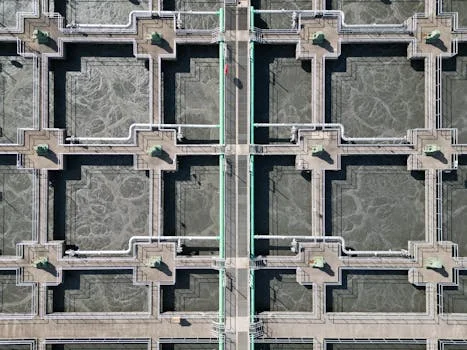
Selecting the optimal wastewater treatment technology for a semiconductor fab requires a detailed understanding of each system's capital expenditure (CAPEX), operational expenditure (OPEX), and contaminant removal efficiencies. This comparison table provides a data-driven overview to aid in technology shortlisting. Dissolved Air Flotation (DAF) systems are particularly effective for CMP wastewater, achieving 90–95% TSS removal and 95% fats, oils, and grease (FOG) removal. For a 100 m³/h system, CAPEX ranges from $1.2M to $3M, with OPEX between $0.50 and $2.00 per cubic meter, primarily driven by chemical and energy consumption.
Membrane Bioreactor (MBR) systems are well-suited for mixed wastewater streams, offering high COD removal (95%) and exceptional TSS removal (99.9%). The CAPEX for a 100 m³/h MBR system is typically $2.5M to $5M, with OPEX ranging from $1.20 to $3.50 per cubic meter, factoring in membrane replacement every 5–7 years. Advanced Oxidation Processes (AOPs), such as UV/H₂O₂ or ozone, are designed to tackle recalcitrant organic compounds, achieving 80–90% TOC removal. These systems have a CAPEX of $1.8M to $4M for a 100 m³/h capacity and incur OPEX of $2.00 to $5.00 per cubic meter due to their energy-intensive nature. Vibratory Membrane Filtration (VMF), exemplified by VSEP technology, is a specialized solution for CMP wastewater, offering high flux rates of 50–100 LMH. CAPEX for a 100 m³/h VMF system is between $2M and $4.5M, with OPEX at $1.50 to $4.00 per cubic meter, considering membrane cleaning cycles every 2–4 weeks. Chemical precipitation is a foundational technology for heavy metal removal, achieving 95–99% efficacy for metals like copper and nickel. The CAPEX for chemical precipitation ranges from $800K to $2M for a 100 m³/h system, with OPEX between $0.80 and $2.50 per cubic meter, excluding sludge disposal costs.
| Technology | Primary Application | TSS Removal (%) | COD Removal (%) | Heavy Metal Removal (%) | CAPEX (100 m³/h, M$) | OPEX ($/m³) | Payback Period (Years) |
|---|---|---|---|---|---|---|---|
| DAF (Dissolved Air Flotation) | CMP Wastewater | 90–95 | N/A | N/A | 1.2–3.0 | 0.50–2.00 | 2–4 |
| MBR (Membrane Bioreactor) | Mixed Streams, High Organic Load | 99.9 | 95 | Varies | 2.5–5.0 | 1.20–3.50 | 3–6 |
| Advanced Oxidation (UV/H₂O₂, Ozone) | Recalcitrant Organics | N/A | 80–90 (TOC) | N/A | 1.8–4.0 | 2.00–5.00 | 4–7 |
| Vibratory Membrane Filtration (VMF) | CMP Wastewater, High Flux | 95–99 | N/A | N/A | 2.0–4.5 | 1.50–4.00 | 3–5 |
| Chemical Precipitation | Heavy Metals | Varies | N/A | 95–99 | 0.8–2.0 | 0.80–2.50 (excl. sludge) | 1–3 |
ROI Calculator: Payback Period for Wafer Fab Wastewater Treatment
Securing budget approval for wastewater treatment infrastructure hinges on demonstrating a clear return on investment (ROI). The primary drivers of ROI in wafer fab wastewater treatment are water reuse savings, regulatory compliance, and operational cost reductions. By treating and reusing wastewater, fabs can achieve significant savings, estimated at $0.50–$1.50 per cubic meter by avoiding expensive municipal water purchases. For a 100 m³/h system operating 24/7, this translates to annual savings of $438,000 to $1.3 million. robust treatment systems prevent costly regulatory fines, which can reach $50,000 per day in the U.S., and avoid production shutdowns that can result in tens of millions of dollars in lost revenue, as seen in a 2023 TSMC case study.
MBR systems, for example, can reduce sludge volume by up to 60% compared to DAF systems, leading to substantial savings in sludge disposal costs, estimated at $50–$100 per ton. The payback period for a wastewater treatment system can be calculated using the formula: (CAPEX - Incentives) / (Annual OPEX Savings + Annual Compliance Savings). For instance, a $2.5 million MBR system generating $800,000 in annual savings can achieve a payback in approximately 3.1 years. Fab owners can further enhance ROI by leveraging available incentives, such as the U.S. Inflation Reduction Act (IRA) tax credits, which offer up to 30% for water reuse systems, or Singapore’s Water Efficiency Fund, which provides up to 50% CAPEX subsidies. These financial benefits significantly shorten the payback period, making the investment in advanced wastewater treatment more attractive.
| Metric | Value | Annual Impact |
|---|---|---|
| System CAPEX | $2,500,000 | N/A |
| Water Reuse Savings ($1.00/m³) | $1.00/m³ * 100 m³/h * 24 h/day * 365 days/year | $876,000 |
| Avoided Fines (Assumed Average) | N/A | $200,000 |
| Sludge Disposal Savings (Estimated) | N/A | $50,000 |
| Total Annual Savings | N/A | $1,126,000 |
| Payback Period (Years) | $2,500,000 / $1,126,000 | ~2.2 Years |
Decision Framework: How to Choose the Right Treatment System for Your Fab
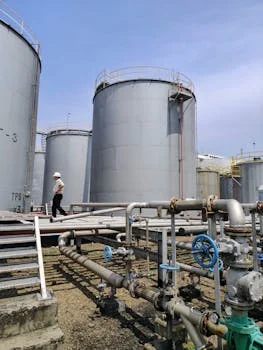
Navigating the selection of a semiconductor wastewater treatment system requires a systematic approach to ensure optimal performance, cost-effectiveness, and compliance. The process begins with a thorough characterization of wastewater streams. This involves detailed analysis of key parameters such as TSS, COD, heavy metals, and fluoride concentrations, often utilizing specialized test kits from providers like Hach or IDE Tech to establish a reliable baseline. Concurrently, it is critical to define precise discharge limits. These limits are dictated by local environmental regulations, such as Taiwan’s EPA requirements for copper (≤0.5 mg/L) and TSS (≤10 mg/L), and may also be influenced by corporate sustainability goals for water stewardship.
The next step involves evaluating the potential for water reuse. Treated wastewater can often be repurposed for non-UPW applications like cooling towers or scrubbers, yielding cost savings of $0.30–$0.80 per cubic meter. The feasibility of reusing RO permeate for certain fab processes, meeting UPW standards with TOC ≤50 ppb and resistivity ≥18 MΩ·cm, should also be assessed. With this data, the technologies outlined in the comparison table (Section 3) can be evaluated. Shortlisting 2–3 promising options based on CAPEX, OPEX, and contaminant removal efficiency is essential. The final crucial step is conducting pilot testing for the shortlisted systems over a period of 3–6 months. Key performance indicators during piloting include flux stability, chemical consumption rates, sludge generation volumes, and overall operational reliability to confirm system suitability for the specific fab environment.
Frequently Asked Questions
What is the typical CAPEX for a wafer fab wastewater treatment system?
Capital expenditure (CAPEX) for wafer fab wastewater treatment systems can range broadly. A smaller system, such as a 50 m³/h DAF unit, might start around $800,000. Conversely, a comprehensive 200 m³/h system incorporating MBR and RO technologies could cost upwards of $5 million. The final cost is heavily influenced by factors like fab size, the complexity and composition of the wastewater streams, and the level of automation and system integration required.
How much does it cost to treat CMP wastewater?
The cost to treat CMP wastewater typically falls between $1.50 and $4.00 per cubic meter. Dissolved Air Flotation (DAF) systems are generally the most cost-effective option in this range, costing approximately $1.50–$2.50/m³. Specialized technologies like vibratory membrane filtration (VMF) can offer higher flux rates but come with a higher cost, ranging from $2.50 to $4.00/m³.
Can wafer fab wastewater be reused?
Yes, a significant portion of treated wafer fab wastewater, often 60–80%, can be effectively reused. Common applications include supplying cooling towers, scrubbers, and irrigation systems. For certain processes requiring high purity, RO permeate can be further treated to meet UPW standards, achieving TOC levels below 50 ppb and resistivity of 18 MΩ·cm, making it suitable for some fab applications.
What are the key regulatory standards for semiconductor wastewater?
Regulatory standards vary by region. In the United States, EPA NPDES permits commonly mandate limits such as ≤10 mg/L for TSS, ≤0.5 mg/L for copper (Cu), and ≤1.0 mg/L for nickel (Ni). China's GB 31573-2015 standard imposes stricter limits, including ≤10 mg/L for fluoride and ≤15 mg/L for ammonia. It is essential to consult local environmental agencies for the most current and specific regulations applicable to your fab’s location.
How long does it take to install a wastewater treatment system?
The installation timeline for a wastewater treatment system can vary based on its complexity and type. For fully integrated, turnkey systems designed for specific fab requirements, the process from initial design to full commissioning typically takes 6 to 12 months. Modular systems, such as pre-skidded DAF or MBR units, can often be installed and operational within a shorter timeframe of 3 to 6 months.
Related Equipment
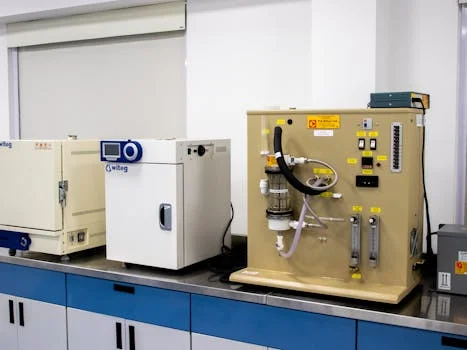
The following HydropureWater products are engineered for the wastewater challenges discussed above:
- MBR system for mixed semiconductor wastewater streams — view specifications, capacity range, and technical data
Need a customized solution? Request a free quote with your specific flow rate and pollutant parameters.