Western Australia Municipal Sewage Treatment Plant Upgrades: Capacity and 2025 Planning Bands
Western Australia municipal sewage treatment plant upgrades are driven by nutrient limits on sensitive estuaries and by growth at coastal works. According to Water Corporation's 2024-25 report, the utility ran 108 schemes and treated nearly 183 billion litres. Filtered BOD below 20 mg/L is the secondary benchmark. Swan and Peel plants need a tighter nitrogen band.
Plant counts in the earlier dataset put Western Australia at 140+ municipal sewage treatment plants, from 500 PE in regional towns to 1.5 million PE at Perth's Woodman Point plant. EPA WA's 2025 discharge limits, including TSS <10 mg/L and TN <10 mg/L for sensitive areas, sit behind the $2M–$500M upgrade band used in this guide. That 140+ figure is wider than the utility count. According to Water Corporation's Wastewater Quality Annual Report 2024-25, the utility managed 108 wastewater treatment schemes in Western Australia, plus three in the Indian Ocean Territories, and treated nearly 183 billion litres that year.
A Perth plant manager facing the 2025 total nitrogen limit is looking at a process change, not a paperwork tweak. Water Corporation holds most of the centralised assets, and the operating focus has moved from plain secondary treatment to resource recovery. The earlier open-data note, the WCORP-296 layer on data.wa.gov.au, split the state between large centralised plants and over 120,000 on-site wastewater treatment systems (OWTS) in regional areas. The same note put 60% of plants in the Perth metro area, 30% in regional hubs such as Geraldton, Bunbury, and Kalgoorlie, and 10% in remote townships such as Broome and Port Hedland.
Salinity, not just organic load, sets materials for coastal duty. Perth coastal plants see saline intrusion, with total dissolved solids from 500 to 2,000 mg/L, so wetted parts need a corrosion allowance. Heavy industrial and food-processing flows in the metro area push fats, oils, and grease often above 300 mg/L.
South West plants also take tourism surges, and population equivalent can triple in peak weeks. Most coastal plants we size for Perth sit at the lower end of the 500–2,000 mg/L TDS band until a high tide lifts salinity.
| Plant Name | Capacity (Population Equivalent) | Primary Treatment Level | Region |
|---|---|---|---|
| Woodman Point | 1,500,000 PE | Secondary / Advanced Tertiary | Perth Metro |
| Beenyup | 400,000 PE | Tertiary (Advanced Water Recycling) | Perth Metro |
| Kwinana | 300,000 PE | Secondary / Industrial Reuse | Perth Metro |
| Albany (Timewell Road) | 50,000 PE | Secondary (Irrigation Focus) | Great Southern |
| Geraldton | 35,000 PE | Secondary / Pond Systems | Mid West |
Engineers still pull the downloadable CSV and the interactive map from the Water Corporation open data portal when they need local capacity and the treatment train on record. That baseline is what a board pack uses to justify the cost comparison of secondary vs. tertiary treatment for WA plants. According to the 2024-25 report, most regional plants are ponds, with disinfection added where recycling needs it, which matches the Geraldton row.
Sewage Plant Compliance Swan River Catchment Nitrogen
Sewage plant compliance on Swan River catchment nitrogen uses a tertiary band of TN <10 mg/L, TP <1 mg/L, and TSS <10 mg/L in this guide's 2025 matrix for sensitive water. The Swan River, Canning River, and Peel-Harvey Estuary are the water bodies named for that tighter band. Ocean-outfall secondary plants are not on the same number set.
The matrix follows this guide's reading of EPA WA Environmental Protection Bulletin 12/2023, which called for total nitrogen below 10 mg/L and total phosphorus below 1 mg/L by 2025 on sensitive catchments. Traditional activated sludge, which this guide places at TN levels of 15–20 mg/L, does not clear that band without tertiary polishing or a biological nutrient removal upgrade. According to Water Corporation's 2024-25 report, advanced treatment, sometimes called tertiary, is used when nitrogen (mostly ammonia) or phosphorus must fall for environmental disposal or for recycling. The same report states that plants are designed to hold filtered BOD below 20 mg/L.
EPA WA 2025 Discharge Matrix for Engineers
Standard secondary limits in this guide remain BOD <20 mg/L and TSS <30 mg/L. Inside a 50km radius of the Swan River catchment, the guide tightens the band to BOD <5 mg/L and TSS <10 mg/L. Plants above 100,000 PE move from weekly grab samples to continuous online instruments. Smaller regional plants may still use grab samples, while pathogen and metals reporting is more frequent than it was.
Most Swan catchment tanks we review still leave the aeration zone at 15–20 mg/L TN before any polishing step. Water Corporation holds 116 wastewater treatment plant process control tables, and 11 of those tables include a utility recycling scheme.
| Parameter | Standard Secondary Limit (EPA 2024) | Sensitive Area Tertiary Limit (2025) | Monitoring Frequency (>100K PE) |
|---|---|---|---|
| BOD5 (mg/L) | <20 | <5 | Continuous / Daily |
| TSS (mg/L) | <30 | <10 | Continuous Online |
| Total Nitrogen (mg/L) | <15 | <10 (Targeting <3 for reuse) | Continuous Online |
| Total Phosphorus (mg/L) | <5 | <1 | Continuous Online |
| E. coli (MPN/100mL) | <1,000 | <10 (For unrestricted reuse) | Weekly |
Albany's Timewell Road plant, listed at 50,000 PE, still meets secondary limits for pasture irrigation in this guide. It faces a tertiary upgrade if discharge volume grows past the land-application capacity on that site. Where a specification still chases E. coli below 1,000 MPN/g ahead of drying, a chlorine dioxide generator for high-level disinfection remains one chemical option on the equipment list.
Biosolids Class A Guidelines Western Australia 2025
Biosolids class A guidelines Western Australia 2025 searches still open the Western Australian guidelines for biosolids management, first published on 1 December 2012, with the wa.gov.au page last updated on 7 June 2023. Earlier notes on the EPA WA Biosolids Guidelines 2023 split sludge into Class A (unrestricted use) and Class B (restricted use), and set Class A at E. coli <1,000 MPN/g. According to those state guidelines (December 2012), Western Australia does not use the US Class A or Class B names. Pathogen grade runs P1 to P4 and contaminant grade runs C1 to C3.
All sludge is treated as pathogen grade P4 and contaminant grade C3 until sampling proves better. P1C1 is the unrestricted-use grade. According to Water Corporation's 2024-25 report, a P3 C2 biosolid can go to broad-acre agriculture, forestry, or mine-site rehabilitation under the 2012 guidelines. The Department of Health reviews biosolids-use proposals other than P1C1.
Biosolids are not supported in public drinking water source areas, except a P1C1 soil conditioner in a priority 3 area that also meets Australian Standard 4454:2012. Pathogen grade P1 in the Kimberley, north of the 26th parallel, must meet Strongyloides and Hookworm viable ova <1 per 50 grams of dry final biosolids. E. coli alone is the bacterial indicator accepted for grades P2 and P3. Grade P1 also needs a virus indicator, coliphage.
For an approved process, contaminant sampling is one sample per 100 dry tonnes, with at least seven samples, and continuous regimes must cover 92 per cent of the scheduled samples. The biosolids adjusted contaminant concentration is the mean plus one standard deviation. Most cake we see from metro digesters is graded for agriculture only after that sampling pack is closed, not on a single grab.
Licence conditions for a discharge still sit under the wider municipal wastewater treatment plant requirements read with the Department of Water and Environmental Regulation. Keep that national page for the statute map. Keep this page for Western Australia plant upgrades, Swan nitrogen bands, and biosolids grades.
Treatment Process Selection for WA's Unique Influent: MBR vs. DAF vs. Lamella Clarifiers
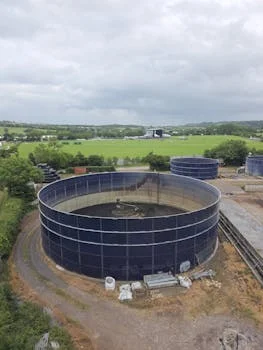
Perth municipal influent in this guide carries fats, oils, and grease of 200–500 mg/L and saline intrusion of 500–2,000 mg/L TDS. Those two numbers decide whether membranes foul and whether carbon steel lasts. For the tightest effluent, including groundwater replenishment or a sensitive discharge, a membrane bioreactor is the barrier option. Systems such as the HydropureWater DF Series are quoted here at TSS <1 mg/L and TN <3 mg/L.
Budget the energy honestly. MBR duty in this guide is 0.8–1.2 kWh/m³, against 0.4–0.6 kWh/m³ for conventional activated sludge at the same plant.
Where grease is the failure mode, dissolved air flotation goes in ahead of biology. DAF systems for high-FOG removal in Perth's influent are credited with 95%+ removal, which keeps grease bulking out of the reactor. Flotation in this slightly alkaline water is run at pH 6.5–7.5 with automatic dosing.
A smaller regional budget often takes a high-efficiency sedimentation tank or lamella clarifier at $200K–$800K. That clarifier is generally limited to effluent targets of >20 mg/L TSS and needs steady chemical dosing, PAC 5–20 mg/L, to hold the rate. Most small regional plants we size run the lamella when the licence stays above 20 mg/L TSS.
| Technology | Primary Benefit in WA | Energy Use (kWh/m³) | Typical CAPEX Range (AUD) |
|---|---|---|---|
| MBR | Superior TN/TP removal; small footprint | 0.8 – 1.2 | $3M – $10M (Small-Med) |
| DAF | 95%+ FOG removal; protects membranes | 0.2 – 0.4 | $500K – $2M |
| Lamella Clarifier | Low cost; simple operation for TSS | <0.1 | $200K – $800K |
| IFAS | Retrofits into existing tanks for TN | 0.5 – 0.7 | $1M – $5M |
The Beenyup upgrade is the reference case for saline, high-FOG influent. MBR systems for tertiary treatment in saline/high-FOG influent took total nitrogen from 12 mg/L to under 2 mg/L in that note. Energy cost rose by about 30%. The effluent then fed the Groundwater Replenishment Scheme.
For a remote-load comparison only, see how Alaska's remote plants handle similar challenges (saline influent, seasonal loads). Do not copy non-WA licence numbers into a Western Australia design. Pilbara and Kimberley plants still use the grades and bands in this article.
Water Corporation states that groundwater replenishment now makes up 5% of the Integrated Water Supply Scheme. Earlier project notes in this guide said the scheme supplies 10% of Perth's drinking water. Stage 2 was completed in August 2022 and doubled advanced water recycling capacity from 14 billion litres to 28 billion litres a year. Actual output depends on how much wastewater is available.
Secondary effluent comes from the Beenyup Wastewater Treatment Plant at Craigie, then ultrafiltration, reverse osmosis, and ultraviolet disinfection to meet Australian drinking water guidelines. Recharge bores sit at Craigie, Wanneroo, and Neerabup. The Department of Health and the Department of Water and Environmental Regulation regulate the scheme. The three-year trial was completed in 2012, and full recharge started in 2017.
Towns near the 500 PE end of the range rarely justify a metro membrane hall. An Underground Package Sewage Treatment Plant (WSZ Series) can sit below grade where odour setback and spare land are both tight. Size it on peak tourism flow, not on the winter resident count, or the clarifier will wash out in January.
Cost of Tertiary Treatment Upgrade Perth Metro
A Perth metro tertiary upgrade costs $50M – $200M for a plant in the 200,000–500,000 PE band and $200M – $500M+ above 500,000 PE, using the project table below. Those bands already include the WA premium for mobilisation, specialist labour, and corrosion-resistant materials. Procurement still has to set that capital against the cost of new water and against a licence breach.
Secondary treatment upgrades for small regional plants (<50,000 PE) typically fall between $2M and $10M. Metropolitan projects on the scale of Woodman Point or Beenyup run from $200M to $500M when advanced tertiary stages and biogas recovery are both in the scope. For a medium plant of 50,000–500,000 PE, an MBR upgrade in this guide costs between $10M and $50M. Most metro tertiary budgets we build land in the $10M and $50M band before drying and brine handling are added.
Biosolids handling adds a second cheque. Simple dewatering on filter presses for biosolids dewatering to <20% cake solids is typically $1M–$5M. Full thermal drying aimed at a higher biosolids grade can exceed $20M. The reuse case in this guide saves about $1.20–$2.50/m³ against a new seawater desalination plant, which is why tertiary capital is easier to defend in a drying climate than it was a decade ago.
Upgrade Cost Bands from $2M to $500M
The $2M–$500M span in the opening is the full stack of the four rows below, not a single contract value. Read the row that matches population equivalent before you quote a board a single number. A regional hub at 50,000–200,000 PE is a different job from a metro mega plant.
| Project Scale | Upgrade Type | Cost Range (AUD) | Key Equipment Included |
|---|---|---|---|
| Regional Small (<50K PE) | Secondary + Irrigation | $2M – $10M | Clarifiers, Screens, Aeration |
| Regional Hub (50K-200K PE) | BNR / Tertiary Polish | $15M – $60M | DAF, Filters, UV Disinfection |
| Metro Large (200K-500K PE) | MBR / Resource Recovery | $50M – $200M | MBR, Biogas Digesters, RO |
| Metro Mega (>500K PE) | Full Advanced Recycling | $200M – $500M+ | MBR, RO, Thermal Drying |
The 2023 Beenyup upgrade, costing $300M in this guide, cut total nitrogen by 80% and was described as supplying 10% of Perth's drinking water, with a 12-year payback. Hold that 10% figure as the earlier project note. The utility's current statement is 5% of the Integrated Water Supply Scheme at up to 28 billion litres a year. High capital for reverse osmosis and advanced purification was justified in that case against the cost of a new drinking-water source.
Cake solids on the filter-press line are written as below 20% solids, while the Class A checklist line later asks for cake above 20% solids before drying. Match the percent to the duty you are actually buying.
Dewatering cost detail for the biosolids grades above is collected in the sludge dewatering solutions for WA's biosolids compliance note. Use the P1–P4 and C1–C3 grades from the state guideline when the two pages disagree on labels.
Engineers comparing these state bands with the national compliance frame can read Municipal Sewage Treatment Plant in Australia: 2026 Compliance & Engin beside this Western Australia cost table. Licence numbers in that national note do not replace a Swan catchment condition.
Equipment Selection Checklist for WA's 2025 Compliance Deadlines
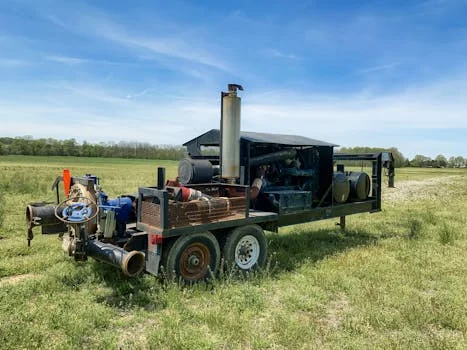
Equipment selection for the 2025 dates starts from site influent, not from a generic tender schedule. Use the five checks below before you release a datasheet to vendors. Most screens we specify for TDS above 500 mg/L move off coated carbon steel within the first duty cycle.
- Corrosion Resistance for Saline Influent: For any plant with TDS >500 mg/L, specify 316L stainless steel as a minimum for all wetted parts. In high-salinity coastal areas, duplex alloys or non-metallic components should be used for pumps and mechanical bar screens for primary filtration.
- High-FOG Pre-treatment: Ensure DAF systems are sized for peak FOG loads of 500+ mg/L. The system must include an automatic chemical dosing system for coagulants and polymers (typically 0.5–2 mg/L) and integrated pH control to maintain the 6.5–7.5 range required for efficient flotation.
- Nutrient Removal Efficiency: For TN <10 mg/L, specify MBR or Integrated Fixed-film Activated Sludge (IFAS) systems. For MBRs, require a design membrane flux of 15–25 LMH and aeration blower efficiency of <1.0 kWh/m³.
- Biosolids Compliance: To reach Class A status as used in the earlier notes, evaluate plate-and-frame filter presses capable of achieving >20% cake solids, followed by thermal or solar drying. Ensure the dewatering system includes automated cake discharge to reduce labour on night shift. Then map that cake onto P1–P4 and C1–C3 before you promise unrestricted use.
- EPA Reporting Integration: All new equipment must include PLC integration with online TSS, TN, and TP meters (e.g., Hach SOLITAX). Data logging must be compatible with Water Corporation or EPA WA reporting formats so an audit can trace a breach back to a shift, not to a missing spreadsheet.
Who Should Specify the Upgrade
Municipal upgrade teams in Western Australia should use this path when the discharge must leave secondary quality for a nitrogen limit or a reuse scheme. It also fits EPC estimators pricing DAF, IFAS, MBR, or biosolids drying against the cost table. Bring the licence point, the PE, and a recent TDS and FOG pair.
Board papers on Western Australia municipal sewage treatment plant upgrades should attach the licence nitrogen limit, the biosolids grade, and the energy figure in kWh/m³. Without those three, the $2M–$500M span is too wide to award.
On-site domestic units and trade-waste-only factories should look elsewhere. This page does not size a household secondary system, and it does not replace an industrial trade-waste agreement. Remote camps can borrow the package-plant note above, then confirm the grade with the same state biosolids guideline.
Send design flow, peak FOG, TDS, and the discharge nitrogen limit and request a sized budget before the capital gate. A single-page process selection is enough for that first pass. Leave membrane flux and cake solids for the datasheet that follows.
Frequently Asked Questions
What is the largest sewage treatment plant in Western Australia?
Woodman Point is the largest facility in this guide, listed at 1.5 million PE and at 1,500,000 PE in the plant table. Beenyup follows at 400,000 PE and Kwinana at 300,000 PE, both in the Perth metro column. Beenyup's advanced water recycling plant reached 28 billion litres a year after Stage 2 in 2022. Most large-plant comparisons we run still start with Woodman Point because that PE dwarfs the regional works.
How many sewage treatment plants are there in Western Australia?
This guide uses over 140 centralised municipal plants, plus more than 120,000 on-site systems. Water Corporation's 2024-25 wastewater quality report states that the utility managed 108 schemes in Western Australia and three in the Indian Ocean Territories. Those schemes treated nearly 183 billion litres in 2024-25. The 140+ figure is the wider municipal set; 108 is the utility's own scheme count for that year.
What are EPA WA's 2025 discharge limits for sensitive areas?
For sensitive catchments such as the Swan River and Peel-Harvey Estuary, this guide's 2025 tertiary band is TSS below 10 mg/L, TN below 10 mg/L, and TP below 1 mg/L. Standard secondary bands in the same matrix stay at TSS below 30 mg/L and TN below 15 mg/L. Water Corporation reports that its plants are designed to hold filtered BOD below 20 mg/L. Reuse rows target TN below 3 mg/L and E. coli below 10 MPN/100mL.
How much does it cost to upgrade a sewage treatment plant in WA?
Upgrades in this guide run from $2M–$10M for small regional plants under 50,000 PE to $50M–$500M for large metropolitan works. A Perth metro tertiary band for a 50,000–500,000 PE plant is $10M–$50M when the process is MBR. Metro mega works that add full advanced recycling sit at $200M–$500M+, and the 2023 Beenyup figure cited here is $300M. Most regional packages we price land at the lower end of the $2M–$10M band unless biosolids drying is added.
Which treatment process is best for high-FOG influent?
Dissolved air flotation is the pre-treatment we specify when Perth influent FOG sits in the 200–500 mg/L band, at pH 6.5–7.5, and it is credited with 95%+ removal. DAF energy in the comparison table is 0.2–0.4 kWh/m³, against 0.8–1.2 kWh/m³ for MBR. A lamella clarifier is the low-energy option under 0.1 kWh/m³, but it is aimed at TSS above 20 mg/L, not at membrane protection. Most FOG-heavy catchments we see put DAF ahead of the bioreactor.
Further Reading
Explore these in-depth articles on related wastewater treatment topics: