Salalah’s Wastewater Treatment Landscape: Key Drivers and Challenges
Salalah’s industrial zones, including the Raysut Industrial Estate and the Salalah Free Zone, generate approximately 12,000 m³ of industrial wastewater daily, with food processing and oil and gas operations serving as the primary contributors to this volume. Under Oman’s Royal Decree 114/2001, specifically the Law on Conservation of the Environment and Prevention of Pollution, all industrial effluents must strictly adhere to discharge limits, including a Biological Oxygen Demand (BOD) of less than 30 mg/L and Total Suspended Solids (TSS) of less than 50 mg/L. Failure to comply with these standards results in administrative fines issued by the Environment Authority (EA), ranging from OMR 1,000 to OMR 50,000 depending on the severity and frequency of the violation.
Water scarcity in the Dhofar Governorate has transitioned wastewater from a liability into a strategic asset, as the 2024 Salalah Municipality water reuse targets aim to recycle 70% of treated effluent for landscape irrigation and industrial cooling. This push for circularity requires equipment capable of tertiary treatment to meet stringent reuse standards. Salalah’s unique coastal climate—characterized by high humidity and seasonal monsoons (Khareef)—presents significant engineering challenges. Equipment must be designed with high-grade corrosion resistance, such as 316L stainless steel, and energy-efficient aeration systems to maintain biological activity in fluctuating ambient temperatures. Selecting a sewage treatment equipment supplier in salalah requires an evaluation of how their technology mitigates these environmental stressors while ensuring long-term compliance.
Technical Specifications: What to Look for in Sewage Treatment Equipment
Industrial wastewater in Salalah typically exhibits high concentrations of contaminants, with food processing facilities often recording Chemical Oxygen Demand (COD) levels between 1,000 and 3,000 mg/L, while oil and gas effluents contain Fats, Oils, and Grease (FOG) ranging from 200 to 500 mg/L. To address these loads, procurement managers must evaluate equipment based on specific performance benchmarks. For instance, a high-performance MBR system for high-quality effluent in Salalah’s industrial zones should achieve 95–99% TSS removal, whereas a DAF system for FOG and TSS removal in Salalah’s food processing plants is expected to remove 90–95% of emulsified oils.
Footprint and modularity are critical for urban projects or expanding industrial sites. Compact, compact underground sewage treatment plant for Salalah’s urban sites offer a space-saving alternative, requiring approximately 0.5 m² per m³/h of capacity compared to the 1.2 m² per m³/h required by conventional activated sludge systems. Material durability is non-negotiable in Salalah’s saline air; 316L stainless steel components generally offer a service life exceeding 10 years in coastal environments, whereas standard carbon steel may fail within 3–5 years without specialized epoxy coatings. Additionally, automation via PLC-controlled systems with SCADA integration is essential for remote monitoring in Dhofar’s outlying areas, providing automated backwashing and real-time fault alerts.
| Parameter | MBR (Membrane Bioreactor) | DAF (Dissolved Air Flotation) | Integrated STP (WSZ) |
|---|---|---|---|
| BOD Removal Rate | 98–99% | 40–60% (Pre-treatment) | 92–97% |
| TSS Removal Rate | 99%+ | 90–95% | 90–95% |
| Energy Use (kWh/m³) | 0.8–1.2 | 0.3–0.5 | 0.4–0.7 |
| Footprint (m²/m³/h) | 0.4–0.6 | 0.3–0.5 | 0.8–1.2 |
| Optimal Use Case | Water Reuse / Limited Space | High Oil/Grease Removal | Municipal / Labor Camps |
When reviewing technical specifications for package STP systems, engineers should also prioritize oxygen transfer efficiency. In Salalah’s humid conditions, fine-bubble diffusers are preferred to maintain dissolved oxygen levels without excessive energy expenditure.
Top Sewage Treatment Equipment Suppliers in Salalah: Performance and Cost Comparison
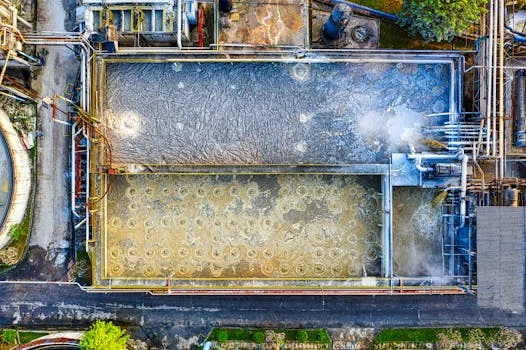
The supplier market in Salalah consists of local engineering firms and international manufacturers providing specialized equipment for the region’s unique industrial profile. Cost benchmarks for these systems vary significantly based on the level of automation and the quality of materials used. A compact MBR system typically ranges from OMR 50,000 to OMR 150,000 for capacities between 10 and 50 m³/h. In contrast, large-scale integrated STPs for municipal or residential developments can range from OMR 80,000 to OMR 300,000 for 20 to 100 m³/h capacities. These prices include the primary treatment units, secondary biological stages, and basic tertiary filtration.
| Supplier Name | Core Expertise | Compliance (Oman EA) | Capacity Range | Cost Range (OMR) |
|---|---|---|---|---|
| Al-Mansoori Environmental | Turnkey Industrial ETP | Full Certification | Up to 5,000 m³/day | 100k – 1.5M+ |
| Neya Water Solutions | MBR & Greywater Reuse | Standard Compliant | 10 – 500 m³/day | 40k – 250k |
| Vanguard Oman | Government & Military Projects | High (ISO 14001) | 50 – 2,000 m³/day | 150k – 1.2M |
| Varun Watertek | Modular Industrial DAF | Standard Compliant | 5 – 100 m³/h | 30k – 180k |
| HydropureWater | B2B Equipment Manufacturing | Full Certification | 1 – 1,000 m³/h | 50k – 800k |
Case studies in the region highlight the importance of localized engineering. For example, the Salalah Military Hospital Helipad ETP, executed by Vanguard Oman, demonstrated the efficacy of high-rate biological treatment in a confined area. Similarly, industrial DAF systems implemented in Salalah Free Zone food plants have consistently met the FOG discharge limit of <10 mg/L, preventing the clogging of municipal sewer lines. When comparing these suppliers to Al Khor’s sewage treatment equipment market, Salalah-based projects often require more robust anti-corrosion specifications due to the direct coastal exposure of most industrial zones.
Compliance and Permitting: Navigating Oman’s Regulatory Framework
Compliance with Oman’s Royal Decree 114/2001 is the primary legal obligation for any facility operator in Salalah. This decree sets the foundation for environmental protection, but specific discharge limits are often governed by ministerial decisions that mandate BOD < 30 mg/L, TSS < 50 mg/L, and a pH range of 6.0 to 9.0 for industrial discharge. For municipal sewage, the standards are even tighter, often requiring BOD < 20 mg/L and TSS < 30 mg/L. If the goal is water reuse, the 2024 guidelines for treated effluent reuse in irrigation require tertiary disinfection to ensure E. coli levels remain below 100 CFU/100 mL and turbidity stays under 5 NTU.
The permitting process through the Oman Environment Authority typically spans 3 to 6 months. It begins with an Environmental Impact Assessment (EIA) for large projects, followed by the submission of detailed equipment specifications and a wastewater management plan. Permitting fees range from OMR 500 for small systems to OMR 5,000 for high-capacity industrial plants. A common pitfall for procurement managers is selecting undersized systems that cannot handle peak loads during the Khareef season when storm-water ingress can dilute biological cultures or overwhelm clarifiers. Utilizing chlorine dioxide disinfection for Salalah’s water reuse projects is an increasingly popular method to ensure compliance with microbial standards while avoiding the hazardous byproducts associated with traditional chlorination.
Cost Breakdown: Budgeting for Sewage Treatment Equipment in Salalah
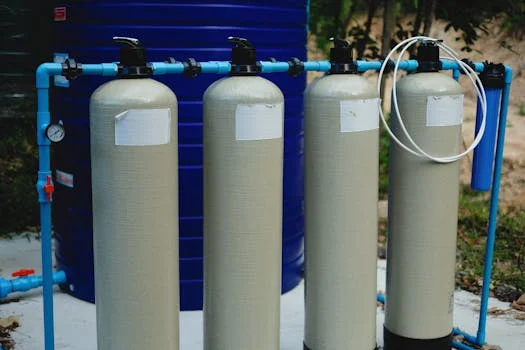
Capital expenditures (CAPEX) for sewage treatment equipment in Salalah generally account for 60–70% of the total project cost, with the remainder allocated to installation (10–15%), civil works (15–20%), and environmental permitting (5%). For an MBR-based system, engineers should budget between OMR 1,500 and OMR 2,500 per m³/h of treatment capacity. Operating expenditures (OPEX) are driven by energy consumption, which ranges from 0.5 to 1.5 OMR/m³ depending on the aeration technology and influent strength. Chemical costs for coagulation and disinfection typically add another 0.2 to 0.5 OMR/m³.
| Cost Category | Estimated Cost (OMR) | Frequency / Basis |
|---|---|---|
| Equipment (50 m³/h MBR) | 180,000 – 220,000 | One-time CAPEX |
| Sludge Disposal | 50 – 150 per ton | Monthly OPEX |
| Membrane Replacement | 200 – 500 per m² | Every 5–7 Years |
| Maintenance Labor | 8,000 – 12,000 | Annual |
| Power (0.9 kWh/m³) | ~14,000 | Annual (at OMR 0.04/kWh) |
The Return on Investment (ROI) for these systems is often realized through water savings. For a 50 m³/h food processing plant with an initial investment of OMR 200,000, reusing treated water for cooling towers or irrigation can save OMR 40,000 annually in utility water costs, leading to a payback period of approximately 5 years. Financing is available through Oman’s Riyada SME loans, which offer up to OMR 250,000 at a 4% interest rate for qualifying green technology projects, or through supplier-backed financing plans that allow for 20% down payments and 3-year repayment terms.
Supplier Selection Framework: Step-by-Step Decision Guide
Selecting the right supplier requires a data-driven approach that balances technical capability with local service availability. The first step is to define project requirements, specifically the peak flow rate, influent characteristics (COD/BOD/FOG), and the desired end-use of the treated water. If the site is located within an urban area of Salalah, an underground integrated system is often the only viable option due to odor control and space constraints. If the project is in the Raysut Industrial Estate, a modular DAF or MBR system that can scale with production increases is more appropriate.
- Requirement Definition: Determine if your site has space for an underground STP or if a containerized modular system is required.
- Technical Shortlisting: Use the comparison matrix to filter suppliers by their capacity range and compliance history with the Oman EA.
- Pilot Testing & Site Visits: Request a site visit to a supplier’s active project in Salalah. Verify the performance of their local service team and the availability of critical spare parts.
- Contract Negotiation: Ensure the contract includes performance penalties if the effluent quality fails to meet Royal Decree 114/2001 standards.
- Permitting Support: Confirm the supplier will provide the necessary technical documentation for the EA permitting process, as this can significantly reduce project delays.
A simple decision tree can guide the final choice: If space is limited and high reuse quality is needed, select MBR. If high grease and oil loads are present, prioritize a DAF pre-treatment stage. For standard municipal sewage where cost is the primary driver, a conventional integrated STP (WSZ series) remains the most cost-effective solution for Salalah’s market.
Frequently Asked Questions
How much does it cost to set up a sewage treatment plant in Salalah?
Costs range from OMR 50,000 for a 10 m³/h compact MBR system to over OMR 2 million for large-scale industrial effluent treatment plants. Total cost is influenced by the required effluent quality; tertiary treatment for water reuse typically increases the capital cost by 20–30%.
Which country has the best sewage treatment plant technology?
While Germany, Japan, and the Netherlands lead in innovation for MBR and anaerobic digestion, Oman-based suppliers and specialized manufacturers like HydropureWater offer localized equipment designed for Salalah’s high humidity and saline conditions, ensuring better after-sales support and regulatory alignment.
What is the difference between STP and WWTP?
An STP (Sewage Treatment Plant) is designed for domestic wastewater from residential or commercial sources. A WWTP (Wastewater Treatment Plant) or ETP (Effluent Treatment Plant) is engineered to handle complex industrial wastes, such as those from Salalah’s food processing or oil and gas sectors, which require specialized chemical or physical pre-treatment.
Can treated sewage be reused in Salalah?
Yes, Oman’s 2024 guidelines encourage the reuse of treated effluent for irrigation and industrial processes. To meet these standards, systems must include tertiary treatment phases such as UV disinfection or ultrafiltration to ensure microbial safety.
How do I choose between MBR and conventional STP for my project?
MBR is the preferred choice for space-constrained urban sites in Salalah that require high-quality water for reuse. Conventional STPs are more suitable for larger sites where footprint is not a concern and the primary goal is meeting basic discharge standards at a lower energy cost (0.4–0.7 kWh/m³ vs. MBR’s 0.8–1.2 kWh/m³).