Why Cologne’s Industrial Wastewater Treatment Standards Are Stricter Than EU Averages
Cologne’s industrial wastewater treatment landscape is governed by Germany’s Federal Water Act, which mandates >96% reprocessing rates, and local StEB Köln regulations targeting micropollutants like pharmaceutical residues. In 2025, industrial facilities in Cologne—particularly in automotive, chemical, and food processing—must achieve COD removal rates of 90-97% and TSS <30 mg/L to comply. This guide provides engineering specs, cost benchmarks (€0.80–€3.50/m³), and a compliance checklist for selecting DAF, MBR, or chemical dosing systems tailored to Cologne’s standards.
The regulatory environment in Cologne is defined by a rigorous interpretation of the German Federal Water Act (Wasserhaushaltsgesetz - WHG). While the European Union’s Urban Waste Water Treatment Directive (91/271/EEC) sets a baseline for member states, Germany’s local implementation through the Waste Water Ordinance (AbwV) imposes stricter thresholds. According to StEB Köln’s 2024 compliance report, the city has achieved a 96% reprocessing rate for all wastewater, significantly higher than the EU average of 85%. For industrial operators, this translates to ultra-low discharge limits for Chemical Oxygen Demand (COD) and Total Suspended Solids (TSS).
A critical differentiator in Cologne is the focus on "fourth cleaning stage" technologies. The Rodenkirchen pilot project, managed by StEB Köln, specifically targets organic micropollutants such as pharmaceuticals, PFAS, and endocrine disruptors. Industrial facilities discharging into the Rhine or municipal sewers are now evaluated on their ability to reduce specific marker substances, such as carbamazepine, by at least 80%. This is particularly impactful for the chemical and pharmaceutical clusters in the Chempark areas, where effluent parameters often range from 500 to 5,000 mg/L for COD and 200 to 1,500 mg/L for TSS (HydropureWater field data, 2025).
Penalties for non-compliance are severe. Under the German Water Act §324, unauthorized discharge or failure to meet technical standards can result in criminal prosecution, fines up to €50,000 per incident, and immediate operational shutdowns. In 2023, StEB Köln’s enforcement division reported three major industrial shutdowns due to persistent heavy metal limit violations. To mitigate these risks, facilities must align their global industrial wastewater treatment standards and equipment selection with localized German requirements.
| Parameter | EU Baseline (91/271/EEC) | StEB Köln / German Standard (2025) | Typical Industrial Load (Cologne) |
|---|---|---|---|
| COD Removal Rate | 75% | 90–97% | 500–5,000 mg/L |
| TSS Limits | 35 mg/L | <30 mg/L (Sector specific) | 200–1,500 mg/L |
| Phosphorus (Total) | 2.0 mg/L | 0.5–1.0 mg/L | 10–50 mg/L |
| Micropollutants | Not Mandated | 80% reduction (Pilot markers) | Variable (High in Pharma) |
Industrial Wastewater Treatment Technologies for Cologne: DAF vs. MBR vs. Chemical Dosing
Selecting the appropriate technology for industrial wastewater treatment in cologne requires a technical evaluation of effluent chemistry and space constraints. Dissolved Air Flotation (DAF) remains the primary choice for high-TSS and oil-heavy effluents, common in the automotive and food processing sectors. The DAF systems utilize microbubble technology (20–50 μm) to achieve TSS removal rates of 92–97% and Fats, Oils, and Grease (FOG) removal of 95%. With hydraulic loading capacities ranging from 4 to 300 m³/h, a high-efficiency DAF system for TSS and FOG removal is essential for meeting the strict Rhine discharge protocols.
For chemical plants and pharmaceutical facilities where COD and BOD reduction is the priority, Membrane Bioreactor (MBR) technology is the gold standard. The DF series MBR systems integrate biological degradation with membrane filtration (<0.1 μm), ensuring a footprint up to 60% smaller than conventional activated sludge plants. This is a critical advantage for urban industrial sites in Cologne where land prices are high. MBR systems consistently achieve COD removal rates of 95–98%, effectively capturing micropollutants that bypass traditional secondary clarifiers. Engineering teams should consider a compact MBR system for COD/BOD removal and micropollutant compliance to future-proof against tightening StEB Köln standards.
Chemical dosing systems act as the "stabilizer" in the treatment process, particularly for pH correction and heavy metal precipitation in metalworking and surface finishing. Modern PLC-controlled chemical dosing for pH adjustment and heavy metal precipitation ensures compliance with DIN 19643 standards. These systems offer ±0.1 pH accuracy and are compatible with coagulants like Polyaluminum Chloride (PAC) and ferric chloride. When integrated with DAF or MBR, automatic dosing optimizes chemical consumption, reducing OPEX by up to 20% through real-time sensor feedback.
| Technology | COD/TSS Removal | Footprint | Energy (kWh/m³) | CAPEX (€/m³) | Best For |
|---|---|---|---|---|---|
| DAF | 70% COD / 95% TSS | Medium | 0.2–0.5 | €500–€1,500 | Food, Automotive |
| MBR (DF) | 98% COD / 99% TSS | Small | 0.8–1.5 | €2,000–€5,000 | Chemical, Pharma |
| Chemical Dosing | Variable | Very Small | <0.1 | €200–€600 | pH, Heavy Metals |
Step-by-Step Compliance Checklist for Cologne’s Industrial Wastewater Treatment
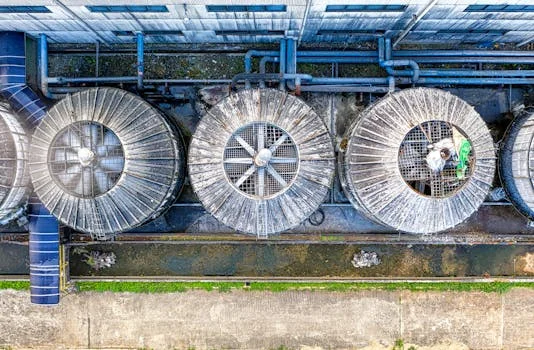
Achieving compliance with the German Federal Water Act and StEB Köln mandates requires a multi-stage engineering approach. Facility managers should audit their existing infrastructure against the following technical requirements:
- Pre-treatment and Screening: Install a fine screening system for industrial wastewater pre-treatment. The GX series rotary mechanical bar screens are designed to remove solids >6 mm, protecting downstream pumps and membranes from mechanical wear. StEB Köln’s 2024 headworks guidelines emphasize the removal of non-biodegradable debris to prevent clogging in municipal sewers.
- Primary Solids Removal: Utilize DAF or high-efficiency sedimentation tanks to reduce TSS levels to <200 mg/L. This stage is critical for facilities governed by DIN EN 858, which regulates the discharge of light liquids and grease into the Cologne drainage system. For higher settleable solids, consider a high-efficiency sedimentation tank to reduce the load on biological stages.
- Secondary Biological Treatment: Implement an MBR system to target COD/BOD removal to <125 mg/L, which is the StEB Köln 2025 target for industrial indirect dischargers. Refer to MBR system design and compliance for industrial applications for comparative membrane flux data.
- Tertiary Disinfection and Oxidation: For facilities discharging directly into sensitive water bodies, a chlorine dioxide generator or ozone system provides a 99%+ kill rate for pathogens and aids in the oxidation of persistent organic pollutants.
- Sludge Management: Under the German Circular Economy Act (KrWG), industrial sludge must be dewatered to minimize volume and disposal costs. A plate and frame filter press can achieve <20% moisture content, significantly reducing the €200–€400/ton disposal fees common in North Rhine-Westphalia.
- Digital Monitoring: StEB Köln’s 2024 digital monitoring mandate requires real-time logging of pH, flow, and TSS. Automated systems must be capable of triggering emergency shut-off valves if parameters exceed 110% of the permitted limit for more than 15 minutes.
Cost Benchmarks for Industrial Wastewater Treatment in Cologne (2025)
Budgeting for industrial wastewater treatment in cologne involves balancing initial Capital Expenditure (CAPEX) with long-term Operational Expenditure (OPEX). For a standard 100 m³/h capacity, CAPEX for a DAF system typically ranges from €50,000 to €300,000, while a full-scale MBR system for high-strength chemical waste can range from €200,000 to €1.2M. Chemical dosing modules are the most affordable, starting at €20,000. These figures are based on 2024 quotes from industrial contractors operating within the Cologne-Bonn region.
OPEX is heavily influenced by energy costs and chemical consumption. In Germany, industrial electricity prices remain a significant factor, making energy-efficient equipment vital. DAF systems operate at €0.80–€1.50/m³, whereas MBR systems, due to aeration and membrane scouring requirements, cost between €1.20 and €2.50/m³. For smaller facilities, a modular underground integrated sewage treatment plant can reduce OPEX by utilizing gravity flow and providing better thermal insulation for biological processes during Cologne's winter months.
Return on Investment (ROI) is often realized through the avoidance of municipal surcharges and fines. For example, a food processing plant in Cologne processing 100 m³/h of effluent with high FOG levels can save approximately €50,000 per year in disposal surcharges by installing a DAF system. With a CAPEX of €150,000, the system achieves a 3-year payback period. facilities can apply for KfW Bank funding (Program 294), which provides low-interest loans and grants for water efficiency and pollution control projects in Germany.
| System Type | CAPEX Range (100 m³/h) | OPEX (€/m³) | Payback Period (Years) |
|---|---|---|---|
| DAF | €50k – €300k | €0.80 – €1.50 | 2.5 – 4.0 |
| MBR (DF) | €200k – €1.2M | €1.20 – €2.50 | 4.0 – 6.0 |
| Chemical Dosing | €20k – €100k | €0.30 – €0.80 | 1.5 – 2.5 |
Case Study: Upgrading a Cologne Chemical Plant’s Wastewater Treatment for Compliance

A prominent chemical facility located near the Cologne-Niehl port faced significant regulatory pressure when their effluent COD levels reached 1,200 mg/L, far exceeding the StEB Köln indirect discharge limit of 500 mg/L. The facility was issued a formal warning under the German Water Act, with potential fines totaling €45,000. The existing sedimentation-based system was unable to handle the increased production volume and the presence of emulsified polymers.
The solution involved a phased upgrade. First, a DAF was installed to remove 90% of the polymer-based TSS, which was causing interference with the biological stage. This was followed by a DF series MBR system with a capacity of 200 m³/h. An automatic chemical dosing system was integrated to manage the fluctuating pH of the influent, which varied between 4.5 and 10.5 depending on the production batch. To further optimize the process, a DAF system optimization for high-efficiency TSS removal strategy was implemented, focusing on microbubble saturation levels.
The results were immediate: COD levels dropped to 450 mg/L, comfortably below the compliance threshold. TSS was reduced to 25 mg/L, and subsequent testing showed a 75% reduction in PFAS and other micropollutants. The modular design of the MBR allowed for installation with only 48 hours of total plant downtime. By switching to a PLC-controlled dosing system, the plant reduced its coagulant spend by 18%. This case highlights that while Cologne’s standards are rigorous, high-spec engineering solutions can provide a clear path to compliance and operational stability.
Frequently Asked Questions
What are the three types of industrial wastewater treatment?
Industrial wastewater is treated through physical, chemical, and biological processes. In Cologne, physical treatment includes DAF for TSS removal; chemical treatment involves automatic dosing for pH and heavy metal precipitation; and biological treatment, such as MBR, is used for degrading organic COD/BOD loads.
How does Germany treat its water?
Germany follows a 3-stage process (mechanical, biological, and chemical) with an increasing mandate for a 4th stage. In Cologne, StEB Köln utilizes advanced oxidation and activated carbon at plants like Rodenkirchen to remove micropollutants, ensuring that 96% of all wastewater is successfully reprocessed.
What is the main industry in Cologne?
Cologne is a hub for the automotive (e.g., Ford), chemical (e.g., Lanxess), and food processing (e.g., Pfeifer & Langen) sectors. These industries produce complex effluents requiring specialized treatment for high COD, TSS, and specific chemical residues.
Where is the largest wastewater treatment plant in Cologne?
The StEB Köln Marvel wastewater treatment plant is the largest in the region, with a capacity of approximately 600,000 population equivalents (PE) and a daily throughput of 200,000 m³. It serves as the primary processing point for both municipal and industrial effluent in the city.
How much does industrial wastewater treatment cost in Cologne?
CAPEX for industrial systems in Cologne ranges from €50,000 for basic DAF units to over €1.2M for advanced MBR plants. OPEX typically falls between €0.80 and €2.50 per cubic meter, depending on the contaminant load and energy consumption of the equipment.