Compare the three blowdown treatment routes
Controlled discharge, pretreatment followed by reverse osmosis for partial reuse, and a high-recovery reuse train with deliberate management of scale-forming salts represent the three main options for North Korean cooling-tower or data-center projects. Blowdown is a potential reuse feed because evaporation concentrates salts and periodic purging creates a continuous stream. Conventional brackish-water RO commonly reaches 75–80% recovery before scaling and operating risks increase. A separate industrial application achieved around 95% recovery and reduced permeate silica to about 1 mg/L, but that result cannot be assumed for another site. Selection depends on measured chemistry, recovery target, concentrate handling, utilities and local execution requirements.
Start by eliminating routes that lack a lawful or operational destination. The supplied evidence establishes no North Korean discharge criteria, receiving-water classification or permit regime, so a controlled-discharge option remains conditional until the responsible authority confirms the receiving destination and applicable conditions. Partial reuse requires a treatment train capable of producing make-up water at the cooling system’s required quality. High recovery requires more than adding membrane stages: the supplier must show how sparingly soluble salts are controlled and where the resulting concentrate or solids will go.
| Discharge route or influent problem | Governing rule or process option | What data settles it |
|---|---|---|
| Controlled discharge | Permit only after the receiving destination, discharge conditions and authority requirements are verified. | Current and design blowdown flow, discharge destination, receiving-water category, applicable permit and required discharge concentrations. |
| Partial reuse with UF or softening followed by RO | Use measured hardness, suspended solids and scale-forming chemistry to define pretreatment before selecting an industrial reverse osmosis system. | Complete blowdown analysis, make-up-water specification, selected cycles of concentration, recovery target and cooling-water quality limits. |
| Higher-recovery reuse | Compare conventional BWRO with a configuration that controls salt precipitation and membrane operation. Conventional BWRO typically plateaus at 75–80% recovery. | Supplier water balance, scaling projections, concentrate destination, precipitation-solids handling, utility demand and operator requirements. |
| Membrane selection | Academic work at a Thai co-generation power plant investigated nanofiltration and reverse osmosis for recycling cooling-tower blowdown; it does not establish automatic superiority for a North Korean site. | Site water analysis, pilot or supplier basis, membrane data, cleaning method and proposed operating envelope. |
The higher-recovery benchmark requires strict qualification. The cited MAXH₂O industrial application operated at around 95% recovery and reduced silica in the permeate to about 1 mg/L. That result belongs to a separate source-water and treatment architecture; it is not a design guarantee for cooling tower blowdown and data center water treatment in North Korea. See the related RO versus UF treatment for data-center cooling blowdown and data-center cooling-tower blowdown route comparison.
Use water chemistry to set the treatment train
Pretreatment selection relies on measured blowdown chemistry rather than the intended recovery percentage alone. Request current and design flow rates, operating schedules, conductivity, hardness, alkalinity, silica, calcium, sulfate, chloride, pH, temperature and suspended solids. Also obtain the cooling-water chemistry limits, cycles of concentration, make-up-water quality and future expansion plan.
Cooling-tower blowdown is typically enriched with sparingly soluble salts, including silica, calcium carbonate and calcium sulfate. The question is whether those constituents will exceed the operating envelope of the proposed membranes and pretreatment under the intended cycles of concentration. A supplier should document the sequence: solids removal where suspended material requires it, hardness control where the analysis supports it, membrane separation, cleaning, concentrate control and make-up-water compatibility.
Softening is a documented reuse route for cooling-tower blowdown, while nanofiltration and reverse osmosis were the two membrane technologies investigated for blowdown recycling in the academic power-plant study. These findings support including softening, NF and RO in the comparison, but they do not prove that one configuration suits every site. Compare an ultrafiltration system, an industrial water softener and RO against the actual analysis. State whether each unit is essential, optional or omitted, and provide the design basis.
Require the supplier to show how pretreatment adequacy will be verified, how membrane cleaning will be performed, how concentrate chemistry will be controlled and how make-up-water quality will be maintained. If the proposal changes chemical dosing, recovery or operating schedule to reach the commercial target, require a revised water and solute balance.
Match recovery and concentrate management to the site
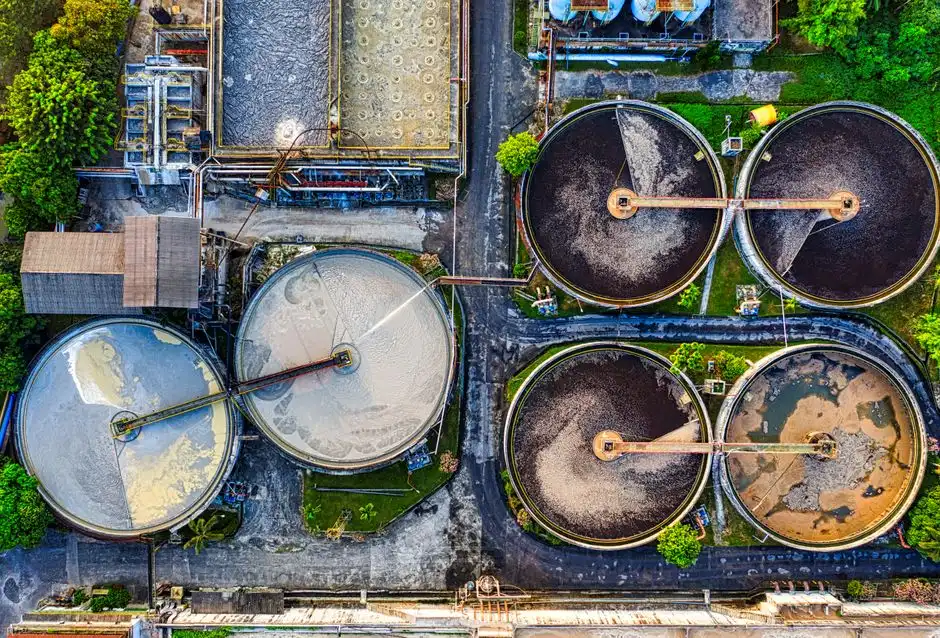
A credible recovery target must come with a complete water balance and a defined concentrate route. The reported 75–80% conventional BWRO plateau serves as a benchmark for route screening, not an automatic design recovery or performance guarantee. Conventional brackish-water RO typically reaches that range before scaling risk, chemical consumption and operational instability increase sharply.
The higher-recovery concept introduces additional consequences that a buyer must price and assign. The cited MAXH₂O application combined reverse osmosis with controlled salt precipitation and advanced membrane operation. Its reported performance was around 95% recovery with permeate silica of about 1 mg/L. Before using that benchmark, require disclosure of the source-water composition, scaling limits, precipitation chemistry, membrane configuration, test method and acceptance protocol.
Request a site water balance covering blowdown generation, evaporation, cooling-tower cycles of concentration, make-up supply, treated-product recovery, concentrate volume and any precipitation solids. The balance should close under the proposed operating schedule and distinguish normal operation from startup, cleaning and off-design conditions.
Concentrate management must be selected before the high-recovery process is contracted. The available evidence provides no North Korean disposal standard, receiving-water permission or site-specific concentrate analysis. Identify the intended destination and obtain confirmation from the responsible authority or receiving party. Equipment for solids separation or filtration may be needed, but its selection requires the concentration and precipitation characteristics of the actual concentrate.
Ask each bidder to state whether its high-recovery claim depends on precipitation, staged membrane equipment, chemical control, additional power, operator intervention or a combination of these measures. The relevant solids-handling options to evaluate include a high-efficiency sedimentation tank and a plate-frame filter press; neither can be prescribed without the solids analysis and destination.
Build the quotation and acceptance package
Making offers comparable requires a documented process and commercial scope. Each quotation should include a process flow diagram, equipment list, membrane data, duty points, materials, utilities, controls, skid dimensions and commissioning schedule. State the contractual feed-water basis, required permeate quality, system recovery, operating availability and test protocol. A headline recovery percentage is not a substitute for those conditions.
| Quote line item | Technical scope to specify | Red flags to check before signing |
|---|---|---|
| Feed basis and system performance | Contractual flow range, complete water analysis, permeate specification, recovery definition and operating availability. | Recovery stated without feed chemistry; performance guaranteed only under ideal conditions; no stabilization or correction procedure. |
| Pretreatment and membranes | Equipment duties, membrane type, cleaning method, cartridge or element life, replacement scope and compatible RO and UF membrane elements. | Unclear cleaning chemicals, no life basis, omitted replacement elements or incompatible material assumptions. |
| Controls and chemicals | Duty points, alarms, chemical-dosing scope, automatic chemical dosing system duties and required operator intervention. | Manual-only dosing; alarms excluded; chemical consumption not defined; proprietary chemicals omitted. |
| Civil, utilities and electrical | Foundations, skid connections, power, drains, vents, access, water demand and installation interfaces. | Works described as “by others” without a responsibility matrix or drawings. |
| Concentrate management | Predicted volume and chemistry, precipitation solids, collection, handling and disposal interface. | No destination for liquid concentrate or solids; disposal assumed without authority confirmation. |
| Delivery and service | Manufacturing, shipping, customs, insurance, site delivery, installation, commissioning, training, remote support and warranty responsibilities. | Local execution conditions excluded; no spares plan; commissioning or operator training left undefined. |
| Commercial exclusions | Separately price make-up-water treatment, cooling-tower repairs, electrical and civil works, permits, freight, import duties, installation, training, initial chemicals, membrane replacement and concentrate management. | Equipment-only price presented as a turnkey project price; import, commissioning or disposal costs omitted. |
Acceptance testing should use defined feed and permeate samples, a stated recovery method, permeate-quality limits, chemical-use limits, control checks, alarm checks and a stabilization period. Document noise, utilities and operator steps where they affect reliable operation. For North Korean delivery, obtain explicit responsibility for manufacturing, shipping, customs, insurance, site delivery, installation and commissioning because the available evidence does not verify local execution conditions.
Frequently Asked Questions
What inputs are needed for a comparable cost quotation?
Request separately priced equipment, pretreatment, membranes, controls, civil works, utilities, freight, import, installation, training, initial chemicals, membrane replacement and concentrate management. The quotation should also identify the feed-water analysis, design flow, operating schedule and recovery basis. No verified North Korean price is available here, so a buyer should not compare a headline equipment price with a turnkey installed price.
How should the supplier size the treatment system?
Require the supplier to document the design flow, operating hours, redundancy, future expansion, feed-analysis basis and treatment steps. Blowdown flow alone is insufficient because evaporation, cycles of concentration, operating schedule and recovery determine the actual feed and product-water duty. The size should be traceable to the contractual water balance.
What should the acceptance test prove?
Define the feed and permeate sampling points, recovery calculation, permeate-quality limits, chemical-use limits, control functions, alarms, noise requirements and stabilization period. Include membrane cleaning and operator-response steps where relevant. Require the same test to use the contractual feed-water basis, not an unrepresentative laboratory sample.
How should buyers assess supplier capability for a North Korean project?
Request evidence of similar projects, local execution partners, customs and logistics arrangements, spare-parts availability, operator training, remote support, commissioning responsibility and a clear warranty and service matrix. Treat claims about North Korean delivery, utilities, permits or local service as items to verify through named documents and accountable parties rather than assumptions.