Choose the Blowdown Route Before Selecting Equipment
For a Kyrgyzstan data center, the first decision is whether cooling tower blowdown should be discharged, pretreated for discharge, or treated for reuse. The choice depends on blowdown flow and chemistry, cooling-loop requirements, available footprint and the authority’s discharge conditions; no Kyrgyzstan-specific limits are established here. Reverse osmosis and nanofiltration are established treatment options, but scaling, corrosion, biofouling and membrane fouling must be addressed before untreated blowdown can be returned to service. Begin by requesting source-water and blowdown analyses, then compare UF, softening-RO and higher-recovery routes before issuing an equipment RFQ.
Segregate the cooling tower blowdown from sanitary sewage, backwash, equipment-cleaning water, condensate and other data-center process wastewater before sizing any treatment train. RSP Engineers identifies cooling tower blowdown as the principal process-wastewater stream and notes that backwash, cleaning water and sanitary flows have different characteristics and potentially different approval pathways. A combined sample could conceal the chemistry and flow conditions that determine the appropriate pretreatment.
Contact the relevant Kyrgyz environmental authority or receiving utility to request written confirmation of the authorized route, discharge point, flow basis, chemical constituents, pretreatment requirements, monitoring obligation and concentrate-disposal constraints. The available material describes discharge routes and permitting principles, but it does not establish Kyrgyz limits; US rules discussed by that source should not be transferred to Kyrgyzstan.
Reuse requires defining the entry point for the treated water. A system intended to return water to the cooling loop must meet the operator’s water-quality and operating targets, not merely produce a visually clear effluent. The 2025 review confirms that cooling tower blowdown can be recycled, while also stating that integrated-system utilization requires further research. A utility-scale comparison in the RO and UF route comparison for data-center blowdown can support process familiarization, but it does not replace site testing or local authorization.
Use Water Chemistry to Decide Between UF, RO and High-Recovery Treatment
Choose the process based on the contaminant and recovery duty rather than an equipment label. UF is primarily a pretreatment barrier; RO is the standard option for salt removal in industrial blowdown; and higher-recovery routes require additional control and a defined concentrate-management plan. The 2025 ScienceDirect review also identifies electrodialysis, electrocoagulation, membrane distillation and advanced oxidation as engineering options, while emphasizing pretreatment and integrated-system research.
| Discharge route or influent problem | Governing rule or process option | What data settles it |
|---|---|---|
| Discharge directly to an authorized receiving route | Use only after the relevant Kyrgyz authority or receiving utility confirms the route and applicable conditions. | Average and peak blowdown flow; full source-water and blowdown analyses; intended discharge point; written authority requirements. |
| Pretreated discharge | Match pretreatment to the governing requirement, such as pH adjustment, suspended-solids removal or other identified treatment. | Confirmed pH, TDS, chlorides, sulfates, silica, turbidity, TOC and treatment-chemical residual limits. |
| Suspended solids, turbidity or particulate load before membranes | Evaluate filtration and clarification before a hollow-fiber UF pretreatment system. | Turbidity and suspended-solids measurements, filtration results, expected pretreatment loading and cleaning strategy. |
| Dissolved salts or concentration incompatible with cooling-loop operation | Evaluate an industrial RO blowdown treatment system, with hardness control where scaling requires it. | TDS, chlorides, sulfates, silica, hardness, pH, recovery target, concentrate volume and receiving-loop water-quality targets. |
| Freshwater reduction with maximum treated-water recovery | Assess a higher-recovery train as an engineered option rather than a default; define concentrate handling and energy demand. | Feed flow and temperature; recovery definition; concentrate destination; energy and chemical consumption; integrated-system pilot evidence. |
Request the full chemical program, including biocide, corrosion-inhibitor and antiscalant identities and residuals. A nominal treatment objective is insufficient: the supplier should show how the selected process responds to the actual salts, hardness, silica, organics and treatment chemicals present in the blowdown.
Build a Reliable Pretreatment and Monitoring Train
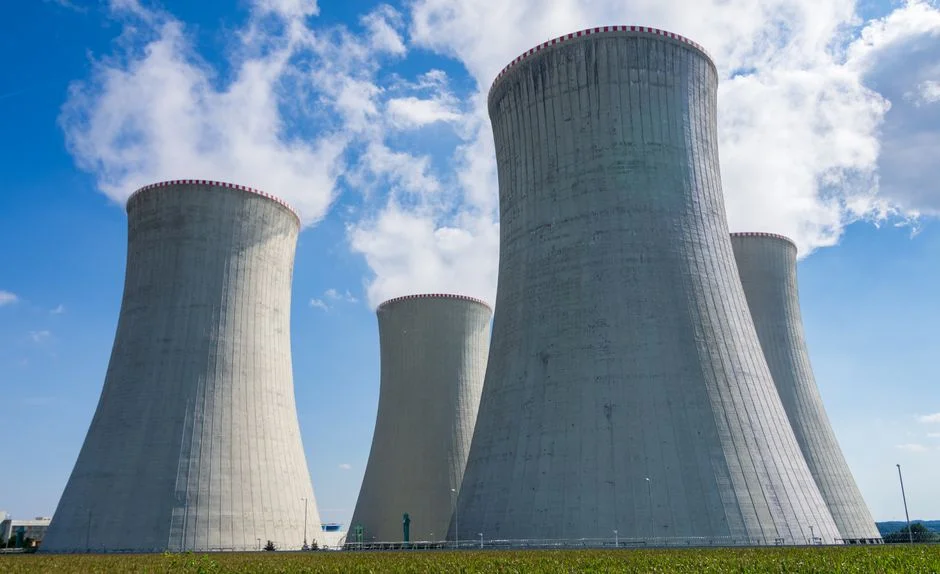
Protect downstream membranes and the cooling system by removing or controlling the contaminants identified in the site analysis before selecting final polishing. The 2025 review cites slow sand filtration, activated-carbon adsorption, constructed wetlands, electrochemical oxidation and biological treatment as examples of complementary pretreatment approaches. Their suitability depends on the contaminants they are expected to remove; treatment-chemical residuals should not be assumed to be handled by any one process.
Establish water-chemistry monitoring from the incoming stream through pretreatment and final treatment. Hach identifies minerals, dissolved solids and organics as upstream contributors to scaling, corrosion, fouling and biofilm growth in cooling systems, and recommends frequent monitoring to detect source-water changes and protect operations. The monitoring plan should identify the parameter, instrument or laboratory method, sampling frequency, alarm condition, response action and responsible operator.
Specify automatic pH adjustment and chemical-dosing capability where the chemistry and treatment objective require it. HydropureWater offers PLC-controlled dosing of coagulants, flocculants, pH adjusters and specialty chemicals through its automatic chemical dosing system. The equipment scope should also define chemical storage, containment, metering, calibration, duty/standby arrangements and safe handling requirements; the product option alone does not establish the required dose or treatment performance.
Where solids removal is required, include the filtration duty and operating sequence in the package rather than treating filtration as an accessory. A multi-media filtration stage should be selected against measured turbidity, suspended solids, expected backwash characteristics and downstream membrane requirements. If reuse will include a return to the cooling loop, also define how temperature, residual chemicals and short-term water-quality excursions will be managed.
Turn the Selected Route into a Quotation and Acceptance Package
Make the RFQ answerable by requiring site inputs and a measurable treatment basis. Request average and peak blowdown flow; source-water and blowdown analyses; the complete chemical inventory; cooling-loop cycles of concentration, temperature and reuse targets; available footprint; electrical supply; utilities; drainage; access for maintenance and chemical delivery; and the intended discharge or reuse route. Require representative samples or analysis reports rather than relying only on make-up-water data.
| Quote line item | Technical scope to specify | Red flags to check before signing |
|---|---|---|
| Design basis and route | Average and peak flow; source and blowdown chemistry; operating schedule; intended discharge or reuse target; governing local requirements identified by the buyer. | Unconfirmed flow basis, unidentified reuse application or treatment system sized from source-water flow instead of blowdown duty. |
| Pretreatment and membrane systems | Complete process sequence; equipment materials; membrane make and model; operating temperature and pressure; cleaning method; recovery definition. | Omitted membrane specifications, no pretreatment rationale, conflicting duty data or a concentrate stream with no stated destination. |
| Controls and monitoring | PLC or equivalent control philosophy; pH and flow control; water-chemistry monitoring points; alarm and fail-safe responses; local/remote indication; data logging. | No control narrative, missing monitoring points or acceptance of the reuse claim without defined limits and sampling procedures. |
| Chemical systems | Dosing equipment; chemical compatibility; metering basis; storage and containment; calibration; operator procedures; treatment-chemical consumption assumptions. | Unspecified chemicals, no compatibility information, omitted containment or dosing included without a defined control response. |
| Utilities, site works and commissioning | Electrical load; water demand; drain connections; skid footprint; access; spill containment; flushing; startup; training; commissioning tests and handover documents. | Unclear site-responsibility boundaries, excluded civil works, no defined acceptance samples or commissioning left without written completion criteria. |
| Performance and commercial guarantees | Delivered-flow basis; permeate or treated-water quality; recovery; availability; test duration; sampling protocol; remedy for non-performance; maintenance and spare parts. | Reuse claim covers only permeate quality, recovery is undefined, concentrate handling is excluded, or acceptance conditions differ between quotation and contract. |
Require the supplier to state utility consumption, maintenance access, included commissioning and excluded site works. Define whether the contract guarantees delivered flow, treated-water quality or both, and specify how concentrate is handled. For membrane-element replacement and valves or media, use the relevant RO and UF membrane replacement scope and treatment-parts and media schedule only after confirming compatibility with the selected process.
Tie acceptance to defined samples and measurable conditions. For reuse, require the buyer and supplier to agree on the sampling point, sample preservation, laboratory or instrument method, operating state, flow, recovery and parameters included in the guarantee. The review’s finding that blowdown can be recycled does not establish that an integrated treatment system will meet this site’s cooling requirements without verification.
Before signature, check each offered route against the site decision. A Cyprus example provides a useful external comparison of discharge, softening-RO and high-recovery routes, but its jurisdiction and site chemistry are not Kyrgyz evidence. Use it to refine questions, not to claim local compliance or transferable performance.
Further Reading
Frequently Asked Questions
How should a Kyrgyzstan data center size the cooling tower blowdown treatment train?
Size the train from the blowdown duty, not from source-water production: request average and peak blowdown flows, operating temperature, representative source-water and blowdown analyses, and the intended reuse or discharge target. The design must also account for pretreatment, peak-flow response, recovery and concentrate handling; an unconfirmed flow basis should block a firm price.
What site information should I require before asking for a treatment-system quotation?
Require the source-water and blowdown analyses, treatment-chemical inventory, cooling-loop temperature and cycles of concentration, desired reuse quality, discharge route, footprint, electrical supply, utilities, drainage and maintenance access. The buyer should also obtain the relevant Kyrgyz authority or receiving utility’s written conditions, because the available material does not establish a local limit or permit requirement.
How should I verify factory acceptance and site performance?
Write the acceptance protocol into the quotation and contract, including the sample point, operating state, flow, recovery, treatment duration, analytical method and accepted parameters. Confirm that site acceptance follows appropriate flushing and startup, and that concentrate, chemical storage and monitoring obligations are assigned clearly. Treat undefined samples, an unconfirmed duty basis or conflicting quality guarantees as pre-signature issues.
When should UF, RO or a higher-recovery route be preferred, and what will a supplier need to quote the price?
Prefer UF where the principal need is a pretreatment barrier before sensitive equipment; consider RO where dissolved-salt removal is required for discharge pretreatment or cooling reuse; and treat higher recovery as an engineered option requiring validated performance and a concentrate plan. For a comparable budget, request itemized quotations covering equipment, pretreatment, membranes, controls, utilities, commissioning, consumables, maintenance and exclusions; without the site inputs and scope, a responsible supplier should not issue a fixed price.