Start with the reuse objective and wastewater profile
For a commercial greywater recycling project in Djibouti, the key decision is whether to install a dedicated greywater treatment train or treat combined wastewater with an MBR. Djibouti’s water scarcity supports reuse: ONEAD selected Stereau in 2013 to design and construct the Doudah plant and a reclaimed-wastewater system for agricultural irrigation. Commercial systems generally collect, filter, disinfect and pump water to toilet flushing or irrigation. However, the supplied sources do not specify Djibouti-specific building flows, prices or approval limits, so the final route must be based on verified flow, wastewater quality, reuse endpoint and site separation conditions.
Djibouti’s water resources are among the scarcest in the world, making water reduction and non-potable water reuse a relevant project objective, according to Stereau’s account of the Doudah project. In 2013, Djibouti’s National Water and Sanitation Office, ONEAD, selected Stereau to design and construct the Doudah wastewater treatment plant and implement a reclaimed-wastewater system for agricultural irrigation. The plant treats a portion of Djibouti City’s effluents; it is municipal evidence, not a building-scale design precedent (Stereau, 2013).
The reuse endpoint must be stated before equipment is selected. Greywater Action identifies commercial reuse for toilet flushing and landscape drip irrigation, while its Solaris building example uses an MBR to treat, store and reuse wastewater for toilet flushing, irrigation and cooling (Greywater Action). These are different duties: flushing imposes distribution, storage and backflow-control requirements; irrigation requires a defined receiving area and water-quality criteria. The supplied research does not establish a Djibouti-specific reuse standard.
Request the following before comparing quotations: hourly and daily wastewater flow, peak factors, wastewater sampling results, sewer connection status, available footprint, power quality, maintenance capability and the client’s reuse priorities. Do not substitute the Doudah municipal plant for missing building-level data.
| Project input | What the buyer needs to establish | Responsible party |
|---|---|---|
| Source stream | Define wastewater origins and whether streams are physically separate. | Client and designer |
| Flow | Record hourly, daily and peak flows from measured data or documented assumptions. | Designer |
| Wastewater quality | Obtain representative sampling, including relevant treatment-design parameters. | Client or designer |
| Reuse endpoint | Specify toilet flushing, irrigation, cooling or another non-potable use. | Client and consultant |
| Site and utilities | Confirm footprint, sewer access, power quality and maintenance access. | Client and supplier |
The broader rural package-plant or sewer comparison is useful for framing infrastructure choices, but it does not replace a project-specific greywater source-separation and reuse-route assessment.
Decide whether greywater can be separated economically
Greywater Action states that commercial systems typically collect greywater in a temporary tank, filter and disinfect it, then pump it for toilet flushing or landscape drip irrigation (Greywater Action). For an existing building with combined greywater and blackwater streams, the same source says treating all wastewater can be easier and more cost-effective than separating the streams. That finding supports a site-specific rule: select dedicated greywater reuse only when separate collection is already feasible or its installation and operating burden can be justified.
The procurement document should define streams by origin rather than relying on the word “greywater” alone. Greywater Action notes a lack of consistency in commercial-scale terminology; it also distinguishes rainwater harvesting from wastewater reuse. A defensible specification therefore identifies each inlet, fixture group and contaminant contribution instead of treating “greywater” as one uniform stream.
Use an if–then decision. If separate plumbing exists, the reuse flow is measurable, and the building can maintain two collection systems, compare a dedicated train with combined treatment. If the building is already constructed and greywater and blackwater are combined, document the separation retrofit, additional pumping, storage and maintenance requirements before crediting the dedicated route with savings. If the reuse demand is intermittent or the source flow is highly variable, ask the supplier to explain how the selected train handles peak and low-flow conditions.
| Decision test | Dedicated greywater route | Combined wastewater route |
|---|---|---|
| Existing collection | Separate greywater plumbing is available or installation is technically feasible. | Greywater and blackwater are already combined. |
| Treatment route | Requires a treatment train matched to the separated stream and reuse endpoint. | Uses an integrated MBR wastewater treatment system route in the source example. |
| Collection and pumping | Must evaluate separate collection, tankage and transfer pumps. | Uses the building’s combined collection route, subject to verification. |
| Procurement risk | Risk centers on separation feasibility and variable source quality. | Risk centers on treating a broader wastewater composition and meeting the required reuse objective. |
For a hotel, office or mixed-use development, obtain a plumbing survey and flow map before asking for a treatment price. The selection should follow the verified source arrangement, not the assumption that separate collection is automatically cleaner, cheaper or more sustainable.
Compare UF polishing with MBR biological treatment
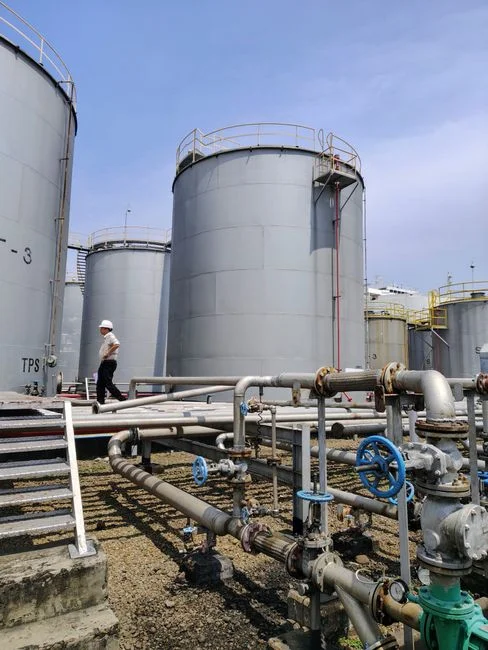
UF and MBR are not interchangeable equipment descriptions: ultrafiltration is a membrane polishing step that requires suitable feed characteristics, while MBR combines activated sludge with membrane separation in an integrated wastewater route. The source wastewater and intended reuse endpoint therefore determine which route is technically defensible.
HydropureWater’s UF system uses 0.03 μm PVDF hollow-fiber membranes, handles 2,000–40,000 L/h, accepts turbidity up to 300 ppm, and uses automatic backwash and air scour without chemicals. The supplier also describes automatic control and stainless-steel corrosion resistance. These specifications define a proposed polishing package, not evidence of field performance at a Djibouti site (HydropureWater, 2026).
HydropureWater’s MBR combines activated sludge with submerged PVDF membrane filtration, provides filtration below 1 μm, uses a footprint stated as 60% smaller than conventional systems, and is offered from 10–2,000 m³/day. These are supplier-stated specifications and scope; they should not be converted into a project guarantee without inlet assumptions, wastewater characterization and agreed acceptance criteria (HydropureWater, 2026).
Greywater Action describes commercial MBR applications for toilet flushing, irrigation and cooling. It reports that the Solaris building in New York reduced fresh-water demand from the city supply by over 75% through on-site treatment and reuse (Greywater Action). That is a project-specific precedent from New York, not an expected reduction for a Djibouti commercial building.
| Comparison point | Ultrafiltration polishing | Integrated MBR biological treatment |
|---|---|---|
| Process role | Polishes a suitable upstream feed through hollow-fiber membranes. | Combines activated sludge with submerged membrane filtration. |
| Stated membrane specification | 0.03 μm PVDF hollow-fiber membranes. | PVDF membranes with filtration below 1 μm. |
| Stated capacity range | 2,000–40,000 L/h. | 10–2,000 m³/day. |
| Stated feed or footprint information | Accepts turbidity up to 300 ppm; automatic backwash and air scour without chemicals. | Footprint stated as 60% smaller than conventional systems. |
| Selection condition | Use where the feed has already received the required upstream treatment. | Use where biological treatment and membrane separation are required within the selected wastewater route. |
For detailed procurement wording, compare the hollow-fiber ultrafiltration system against the integrated MBR wastewater treatment system. Require each bidder to state the inlet assumptions behind the selected process; otherwise, nominal capacity is not a basis for comparison.
Build the treatment and reuse train around public-health controls
The treatment train must extend beyond the main unit: Greywater Action’s commercial sequence is collection, filtration, disinfection and pumping to toilet flushing or drip irrigation (Greywater Action). Equipment selection is therefore incomplete until collection, storage, disinfection, pumping, distribution and endpoint controls are assigned.
The Water Channel identifies health risks associated with storing and reusing untreated greywater, including private holding tanks used for irrigation in parts of the Middle East and North Africa. It also notes that safe treatment can provide an alternative to costly irrigation sources (The Water Channel, 2006). That source is dated evidence about reuse risks; it does not establish the current approval or treatment requirements applicable to a particular Djibouti building.
Specify the reuse destination, anticipated storage time, access controls, cleaning regime and protection against cross-connections or backflow. For a flushing system, define how the reclaimed water is physically separated from potable supply and where the storage tank sits relative to the distribution network. For irrigation, identify the receiving area, application method and access restrictions. Ask the treatment supplier to define the final treatment objective and explain how the proposed train protects the selected endpoint.
Disinfection must be treated as a specified process, not an implied accessory. A UV sterilizer water treatment system can be evaluated as part of the train, but its suitability depends on the selected feed, dose and treatment objective. The supplier should identify the proposed method and its operating controls, while the project authority or consultant confirms the applicable local requirements.
Do not approve a reuse endpoint based only on the words “toilet flushing” or “irrigation.” The procurement specification must connect the treatment objective, storage arrangement and distribution controls to that endpoint.
Issue a pre-procurement decision sheet

A quotation should be comparable only after the client, designer and supplier have supplied the same core project inputs. The client owns the reuse objective and site information; the designer confirms flows, wastewater characteristics and collection arrangements; the supplier defines the treatment route, sizing basis and guarantees; and the appropriate authority or consultant confirms local code and discharge conditions. The supplied research does not establish a Djibouti-specific permit requirement, price, lead time or building performance guarantee.
| Decision sheet field | Required entry | Owner |
|---|---|---|
| Source-stream definition | Fixture origins, separate or combined collection, sewer status. | Client and designer |
| Flow and quality | Measured flow basis, peak conditions, sampling results and assumptions. | Designer |
| Treatment route | Selected UF polishing or MBR route with a written process description. | Supplier |
| Design basis | Design flow, inlet assumptions, operating mode and treatment objectives. | Supplier |
| Disinfection and storage | Method, controls, tank provision, access, cleaning and backflow protection. | Supplier and designer |
| Utilities and access | Power, footprint, drains, access and routine maintenance requirements. | Client and supplier |
| Documentation | Warranty scope, spare parts, operating records and acceptance criteria. | Supplier |
| Compliance confirmation | Applicable local reuse, discharge and installation requirements. | Consultant or authority |
Each quotation should identify its treatment process, inlet assumptions, design flow, product-water objectives, disinfection method, storage provisions, utilities, maintenance items and warranty scope. Compare like-for-like entries and mark missing information rather than filling it with assumed values. The MBR engineering specifications and applications guide can support technical review, but its figures are not project-specific evidence.
The Doudah municipal project, the reported 75% fresh-water reduction at the Solaris building and HydropureWater’s stated 60% footprint reduction demonstrate precedents and supplier-stated scale respectively. They must not be used as performance guarantees for a Djibouti commercial building. Require the selected bidder to make every commitment against the completed decision sheet.
Frequently Asked Questions
How much does a commercial greywater recycling system in Djibouti cost?
The supplied research does not establish a Djibouti-specific price. A quotation requires the measured source flow, wastewater quality, reuse endpoint, separation condition, footprint, power availability, disinfection and storage needs. Request itemized pricing for equipment, collection works, pumping, installation, commissioning and maintenance rather than accepting a unit price without its design basis.
Should we select a dedicated greywater system or an MBR-based combined wastewater plant?
Choose a dedicated route only if separate collection is feasible and the designer can demonstrate why its lower-grade source stream offers a better project outcome. For an existing building with combined streams, Greywater Action says treating all wastewater can be easier and more cost-effective than separating greywater. The final comparison must use measured flow, wastewater quality, reuse demand and site constraints.
What flow data are needed before sizing a UF or MBR system?
Provide hourly and daily flow, peak factors, operating profile and wastewater sampling results. For UF, identify upstream treatment and confirm the feed can meet the stated turbidity condition. For MBR, document the wastewater characteristics and biological loading assumptions. The supplier should state its design flow and inlet assumptions in the quotation.
How should suppliers demonstrate compliance and delivery readiness?
Ask each supplier to identify the applicable local requirements, treatment objective, disinfection method, storage and backflow controls, utilities, maintenance scope and warranty. Confirm code and discharge conditions with the appropriate consultant or authority. The supplied sources do not establish a project-specific Djibouti permit pathway or lead time, so obtain those documents before treating either as resolved.