
Define the Cape Verde discharge route first
Selecting a hospital wastewater treatment system in Cape Verde starts with the receiving route: sewer discharge, municipal treatment plant acceptance or a permitted on-site discharge. Equipment selection should match hospital wastewater characteristics, peak flow, reuse goals, space and local operating capability. Antimicrobial-resistance evidence reinforces the need for effective biological treatment and final disinfection: a 2025 West Africa review reported pooled blaTEM prevalence of 76.0% (95% CI 64.6%–84.6%) in hospital wastewater. The correct train depends on project data and confirmed Cape Verde permit requirements.
Three procurement routes should be developed in parallel during the initial project planning stages. For each route, request the current permit conditions, receiving-plant acceptance criteria and approved discharge point from the responsible Cape Verde authority. The supplied Cape Verde country material does not verify city-specific discharge limits, so these conditions must be obtained in writing rather than inferred from another jurisdiction.
| Procurement route | Authority information to request | Equipment-schedule implications |
|---|---|---|
| Connection to a public sewer | Current sewer acceptance criteria, required pretreatment, sampling and inspection requirements, connection approval and applicable discharge conditions | Confirm inlet works, pumping, equalization and pretreatment required by the receiving authority before defining the package scope |
| Transfer or discharge accepted by a municipal wastewater treatment plant | Acceptance limits, permitted tanker or pipeline route, receiving-point approval, monitoring requirements and pretreatment obligations | Size the treatment and storage train around the agreed transfer or discharge arrangement, including any retention needed for the operating scenario |
| Treatment followed by a permitted on-site discharge | Permit application requirements, discharge point, sampling programme, effluent limits, inspection requirements and operating records | Define the complete treatment train, monitoring equipment, controls, access for sampling and compliance reporting before ordering |
Record whether the authority requires pretreatment, sampling, inspection, an approved design or a signed discharge permit before finalizing the equipment schedule. Also assign responsibility for confirming the route, preparing permit documents and maintaining compliance evidence. The West African hospital wastewater engineering guide provides a regional planning reference, but it does not replace confirmation from the authority responsible for the Cape Verde project.
Characterize hospital wastewater and design objectives
Hospital effluent treatment must be based on measured wastewater characteristics and the intended receiving route, rather than generic healthcare wastewater assumptions. Request average and peak flow, the wastewater sources connected to the system, sampling results, pH, COD, BOD, TSS, oil and grease, pathogen indicators, antibiotic residues, and discharge from dialysis, laboratories, kitchens and clinical units. Separate streams that require special handling from the main sanitary flow.
The 2025 West Africa systematic review by BMC Public Health reported pooled blaTEM prevalence of 76.0% (95% CI 64.6%–84.6%) in hospital wastewater. That result supports risk-based treatment and disinfection design, but it is not a substitute for site-specific sampling or a Cape Verde effluent specification. Sampling should also establish whether the flow contains episodic discharges that could upset biological treatment or overwhelm disinfection.
| Design input | Information to obtain | Decision supported |
|---|---|---|
| Hydraulic profile | Average flow, measured peak flow, operating scenario and wastewater-source coverage | Equipment duty, equalization, pumping and minimum operating flow |
| Quality profile | Sampling results for pH, COD, BOD, TSS, oil and grease, pathogens and antibiotic residues | Treatment objectives, pretreatment needs and final disinfection |
| Special streams | Dialysis, laboratory, pharmacy, kitchen and clinical-unit discharge information | Segregation, equalization or dedicated treatment requirements |
| End use or receiving route | Environmental discharge, sewer connection, irrigation, equipment flushing or another reuse purpose | Effluent targets, polishing requirements and permit evidence |
Define whether the discharge is for environmental compliance, irrigation, equipment flushing or another reuse purpose. Do not assume that one treatment train satisfies every objective. Environmental compliance is governed by the confirmed discharge route; reuse may require additional polishing, but the supplied evidence does not establish a Cape Verde reuse specification. The medical wastewater decision framework is useful for structuring the required inputs, while the project-specific permit remains controlling.
Compare compact, package and membrane treatment routes
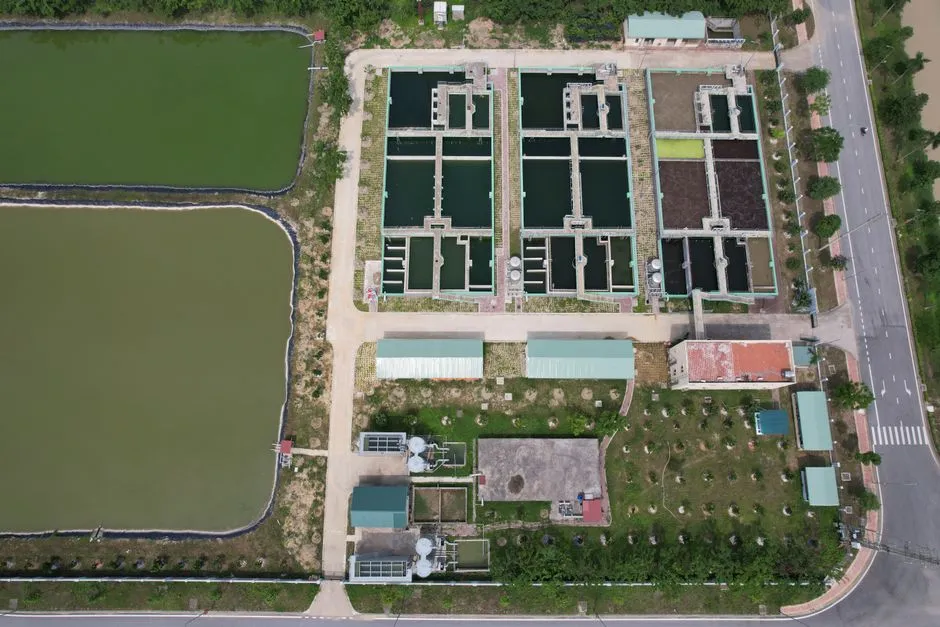
The correct treatment route follows from wastewater quality, hydraulic duty, land availability and the receiving authority’s requirements. Compact filtration, integrated package plants and membrane systems solve different problems; a lower-cost unit is not necessarily the compliant or reliable choice if the influent, flow profile or effluent objective is unsuitable.
| Treatment route | Supplied product evidence | Selection condition |
|---|---|---|
| Compact filtration and ozone | The compact medical wastewater treatment system combines multi-stage filtration with ozone disinfection, states a 99%+ kill rate, occupies a footprint as small as 0.5 m² and uses no chemical dosing | Consider where the wastewater characteristics are suitable, space is constrained and the confirmed discharge requirements can be met by the documented process |
| Integrated package plant | The WSZ integrated package sewage treatment plant combines anoxic and aerobic treatment, sedimentation and disinfection in one buried unit, with a stated capacity range of 1–80 m³/h | Consider for decentralized sanitary wastewater treatment where the package arrangement and burial depth are compatible with site conditions |
| MBR | The MBR route is stated to use submerged PVDF membranes, filtration below 1 μm, a 60% smaller footprint than conventional systems and a capacity range of 10–2,000 m³/day | Consider where higher-quality reuse or sensitive receiving conditions justify membrane treatment and site operating requirements can be met |
Disinfection must remain the final process barrier after appropriate solids and organic-load treatment. Ozone or ultraviolet treatment should not be used to substitute for biological or physical pretreatment. For a hospital, the bid should identify how each stage contributes to the agreed objectives, how sludge or separated solids are managed, and what evidence supports the stated disinfection performance.
Do not accept a generic compliance statement as the selection test. Ask the supplier to map the proposed process to the confirmed Cape Verde permit conditions and receiving-plant criteria. A unit can have a small footprint or a high stated kill rate and still be unsuitable if the feed characteristics, hydraulic peaks, treatment objectives or local approval conditions do not align with its design basis.
Size the train and verify site constraints
Size the treatment train against measured peak flow and the facility’s operating scenario; daily average flow alone is not an adequate design basis. Check whether peak flow includes outpatient activity, ward changes, laundry, kitchen discharge, laboratory flows, dialysis service hours and other episodic events. The supplier must state the design flow and the operating basis in the proposal so that the buyer can compare offers on the same basis.
Compare the selected footprint with available land, below-grade installation space, excavation constraints, access routes, noise limits and future maintenance clearances. Package units should also be checked for lifting access, module replacement routes and the space needed to remove tanks, blowers, membranes, pumps and control equipment. A compact footprint does not by itself establish installability.
| Constraint | Verification required before order |
|---|---|
| Hydraulic duty | Design flow, peak-flow method, equalization requirement and minimum operating flow |
| Site and access | Footprint, burial depth, excavation, delivery route, access and maintenance clearances |
| Utilities | Electrical supply, backup-power requirement, standby strategy, remote monitoring and operator interface |
| Local capability | Operator skill, spare-parts availability, local service support and response arrangements |
| Reuse | Core process effluent, additional polishing requirements and the confirmed end-use specification |
Where reuse is required, identify the additional polishing requirements after the core wastewater process. The supplied evidence does not establish a Cape Verde reuse specification, so the buyer must request the receiving criteria before adding polishing equipment. The integrated MBR wastewater treatment system should be evaluated against the required reuse quality, confirmed hydraulic duty and site constraints.
Build the supplier submittal and acceptance checklist
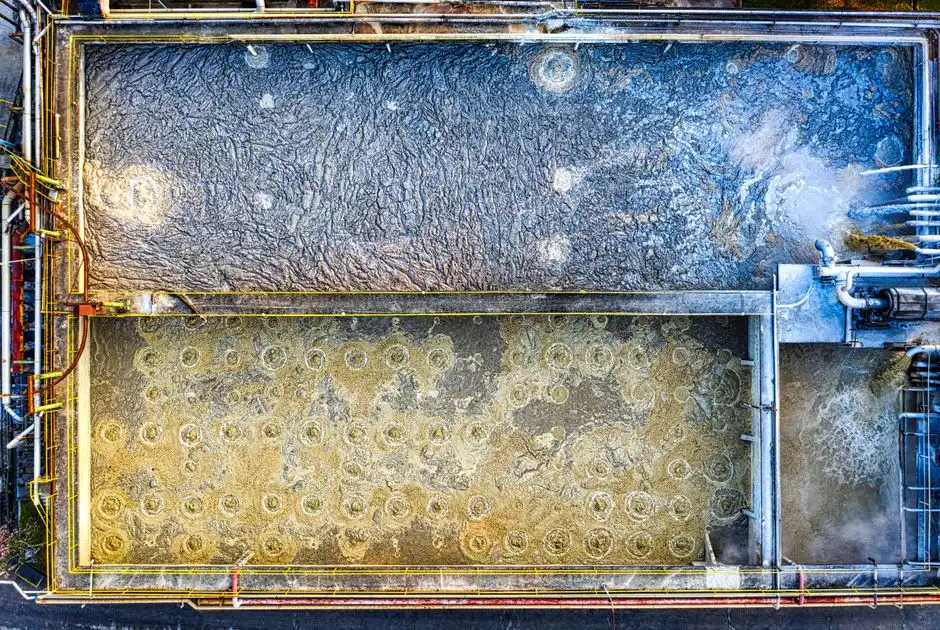
Procurement should require each bidder to provide enough information to establish design intent, regulatory responsibility and testability. A bid that lists only a unit price, nominal capacity and a general compliance statement should be returned for completion.
| Submittal item | Required supplier response | Buyer verification |
|---|---|---|
| Design basis | Design flow, wastewater assumptions, treatment train, equipment duty and proposed receiving route | Agrees with measured site data and written authority requirements |
| Technical scope | Materials, equipment schedule, controls, utilities, civil interfaces, sludge or solids handling and reuse polishing | Defines boundaries between supplier, contractor and hospital |
| Regulatory allocation | Permit-application responsibilities, authority correspondence, sampling and compliance records | No unverified statement of Cape Verde compliance is accepted as approval |
| Commissioning and acceptance | Factory and site tests, performance guarantees, test media or wastewater, sampling methods and acceptance criteria | Tests are tied to the agreed discharge route and confirmed permit conditions |
| Operations and commercial terms | O&M tasks, operator training, warranty, delivery, installation, commissioning lead times and post-commissioning support | Resources and dates are contractually clear before award |
Assign responsibility for the wastewater analysis, receiving-route confirmation, permit application, civil works, power supply and local regulatory correspondence. Define acceptance around the agreed discharge route and confirmed Cape Verde permit conditions. Do not use an EPA, EU or other claimed compliance statement as a substitute for local approval.
Ask for delivery, installation and commissioning lead times, training scope, warranty terms and local post-commissioning support in the bid package. The 30 m³/day hospital MBR case study and the hybrid hospital wastewater system design and cost breakdown can help identify information that should appear in a complete offer, but their project conditions must not be transferred automatically to a Cape Verde site.
Frequently Asked Questions
How much does a hospital wastewater treatment system cost in Cape Verde?
No verified Cape Verde price was supplied, so request itemized quotations for design, equipment, freight, civil works, installation, commissioning, permits and local support. Require each supplier to state price exclusions and assumptions; compare only bids based on the same flow, wastewater profile, receiving route and compliance scope.
Should a Cape Verde hospital connect to the sewer or install an on-site treatment plant?
Choose the sewer route when the public authority accepts the hospital flow and specifies the required pretreatment; choose on-site treatment when the receiving route requires it and a permitted discharge can be demonstrated. Obtain current acceptance criteria and site constraints before comparing the two options.
How do you size an MBR or compact medical wastewater system?
Size both against the measured peak-flow scenario, minimum operating condition, wastewater characteristics and confirmed effluent objectives. Check the supplier’s stated duty, footprint, pretreatment requirements, access, utilities and maintenance plan rather than selecting from a nominal capacity range.
What should be included when selecting a wastewater equipment supplier?
Check local service and spare-parts capability, operator training, controls, remote monitoring, commissioning tests, warranty coverage and documented performance against the agreed Cape Verde permit conditions. Also verify who owns the permit application, authority correspondence and remedial work if acceptance testing fails.
How long should equipment delivery, installation and commissioning take?
The supplied research does not establish a Cape Verde delivery period. Request written dates for manufacturing, shipment, customs clearance, delivery, installation, training and commissioning, together with dependencies outside the supplier’s control. Use the West African hospital wastewater engineering guide as regional context, not as a substitute for a project-specific schedule.
