Start with the wastewater fraction—not the equipment name
Choose DAF for oily, buoyant, colloidal, or chemically conditionable solids; choose conventional or lamella clarification when heavy, readily settleable minerals dominate. In Grenada, separate process, contact, washdown, and stormwater streams before selecting equipment, because no supplied evidence establishes site-specific wastewater conditions. Use representative characterization and jar testing to set the separation mechanism, chemical dose, and peak mass loading. DAF uses 30–50 micron microbubbles, while clarification relies on gravity settling, with inclined plates increasing effective settling area. Neither process removes dissolved metals by itself.
The RFQ should begin with a fillable stream register. For each source, record average flow, peak flow, batch-discharge profile, and the stream’s share of the total load. One averaged sample can conceal washdown events, batch releases, stormwater contributions, and chemistry changes, so representative grabs must cover the operating conditions that govern treatment performance (HydropureWater, “DAF vs. Clarifier for Mining Wastewater: 2026 Decision Guide,” 2026).
Require TSS, particle-size distribution, settleability, solids density where available, oils and greases, pH, alkalinity, temperature, total metals, and dissolved metals. Distinguish the dissolved fraction from metals attached to settleable or floatable solids: clarification can remove metals carried by solids that settle, while DAF can remove metals associated with solids that float or are conditioned to float. Neither separator, by itself, removes dissolved metals (HydropureWater, 2026).
| Stream | Required characterization | Likely fraction | RFQ assignment |
|---|---|---|---|
| Process water | Flow profile, TSS, oils and greases, particle size, pH, total and dissolved metals | Buoyant, colloidal, or conditionable solids; possibly dissolved metals | DAF where testing confirms floatability; clarification for readily settleable solids; downstream treatment for dissolved metals |
| Contact water | Batch discharges, reagent carryover, oils, TSS, settleability | Variable reagent or hydrocarbon contamination | Segment batches where possible; test conditioning and flotation |
| Equipment washdown | Peak flow, grit, sand, mineral fines, TSS | Heavy nonfloating solids | Solids exclusion or pretreatment before clarification or flotation |
| Stormwater | Event flow, TSS, particle size, oils, metals, settleability | Variable solids and contamination | Characterize separately; evaluate equalization and peak mass loading |
Match DAF and clarification to the separation duty
DAF is the appropriate candidate when oils, fats, flotation reagents, low-density solids, or colloidal material can be conditioned into bubble-attached floc. Clarification is the appropriate candidate when dense mineral fines, tailings solids, sand, grit, or metallurgical precipitates settle readily. These are duty distinctions, not claims that either equipment family is universally superior (HydropureWater, 2026).
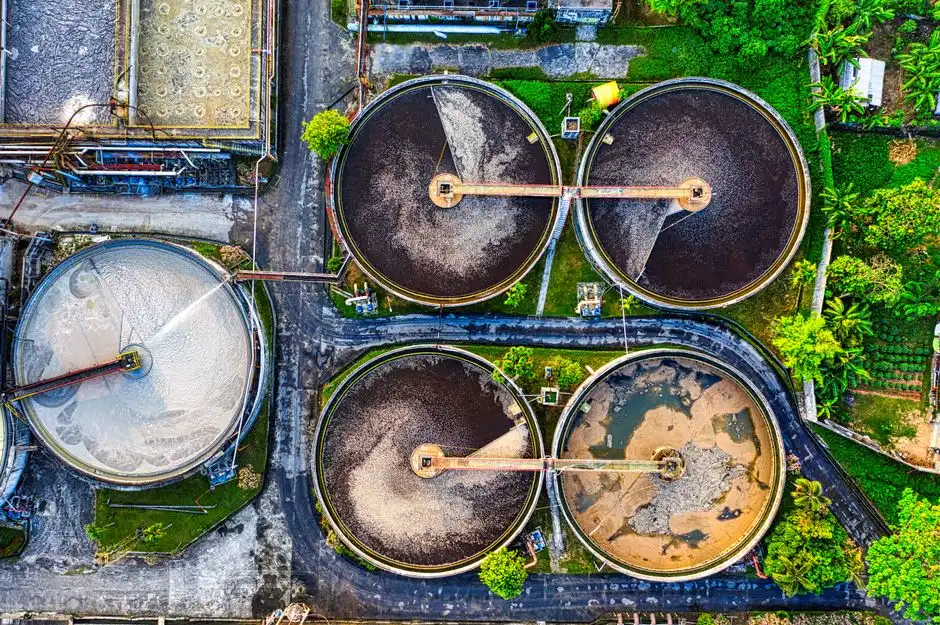
A conventional clarifier separates solids by gravity, and a lamella plate clarifier retains that settling principle while adding inclined plates to increase effective settling area within a compact tank. Lamella plates do not remove dissolved metals, emulsified oil, or colloidal particles that do not settle (HydropureWater, 2026). Heavy sand and gravel should be excluded or treated before either separator rather than forced through flotation, where nonfloating material can create an overload rather than a useful float (HydropureWater, 2026).
Clearwater’s April 27, 2026 publication specifies 30–50 micron microbubbles for its DAF systems. Its FPAC, FPBC, and FPHF models address different flow-and-solids configurations: FPAC for small-to-medium flow with high TSS and FOG loads, FPBC for low-to-medium solids loads including less-buoyant particles, and FPHF for high flow with low-to-large solids loads (Clearwater Industries, 2026-04-27). These descriptions are not site-sizing guarantees.
A combined train is justified only when testing demonstrates distinct fractions that cannot be handled efficiently by one separator. A stream containing substantial sand and significant FOG may need solids exclusion or pretreatment first. If separate DAF and clarification stages are proposed, the comparison must include intermediate pumping, controls, each sludge route, and the added operating burden. The mining pretreatment decision provides a useful framework for examining this sequence against measured wastewater data.
| Decision test | DAF | Gravity or lamella clarification | Combined or pretreatment |
|---|---|---|---|
| Target fraction | Oils, fats, flotation reagents, low-density solids, conditionable colloids | Dense mineral fines, tailings solids, sand, grit, readily settling precipitates | Distinct heavy-solids and buoyant or conditioned fractions |
| Required proof | Jar-tested floc attaches to bubbles and rises | Jar-tested solids settle at a usable rate | Each stage has a demonstrated contaminant target and no harmful hydraulic or solids transfer |
| Bid information | Flotation area, recycle configuration, pressure and air system, skimmer capacity | Effective settling area, surface-overflow basis, distribution, sludge collection and recycle | Intermediate pumping, controls, equalization and separate sludge routes |
Prove the choice with jar tests and peak loading
Jar testing should establish pH adjustment, coagulant, flocculant, flotation-conditioning dose, and settling assumptions. Repeat or challenge the test under the wastewater conditions that govern peak loading, including batch discharges or washdown chemistry. A defensible test compares the proposed mechanism against the same wastewater, chemical dose, flow, temperature, sampling point, and acceptance criterion (HydropureWater, 2026).
Use the source-reported DAF loading range of 2–6 gpm/ft² only as a screening reference. Wastewater-specific testing and equipment design govern the selection. Assess peak mass loading, not average flow alone, because a unit may handle the water volume while remaining undersized for flotation duty or sludge withdrawal (HydropureWater, 2026).
The source-reported air requirement of 0.01–0.05 ml air per mg of solids must also be validated through wastewater-specific testing and the selected DAF design (HydropureWater, 2026). Likewise, the source-reported 80%–110% nominal design-flow band is a control and equalization criterion. It does not demonstrate that an untreated peak can enter the unit safely or that peak mass loading has been accepted (HydropureWater, 2026).
Integrate chemical dosing with flow, pH, level, skimming, sludge withdrawal, and equipment controls. Treat dosing as part of the operating train, not an accessory. Clearwater’s April 27, 2026 product publication also states that its standard DAF clarifiers use 304SS, with 316SS, polypropylene, and other materials available on request; this is a manufacturer statement about configurations, not evidence that any listed material is suitable for Grenada wastewater. Require each bidder to provide a corrosion rationale tied to the characterized stream (Clearwater Industries, 2026-04-27).
Compare the complete treatment train and sludge route
The lower separator purchase price is not necessarily the lower installed or operating cost. One source reports DAF energy use of 0.5–1.5 kWh/m³ of treated water for air compression and recycle pumping. Clarifiers avoid that recycle system, but their complete installation may require more civil work, flocculation, sludge recirculation, withdrawal equipment, and hydraulic integration (HydropureWater, 2026).
The available screening prices conflict. One source reports DAF equipment at $80,000–$350,000 and conventional circular clarifiers at $50,000–$200,000; another reports DAF at $150,000 to over $1.5 million. A further source reports clarifier civil construction costing 30%–50% more than modular DAF. These are source-reported screening claims, not Grenada quotations, and the civil comparison is not a universal installed-project estimate (HydropureWater, 2026).
Require local bids for foundations, basins, access, utilities, installation, controls, chemicals, and sludge handling. Compare floated-sludge skimming with bottom-sludge withdrawal by expected moisture content, volume, storage time, collection frequency, disposal, and compatibility with the selected dewatering route. A lower equipment price can disappear when the DAF requires recycle pumping and float handling, or when a clarifier needs extensive civil construction and withdrawal equipment.
| Installed-cost schedule | Minimum information required from each bidder | Basis for comparison |
|---|---|---|
| Equipment and pretreatment | Separation mechanism, effective area, recycle, solids exclusion, chemical equipment | Same measured stream, peak flow, and peak mass loading |
| Civil and installation | Foundations, basins, access, utilities, drainage, installation boundary | Local bids and site civil drawings |
| Controls and chemicals | Flow, pH, level, alarms, data logging, dosing, power | Connected loads and validated chemical demand |
| Sludge and disposal | Expected solids production, moisture, collection, storage, dewatering, disposal frequency | Route-specific solids balance |
| Service and maintenance | Labor, spare parts, maintenance tasks, supplier support | Defined service period and response scope |
Issue a comparable RFQ before ordering equipment
Require every bidder to identify the separation mechanism, duty basis, effective flotation or settling area, recycle arrangement, sludge handling, chemical dosing, controls, utilities, materials, maintenance, installation scope, and service scope. The proposed model must be tied to the wastewater characterization, hydraulic profile, and peak mass-loading basis—not to a generic capacity table (HydropureWater, 2026).
Request comparable mining or metals references, a site-specific test plan, defined test methods, sampling points, and acceptance criteria tied to applicable permit or sewer requirements. The mining wastewater equipment comparison describes the same need: if only one process is considered, require the bidder to document why the alternative was excluded on technical grounds rather than product preference.
Reject bids based only on average flow, generic removal percentages, or purchase price presented as total cost. Require separate line items for equipment, pretreatment, civil work, chemicals, utilities, sludge handling, installation, disposal, controls, labor, and maintenance. A bidder should also state its industrial DAF system operating boundary, or its lamella clarifier civil and distribution scope, rather than relying on an equipment-only comparison.
The RFQ should require both bidders to use the same wastewater data, chemical-conditioning assumptions, hydraulic profile, and performance criteria. This keeps the decision auditable: the assigned mechanism follows the measured contaminant fraction, the sizing follows peak loading, the bid price includes the treatment train, and the sludge route remains visible in the commercial comparison.
Frequently Asked Questions
What will DAF or clarification cost for mining wastewater near Grenada?
Neither technology has a defensible site-specific price until wastewater, flow, peak solids loading, civil work, chemicals, controls, utilities, and sludge handling are defined. The reported DAF ranges of $80,000–$350,000 and $150,000 to over $1.5 million, and the $50,000–$200,000 conventional clarifier range, are screening figures rather than Grenada quotations (HydropureWater, 2026). Request an installed-price schedule with separate assumptions for every major train component.
Can either process remove dissolved metals?
No. A clarifier removes metals associated with solids that settle; it does not remove dissolved metals. Colloidal metal-bearing solids may also escape if they do not settle. Total and dissolved metals must be measured separately, and downstream chemistry and separation may be required depending on the result (HydropureWater, 2026).
How should jar-test results be used for sizing?
Use them to establish pH adjustment, coagulant, flocculant, flotation-conditioning dose, and settling assumptions, then test the governing peak-loading condition. Treat the source-reported 2–6 gpm/ft² DAF range and 0.01–0.05 ml air per mg solids range as screening references that require wastewater-specific validation (HydropureWater, 2026).
What should buyers check when selecting a DAF or clarifier supplier?
Require comparable mining or metals references, a site-specific test plan