Confirm the wastewater is suitable for EGSB treatment
An EGSB reactor is suitable for coffee-processing wastewater only after the plant characterizes the actual stream and defines its discharge or reuse objective. A comparison study by Water Science & Technology tested coffee-industry wastewater at approximately 7 gCOD/l, demonstrating that this wastewater has been evaluated in EGSB and UASB reactors; however, that concentration is not a universal feed assumption (Water Science & Technology, 1999). The same study also tested brewery effluent and ethanol, so the coffee result should not be transferred to other industrial streams without site-specific data.
Request measured flow-duration information, not only annual-average flow. The characterization package should include total and soluble COD, pH, temperature, suspended solids, oil and grease, alkalinity, nutrients where relevant, and the process sources contributing to each stream. Identify washing, bean processing, pulp separation, equipment cleaning, and cooling or wash-water streams separately. Recycle streams, batch discharges, and cleaning-water dilution can alter both hydraulic and organic loading, so a blended daily average can conceal the conditions that control reactor performance.
| Feasibility item | Evidence or site input required | Engineering decision |
|---|---|---|
| Organic biodegradability | COD profile, including soluble and particulate fractions; process-source sampling | Proceed only if the wastewater contains a biodegradable organic load and the treatment objective can be met by the proposed process train. |
| Hydraulic variability | Measured flow-duration data, operating schedule, batch discharges and recycle streams | Determine whether equalization is required and whether the EGSB can accept the actual hydraulic profile. |
| Reference concentration | Approximately 7 gCOD/l in the coffee-wastewater comparison study (Water Science & Technology, 1999) | Treat this as evidence that coffee wastewater has been studied under EGSB conditions, not as the plant design feed. |
| Solids and grease | Suspended-solids, oil-and-grease and colloidal-material characterization | Identify potential pretreatment needs before reactor selection. |
| Process compatibility | pH, temperature, alkalinity and discharge or reuse specification | Reject or defer EGSB if the stream, operating conditions or required effluent quality are incompatible with the concept. |
Record sample dates, sampling points, and operating conditions with the results. Seasonal production, campaign changes, and cleaning events should be represented separately from routine operation. This distinguishes a genuine process constraint from a temporary blend.
Set an evidence-based HRT screening range
The coffee-specific laboratory evidence supports an initial hydraulic retention time (HRT) screening window of 3 to 9 days, rather than a final reactor volume. Sustainability evaluated coffee processing wastewater in a laboratory-scale expanded granular sludge bed reactor at those HRT values and assessed COD removal efficiency (2018). The reactor operated under mesophilic conditions at 26 ± 2 °C, with an average pH of 7.5 ± 0.2 (Sustainability, 2018).
These experimental conditions define the evidence boundary. A plant-scale comparison must account for actual wastewater temperature, hydraulic variation, reactor configuration, upflow behavior, granular-sludge condition, and the selected treatment objective. The study establishes a range for formulating pilot questions and preliminary scenarios; it does not demonstrate that every full-scale plant will perform identically.
| Parameter | Published screening reference | Source and scope | Value to confirm for the site |
|---|---|---|---|
| Hydraulic retention time | 3 to 9 days | Laboratory EGSB treatment of coffee processing wastewater; mesophilic study (Sustainability, 2018) | Selected HRT from the hydraulic profile, organic load, temperature and treatment objective |
| Temperature | 26 ± 2 °C | Experimental operating condition, not a site requirement (Sustainability, 2018) | Minimum wastewater temperature and any heating or insulation requirement |
| pH | Average 7.5 ± 0.2 | Experimental reactor condition, not an assumed plant influent (Sustainability, 2018) | Measured influent pH range and alkalinity status |
| COD removal efficiency | Measured across the published HRT comparison | Laboratory coffee-wastewater study; efficiency was evaluated as HRT changed (Sustainability, 2018) | Required removal against the discharge or reuse target |
- Use the 3-to-9-day study range to frame preliminary hydraulic scenarios rather than selecting a single HRT from the literature.
- Model the measured flow-duration profile, including batch releases, recycling, and cleaning-water contributions.
- Check whether the selected scenario remains credible at the plant’s temperature and alkalinity conditions.
- Require a pilot or detailed process analysis where the selected objective cannot be supported by the site-specific loading and hydraulic review.
The supplier should show the HRT calculation, the corresponding design flow and COD load, and the relationship between the two. A quoted HRT without its hydraulic basis is not a comparable design.
Build the pretreatment and polishing train
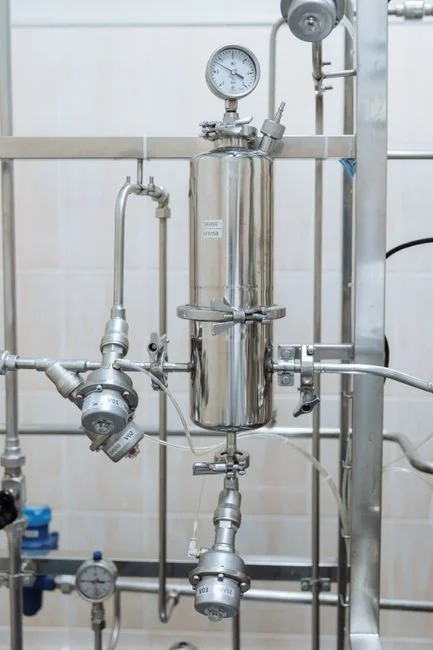
EGSB feasibility depends on protecting the reactor from excessive solids, grease, and colloidal material, though coffee-specific studies do not establish a universal pretreatment sequence. The first engineering task is to characterize the waste before selecting equipment. Determine suspended solids, oil and grease, particle distribution, settleability, and the source of each fraction. A stream with high particulate COD may require removal before the organic load presented to the EGSB is defined.
Evaluate an industrial DAF pretreatment system where the project requires removal of suspended solids, oil and grease, or colloidal material before biological treatment. Do not prescribe DAF by default: the selection should follow the measured solids and grease characteristics and the resulting COD fraction presented to the reactor. Equalization, screening, and temperature management should also be evaluated as part of the train.
Define the final discharge or reuse requirement before selecting polishing equipment. A 2024 review in Carbon Capture Science & Technology emphasizes that food and beverage wastewater treatment must address resource-recovery objectives and final effluent-quality limits as linked design considerations (2024-12). Recovery technologies are often considered separately from regulatory effluent quality; for this project, those requirements should be integrated into one process basis.
Use the food and beverage wastewater pretreatment requirements as a prompt for route-specific diligence. Ask the authority or receiving utility to confirm the applicable discharge route, reuse specification, sampling protocol, and any sewer or receiving-water limits. Polishing options cannot be selected credibly until those requirements are known.
The procurement drawing should identify the flow and COD duty of every pretreatment and polishing step, including bypass, sludge or concentrate removal, and the consequences of upset. This makes the EGSB concept auditable.
Define reactor monitoring and sludge handling
An EGSB proposal should define how operating stability will be detected and who will act on each alarm. Require monitoring arrangements for organic loading, pH, temperature, and alkalinity, with sampling points, instruments, calibration responsibilities, and response actions stated. Monitoring should also support the operating record needed to distinguish a genuine COD-reduction failure from dilution, hydraulic upset, or an unrepresentative influent sample.
Include solids capture, sludge withdrawal, and dewatering in the operating concept. Coffee wastewater solids can carry both the organic fraction removed before the reactor and biomass produced within it. Their destinations, expected disposition route, and effects on the liquid-treatment train should be included in the design basis.
| Proposal item | Information the supplier must state | Buyer check |
|---|---|---|
| Reactor monitoring | Organic loading, pH, temperature and alkalinity measurement points and instruments | Are sampling and calibration responsibilities defined, and are alarm actions assigned? |
| Process stability | Indicators used to identify hydraulic upset, granule loss or inhibition | Can the operator distinguish an upset from normal variation before effluent quality deteriorates? |
| Sludge capture | Solids withdrawal, separation, storage and return or disposal arrangements | Is the residual stream included in the plant mass and utility balance? |
| Sludge dewatering | Selected method, waste characteristics considered and resulting handling route | Does the method suit the actual sludge and the available handling route? |
| Operational records | Sampling schedule, reporting and trend review | Will records support performance evaluation against agreed acceptance criteria? |
Compare a plate and frame sludge dewatering press when the project requires a defined dewatering method and the waste characteristics suit the selected configuration. The comparison should include feed condition, plate configuration, filtrate handling, wash-water demand, solids capture, and disposal route. The press is not justified solely by the presence of sludge; its selection follows characterization of the material to be dewatered.
Prepare the supplier-ready design basis
A comparable budget or proposal requires the same measured inputs and explicit design assumptions from every supplier. Provide the wastewater characterization, measured flow range, operating schedule, required effluent or reuse specification, available footprint, and discharge route. Mark each item as measured, published reference, supplier assumption, or still to be confirmed. This prevents a laboratory concentration or an annual-average flow from being mistaken for a guaranteed site condition.
| Fillable design-basis field | Supplier response required | Buyer entry or evidence |
|---|---|---|
| Measured flow-duration profile | Design flow, operating schedule and equalization assumptions | Attach sampling record and operating scenario |
| COD characterization | Design COD load and reactor-volume basis | Attach total and soluble COD results, sampling points and dates |
| HRT basis | Selected HRT, reactor volume and calculation method | State the hydraulic and organic assumptions |
| Temperature and alkalinity | Operating requirements and provisions for control | Confirm site values and utility availability |
| Pretreatment | Included equipment, performance assumptions and sludge route | Confirm solids, grease and colloidal characterization |
| Polishing and discharge | Final treatment train and claimed compliance route | Attach the applicable permit, reuse specification or receiving requirements |
| Monitoring | Instruments, sampling, alarms, controls and operator responsibilities | Define required records and response actions |
| Residuals | Quantity, characteristics, dewatering, storage and disposal | Confirm disposal route and available space |
| Commissioning | Tests, sampling protocol, performance criteria and acceptance sequence | Define how site-specific success will be demonstrated |
Ask each supplier to state the design flow and COD load, reactor volume and HRT basis, pretreatment assumptions, temperature and alkalinity requirements, monitoring plan, sludge handling, and commissioning criteria. Request a clear separation between included equipment, optional items, exclusions, and site responsibilities. Clarify how treatment of the Water Science & Technology coffee-wastewater reference condition and the 3-to-9-day laboratory HRT range will be adapted to the site.
Do not treat published HRT or COD values as a guarantee. Require the supplier to identify assumptions, performance evidence, test methods, and site-specific acceptance criteria. For a comparable selection method, an industrial effluent treatment plant selection method can support the commercial review, but the technical basis remains the measured wastewater and the receiving requirement.
Frequently Asked Questions
How much does an EGSB reactor for coffee processing wastewater cost?
Reactor cost depends on design flow, COD loading, pretreatment, reactor volume, temperature control, monitoring, and sludge handling. Request an itemized budget that separates the reactor, equalization, pretreatment, polishing, controls, utilities, commissioning, and residual handling. Ask the supplier to identify exclusions and site-specific assumptions behind the price.
How should a supplier be selected and sized for coffee wastewater?
Require every bidder to state its design flow, COD load, reactor volume, HRT calculation, pretreatment assumptions, temperature and alkalinity provisions, monitoring plan, and commissioning criteria. Check that the proposed HRT is tied to the measured hydraulic profile rather than copied from the 3-to-9-day laboratory screening range reported by Sustainability in 2018. A proposal that cannot identify its design basis or acceptance tests is not comparable.
What wastewater data are needed before choosing EGSB treatment?
Obtain measured flow-duration data, total and soluble COD, pH, temperature, suspended solids, oil and grease, alkalinity, and process-source information. Identify recycling, batch discharges, and cleaning-water dilution separately. These inputs determine whether the stream is suitable, what pretreatment is needed, and which reactor loading assumptions the supplier must use.
Does EGSB treatment automatically satisfy the plant’s discharge requirements?
EGSB treatment does not establish regulatory acceptance