Start with the disposal route and wastewater profile
A Mbuji-Mayi hotel should compare an underground A/O package plant with an MBR system after confirming its wastewater flow, effluent targets, sewer access, and site constraints. The WSZ A/O package handles 1–80 m³/h, is fully automated, and can be buried below grade. MBR treats 10–2,000 m³/day and filters below 1 μm, but unstable power and fragile water infrastructure make backup power and maintenance access critical. Final selection requires wastewater sampling and a site survey.
First establish where the wastewater can legally go. Confirm whether a public sewer is available and usable, or whether the project needs an onsite treatment plant discharging to an approved route, a septic arrangement, or a defined water-reuse destination. No supplied source confirms current hotel sewer access or a Mbuji-Mayi hotel discharge permit, so neither should be assumed. Ask the competent authority for the applicable route, permit conditions and any current effluent limits.
Do not size treatment from total water consumption alone. Build the hotel wastewater flow design around occupied rooms, restaurant and kitchen service, laundry, staff accommodation, showers and peak occupancy. Identify kitchen grease and food waste, laundry detergents and lint, cleaning chemicals, guestroom toiletries and any sources that discharge separately. Obtain flow data for normal and peak periods, then collect a representative wastewater sample for analysis before assigning biological loading or deciding whether A/O is sufficient.
Local infrastructure evidence is a design warning, not a discharge rule. Action contre la Faim reports that Mbuji-Mayi’s water network was shut off because of power cuts and that a cholera epidemic was declared in mid-August. The article does not provide current hotel-specific wastewater limits, but it shows why treatment continuity, sanitation and clean-water protection should be addressed in the project brief.
For a worked procurement approach, see A/O package plant versus MBR for a Lubumbashi hotel. The method transfers to Mbuji-Mayi, but local sewer, power, geology and regulatory conditions still require separate verification.
Compare the two treatment routes
The key distinction is process configuration: the A/O package combines anoxic and aerobic biological contact oxidation with sedimentation and disinfection, while MBR combines activated sludge with submerged PVDF membrane filtration. The published capacities also use different time bases and must be compared only after converting them to a common flow basis.
| Selection item | Underground A/O package plant | MBR wastewater treatment system |
|---|---|---|
| Catalog capacity | 1–80 m³/h | 10–2,000 m³/day |
| Biological treatment | Anoxic and aerobic biological contact oxidation | Activated sludge |
| Solids separation | Sedimentation | Submerged PVDF membrane filtration below 1 μm |
| Disinfection | Included in the package description | Confirm the specified treatment train in the proposal |
| Installation | Designed for burial below grade | Compact membrane process, subject to the supplier’s proposed layout |
| Automation and staffing | Fully automated; catalogue states no operator is required | Ask for the required operator attendance and control philosophy |
| Primary attraction | Compact buried biological treatment | Filtration and water-reuse potential |
| Key procurement check | Confirm peak-flow loading, burial conditions and service access | Confirm membrane cleaning, replacement and module-access provisions |
The underground A/O package treatment plant is the stronger candidate when hydraulic loading, limited surface space, automation and straightforward biological treatment dominate the brief. Its buried installation can free the site for hotel operations, but construction access, excavation conditions, lifting arrangements and maintenance access still have to be designed around the plant rather than assumed from the product name.
The MBR wastewater treatment system becomes the stronger candidate when the specified effluent quality, reuse potential or restricted above-ground footprint justifies the additional process complexity. Membrane filtration is not a substitute for confirming the reuse target, treatment stages, pretreatment needs and operating support. “Below 1 μm” is a catalog filtration claim, not a complete effluent specification or assurance that reclaimed water is suitable for its intended purpose.
Both options still require a site-specific hydraulic and pollutant design. Ask each supplier to state the selected duty flow, redundancy, solids-removal method, odor control, power demand and commissioning tests. A broader hotel wastewater technology comparison can help structure the evaluation, but the Mbuji-Mayi decision should remain anchored to local waste, power, logistics and reuse conditions.
Match the system to Mbuji-Mayi operating conditions
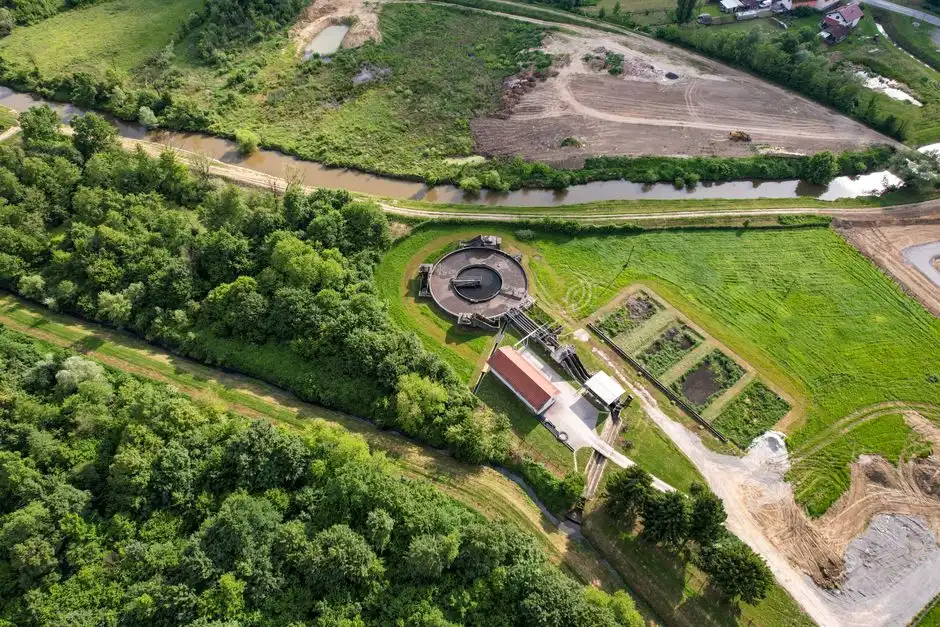
Mbuji-Mayi operating conditions can outweigh a nominal equipment-price difference because an unavailable process can interrupt treatment, hotel operations and any downstream water-reuse scheme. The correct comparison is lifecycle performance under interrupted power, constrained logistics and the selected discharge or reuse route.
Specify backup power explicitly. Action contre la Faim reports that power cuts had shut off the city’s water network because extraction and distribution depended on electricity. This does not establish a hotel outage duration or generator sizing, but it makes it necessary to determine the plant’s uninterrupted operating period, critical loads, protected controls and restart sequence. Require each supplier to identify where backup power must connect, whether a generator is already available, and what happens to membrane cleaning, disinfection and sludge handling during an outage.
Plan for remote-site logistics. Mbuji-Mayi’s isolation can complicate the movement of membranes, pumps, chemicals, wear parts and qualified technicians. The supplied research does not provide local service availability, spare-parts inventories or delivery lead times, so do not accept “local support” without a named arrangement. Ask what critical spares must be stocked, who will perform routine service, who responds to faults, how membrane or pump modules reach the site, and what replacement lead time the supplier can commit to in writing.
Protect potable-water operations and any reuse line from cross-contamination. Separate wastewater and reuse pipes physically, specify backflow prevention at connections, clearly mark non-potable services and obtain the hydraulic designer’s approval of the reuse network. The waterborne-disease risk reported by Action contre la Faim strengthens the need for hygienic treatment and operating controls, but it does not support claims about the current pollutant concentration in local receiving waters.
Use an if-then decision rule: if the site has a reliable sewer and the authority accepts conventional biological treatment, compare package options against the sewer connection and permit. If there is no dependable sewer, the treatment train must discharge to a verified route or provide the intended reuse function. If power interruptions are frequent and service response is slow, simplify operations and increase critical spares. If reuse quality is mandatory and MBR is technically justified, budget for membrane cleaning and replacement rather than comparing only the initial package price.
Turn the comparison into a procurement brief
A comparable procurement brief should make suppliers demonstrate the same design basis and operating responsibilities. Give each bidder the same flow data, wastewater analysis, site information, discharge or reuse target and commercial schedule so that differences in price reflect technical scope rather than unequal assumptions.
| Information to request before quotation | Minimum supplier response |
|---|---|
| Design flow and influent basis | Guaranteed design flow, average and peak basis, duty/standby arrangement, and treatment-stage description |
| Effluent and reuse | Guaranteed effluent parameters tied to the agreed analysis, sampling method and receiving or reuse route |
| Utilities | Complete electrical load, backup-power connection, water, chemicals, sludge and other utility requirements |
| Installation | Civil works, excavation, tank or module delivery, placement, connections, commissioning and training |
| Operations | Operator attendance, preventive maintenance, sludge removal frequency, odor control, noise and consumables |
| Support | Warranty, critical spare parts, named service personnel, response arrangements and replacement-part lead time |
| Site risks | Burial depth, vehicle access, flood level, groundwater assumptions and access for membrane or pump maintenance |
| Regulatory route | Confirmation of the authorized discharge or reuse route and applicable permit conditions |
Require a guaranteed design flow, the influent basis used, a guaranteed effluent result, the full treatment train, duty/standby provisions and a complete utility-consumption schedule. The guaranteed effluent should correspond to the hotel’s actual wastewater sample, not only to clean-water catalogue values. State how performance will be demonstrated during commissioning and what remedies apply if the guarantee is not achieved.
Define the contractor scope. Ask for civil works, installation, commissioning, operator training, initial chemicals, warranty, spare parts, sludge handling, annual service and long-term support. Include sludge removal frequency, odor control, noise limits, burial depth, vehicle-access requirements and flood or groundwater assumptions for the selected site.
Contract should also identify the permitted discharge or reuse route. The supplied research does not establish a current Mbuji-Mayi hotel discharge permit or numeric effluent limit, so the buyer must obtain those requirements from the competent authority and write them into the performance guarantee.
Use the A/O-versus-MBR comparison for a Lubumbashi hotel to check that the comparison method is consistent, while requiring Mbuji-Mayi-specific verification. Request a lifecycle price breakdown for equipment, civil works, backup power, sludge handling, consumables, service and replacement parts. The supplied research contains no supported local price range, so require each bidder to quote the complete site-specific scope rather than compare headline package prices.
Frequently Asked Questions
What is the fastest way to size a hotel sewage treatment Mbuji-Mayi system?
Begin with peak wastewater flow and pollutant loads, not occupied-room count alone. Build the flow from occupied rooms, kitchens, laundry, staff accommodation and showers, then confirm it with metered or operational data where available. Require the supplier to demonstrate the selected duty and standby configuration against those inputs and the wastewater analysis.
How should a buyer select a supplier for on-site wastewater treatment in the DRC?
Ask each supplier for guaranteed effluent performance, complete utility requirements, installation scope, named local-support arrangements, critical spare-parts commitments and warranty terms before comparing price. Confirm that the offer includes commissioning and training, and obtain written replacement-part lead times. No supplied source establishes Mbuji-Mayi service availability, so local claims need documentary support.
What compliance risk should be checked before buying a packaged sewage treatment plant?
Verify the receiving route and current applicable limits with the competent authority because the supplied research does not establish Mbuji-Mayi hotel-specific discharge requirements. Confirm whether the proposal covers sewer discharge, another approved route or water reuse, and require the permit conditions to appear in the contract and effluent guarantee.
How should the budget compare an A/O package plant with an MBR system?
Request a lifecycle comparison covering equipment, civil works, backup power, sludge handling, consumables, service and replacement parts. No supported local price range is available, so do not use a generic catalogue price as the capital budget. For MBR, ask separately for membrane-cleaning and replacement costs; for A/O, include excavation, buried-installation access and biological-system servicing.
What samples and site information should the hotel collect before procurement?
Collect a representative wastewater sample covering guestrooms, kitchens and laundry, together with flow information and the intended discharge or reuse requirements. The site survey should document sewer availability, available land, access for construction and maintenance, electricity supply, backup-power arrangements, groundwater and flood conditions, and the separation of wastewater from potable-water systems.