Start with sewer access and site constraints
For a Bordeaux-area site, the practical choice is between public sewer connection and onsite domestic sewage treatment. The public route is the baseline where a compliant connection is technically and administratively available. If that connection is unavailable or unsuitable, an onsite A/O package plant can provide a decentralized treatment route for domestic sewage flows within the WSZ screening range. Final selection requires verified flow data, site constraints, discharge or reuse requirements and the applicable authorization route.
The first question is whether the particular site has a usable connection. The network is extensive, but proximity alone does not establish connection feasibility, capacity, ownership or the conditions attached to a new connection. Veolia’s company announcement in 2017 stated that the delegated public service covered six wastewater treatment plants and 4,200 km of networks, with total treatment capacity for a population equivalent of 1.15 million inhabitants. That is the scale of the public system, not confirmation that any given site can connect.
Ask the responsible utility to identify the nearest suitable connection point, whether an extension is required, the expected administrative process, and any discharge or contractual conditions. The site surveyor must then verify the connection route, underground utilities, easements, construction access and whether the works affect the public network. A connection to the public system is fundamentally different from an onsite discharge solution: the former transfers treatment responsibility to the utility network, while the latter requires the project to define treatment, discharge authorization, monitoring and maintenance arrangements.
The public sewer versus package-plant methodology is useful here because the decision starts with access, not with a particular machine. If the utility confirms a compliant route with workable construction and operating conditions, retain it as the reference case. If it cannot, document that result before moving to equipment selection.
Quantify flows before selecting treatment equipment
Peak flow and sewer condition can make an apparently adequate nominal treatment capacity unsuitable for the site. The WSZ range of 1–80 m³/h is a screening range, not proof that a site can use a particular unit size; the installed route must be checked against verified flow, peak factors and the hydraulic conditions of the incoming sewer. The HydropureWater catalog does not provide the project-specific flow calculations needed for that check.
Request the average daily flow, peak-hour flow, daily and seasonal variation, contributing-user numbers and usage profiles. Include accommodation occupancy, staffing hours, restaurant or laundry demand, irrigation demand and any planned expansion. For domestic wastewater treatment in Bordeaux, the design flow should reflect what enters the treatment route, not only metered consumption. A low annual average can conceal short peaks that affect equalization, biological loading, clarification and disinfection.
Separate the sewer configuration from the treatment proposal. The US EPA’s Municipal Wastewater guidance, dated 2026, states that sanitary sewers may receive substantial wet-weather infiltration and inflow through cracks, faulty seals or improper connections. Large I/I can cause sanitary sewer overflows and operational problems at the treatment facility. Combined sewers carry both sanitary sewage and stormwater runoff and can overflow during wet weather. These are U.S. system descriptions, not Bordeaux permit rules, but they identify a condition that must be checked: whether a disconnected or poorly sealed sanitary line will pass clean sewage or admit stormwater and groundwater.
| Screening input | What to request | Why it affects route selection |
|---|---|---|
| Average daily flow | Measured or documented domestic sewage generation | Establishes the base loading and treatment capacity |
| Peak-hour flow | Measured peak or a project-specific flow survey | Tests equalization, treatment and downstream conveyance |
| Variation | Daily, weekly, seasonal and occupancy profiles | Identifies loading peaks and operating risks |
| Sewer condition | Separate or combined system; I/I evidence; surcharge history | Wet-weather inflow can distort the required treatment flow |
| Reuse demand | Volume, quality and timing of irrigation or process-water demand | May trigger a higher-grade treatment route |
The A/O package plant versus MBR comparison provides a useful structure for this check, but the size decision must remain project-specific.
Compare the public sewer and A/O package plant
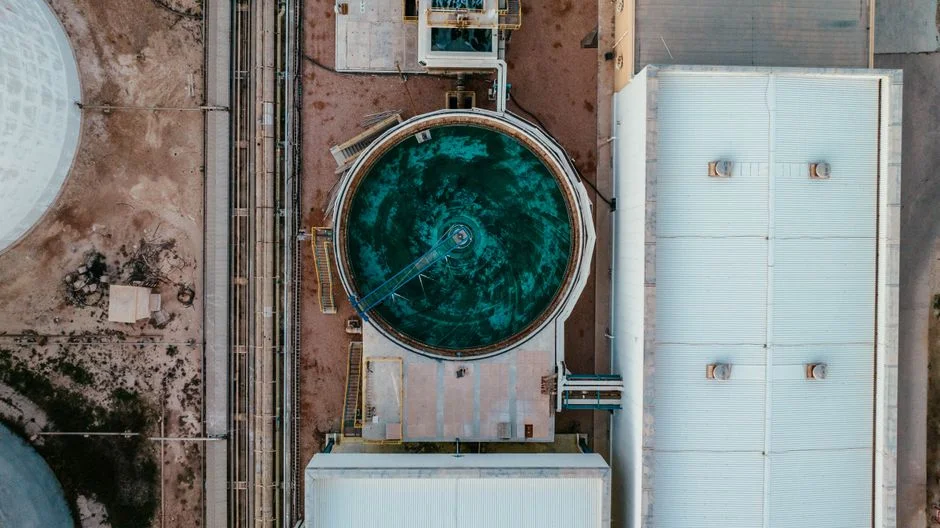
The public sewer is preferable when a compliant connection is available and the owner accepts the utility’s connection, discharge and contractual requirements. It transfers routine network operation to the public service, but it does not eliminate project obligations: the site still needs a valid connection, adequate internal drainage, and any works required to reach the network. It also makes local reuse dependent on what the utility and authority permit.
An onsite package plant is relevant when sewer access is unavailable, impractical or unacceptable to the project. The HydropureWater catalog states that the WSZ combines anoxic/aerobic biological contact oxidation, sedimentation and disinfection in one buried unit. It describes the equipment as fully automated and requiring no operator, and gives a capacity range of 1–80 m³/h for applications including hotels, hospitals, factories and rural communities. Those are catalog claims; they do not establish Bordeaux discharge compliance or eliminate the need for site-specific engineering and legal checks.
| Decision criterion | Public sewer route | Onsite A/O package-plant route |
|---|---|---|
| Access prerequisite | Utility confirms a compliant connection point and route | No public connection assumed; site must support treatment and authorized discharge |
| Treatment responsibility | Network operator serves the collection and treatment system | Project must define operation, maintenance, sludge and monitoring responsibilities |
| Footprint | Internal drainage plus any public-network connection works | Buried treatment unit, access, controls, sludge handling and discharge works |
| Hydraulic basis | Must meet utility connection and network requirements | Must handle verified average flow, peaks, equalization and wet-weather I/I |
| Reuse | Subject to utility and authority requirements | May justify a higher-grade route if project reuse criteria are demanding |
| Commercial scope | Obtain the utility’s connection requirements and cost inputs | Obtain a complete installed quotation; no purchase price is supplied |
Footprint comparison must include more than plant length and width. For a below-grade installation, assess excavation, structural works, waterproofing, ventilation, access for maintenance, lifting provisions, sludge removal, controls and landscaping above the unit. Check vehicle loading, flood exposure and future access. The product evidence confirms above-ground landscaped installation only for the WSZ configuration; it does not establish that every buried arrangement will fit a particular Bordeaux site.
Do not assign a purchase price or guaranteed permit outcome. A useful comparison of the underground A/O package treatment plant must use verified site inputs and confirmed authority requirements rather than an invented allowance.
Decide when MBR is the stronger upgrade
MBR is the stronger route when the verified project brief requires membrane-separation performance or reuse value that a standard A/O package route is not intended to deliver. The HydropureWater catalog describes the MBR system as activated-sludge treatment combined with submerged PVDF membrane filtration for municipal sewage, industrial process water and reuse projects. That makes it an option to evaluate against explicit effluent and reuse criteria, not a default replacement for every A/O system.
The catalog states that the MBR system produces near-reuse-quality effluent, provides filtration below 1 μm and occupies 60% less footprint than conventional systems. These are product-catalog claims, not Bordeaux regulatory thresholds, and they do not disclose the comparison basis behind the footprint claim. They should therefore be treated as manufacturer information requiring clarification rather than accepted as project guarantees.
- Define the required reuse application and whether it is potable, non-potable, irrigation, process water or another specified use.
- Obtain the applicable effluent and reuse requirements from the authority or environmental adviser.
- Check whether A/O treatment can meet those requirements with the proposed receiving point and downstream reuse infrastructure.
- Compare MBR only where membrane separation adds required value or resolves a verified footprint constraint.
- Include membrane replacement, fouling control, cleaning, monitoring, sludge handling and operator competence in the lifecycle comparison.
The MBR membrane bioreactor should not be accepted on the phrase “near-reuse-quality” alone. Require the supplier to define the reference parameter, test method, guaranteed operating range and intended reuse category. The decentralized sewage treatment technology comparison can then be used as a decision aid, with the final choice tied to the Bordeaux project brief rather than transferred from another jurisdiction.
Build the procurement information request
A defensible quotation starts with verified site, flow and compliance inputs rather than a selected product name. Divide the information request between the site owner or operator, the civil contractor or surveyor, and the relevant authority or environmental adviser. This prevents equipment scope from being confused with connection, civil, discharge, reuse or operating obligations.
| Information holder | Inputs to request | Decision supported |
|---|---|---|
| Site owner or operator | Flow survey, user counts, operating hours, expansion plans, irrigation demand and process-reuse demand | Capacity, hydraulic design and reuse case |
| Civil contractor or site surveyor | Available footprint, underground utilities, access routes, cover requirements, flood exposure and vehicle-loading constraints | A/O or MBR route and installation arrangement |
| Utility or authority | Connection availability, discharge route, reuse requirements, authorization pathway and applicable monitoring conditions | Public sewer versus onsite treatment and compliance risk |
| Equipment supplier | Installation, commissioning, controls, sludge handling, routine service, monitoring and operator training | Comparable commercial and technical scope |
Specify what each quotation must include before comparing prices. Request civil works, excavation or restoration, pipework, electrical supply, controls, sludge removal and disposal, commissioning, performance testing, routine maintenance, monitoring and training as separate priced items where appropriate. This exposes omissions without inventing a Bordeaux cost estimate.
Also require the supplier to state design inputs, process assumptions, equipment sizing basis, guaranteed performance, test methods, maintenance intervals and warranty exclusions. For the A/O route, ask how peak flow, I/I and sludge are handled. For MBR, ask how membrane life, replacement and fouling controls are priced. The package-plant and MBR procurement framing can support the structure, but Bordeaux-specific utility and authorization confirmation remains essential.
Frequently Asked Questions
How should I set the budget for public sewer connection versus an onsite A/O plant?
Request two complete scopes rather than comparing an equipment price with a connection quotation. For the public route, ask the utility for all connection and works charges it will impose. For the onsite route, require civil works, installation, electrical and controls work, commissioning, sludge handling, routine service, monitoring and training to be listed as priced inclusions or exclusions. Numerical budgets cannot be supported without project-specific quotations.
How do I verify that A/O or MBR equipment is correctly sized?
Provide the measured or documented average daily flow, peak-hour flow, seasonal variation, user profile and expected expansion. Require the supplier to show the equipment selection calculation, equalization provision and response to peak loading. Treat the WSZ 1–80 m³/h range as a screening range rather than automatic sizing. Also provide the incoming sewer configuration and wet-weather I/I evidence.
What should I check before selecting an onsite treatment supplier?
Ask for the proposed process basis, civil and installation scope, controls, sludge route, monitoring, commissioning tests, maintenance obligations and warranty exclusions. For MBR, request the precise effluent guarantee, filtration basis, membrane replacement provision and fouling-control plan. Confirm that the supplier’s proposal responds to the site’s verified flows, access constraints and authority requirements rather than relying only on a general technology description.
Can this equipment be approved for discharge or reuse in Bordeaux?
No equipment description alone establishes approval. Ask the authority or environmental adviser to identify the applicable discharge point, authorization route, effluent and monitoring requirements, and any conditions for reuse. Obtain that confirmation before ordering equipment, while allowing for the possibility that the utility’s requirements or site conditions make an onsite route unsuitable.