
Determine Which Limits Control the Newport Discharge
The controlling requirement is the strictest applicable limit at the point where wastewater enters the Newport sewer system, not simply the federal categorical standard. A fabricated metals plant may qualify as an industrial user subject to US fabricated metals pretreatment requirements if forming, finishing, forging, foundry, metal-spraying, or machining-wash operations are co-located with plating or anodizing; a dry stamping shop sending parts elsewhere is generally outside 40 CFR Part 433. Confirm the plant’s categorical status, Newport POTW pretreatment limits, and individual wastewater discharge permit before selecting equipment.
PSES are pretreatment standards for existing sources, while PSNS are the tighter standards for new sources. Newport’s local limits, developed under 40 CFR 403.5, may impose additional restrictions for metals, oil and grease, suspended solids, and pH. The City of Newport issues the discharge permit, while RI DEM approves the pretreatment program. Engage both authorities before a process change alters flow or pollutant loading.
| Decision point | What the buyer must establish | Design consequence |
|---|---|---|
| Categorical scope | Whether plating, anodizing, pickling, machining wash, or another regulated operation occurs on site | Apply Part 433 where applicable; document exclusion if only dry stamping occurs |
| Source status | Existing-source or new-source applicability | Compare PSES and PSNS rather than assuming one table covers the site |
| Newport limits | Current local-limit table and permit conditions | Use the stricter limit for each pollutant |
| Authority review | City permit status and RI DEM program requirements | Obtain written acceptance before changing flow or loading |
Characterize Batch Wastewater Before Sizing Equipment
A full-week characterization provides the defensible basis for sizing equalization and treatment equipment. HydropureWater’s 2026 field data indicates that mixed floor drains entering pretreatment can contain oils at 50–500 mg/L, total dissolved metals at 5–200 mg/L, TSS at 100–1,000 mg/L, and pH swings between 2 and 12. A shorter composite can miss a production batch and produce an undersized basin or incorrectly selected unit.
Map every fabricated metals floor drain to its source. Stamping and machining drains can carry free or emulsified oils; grinding drains can carry swarf and TSS; pickling drains can contain dissolved metals; plating rinsewater can contribute metals; chromic-acid operations can introduce hexavalent chromium; and alkaline cyanide plating can introduce cyanide. The fabricated metals pretreatment design comparison provides a review framework, but it does not replace site sampling.
| Required input | Why it affects equipment selection | Procurement requirement |
|---|---|---|
| Flow and batch timing | Defines equalization volume and release rate | Full-week flow record with production-batch timestamps |
| pH, oil and grease, TSS | Identifies separation and pH-control demands | Composite and grab samples tied to discharge sources |
| Total and hexavalent metals, cyanide | Determines chemical treatment and polishing need | Species-specific analytical results |
| BOD and COD | Evaluates POTW organic loading and biological polishing | Results tied to representative operating periods |
| Production forecasts | Tests whether current characterization represents future loading | Current and planned production mix |
Select the Unit Operations for Each Contaminant
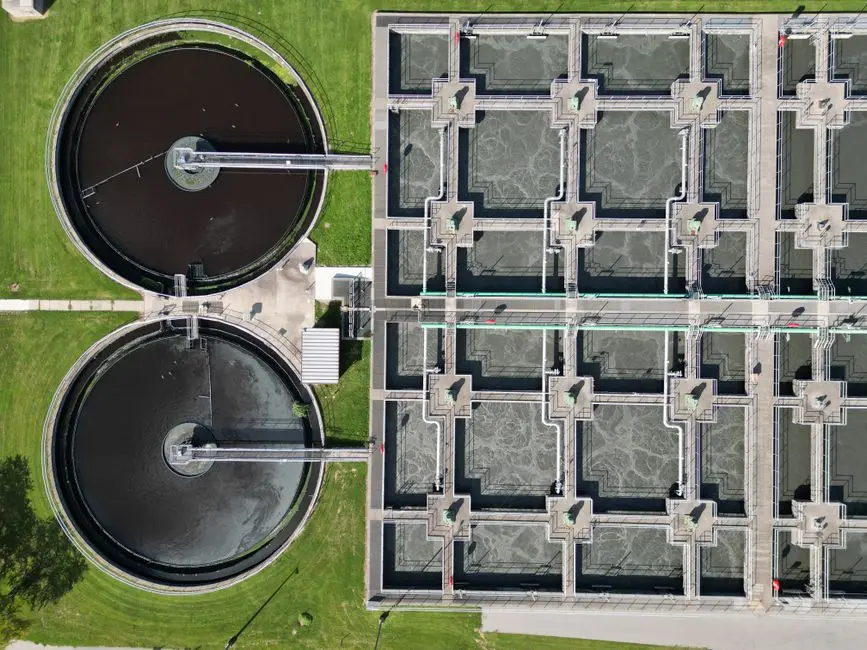
The treatment train must follow the contaminants: physical separation for oil and floatable solids, oxidation or reduction where chemistry requires it, precipitation for dissolved metals, and clarification before discharge. These stages require distinct reaction steps because oils, hexavalent chromium, cyanide, and dissolved metals require different treatment mechanisms.
A DAF system for oil, grease and suspended solids is the physical-separation option. HydropureWater’s 2026 framework specifies hydraulic surface loading of 4–20 m/h, an A/S design point of 0.02 within a 0.005–0.060 range, and recycle of 10–30% of forward flow. Use an automatic chemical dosing and pH control skid with flow-paced feed and pH or ORP feedback.
For chromium-bearing wastewater, sodium metabisulfite reduces hexavalent chromium at pH 2–3, with ORP controlled at roughly 250–300 mV according to HydropureWater’s 2026 guidance. The resulting trivalent chromium precipitates as Cr(OH)₃ during the pH 8.5–9.5 stage. Oxidize cyanide before metals precipitation, using NaOCl under controlled conditions; otherwise, cyanide can resolubilize downstream precipitates.
Use lamella clarification after hydroxide precipitation when compact solids separation and high surface loading are required. HydropureWater’s 2026 product guidance reports 20–40 m/h surface loading for the lamella stage. Polymer dosing may assist floc formation, but its need and dose must follow jar or pilot testing rather than a generic specification.
| Dominant condition | Required or conditional unit operation | Reason |
|---|---|---|
| Free or emulsified oil and floatable TSS | DAF | Separates oil and floatable solids before chemical treatment |
| Hexavalent chromium | Reduction followed by hydroxide precipitation | Converts Cr(VI) before Cr(OH)₃ precipitation |
| Alkaline cyanide | Oxidation before precipitation | Prevents cyanide from resolubilizing metals precipitates |
| Dissolved metals | Metals hydroxide precipitation plus lamella clarification | Separates precipitated metals from treated water |
| Batch pH or flow swings | Equalization and automated dosing | Prevents untreated batch chemistry from upsetting the train |
Build Controls That Prevent Off-Spec Discharges
Equalization and automated diversion controls convert a selected treatment train into a controllable system. Size the basin around the actual batch-release pattern, and require a written slug-load control plan covering equalization capacity, flow and pH monitoring, and release procedures under 40 CFR 403.8(f).
Specify PLC-controlled dosing with pump calibration columns, stroke-count totalizers, and hard interlocks for pH, ORP, and high-TSS excursions. During an excursion, flow should return to the equalization header rather than continue through the treatment train. The 2026 fabricated metals pretreatment guidance describes this arrangement as a means of preventing a chemistry upset from becoming a discharge violation.
Install a rotary mechanical bar screen upstream of equalization to remove rags, wipes, and tramp metal. HydropureWater’s 2026 guidance identifies these materials as a common cause of premature filter-press cloth failure. Sludge handling should account for floated metal hydroxide at 2–5% dry solids from DAF and plate-and-frame dewatering to 25–35%, also reported in that 2026 source. A belt press is an alternative, but the same source states that it caps around 22% dry solids for metal hydroxide.
Verify Compliance at the Permitted Discharge Point
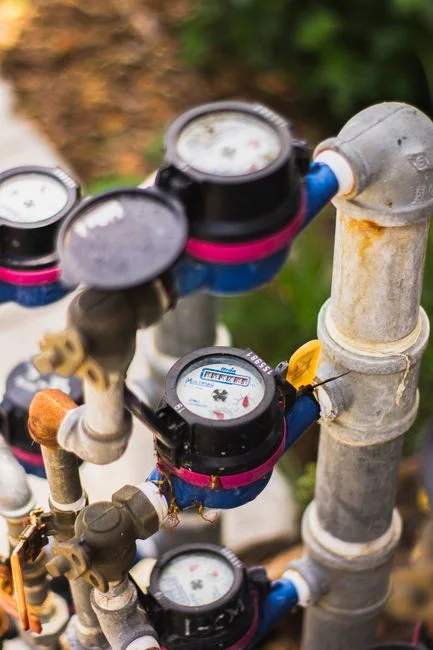
Compliance must be demonstrated at the point where wastewater enters the Newport sewer system, not at the outlet of an individual treatment unit. Confirm the permitted sampling point, monitor daily-maximum and monthly-average results, and compare each pollutant against applicable EPA PSES or PSNS limits and Newport permit conditions. Sampling results from the treatment-skid outlet are useful for process control but do not replace sewer-point verification.
Polishing equipment serves specific downstream needs. HydropureWater’s 2026 guidance identifies reverse osmosis as appropriate for sub-ppm dissolved solids or a specific metal cap; nickel below 0.1 mg/L is presented as a reuse-driven example. The same source identifies MBR for BOD or COD tightening and water reuse. Anion exchange or granular activated carbon can be reserved for PFAS-related polishing needs, but the source states that no current numerical PFAS limit has been established for chrome finishers.
| Polishing trigger | Potential option | Decision condition |
|---|---|---|
| Sub-ppm dissolved solids or a specific dissolved-metal cap | RO | Permit or reuse specification requires it; provide upstream filtration requirements |
| BOD or COD reduction with reuse | MBR | Organic loading and water-reuse objectives justify biological treatment |
| PFAS-related requirement | Anion exchange or GAC | Install only against a confirmed requirement or defined future-proofing scope |
Frequently Asked Questions
What inputs are needed before requesting a pretreatment-equipment quotation?
Provide a full-week wastewater characterization, source-drain map, batch schedule, production forecast, current permit and local limits, categorical applicability determination, and desired reuse conditions. These inputs let the bidder state equalization volume, treatment capacities, chemical assumptions, control philosophy, and sludge-handling scope.
How should a buyer control cost without under-sizing the treatment train?
Do not price from generic equipment ranges. Request an itemized bid separating equalization, DAF, chemical dosing, precipitation, lamella clarification, controls, sludge dewatering, building utilities, and optional polishing, with each quoted item tied to a stated sizing assumption.
Which supplier qualifications reduce compliance risk?
Require bidders to identify their design flow and batch criteria, treatment sequence, control philosophy, performance guarantees, sludge scope, utility requirements, and required owner inputs. Treat permit confirmation and full-week characterization as proposal acceptance criteria rather than optional assumptions.
When is polishing equipment justified?
Add polishing only when the controlling permit, a specific reuse specification, or a confirmed future requirement demands it. Keep RO, MBR, anion exchange, or granular activated carbon outside the base bid when current wastewater data and permit conditions do not justify those units; preserve space and connection provisions for later expansion.