
Choose the permitted discharge route before selecting equipment
Wastewater from an expanded semiconductor fab in Hungary should not be sent directly to a municipal sewer or receiving water without verified acceptance. First inventory and segregate the streams, then compare sewer discharge, onsite treatment followed by discharge, partial reuse and zero liquid discharge against the applicable permit, contaminants, flow variability and reuse objectives. Hungary-specific work must map the project through Government Decrees 28/2004, 27/2008 and 220/2004, the Urban Waste Water Treatment Directive where relevant, and applicable BAT references. Final limits and equipment sizing require confirmed wastewater analyses, peak flows and permit conditions rather than generic semiconductor assumptions.
The route decision is a legal and engineering decision, not a menu of preferred technologies. A sewer connection may be commercially attractive, but it depends on the sewer operator accepting the industrial waste, the applicable discharge limits and sufficient capacity. Direct discharge requires a surface-water authorisation and a receiving-water assessment. Partial reuse still needs a compliant residual discharge or sewer route. Zero liquid discharge removes the liquid discharge point, but concentrates the contaminants into solids and brine that must have an approved management route.
The compliance stack must be mapped at the actual discharge point. HydropureWater’s 2026 Hungary compliance review identifies Government Decree 28/2004 as the source of non-hazardous wastewater limit values for surface-water discharge, including COD, BOD5, TSS, total nitrogen and total phosphorus. It also identifies Government Decree 27/2008 Annex 2, read with Decree 220/2004, for wastewater thresholds and emission limits to receiving waters and public sewers, including tighter requirements in the Lake Balaton and Tisza sensitive zones. Directive 91/271/EEC becomes relevant where effluent reaches a municipal collector. The 2016 CWW BREF and the 2019/903 Electrochemical Industry BAT Conclusions provide treatment and process-specific BAT references, but their applicability and current project conditions must be checked rather than assumed. The detailed sequence is set out in the Hungary fab wastewater compliance and permit review.
Permit history also affects expansion risk. The same 2026 review states that substantive permit challenges are subject to a two-year limitation period from notification under Hungary’s Act CL of 2016 on General Administrative Procedure. That is not permission to assume that an existing authorisation can simply be transferred or that an expanded discharge remains continuously compliant. Request the current permit, notification history, compliance records and enforcement position before treating a route as available.
| Discharge route | Proceed only if | Principal treatment need | Decision risk |
|---|---|---|---|
| Municipal sewer | The sewer operator accepts the waste, applicable industrial pretreatment limits are met and capacity is reserved. | Industrial wastewater pretreatment at the property boundary. | Contractual rejection, unsuitable influent, permit mismatch or no available capacity. |
| Treated direct discharge | A surface-water permit covers the route, receiving-water conditions are acceptable and the final effluent meets every applicable limit. | A treatment train sized for contaminant loads and flow peaks, with controlled residual sludge. | Permit rejection or non-compliance because the route was selected before confirming the discharge envelope. |
| Partial reuse | Water-quality targets are defined by each reuse user and the remaining liquid still has an authorised route. | Treatment to the required reuse specification plus treatment or disposal of the residual stream. | A “reuse” claim without a defensible residual-discharge or solids route. |
| Zero liquid discharge | Water recovery is operationally required and the concentrate and sludge have verified management routes. | Maximum liquid recovery plus brine or solid residual treatment. | Unresolved concentrate disposal, energy demand, fouling and an incomplete permit basis. |
Separate the wastewater streams that drive treatment
Semiconductor wastewater must be segregated by chemistry and generation pattern before it is combined, because mixing incompatible streams can move the treatment problem rather than solve it. The 2026 Semiconductor Fab Wastewater source identifies hydrofluoric acid, specialised solvents and heavy metals including copper and lead in wastewater from cleaning and etching operations. These are not interchangeable with general cooling or sanitary effluent.
The source-specific inventory should cover at least fluoride-bearing, CMP, solvent-bearing, metal-bearing, cleaning and general process streams. Fluoride may require dedicated chemical control before biological or membrane treatment. CMP slurry can carry abrasive solids and process chemicals, so the CMP wastewater treatment by ultrafiltration can inform the solids-separation decision. Solvent-bearing streams require their own compatibility assessment because they may affect biological treatment, membranes and chemical dosing. Metal-bearing streams need source identification, precipitation or other removal mechanisms, and monitoring that distinguishes the metal species relevant to discharge and reuse.
HydropureWater’s 2026 compliance review adds nickel and zinc from solder and interconnect routes to the risk map. The same review gives typical permit values of Ni at no more than 0.2 mg/L and Zn at no more than 0.5 mg/L under Government Decree 27/2008 Annex 2 and Decree 220/2004, based on its 2026 Hungary compliance library. These values do not replace source-specific sampling or the project permit. They illustrate why a generic contaminant list is inadequate: the relevant parameter, occurrence and load can differ by process route.
Request a flow-duration profile for every stream, including average flow, maximum-hour flow, maximum-day flow, batch dumps and expected production-ramp conditions. Obtain pH, temperature, conductivity, fluoride, metals, organics and toxicity indicators from representative sampling. For reuse, add the receiving process and its required water-quality specification to the inventory. A missing flow series, unidentified chemical inventory or unconfirmed batch rule is a sizing hold point, not a reason to apply a generic design factor. Further stream-specific technical detail is available in the chip-fab fluoride wastewater treatment blueprint.
| Stream | Indicative contaminants or risks | Segregation and treatment question | Required engineering inputs |
|---|---|---|---|
| Fluoride-bearing | Hydrofluoric acid-derived fluoride; pH and load variation. | Should fluoride removal occur at source, before equalization or after neutralisation? | Fluoride concentrations, acidity, flow profile, chemical-use records and removal or recovery tests. |
| CMP slurry | Abrasive solids, colloids and process chemistry. | Can the stream be segregated for solids separation without disrupting the common train? | Solids characterisation, particle-size distribution, batch-generation rules and slurry recovery method. |
| Solvent-bearing | Specialised cleaning and process solvents, organics and possible toxicity effects. | Which streams are compatible with biological treatment, membranes and chemical dosing? | Chemical inventory, pH, COD or TOC, toxicity indicators, volatility and batch-dump profile. |
| Metal-bearing | Copper, lead, nickel, zinc and other metals, depending on the process route. | Which dissolved metals require precipitation, adsorption or another confirmed control step? | Source-specific analyses, total and dissolved fractions, mass loads and permit limits. |
| Cleaning and general process | Mixed chemistry; potentially variable detergent, oxidant and metal content. | Can the stream enter equalization and biological treatment only after source controls are demonstrated? | Flow-duration series, pH, temperature, conductivity, COD, BOD, TSS, metals and toxicity. |
Match treatment objectives to the equipment train
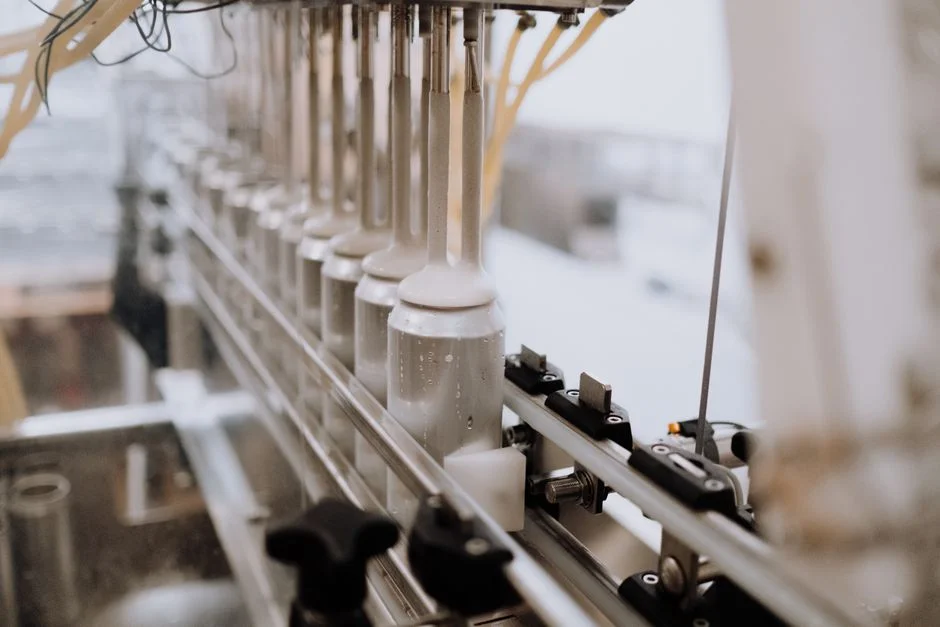
Equipment selection follows the treatment objective and the confirmed operating envelope, not a generic “chip-fab treatment package.” The cited 2026 design basis in HydropureWater’s Hungary review uses a rotary mechanical bar screen with a 2–6 mm aperture and 8–24 hours of hydraulic equalization to protect downstream equipment and dampen flow peaks. These are comparison-basis values for the referenced project, not universal Hungarian requirements. Confirm the actual screen aperture and hydraulic storage against the stream inventory and equipment supplier data.
Source control comes first: minimise fluoride, metal, solvent and solids loads at the point of generation where practicable. Then apply physical and chemical pretreatment according to the contaminant. DAF pretreatment for industrial wastewater is an option where suspended solids, colloids, oil and grease or floatables require removal. It is not a substitute for source control, biological treatment or dissolved-metal removal. Chemical dosing must be selected from actual alkalinity, acidity, metal and fluoride data rather than from a generic recipe.
Biological treatment may be appropriate for biodegradable organics where the segregated feed, toxicity and process conditions support it. An integrated MBR wastewater treatment system combines biological treatment with membrane separation where the required effluent or reuse quality justifies it. The 2023 Water Technology Online article on SUEZ’s Hungarian ultrafiltration facility explains that ultrafiltration-based MBR systems have been selected over conventional methods to meet stringent wastewater discharge regulations and conserve freshwater through reuse. That is evidence of an application route, not proof that MBR is required for this expansion.
Reverse osmosis becomes relevant where dissolved salts or ionic contaminants must be reduced, or where high-quality reuse is required. It introduces a concentrate stream, so the design must identify how that concentrate will be managed. Zero liquid discharge may be selected when the reuse objective and permit route justify maximum water recovery, but it still requires a controlled residual route; eliminating a liquid outlet does not eliminate the need to manage concentrated contaminants.
For the cited comparison in HydropureWater’s 2026 Hungary review, the design margin should be 15–20% below the BAT-AEL band rather than at its upper edge. Treat that as the stated comparison basis, not a universal Hungary limit. The current permit and applicable BAT conclusions must determine the actual design envelope.
| Treatment objective | Potential unit operation | Function | Decision check before selection |
|---|---|---|---|
| Protect downstream equipment and absorb batch variation | Rotary mechanical bar screen and hydraulic equalization | Remove coarse material and dampen hydraulic peaks. | Confirm screening aperture, peak flow, batch dumps and required detention against the flow series. |
| Remove suspended solids, colloids or floatables | DAF | Separate recoverable solids and oil or grease where applicable. | Characterise solids, oil and grease, flotation chemistry and downstream compatibility. |
| Remove biodegradable organics and separate biomass | Biological treatment with MBR, where justified | Reduce organics and provide membrane-based solids separation. | Validate biodegradability, toxicity, membrane fouling, reuse requirements and redundancy. |
| Reduce dissolved salts and ionic contaminants | Reverse osmosis | Produce low-conductivity permeate for reuse or a more stringent liquid effluent. | Define feed chemistry, recovery, concentrate composition, fouling and concentrate management. |
| Maximise liquid recovery | Zero liquid discharge system | Reduce liquid discharge and recover water for reuse. | Confirm residual solids or brine route, energy demand, operating envelope and permit treatment. |
Test the treatment case against cost and lifecycle risk
The available budget figure is an order-of-magnitude comparison, not a quotation. HydropureWater’s 2026 Hungary case study reports indicative capital expenditure of EUR 2.8–4.5 million for a 500 m³/day retrofit treatment plant comprising screening, equalization, DAF, MBR, RO and sludge treatment. The same source reports electricity and membrane replacement driving approximately 18–25% annual operating expenditure as a share of capital expenditure for that scenario, and states that a packaged skid approach compresses operating expenditure by 10–15%. These figures apply to the referenced retrofit scenario and must not be transferred to another fab without a matched scope.
Request separate priced line items for equipment, civil works, installation, commissioning, performance testing, controls, monitoring, redundancy, chemical storage, membrane replacement, chemical consumption, sludge treatment and disposal. Also request the operating assumptions behind the lifecycle estimate: power tariff, operating hours, membrane life, cleaning frequency, chemical dosage, residual volumes, labour, waste-disposal route and future expansion provisions. A supplier should identify exclusions rather than present one packaged number as a complete project cost.
| Cost or risk item | Information to request before quotation comparison | Why it affects the route decision |
|---|---|---|
| Equipment and civil works | Process scope, capacities, materials, foundations, buildings, access and utility connections. | Retrofit and greenfield conditions can dominate the installed cost. |
| Membranes and energy | Design flux, recovery, cleaning assumptions, replacement interval, power demand and tariff. | These are the operating-cost drivers identified in the 2026 case study. |
| Chemicals and dosing | Consumption per operating and peak conditions, storage requirement and compatibility review. | Dose depends on confirmed stream chemistry, not a generic water-quality assumption. |
| Sludge and concentrate | Generation rate, characterisation, dewatering, storage, transport and acceptance criteria. | The residual route must remain viable throughout the operating life of the plant. |
| Controls and monitoring | Online analysers, sampling, alarms, data integration, cybersecurity and permit reporting interfaces. | Monitoring must demonstrate the route’s compliance and operating envelope. |
| Delivery and commissioning | Manufacturing schedule, site access, delivery sequence, tie-ins, testing, training and acceptance criteria. | A lower-space skid can still create schedule or maintainability risk if the interface is not verified. |
Do not select a skid merely because it occupies less space. Check feed variability, chemical loading, maintenance access, hazardous-area needs, operator requirements and expansion provisions against the confirmed inventory. The 2026 Hungary retrofit assessment can serve as a comparison basis, but the procurement decision should rest on a project-specific scope and performance guarantee.
Build the pre-design package before procurement
A defensible pre-design package assigns each missing input to a responsible party and ties it to a route or equipment decision. Use a mass-and-load balance rather than a flow-only comparison: include contaminant mass, peak loading, treatment removal assumptions, residual sludge, concentrate and reuse water. Verified analyses and operating envelopes are prerequisites for final equipment sizing, chemical storage limits and permit claims.
| Input owner | Required information | Decision supported |
|---|---|---|
| Fab process engineering | Source-by-source inventory, chemical lists, batch-generation rules, production ramp-up assumptions and planned process changes. | Segregation, equalization, pretreatment and capacity design. |
| EHS and permitting teams | Current permits, notification history, monitoring records, sewer and receiving-water conditions, applicable limits, BAT assessment and stakeholder expectations. | Route selection and compliance risk. |
| Utilities and water reuse users | Confirmed flow series, reuse targets, water-quality specifications, power and chemical interfaces and available freshwater supplies. | Treatment objectives, reuse train and utilities design. |
| Sludge and waste contractors | Acceptance criteria, characterisation needs, storage, transport, treatment and disposal capacity. | Residual-management route and lifecycle cost. |
| Equipment suppliers | Performance envelope, installation constraints, operating assumptions, redundancy, maintenance, commissioning and delivery schedule. | Commercial comparison and procurement risk. |
The automatic chemical dosing system is only one package item. Its control philosophy, tank capacity, hazardous-area classification and duty or standby arrangement must follow the selected treatment route and confirmed chemical inventory. The final pre-design issue should identify every assumed value, its owner, its verification method and the decision it blocks.
Frequently Asked Questions
What is the available cost for wastewater treatment at a Hungary fab?
HydropureWater’s 2026 case study gives indicative 2026 capex of EUR 2.8–4.5 million for a 500 m³/day retrofit train containing screening, equalization, DAF, MBR, RO and sludge treatment. Treat this as a scenario benchmark. Request a project quotation with equipment, civil works, utilities, commissioning, membrane replacement, chemicals, sludge handling and performance testing itemised separately.
How should a supplier be selected for this treatment plant?
Select against the confirmed wastewater inventory, operating envelope and route-specific acceptance criteria. Require evidence for feed variability, membrane fouling, chemical consumption, maintenance access, redundancy, hazardous-area requirements, installation sequence and concentrate or sludge handling. A lower-space skid is not a sufficient selection criterion.
What must be known before equipment capacity is sized?
At minimum, obtain source-specific flow-duration profiles, maximum-hour and maximum-day flows, batch dumps, pH, temperature, conductivity, fluoride, metals, organics and toxicity indicators. Add the intended reuse specification and production ramp-up assumptions. Missing peak-flow or chemistry data should hold final sizing.
How should permit risk be separated from design assumptions?
Obtain the current permit, notification history, applicable limits, sewer or receiving-water conditions and monitoring records from the permitting team. Use Government Decrees 28/2004, 27/2008 and 220/2004, Directive 91/271/EEC where relevant, the 2016 CWW BREF and the 2019/903 Electrochemical Industry BAT Conclusions as a compliance-screening framework—not as a substitute for project-specific authorisation. Substantive permit challenges are subject to a two-year limitation period from notification under Hungary’s Act CL of 2016, according to HydropureWater’s 2026 review.