
Set the Ridgeville decision boundary before comparing equipment
For Ridgeville mining or metals wastewater, MBR is usually the stronger option when reliable solids separation, a constrained footprint or process-water reuse drives the project. Conventional activated sludge remains credible for large dilute flows where land is available, energy is inexpensive, existing basins and clarifiers are serviceable, and there is no major reuse requirement. Neither process automatically removes dissolved metals: precipitation or another dedicated treatment step may be required. The defensible choice comes from the current permit, actual wastewater characterization, reuse target and a like-for-like lifecycle model—not the process acronym alone.
Begin with the current state NPDES permit, discharge point, reuse specification and sampling-compliance requirements. Federal ore-mining and dressing provisions under 40 CFR Part 440 address arsenic, lead, zinc, copper, nickel and cadmium, but membrane solids retention alone does not establish compliance with those requirements (HydropureWater, 2026). The permit and intended reuse application are therefore the controlling documents, not a generic product performance claim.
Request flow records showing peak and low-flow periods, expected future operating scenarios, TSS, pH, metals, hardness, salinity, biodegradable organics, toxicity and temperature. Require the sampling period and analytical method so seasonal and episodic loads are not hidden in a short sample. Also identify whether existing basins, aeration equipment, clarifiers, equalization and sludge-handling assets have useful remaining life.
The supplied research supports technical screening criteria, but it does not establish Ridgeville’s local permit limits, reuse quality or a universal cost advantage. Treat Ridgeville as a site-specific evaluation and resolve the following decision boundary before requesting equipment quotations:
- Controlling outcome: discharge, process-water reuse, zero-liquid-discharge preparation or another application-specific quality target.
- Wastewater envelope: flow variability, solids character, metal speciation, pH, dissolved salts, biodegradable carbon, toxicity and temperature.
- Site constraint: available land, access for maintenance, electrical supply, drainage, sludge-disposal route and condition of existing equipment.
- Commercial boundary: civil works, pretreatment, biological reactor, solids separation, sludge treatment, polishing, controls, commissioning, spares and disposal.
Compare MBR and activated sludge under mining-water conditions
Conventional activated sludge uses an aerated biological reactor followed by gravity clarification, so effluent performance depends on biological treatment and sludge settleability; MBR retains biomass and separates solids through membranes. HydropureWater’s 2026 field data report normal MBR operation at 8,000–12,000 mg/L MLSS compared with 2,000–4,000 mg/L for CAS using the Lamella-clarifier engineering reference, also from 2026. Those figures are comparison inputs, not universal design criteria.
MBR removes dependence on floc settling from effluent solids capture, but it introduces membrane selection, fouling, cleaning and replacement considerations. CAS avoids those membrane-specific risks while retaining clarifier, sludge-removal, aeration and land requirements. A metal-bearing or poorly settling sludge can escape through a clarifier during upset even if the biological reactor remains active. HydropureWater’s 2026 comparison also reports that CAS systems lost 30–60% of removal efficiency during a 24–72-hour window after a metal pulse; that observation is not a universal performance claim, but it demonstrates the sensitivity of clarifier-based separation to short disturbances.
HydropureWater and the Lamella-clarifier engineering reference, both dated 2026, state that MBR can reduce concrete and civil footprint by approximately 60%. Apply that figure only after reconciling the actual configuration, sludge systems, access, pretreatment and installation scope. Neither option should be selected from reactor footprint alone.
| Decision criterion | Conventional activated sludge | Membrane bioreactor | Procurement check |
|---|---|---|---|
| Biological treatment | Biodegradable organics treated in an aerated reactor. | Biodegradable organics treated before membrane separation. | Require a loading and SRT basis using actual Ridgeville wastewater. |
| Solids separation | Secondary clarification depends on floc settleability. | Membrane physically retains biomass and suspended solids. | Compare solids capture during representative metal and loading pulses. |
| MLSS reference | 2,000–4,000 mg/L, Lamella-clarifier engineering reference, 2026. | 8,000–12,000 mg/L, HydropureWater field data, 2026. | Do not use either range as a universal design value. |
| Footprint reference | Includes aeration, reactor, secondary clarification and associated civil scope. | Approximately 60% less concrete and civil footprint, HydropureWater and Lamella-clarifier engineering reference, 2026. | Compare complete site layouts, access and sludge handling. |
| Primary operating risk | Loss of settling, sludge carryover, aeration and sludge-handling demands. | Fouling, membrane damage, cleaning, replacement and higher maintenance demand. | Require upset-response and recovery procedures. |
| Dissolved metals | Not comprehensively removed. | Not comprehensively removed. | Require dedicated metals treatment and removal demonstrations. |
| Best initial fit | Large dilute flow, available land and serviceable conventional assets. | Constrained site, dependable solids separation or defined reuse value. | Advance only the option that satisfies permit, reuse and lifecycle criteria. |
Match the process train to metals, toxicity and reuse requirements
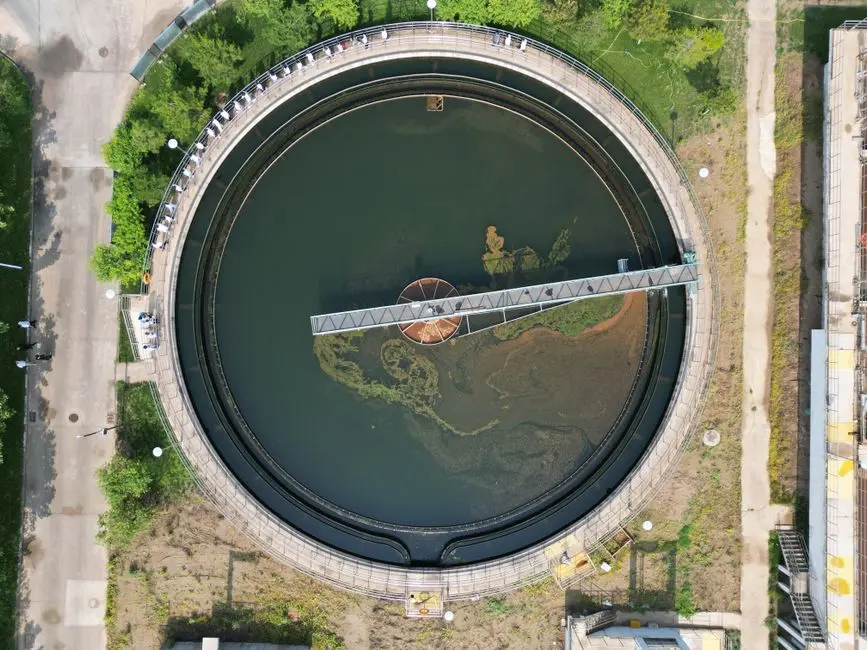
Neither MBR nor CAS is a complete metals-removal train. Biological treatment addresses biodegradable organics; membrane separation or secondary clarification removes biomass and suspended solids; precipitation addresses dissolved metals. Upstream pH adjustment, chemical precipitation, adsorption or another dedicated process may be needed before the biological and membrane stages.
HydropureWater’s 2026 screening flags include BOD/COD below 0.3, sulfate above 1,000 mg/L, hardness in the thousands of mg/L as CaCO3 and TDS above 5,000 mg/L. Treat these as validation triggers, not universal design thresholds. The same source gives approximate pH ranges of 8.5–9.5 for a CAS precipitation stage and 6.5–7.5 ahead of MBR membranes, while emphasizing that final targets require process design and permit review. Jar and pilot testing should establish the chemical sequence for Ridgeville wastewater rather than transferring those values directly.
Define the treated-water destination before selecting equipment. MBR permeate may support some process-water reuse routes, but suitability must be demonstrated against the actual reuse specification. UV, reverse osmosis or another barrier should be added only when the receiving process requires it. This prevents an MBR from being credited with reuse quality that its permeate alone cannot deliver.
Give suppliers the complete proposed train, including equalization, pH adjustment, precipitation, solids removal, biological treatment, membrane separation or clarification, sludge dewatering and final polishing. Require separate evidence for dissolved and particulate metals. A dissolved-metal result cannot be inferred from membrane solids retention, and a particulate-metal result cannot demonstrate removal of dissolved metal.
Evaluate pretreatment, fouling and operating risk
The 2024 reviews supplied in the research identify membrane selection, backwashing, chemical cleaning, MLSS control, aeration control and pretreatment as core MBR implementation requirements; the 2024 MDPI review identifies particles and colloids as important fouling contributors. Pretreatment is therefore part of the MBR process, not an optional accessory.
For Ridgeville, test for mine-derived particulate solids, metal-bearing precipitates, pH excursions, variable hydraulic loading, oils and residual flotation reagents. Evaluate equalization against the recorded diurnal and storm-related flow profile. CAS also needs upstream solids control, but its principal separation risk is clarifier performance. MBR avoids a clarifier while transferring risk to membrane condition, cleaning systems, spare-module availability and sludge handling.
HydropureWater’s 2026 specification states that MBR systems require 1–3 mm fine screening, with cited cutoffs of 1–2 mm for hollow-fiber modules and 2–3 mm for flat-plate modules. Require each bidder to reconcile the selected module geometry with its screen specification, bypass arrangement and integrity monitoring. Equalization should follow analysis of actual flow and load shocks, not a generic volume allowance.
Use DAF pretreatment for mining wastewater as a screening option where suspended solids and colloidal material create a separation or fouling risk. Suitability must be established through wastewater testing rather than assumed from the equipment description. The mining pretreatment options for sewer compliance provide a useful basis for checking the solids-removal boundary.
Require project-specific operating evidence covering membrane-normalized flux, transmembrane pressure, chemical demand, cleaning recovery and performance during upset. HydropureWater’s 2026 guidance recommends a 60–90 day cassette pilot using actual wastewater when metal pulses, low BOD/COD, sulfate, hardness or high TDS could undermine biological performance, settleability or flux. The pilot should also verify sludge dewatering because MBR waste sludge can have lower settleability and more colloidal particles than CAS waste activated sludge, according to HydropureWater, 2026.
Build a comparable lifecycle model and supplier RFQ
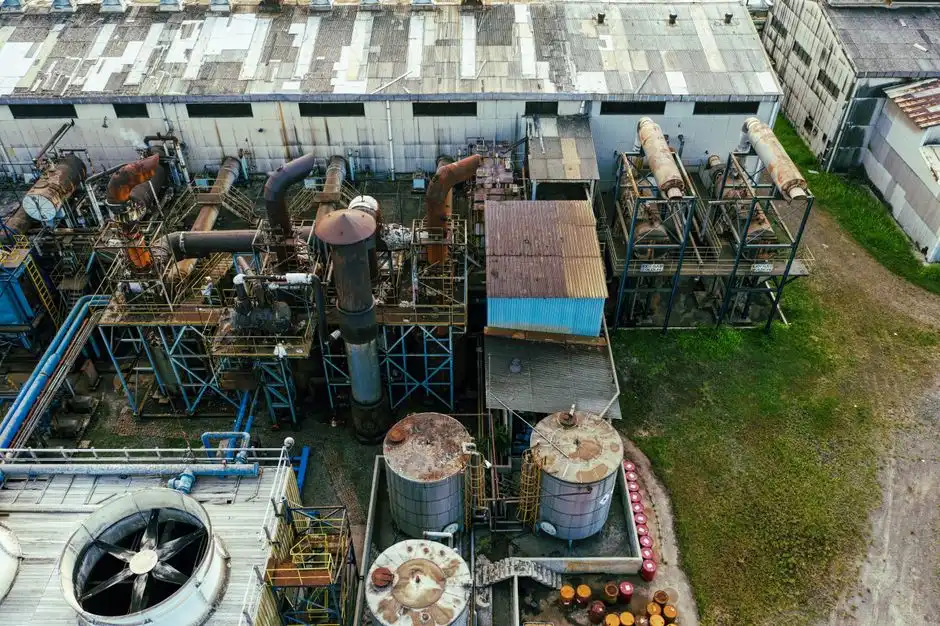
A defensible quotation must include the same wastewater duty, effluent specification, civil scope, pretreatment, sludge handling, power, cleaning and replacement assumptions. For a 1,000 m³/day example, HydropureWater’s 2026 field data and the Lamella-clarifier engineering reference place MBR capital cost at 20–40% above equivalent-flow CAS and operating cost at 15–30% higher per m³. These are screening comparisons, not Ridgeville quotations.
HydropureWater’s 2026 screening condition identifies an approximately 4–6-year payback condition when make-up water costs more than about $2/m³ or brine disposal has a real cost. It also identifies electricity below about $0.07/kWh as favorable for CAS. These figures are screening conditions from the cited source, not guaranteed outcomes; the model must use Ridgeville’s actual tariff, reuse value, operating profile and disposal cost. Use the MBR cost-per-m³ calculation guide to structure that comparison, not as a price source.
| RFQ item | Information required from every supplier | Acceptance evidence |
|---|---|---|
| Design basis | Design flow, peak flow, wastewater characterization, biological loading basis, pretreatment envelope, permit duty and reuse profile. | Signed calculations tied to Ridgeville inputs and the same duty for all bids. |
| MBR equipment | Reactor and membrane sizing, configuration, material, aeration, permeate pumping, backwashing, cleaning controls and redundancy. | Pilot flux, pressure, fouling, cleaning-recovery and upset-response data for actual wastewater. |
| CAS equipment | Reactor sizing, aeration, secondary clarification, sludge removal, recirculation, pumping, controls and equalization. | Settleability and solids-capture performance under representative metal and loading pulses. |
| Metals removal | pH adjustment, precipitation or other dedicated steps, chemical sequencing, solids removal and residual-metal testing. | Dissolved and particulate metals demonstrated across the proposed train. |
| Civil and installation | Excavation, foundations, buildings, piping, drainage, access, utilities, screening, equalization and site restoration. | Complete site plan, quantities and excluded-work schedule. |
| Sludge | Sludge production, pumping, storage, conditioning, dewatering, disposal route and replacement strategy. | Measured sludge properties and lifecycle cost using actual waste. |
| Operations | Controls, alarms, cleaning reagents, preventive maintenance, operator workload and remote monitoring. | Training plan, maintenance schedule and operating manual. |
| Commercial | Equipment, installation, commissioning, training, acceptance testing, spares, warranty, membrane-life assumptions, support and exclusions. | Lifecycle model with replacement and downtime priced separately. |
Pilot criteria should be written before award: biological loading, membrane flux, fouling rate, cleaning recovery, metals removal, sludge dewatering and operation through controlled upset conditions. For an integrated submerged-PVDF MBR system, require the supplier to reconcile the proposed configuration with site wastewater, pretreatment and reuse objectives rather than relying on catalog capacity or footprint statements.
Frequently Asked Questions
Should Ridgeville choose MBR or conventional activated sludge before obtaining quotations?
Use the permit, reuse objective and wastewater characterization to screen both options, but do not issue a final equipment award before testing and lifecycle analysis. MBR advances where reliable solids separation, constrained land or defined reuse value controls; CAS remains credible for large dilute flows with available land and serviceable assets.
How should procurement compare MBR and CAS cost without accepting a misleading low bid?
Require equal flow, effluent duty, civil scope, pretreatment, sludge handling, power, cleaning and replacement assumptions. Ask for a lifecycle model using Ridgeville’s electricity tariff, reuse value, disposal cost, operator labor and membrane assumptions. Request written identification of every exclusion.
Which supplier qualifications matter most for an MBR mining-water train?
Prioritize project-specific evidence using comparable mining wastewater, not municipal references alone. Require pilot data covering flux, transmembrane pressure, fouling, cleaning recovery and upset response, together with proposed redundancy, spare modules, operator training and support terms.
Does membrane solids retention prove that the Ridgeville discharge will meet metals limits?
No. Forty CFR Part 440 addresses arsenic, lead, zinc, copper, nickel and cadmium, but solids retention does not establish compliance. Demonstrate dissolved and particulate metals removal through the complete treatment train using actual wastewater and the permit or reuse specification.