
Characterize the wastewater before selecting a process
Pharmaceutical wastewater treatment in France should be selected from the actual wastewater profile, not from a generic process recipe. Veolia Water Technologies’ 2020 guide reports flows of 30–600 m³/d across pharmaceutical plants, COD from 400 to 62,000 mg/L and COD/BOD₅ ratios from 1 to 15. These results show why biological treatability and flow variability must be measured at the French site. Equalization, pH control, primary separation, biological treatment and MBR may form one train, while advanced oxidation or other tertiary processes remain target-dependent.
Start with separate flow and load records for each source: API synthesis, fermentation and purification, extraction, cleaning, laboratory drainage and utility blowdown. Veolia reports highly variable flows and loads across 50 pharmaceutical plants in research published in 2020. API production sites generally produced the most concentrated wastewater, but finished-product operations can still create peaks through detergents, cleaning losses and sanitary flows.
Request laboratory results tied to production campaigns rather than a single composite sample. The minimum characterization package is flow records, COD, BOD₅, pH, salinity, TSS, solvent profiles, API indicators, toxicity and the intended reuse or discharge objective. Include campaign variability, because a daily average does not define equalization or biological loading. The biopharmaceutical COD removal guide provides a useful framework for interpreting organic load and biodegradability.
| Site input | What it changes | Procurement implication |
|---|---|---|
| Source-by-source flow and batch records | Defines hydraulic variation and equalization duty | Specify average, peak and campaign conditions separately |
| COD, BOD₅ and refractory COD | Indicates organic biodegradability and the need for advanced treatment | Use measured ratios; do not infer biodegradability from COD alone |
| pH, salinity, TSS, toxicity, solvents and API indicators | Identifies inhibition, separation, dosing and trace-pollutant requirements | Define pretreatment and laboratory testing before equipment selection |
| Reuse or discharge objective | Sets the required solids separation and tertiary-treatment route | Obtain current French permit or reuse conditions before finalizing guarantees |
The supplied research contains no current French numerical discharge limits or site-specific pretreatment standards. Treat those values as regulatory verification items, not assumptions for a quotation or performance guarantee.
Match the biological route to biodegradability and inhibition risk
Veolia’s 2020 guide classifies a COD/BOD₅ ratio below 2 as easily biodegradable, 2–3 as biodegradable, and above 3 as potentially not biodegradable. The same guide reports pharmaceutical ratios from 1 to 15, so “pharmaceutical wastewater” does not support a single biological-treatment assumption. This ratio screens biodegradability, but it does not quantify refractory COD or prove that biomass can tolerate the stream.
Use the ratio to structure the first screening. A measured ratio below 2 supports investigating conventional activated sludge or another aerobic biological route. A ratio from 2–3 supports a biological route with attention to consistency and inhibition. A ratio above 3 requires deeper characterization rather than an automatic rejection of biological treatment: the concentration may include refractory compounds, but toxicity, salinity or inhibitory products may also be suppressing the BOD₅ response.
Then test compatibility with the stream. Veolia’s 2020 guide identifies high organic content, more than 30 solvents regularly used in the industry, toxic or persistent substances, high salinity, foam and inhibitory compounds as constraints on biological treatment. Chemical production streams may carry acids, bases, metals, halides, cyanides, sulfates and API traces. Fermentation and purification may introduce nutrients, surfactants and salts. Each constraint needs a defined response: controlled pH, dilution or segregation, removal before biology, an alternative biological stage or a non-biological polishing step.
Conventional activated sludge remains a candidate when the stream is biodegradable, inhibition is manageable and the required effluent quality does not demand the separation characteristics of MBR. The MBR versus activated sludge for pharmaceutical wastewater comparison provides a focused basis for that decision.
Reject any route whose success depends on treating all waste streams as identical. A segregated toxic or solvent-rich stream may need source control, equalization with dedicated holdback, or pretreatment before it enters the common biological reactor.
Decide where equalization, separation and dosing are needed
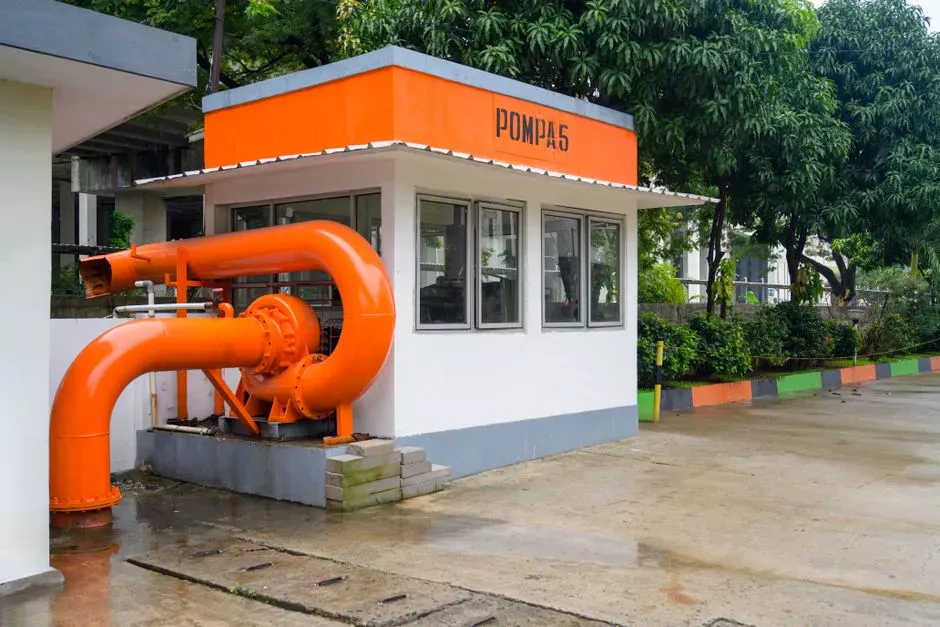
Veolia’s 2020 guide separates equalization, pretreatment, neutralization and primary separation as distinct functions upstream of biological treatment. Equalization buffers batch-driven flow and load peaks; pretreatment removes or controls substances that would impair downstream processes; neutralization establishes a suitable pH; and primary separation removes material before it reaches the biological and membrane stages.
The required sequence follows the waste profile. If the analysis shows suspended solids, free oil, fat, oil and grease, or colloidal material, primary separation may reduce solids and organic loading on the downstream reactor. Veolia identifies DAF as a process for removing suspended solids, FOG, oil and colloidal matter, but the selected duty must follow the site analysis rather than a catalogue application list.
Dosing is needed where the data show a controlled chemical duty. A PLC-controlled chemical dosing system can support pH adjustment or coagulant addition, but chemical selection, storage, containment and control logic must follow the actual stream and site requirements. Do not prescribe dosing merely because the plant handles APIs; identify the reaction required and its operating basis.
| Observed condition | Conditional pretreatment decision | Downstream effect |
|---|---|---|
| Variable flow and load | Provide equalization sized from recorded peaks and campaign sequences | Reduces hydraulic and organic shock loading |
| Out-of-range pH or corrosive discharges | Provide neutralization with controlled chemical dosing | Protects biological and membrane processes |
| Suspended solids, oil, FOG or colloidal matter | Evaluate primary separation, including DAF where the analysis supports it | Reduces solids, foam and separator loading |
| Toxic, persistent or inhibitory compounds | Investigate segregation, source treatment or a dedicated pretreatment stage | Limits biological inhibition and protects downstream guarantees |
| Batch discharges with incompatible compositions | Define segregated collection and controlled return or holdback | Prevents one batch from determining plant performance |
Do not use equalization to mask a persistent contaminant that biology cannot treat. It can moderate a peak, but it cannot remove toxicity, refractory COD or an API that requires a dedicated removal route.
Choose MBR when high-quality separation and reuse justify it
The MBR decision should follow from the required solids separation and reuse quality, not from the assumption that every pharmaceutical effluent requires an MBR. An MBR combines biological treatment with membrane solids separation. That integration can suit sites requiring a compact, high-quality biological stage and reliable solids removal, provided the influent is compatible and the operating burden is accepted.
The integrated MBR membrane bioreactor uses submerged PVDF membranes and is specified for filtration below 1 μm. The product catalogue states a footprint 60% smaller than conventional systems and a capacity range of 10–2,000 m³/day. These figures are catalogue screening references, not site sizing values. Final selection requires measured flow, load, membrane flux, downtime philosophy, sludge handling and utility requirements.
MBR is stronger than conventional activated sludge when reliable solids separation is central to the reuse or discharge objective, or when the footprint constraint supports combining biological and separation stages. It is not automatically stronger where the effluent has refractory COD, inhibitory APIs or a demand that cannot be met by the membrane alone. MBR separates solids; it does not remove every dissolved pollutant.
Veolia’s 2020 examples include equalization followed by MBR, and equalization followed by an anaerobic reactor and MBR. These show MBR functioning inside broader trains rather than as a universal solution. The pharmaceutical MBR system engineering guide develops the equipment-selection detail.
- Confirm that biology is technically plausible from biodegradability and inhibition testing.
- Define the solids-removal and reuse requirement that justifies the membrane stage.
- Select pretreatment for the measured contaminants and membrane-fouling risks.
- Verify the French discharge or reuse route, local pretreatment or authorization conditions and site flow before fixing guarantees.
The supplied research does not provide current French regulatory thresholds. A permit reviewer must confirm the applicable requirements; an equipment supplier should not infer them from generic pharmaceutical benchmarks.
Build a procurement-ready selection record
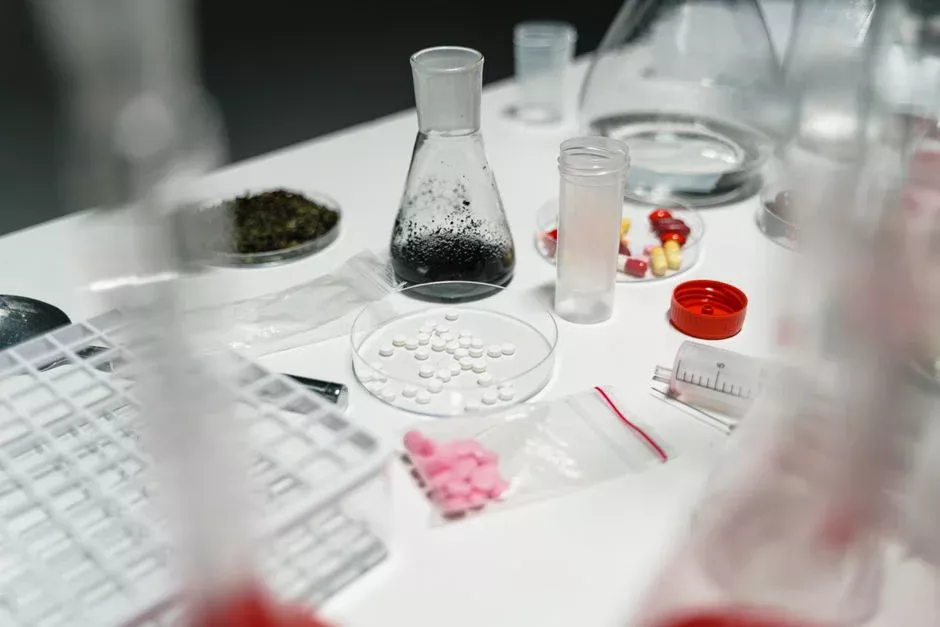
A quotation becomes comparable only when suppliers receive the same site data, objectives and exclusions. Create a source-by-source record covering flow and load, batch and campaign variability, COD/BOD₅, refractory COD, pH, salinity, TSS, toxicity, solvent and API indicators, reuse targets and current French permit conditions. Label each figure by source, sampling point, date and production campaign. This prevents averages and exceptional batches from being combined into an artificial design load.
For an MBR proposal, require the supplier to state the design flow range, daily and peak load, membrane flux basis, downtime philosophy, sludge-handling route, footprint, utilities, controls and membrane-cleaning provisions. Use the catalogue range of 10–2,000 m³/day only to screen whether the supplier has equipment within the project scale. Do not use it as the plant size.
Ask each bidder to identify treatment guarantees, pilot-test needs, chemical and energy consumption, membrane replacement assumptions, commissioning acceptance tests and site-specific compliance limitations. Where inhibition or refractory COD is material, a wastewater-specific pilot may be necessary. A generic performance guarantee is not evidence that the proposed biology will handle the actual stream.
| Procurement package | Required entry | Bidder response required |
|---|---|---|
| Wastewater characterization | Source, campaign, flow, COD/BOD₅, refractory COD, pH, salinity, TSS, toxicity, solvents and API indicators | Design basis, exclusions and unresolved analytical risks |
| Objectives and compliance | Reuse or discharge route, current French permit conditions, applicable pretreatment requirements | Permit-dependent design items and compliance limitations |
| MBR sizing basis | Average and peak flow, daily and peak load, flux, downtime and sludge route | Equipment dimensions, utilities, controls and membrane assumptions |
| Commercial and technical close-out | Treatment guarantees, pilot needs, consumption, replacement assumptions and acceptance tests | Measurable acceptance criteria and a complete responsibility matrix |
Keep unresolved regulatory items visible in the offer. Price comparison is meaningful only when the same flow basis, analytical dataset, treatment objective, guarantee envelope and French compliance assumptions apply to every bidder.
Frequently Asked Questions
Should pharmaceutical wastewater treatment in France be sized from the daily average?
No. Size equalization, biological loading and membrane capacity from measured average, peak and campaign conditions. Veolia’s 2020 guide reports batch-driven variation and pharmaceutical flows of 30–600 m³/d, so a site average alone will not define the duty. The industrial effluent treatment buyer’s decision guide provides a broader format for comparing design inputs.
How much will an MBR treatment system cost for a French pharmaceutical site?
The supplied research contains no site-specific quotation. Request a quotation using measured flow and load ranges, pretreatment scope, reuse or discharge targets, MBR sizing basis, utilities, controls, sludge handling, guarantees and current French permit conditions. Compare bids on the same scope, and require exclusions and assumptions to be priced separately.
Which supplier qualifications should be checked before selecting an MBR?
Require wastewater-specific evidence, a defined design basis, pilot-test recommendations where inhibition or refractory COD is material, and measurable commissioning acceptance tests. Also request membrane flux assumptions, chemical and energy consumption, replacement assumptions, controls, utilities and a clear responsibility matrix. A catalogue capacity range is only a screening reference, not proof of suitability.
When are advanced oxidation or disinfection required?
Specify them against the intended reuse or discharge route, identified trace pollutants and current French permit conditions. MBR provides solids separation but does not establish compliance with every dissolved-pollutant requirement. If disinfection is relevant, evaluate the chlorine dioxide generator for the confirmed application, but first obtain the target water-quality requirement, compound information, dose-response basis and regulatory basis.