Confirm the ceramic wastewater sludge is suitable for dewatering
A belt filter press can be considered for ceramic tile wastewater sludge only after representative solids have been treated and conditioned enough to form a dewaterable floc. Ceramic-industry research confirms that alum or ferric chloride coagulation affects COD removal and sludge dewatering, while capillary suction time is used to evaluate dewatering tendency. The key procurement decision is therefore not simply press type, but whether site-tested sludge properties, conditioning requirements and continuous operating demand support a belt press. Obtain representative feed and sludge data before selecting or sizing equipment.
Ceramic-industry research treats sludge dewatering as an outcome of the treatment process rather than a fixed property of the belt press. The study examined chemical coagulation for ceramic industry wastewater using alum and ferric chloride and included the capillary suction time of the resulting sludge as a dewatering parameter. It reported statistical model coefficients of determination of R² = 96.26% for alum and R² = 89.15% for ferric chloride for COD removal (Sakarya University Journal of Science, “Ceramic Industry Wastewater Treatment By Chemical Coagulation Process”).
Those coagulation results are treatment-process evidence, not a guarantee of press performance. COD removal and filterability are related but separate requirements. A supplier should receive sludge after the proposed treatment route, with its chemical dose, pH, mixing conditions and resulting dewatering characteristics documented.
Request representative wastewater and sludge samples across normal production cycles. Include weaker production periods, cleaning operations, upset conditions and changes in ceramic body preparation or glaze chemistry where these affect the waste stream. The belt filter press suitability guide provides an approach for resolving an industrial sludge route before equipment selection.
| Screening item | Plant input or test required | Procurement implication | Owner |
|---|---|---|---|
| Wastewater and sludge representativeness | Composite and event samples across normal production cycles | No equipment selection from one laboratory jar or grab sample | Plant laboratory |
| Coagulation and conditioning route | Coagulant type, dose, pH, mixing conditions and floc observations | Confirm whether the proposed route forms a workable floc | Treatment-system supplier or plant process engineer |
| Dewatering tendency | Capillary suction time on conditioned sludge | Use as a comparative test input, not as a universal belt-press performance guarantee | Plant laboratory or qualified trial provider |
| Chemical dosing | Polymer and coagulant requirements, storage and metering arrangement | Confirm integration with an automatic coagulant and flocculant dosing system | Process engineer and chemical supplier |
| Dewaterability gate | Stable floc retained through the intended treatment and conditioning route | If the floc breaks or does not form, resolve pretreatment before comparing presses | Process engineer |
Build the site data set before selecting a belt press
A defensible belt-press selection starts with a complete site data set, not a catalog capacity. The inquiry package should identify the wastewater source, treatment route, sludge production, conditioning assumptions, operating schedule and downstream cake requirement.
Collect average and peak wastewater flow, suspended solids, sludge production rate, pH, temperature, oil and grease, grit or abrasive solids, and the required operating schedule. State the measurement basis, sampling period and variability. Peak flow and production spikes determine both hydraulic demand and whether the proposed configuration can maintain the required duty without relying on an unverified storage or equalisation assumption.
Request sludge results after the proposed treatment and conditioning route. The results should include capillary suction time and results from any trial dewatering work. If testing has not been performed, mark the value as missing and identify the laboratory, trial provider or responsible project party rather than entering an assumed figure.
Define the required cake condition and disposal route using the plant’s actual receiving standard. Whether cake must meet a moisture limit, remain within a permitted classification, or be accepted by a specific collector changes the process test protocol and acceptance criteria. Do not derive a guaranteed moisture result from general sludge-dewatering literature.
The following matrix can be sent directly to suppliers as the minimum application package. The belt filter press selection checklist provides additional questions for completing the procurement record.
| Required input | Value or range requested | Unit or basis | Responsible party |
|---|---|---|---|
| Average and peak wastewater flow | State averaging period and peak basis | Plant engineer | |
| Suspended solids | State sampling point and frequency | Plant laboratory | |
| Sludge production rate | State wet or dry basis and operating condition | Treatment-system supplier | |
| pH and temperature | State normal range and excursion condition | Plant laboratory | |
| Oil and grease | State analytical method | Plant laboratory | |
| Grit or abrasive solids | Describe source, particle characteristics and removal step | Process engineer | |
| Conditioned-sludge capillary suction time | State test method and sludge condition | Laboratory or trial provider | |
| Polymer and coagulant assumptions | Include dose basis and mixing method | Chemical supplier or plant process engineer | |
| Required operating schedule | State hours per day, days per week and production relationship | Plant operations | |
| Disposal route and receiving requirement | Attach the actual written requirement | Plant manager or disposal contractor |
Assign responsibility for every blank field. The plant laboratory should own measured wastewater and sludge data; the treatment-system supplier should own the conditioned-sludge route; the civil contractor should own utilities and installation interfaces; and the belt-press vendor should own equipment sizing, consumption assumptions and supporting performance evidence. Ownership prevents a quotation from becoming the only source for plant data.
Match continuous-duty requirements to the press configuration
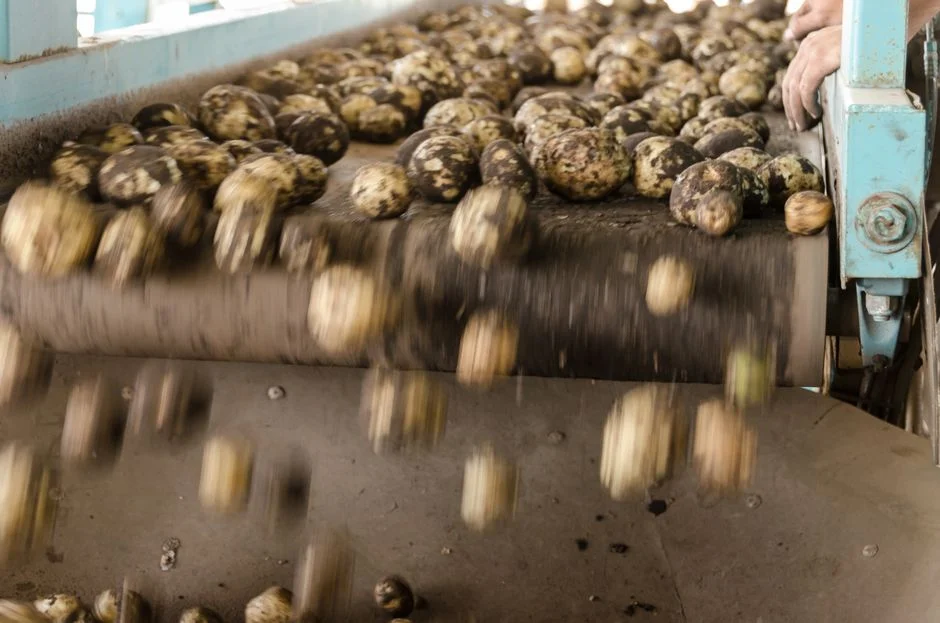
A belt filter press is appropriate for a ceramic tile wastewater application only when continuous sludge filtration fits the plant’s production and treatment schedule. Commercial evidence from Basair states that its belt filter press can operate continuously with a high degree of automation (Basair, “Belt Filter Press for Sludge Dewatering”).
Ask each supplier to state the proposed belt width, belt length, drive arrangement, wash-water system, polymer feed integration, controls and duty-cycle assumptions. These are configuration inputs, not optional sales details. They allow the buyer to check whether the proposed machine reflects the site’s sludge rate, conditioned-feed characteristics, operating hours and downstream handling arrangement.
Envirodyne describes its heavy-duty belt press components as suited to continuous 24-hour-per-day, 7-day-per-week service (Envirodyne Systems, “Belt Filter Presses”). Use that statement as a qualification question; ask each supplier to demonstrate equivalent suitability for the actual duty, including expected availability and the effect of cleaning, polymer changes and unplanned sludge variation.
Include operator access, maintenance access, belt and polymer consumption, available floor area and utilities in the configuration comparison. Confirm access for belt replacement, spray-water maintenance, drive inspection and cake collection. Review the filter press process flow diagram with the proposed supplier to verify where conditioning, feed, washing, solids discharge and utilities connect.
Use a clear decision rule: if the plant needs uninterrupted treatment during extended production periods and can provide the required conditioning, wash water, utilities and maintenance access, continuous belt filtration deserves further evaluation. If the operating pattern is intermittent, labor-intensive or incompatible with continuous cake handling, retain batch or semi-continuous options in the comparison.
Compare a belt filter press with a plate and frame press
Continuous belt filtration and batch or semi-continuous plate-and-frame dewatering should be compared using the same sludge, conditioning assumptions and acceptance tests. Continuous operation and filtration area are useful configuration attributes, but neither establishes suitability without representative sludge evidence.
HydropureWater plate and frame filter presses are offered with filtration areas from 1 m² to 500 m² and manual, hydraulic or fully automatic PLC-controlled operation. These options are a plate and frame sludge dewatering alternative to evaluate against a belt press, not evidence of a guaranteed outcome for ceramic tile sludge.
Request the same performance package from every supplier: test protocol, feed sludge properties, conditioned and unconditioned results, cake yield, cake moisture, runtime and wash-down requirements. If the feed properties differ between offers, the results are not directly comparable. Require each supplier to identify the chemical dosing, conditioning and operating assumptions behind the proposed capacity.
| Procurement criterion | Belt filter press | Plate and frame press |
|---|---|---|
| Operating mode | Continuous sludge filtration | Manual, hydraulic or fully automatic PLC-controlled operation |
| Available configuration evidence | Supplier-specific belt width, length, drive, controls, wash system and polymer integration | Offered filtration areas from 1 m² to 500 m² |
| Representative feed testing | Same conditioned ceramic sludge used for the test | Same conditioned ceramic sludge used for the test |
| Performance evidence | Cake yield, cake moisture, runtime, wash-down and operating interventions | Cake yield, cake moisture, runtime, wash-down and operating interventions |
| Operating inputs | Polymer, wash water, utilities, operator access and belt maintenance | Polymer, wash water, utilities, operator access, plate handling and wash-down |
| Schedule fit | Strongest case where continuous sludge filtration matches production | Evaluate for intermittent, batch or semi-continuous operation |
| Deciding variables | Tested sludge, available labor and utilities, footprint and downstream cake handling | Tested sludge, available labor and utilities, footprint and downstream cake handling |
Do not select on filtration area or continuous operation alone. The deciding variables are the tested sludge, available labor and utilities, plant footprint and downstream cake handling. Use the 2026 filter press process flow diagram to confirm the proposed route, then require both suppliers to document any operating assumption that affects that route.
Set acceptance criteria and supplier proof before purchase

Convert the selection into measurable acceptance criteria tied to agreed feed properties. Require every supplier to state the sludge and conditioning assumptions behind each proposed capacity, belt size and performance value. An unconditional moisture or throughput claim does not answer how the machine will perform on ceramic tile wastewater sludge.
Ask for a representative-sample trial or pilot where the sludge is variable, abrasive or difficult to condition. The trial should use the proposed treatment and dosing route. Record feed characteristics, chemical dosage, test duration, cake yield, cake moisture, wash-water consumption, polymer consumption, runtime and operator interventions.
Define in advance how operating hours, availability, wash-water use, polymer demand, cake discharge and operator interventions will be measured. Leave unresolved performance figures as conditional guarantees tied to agreed feed properties rather than presenting them as universal results.
Before issuing the purchase order, confirm that the acceptance protocol identifies the sample source, conditioning method, test duration, measurements, treatment of abnormal periods and remedy for failed results. This creates a common basis for comparing a belt filter press with the plate-and-frame route.
Frequently Asked Questions
How much does a belt filter press cost for ceramic tile wastewater?
No supported price for a belt filter press applied to ceramic tile wastewater is available in the supplied research. Request a quotation that states the proposed width, length, drive, controls, wash-water system, polymer integration, installation scope, commissioning, spare parts, utilities and any site-specific performance conditions. Do not compare quotations until the suppliers are sizing against the same feed and sludge data.
Which sludge properties should I send to a belt press supplier for sizing?
Send representative wastewater and conditioned-sludge data covering average and peak flow, suspended solids, sludge production rate, pH, temperature, oil and grease, grit or abrasive solids, capillary suction time, chemical dose and operating schedule. Also include the required cake condition and disposal route. Mark unavailable values explicitly and identify who will provide them.