
Map the wastewater before choosing treatment
The decision for EV and automotive wastewater in Blanchester begins with separating streams and defining the required outcome. Screen membrane bioreactor (MBR), conventional activated sludge (CAS), and hybrid routes against measured flow, loads, fouling risk, land availability, and reuse needs. Use the worksheet below to record known data, flag missing information, and obtain an engineer-reviewed design basis before selecting equipment. Catalog specifications are screening inputs only; they are not site-specific performance guarantees.
Sample wash water, component washing, process rinses, paint operations, comfort-testing flows, and sanitary flows separately where possible. Each stream carries a different combination of oils, detergents, solids, residual cleaning chemicals, and biological toxicity. Combining them before characterization can conceal the source of a membrane-fouling or biological-inhibition problem. HydropureWater’s EV and automotive wastewater comparison, published in 2026, recommends separate sampling where practicable and records of total and hourly flow, BOD, TSS, oil and grease, pH, detergents, and cleaning chemicals.
Complete one row per segregated stream. Mark measured values separately from assumptions, and identify the sample period and production condition represented by each result.
| Characterization field | Wash water | Component wash | Process rinses | Paint operations | Sanitary |
|---|---|---|---|---|---|
| Total and hourly flow | Enter measurement and period | Enter measurement and period | Enter measurement and period | Enter measurement and period | Enter measurement and period |
| BOD or COD load | Enter result and units | Enter result and units | Enter result and units | Enter result and units | Enter result and units |
| TSS | Enter result and units | Enter result and units | Enter result and units | Enter result and units | Enter result and units |
| Oil and grease | Enter result and units | Enter result and units | Enter result and units | Enter result and units | Enter result and units |
| pH | Enter result | Enter result | Enter result | Enter result | Enter result |
| Detergents and cleaning chemicals | Identify compounds | Identify compounds | Identify compounds | Identify compounds | Identify compounds |
| Reuse or discharge outcome | State end use or route | State end use or route | State end use or route | State end use or route | State end use or route |
Define whether the treated water will be discharged, reused in an industrial process, or support a future reuse decision. That requirement determines whether solids separation, filtration, nutrient removal, and membrane capacity are necessary. If preliminary solids exclusion is required, assess a rotary mechanical bar screen for preliminary solids removal, but select its duty from the measured stream profile rather than a generic inlet specification.
Test MBR suitability against fouling and inhibition risks
MBR replaces settling-based separation with a physical membrane barrier, making membrane fouling the principal operating concern. A 2019 plant-wide modelling comparison in Water Research reports that fouling reduces permeate flow or raises transmembrane pressure, while chemical cleaning, physical cleaning, and aeration increase energy demand and operating costs compared with CAS.
This reality makes a simple equipment-price comparison inadequate. A membrane bid should include the complete maintenance program: cleaning chemistry and frequency, aeration for scouring, membrane replacement provisions, recovery testing, and the operating response to production changes. The 2019 modelling study also identifies higher energy consumption for MBR as a trade-off for compact treatment and high effluent quality.
Before approving an MBR, resolve three questions:
- Is free oil likely to reach the membrane? Use oil-and-garbage observations, oil-and-grease results, and the locations of collection points to determine whether equalization and upstream oil removal are required.
- Can detergents or cleaning chemicals inhibit the biological population? Record identified compounds, concentrations, dosing practices, and discharge timing rather than describing the stream only as “wash water.”
- Can the stream load or chemistry be buffered before the membrane stage? Variable flow, slug loads, and incompatible cleaning events need a defined response.
Assign an action to each risk: accept, equalize, screen, remove oil, chemically control, provide upstream biological treatment, or defer selection pending testing. Where the response involves bulk contaminant removal, evaluate a DAF machine as a pretreatment option. Its suitability still depends on the measured oil, solids, flow, and chemical properties.
Do not use a catalog filtration value as proof that the wastewater is fit for MBR service. Environmental and biological tests must establish whether membrane flow, cleaning frequency, and biological activity can be sustained under actual production conditions.
Compare MBR, activated sludge, and the hybrid option
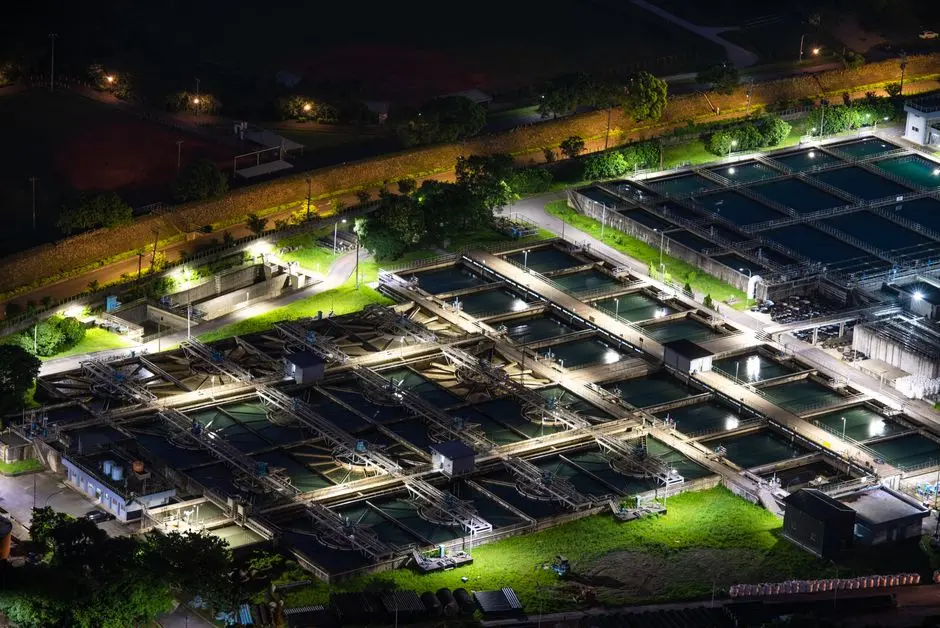
MBR is the preliminary choice when compact equipment, high effluent quality, and consistently separated solids are the controlling requirements. The 2019 Water Research comparison attributes those benefits to physical solid-liquid separation and smaller solid-liquid units. CAS remains defensible when flow and loading are predictable, land is available, operators have relevant experience, and simpler infrastructure outweighs footprint or reuse-oriented solids separation.
A hybrid system can provide a biological buffer before the membrane stage. HydropureWater’s 2026 EV and automotive wastewater comparison describes conventional activated sludge upstream of an MBR as a way to stabilize COD and remove bulk contaminants before water reaches the membrane stage. This makes the hybrid credible where automotive wastewater varies substantially, provided the upstream stage is designed and operated as an intentional biological buffer.
| Screening criterion | MBR | Conventional activated sludge | Hybrid |
|---|---|---|---|
| Flow and loading | Favorable when characterized loads and membrane fouling risk are controlled | Favorable when flow and loading are predictable | Favorable where a biological stage can buffer variable loads |
| Land constraint | Preferred for compact treatment, subject to complete site layout | Requires more area for aeration and a secondary clarifier | Uses more space than an MBR-only route |
| Solids separation | Consistently separated solids by physical membrane barrier | Relies on settling in a secondary clarifier | Clarifier solids separation followed by membrane separation |
| Fouling exposure | Requires control of oil, solids, chemicals, and loading | Less directly dependent on membrane foulants | Upstream treatment may reduce membrane burden |
| Operating implications | Adds membrane cleaning, aeration, inspection, and replacement planning | Adds sludge production, settling, and secondary-clarifier operation | Combines biological and membrane-system maintenance |
| Industrial reuse relevance | Strong preliminary fit when high-quality separation is required | Feasible only if the required effluent is demonstrated | Useful when upstream treatment stabilizes the membrane feed |
| Site constraints | Must include equalization, pretreatment, access, and controls | Must include aeration, clarifiers, sludge handling, and civil works | Must include both process trains and intermediate-transfer provisions |
Use the table as a pass/fail screen, not a product award. Record “pass,” “fail,” or “unverified” against each criterion and attach the supporting flow, load, footprint, reuse, or maintenance information.
HydropureWater’s verified 2026 product catalog lists DF flat-sheet modules with 0.1 μm membranes, configurations from 80–225 m², and production from 32–135 m³/day. These are available catalog configurations, not a Blanchester sizing recommendation. For an equipment concept, review the DF flat-sheet MBR modules against the characterized duty, and review the integrated MBR treatment system only as a supplier-defined configuration to be checked against site requirements.
Apply land, reuse, and compliance constraints
The land comparison must include every permanent and temporary installation requirement, not just the treatment vessel. HydropureWater’s verified product catalog states that its integrated MBR occupies 60% less footprint than conventional systems. The 2026 EV and automotive wastewater comparison qualifies this claim: equalization, pretreatment, maintenance access, and site geometry must be included before the footprint advantage is treated as achievable.
For reuse, define the receiving process and its water-quality requirements. The 2019 Water Research comparison identifies high effluent quality and compact solid-liquid separation as MBR benefits, while the 2026 HydropureWater comparison associates MBR effluent with potential industrial reuse. Neither statement establishes that a particular Blanchester stream will meet a reuse specification. That requires measured effluent performance at the required duty and a site-specific acceptance test.
Compliance must be checked at the receiving authority and reuse endpoint. HydropureWater’s 2026 article reproduces Missouri DNR guidance stating that conventional secondary treatment can meet advanced ammonia limits, while equipment, basin configuration, and design conditions determine performance. It also describes a Missouri DNR construction-permit condition requiring at least two MBR trains for a wastewater treatment plant at 100,000 gpd or more, with daily average flow treatable while one cassette is out of service. Verify whether comparable requirements apply to the Blanchester facility.
The MBR cost per m³ guide can support bid review, but it cannot provide a site-specific price or permit requirement without measured flow, loads, treatment objectives, site constraints, and the applicable discharge route.
Issue a preliminary selection with named information gaps
Record one outcome—MBR, conventional activated sludge, or hybrid—with the measured inputs supporting it and an explicit confidence status. “Hybrid” is not a compromise selection; identify the upstream biological stage, the membrane feed condition it must create, and the treatment train that provides it.
Assign each unresolved item to an owner:
- Plant engineer: measured hydraulics, treatment objectives, site geometry, utility availability, and process-basis requirements.
- Environmental lead: discharge route, receiving authority, reuse criteria, and applicable local limits.
- Laboratory: representative characterization, including the parameters and operating conditions not yet verified.
- Operations team: staffing, maintenance capability, control-system expectations, and production-interface responsibilities.
Before accepting a quotation, require the supplier to state the process basis, guaranteed duty, pretreatment scope, complete footprint, membrane replacement strategy, control philosophy, and site-specific acceptance criteria. A catalog module size, filtration claim, or footprint comparison is not a performance guarantee for the characterized Blanchester wastewater.
Frequently Asked Questions
What does an MBR cost compared with conventional activated sludge for EV wastewater?
Do not compare equipment prices alone. Request a site-specific total-cost comparison covering installed equipment, pretreatment, civil work, membrane maintenance, energy, sludge handling, operator labor, and replacement reserves. The 2019 Water Research modelling comparison reports that MBR fouling controls increase energy demand and operating costs compared with CAS. Since the research supplies no Blanchester quotation, require each bidder to state pricing assumptions, exclusions, energy basis, membrane-maintenance scope, and replacement reserves before comparing bids.
How should equipment be sized for automotive wash water in Blanchester?
Size from measured total and hourly flow, pollutant loads, and the required effluent or reuse quality—not from a catalog production rate. The 2026 HydropureWater EV and automotive wastewater comparison lists hourly flow, BOD, TSS, oil and grease, pH, detergents, and cleaning chemicals as required characterization inputs. Have the designer size equalization, biological volume, membrane area, pretreatment, redundancy, and solids handling against that design basis.
What should a buyer request when selecting an MBR supplier?
Request a written process basis, duty curve, performance guarantees, fouling-control strategy, cleaning and maintenance scope, reference experience, and site-specific acceptance criteria. Also require the supplier to identify any exclusions, assumptions, and performance limits. This check exposes whether the proposed equipment has been matched to the characterized wastewater or merely selected from a published module range.
What compliance risk remains after choosing a treatment route?
Identify the receiving authority, discharge route, applicable local limits, and reuse requirements before treating a catalog specification as permit evidence. HydropureWater’s 2026 comparison cites Missouri DNR requirements, including an MBR redundancy condition for facilities at 100,000 gpd or more, but that does not establish an Ohio requirement. Obtain confirmation of the applicable Blanchester criteria and incorporate them into the equipment guarantee and acceptance test.