What Can Be Confirmed About the GM Hungary Project
A defensible DAF capacity for General Motors's new assembly plant in Hungary cannot be confirmed from the supplied public evidence. The research does not establish a confirmed commissioning date, plant location, wastewater flow, permit limits, or process configuration. DAF capacity must be calculated from verified peak and average flows, batch-discharge conditions, stream compositions, emulsified-oil behavior, discharge routes, and equalization requirements. The practical first step is to obtain site wastewater data and the current permit or utility consent, then use those inputs to define the DAF design envelope and supplier guarantee.
The supplied GM Hungary wastewater compliance framework identifies an unresolved distinction between a new installation, a change of legal operator, and an operating handover. Each case has different legal-trigger and baseline-confirmation steps, so procurement should not begin from a presumed project status.
GM's Water Security 2021 CDP disclosure defines the corporate reporting boundary as entities or groups over which operational control is exercised. The first diligence question is not the nominal production rate, but who controls the plant and who can direct wastewater treatment, discharge decisions, and environmental reporting. A share-purchase agreement alone does not establish the permitting route.
Until the plant identity, operator, location, process configuration, and discharge route are verified, neither production-rate assumptions nor GM's corporate water-reuse practice can be converted into a DAF sizing input. The DAF engineering specifications and selection guide supports equipment selection only after the site design envelope has been established.
Establish the Legal and Discharge Basis
The supplied Hungarian framework requires authority notification and an integrated environmental permit application within 90 days of legal transfer for an acquisition or operator change, with the authority's substantive decision due within 180 days after a complete application (HydropureWater, Wastewater Requirements When GM Acquires a Hungary Plant, 2026). These are regulatory milestones, not equipment-delivery dates.
A plant discharging more than 10 m³/day of industrial wastewater to a municipal sewer requires separate consent from the local water utility. The municipal-sewer values stated in that source are COD ≤1,000 mg/L, TSS ≤50 mg/L, and oil and grease ≤20 mg/L. These are source information only and must not replace the current permit, sewer ordinance, or utility consent (HydropureWater, 2026).
Direct surface-water discharge designs must follow the confirmed permit, relevant BAT conclusions, and receiving-water requirements. The governing design condition is the most stringent applicable requirement among those instruments and any municipal utility rules.
| Decision item | Evidence required | Design consequence | Acceptance test |
|---|---|---|---|
| Legal operator and project trigger | Transfer or handover documents; operational-control assessment | Select the correct permitting workstream | Legal owner and responsible operator formally confirmed |
| Municipal-sewer discharge | Current integrated permit, water-utilization-right documents, utility consent, sewer ordinance | Set preliminary COD, TSS, oil-and-grease, and hydraulic objectives | Accepted discharge route and limits documented in the design basis |
| Direct surface-water discharge | Confirmed permit, BAT conclusions, receiving-water assessment | Establish site-specific treatment and monitoring requirements | Every numerical target traceable to an approved instrument |
| Change of legal operator | Authority notification and permit application | Separate permitting schedule from fabrication and construction | Application and regulatory decision connected to the procurement schedule |
Before freezing the treatment concept, obtain the current environmental permit, water-utilization-right documents, municipal discharge consent, monitoring and accident records, sludge records, sewer-ordinance information, and receiving body status. The GM Hungary wastewater compliance framework should be used as a diligence framework, not as a project fact sheet.
Build the DAF Design Basis by Waste Stream
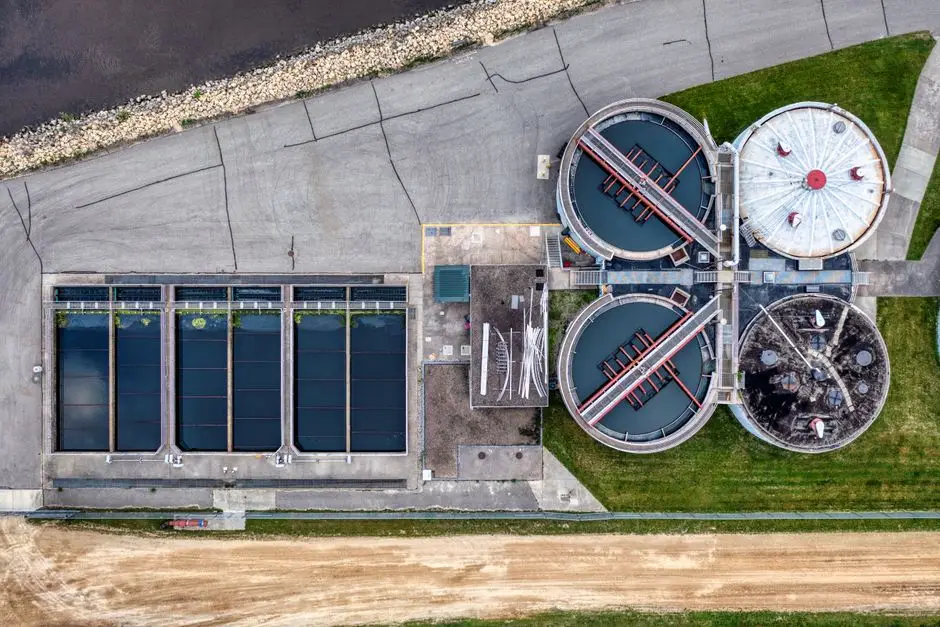
Automotive wastewater streams must be segregated before equipment calculations because their chemistry and discharge behavior differ. Combining them can make DAF performance less predictable, interfere with biological treatment, or contaminate a reuse loop (HydropureWater, 2026).
| Waste stream | Contaminant risks to verify | Required data | DAF role and acceptance criterion |
|---|---|---|---|
| Paint-shop pretreatment | Organics, suspended solids, oils, phosphate | Flow profile; pH, COD, TSS, oil and grease, phosphate; batch and cleaning samples | Assess physical separation and emulsified-oil behavior; demonstrate applicable effluent targets |
| Cathodic electrodeposition or electrophoretic rinse | Zinc, nickel, suspended solids and other permit-relevant constituents | Metals analysis, flow, COD, TSS, pH and production-condition coverage | Determine whether DAF removes the relevant floatable or solids fraction without masking residual metals |
| Machining and parts washing | Oil, high COD, surfactants and emulsified contaminants | Flow and batch records; COD, TSS, oil and grease, pH and emulsion characterization | Guarantee performance over the specified influent envelope, including concentrated discharges |
| Compressor or cooling-tower blowdown | Elevated temperature, conductivity and dissolved solids | Temperature, conductivity, dissolved-solids and flow data | Decide by mass balance whether heat recovery, segregation, or separate treatment is more appropriate |
| Sanitary wastewater | Domestic wastewater characteristics | Local utility connection requirements | Exclude from industrial DAF sizing unless the receiving authority confirms otherwise |
Representative results are required for flow, pH, COD, TSS, oil and grease, zinc, nickel, phosphate, temperature, conductivity, and toxicity. Sampling must cover normal operation, concentrated batches, cleaning operations, and maximum discharge events. Every result should be identified as a grab, time-composite, or flow-proportional composite sample (HydropureWater, 2026).
DAF systems target oils, emulsions, suspended solids, and colloidal matter, so feed characteristics and emulsified-oil behavior matter more than nominal tank size. The automotive paint-shop wastewater treatment strategy provides useful stream-separation context, but source-level contaminant concerns cannot be converted into site influent design values. The supplied DAF article supports the same selection principle: assess the feed and physical treatment objective before equipment commitment.
Calculate and Select the DAF System
The DAF design envelope follows from verified average and peak flows, concentrated batch volumes and durations, stream composition, equalization behavior, and the confirmed sewer or receiving-water limits. Equalization tank sizing must be based on those measured discharge patterns; a nominal production rate does not establish either hydraulic capacity or pollutant loading.
The supplied DAF range is 4–300 m³/h across 13 standard models (HydropureWater, DAF System Engineering Specifications: 2026 Guide). This identifies candidate equipment, not a project selection. The engineering article specifies saturation at 3–6 bar, bubbles of 20–100 μm, and treatment time of 20–60 minutes. Final selection must remain tied to verified feed conditions and guaranteed effluent targets.
| Calculation or decision | Required verified input | Output | Supplier or acceptance evidence |
|---|---|---|---|
| Hydraulic selection | Average flow, peak flow, batch volume and duration, equalization operating level | DAF design flow and number of operating units | Guaranteed flow demonstrated during the performance test |
| Equalization tank sizing | Measured discharge sequence, production and cleaning schedule, offline and upset conditions | Working volume and control strategy | Batch-discharge simulation confirms no uncontrolled discharge or overload |
| DAF process selection | COD, TSS, oil and grease, emulsion behavior, pH, temperature, conductivity | Loading basis, chemical demand and flotation objective | Representative influent and effluent datasets satisfy stated targets |
| Downstream treatment | Metal analysis, permitted COD, reuse targets, mass balance | Precipitation, lamella clarifier for metal-precipitation solids, biological treatment, and polishing scope where justified | Each stage has a defined inlet envelope and outlet criterion |
Where metals require removal, the supplied framework places chemical precipitation and lamella clarification around the pretreatment train. Biological treatment may follow using MBBR or MBR according to permitted COD and reuse objectives. For reuse, evaluate filtration and optional reverse osmosis against a site mass balance, water-quality assessment, and process compatibility; GM's corporate use of recycled water does not establish a Hungarian zero-liquid-discharge requirement (HydropureWater, 2026).
Before award, ask each bidder to apply its industrial DAF system to the verified design envelope rather than a generic removal claim. Pilot or acceptance testing may then validate the selected assumptions.
Convert the Design Basis into a Supplier Guarantee
A bid becomes comparable only when every bidder guarantees the same verified design envelope and measurable outcomes. The supplied framework requires each bidder to state guaranteed flow, influent envelope, effluent targets, hydraulic loading, chemical consumption, footprint, utility demand, and test protocols for every proposed unit (HydropureWater, 2026).
| Procurement field | Owner | Evidence source | Design consequence | Acceptance criterion |
|---|---|---|---|---|
| Peak and average flows; batch records | Plant engineering and production | Calibrated flow meters and operating logs | Sets DAF flow and equalization basis | Agreed test flow and batch profile are achieved |
| Stream analyses and emulsion characterization | Environmental manager and laboratory | Representative normal, batch, cleaning and maximum-discharge samples | Defines contaminant and operating envelope | Bidder guarantee explicitly covers the submitted envelope |
| Permit and utility consent | Environmental manager and legal operator | Current instruments and receiving-body confirmation | Sets legally required treatment targets | Every guarantee traces to an approved requirement |
| Utilities and sludge route | Facilities and procurement | Utility capacities, sludge records and disposal contracts | Determines pumps, aeration, chemicals and handling scope | Demand and generated sludge remain within stated guarantees |
| Commissioning protocol | Supplier, contractor and plant team | Approved test plan and calibration records | Defines the acceptance event | Representative and adverse-condition tests pass |
| Service and handover | Procurement and operations | Service-response evidence, consumables access and training plan | Defines operating readiness | Named operators demonstrate startup, shutdown, and incident response |
The performance protocol should use representative influent and effluent datasets, documented operating envelopes, calibration records, chemical consumption, sludge generation, upset conditions, and non-compliant discharge scenarios. The GM Hungary wastewater compliance framework requires a transparent incident workflow connecting operators, the plant manager, the environmental manager, and the legally responsible operator.
Compare lifecycle cost rather than purchase price alone: energy, chemicals, consumables, sludge disposal, operator time, maintenance, local service, and spare-parts availability all affect the award. Do not request a project-specific quotation until peak and average flows, stream compositions, discharge limits, treatment stages, utilities, sludge handling, and reuse targets are verified.
Frequently Asked Questions
What DAF flow capacity should be specified for the GM assembly plant in Hungary?
No numerical DAF flow capacity is defensible until peak and average flows, concentrated batch conditions, stream compositions, emulsified-oil behavior, and equalization requirements are verified. The bidder should then guarantee the agreed flow over the stated influent and effluent envelope, consistent with the DAF engineering specifications and selection guide.
Can the current GM plant capacity or production rate determine the DAF size?
No. Nominal production output does not establish wastewater hydraulic capacity, pollutant loading, batch-discharge behavior, or equalization demand. Those values must come from verified flow measurements, production-condition sampling, and operating records (HydropureWater, 2026).
How much should a DAF system cost for this project?
The supplied research provides no project-specific quotation. Request separate capital and lifecycle operating costs after