Start with the site's sewerage reality
Domestic sewage treatment in Faisalabad begins with a confirmed connection route rather than an equipment catalogue. WASA Faisalabad serves a city divided into western and eastern zones: the north-western area drains toward Paharang Drain and the Chenab River, while the eastern area drains toward Madhuana Drain and the Ravi River (WASA Faisalabad, Sewerage Services, undated). Its flat topography prevents continuous gravity-only disposal, so multistage pumping is frequently required. Before treating centralized sewerage as available, obtain written confirmation of sewer availability, connection approval, discharge responsibility, and any pumping requirement from WASA Faisalabad.
That check is particularly important for a hotel, housing development, or industrial facility whose wastewater does not coincide with an available disposal main. Citywide infrastructure figures indicate service capacity, but they do not establish that a particular parcel can be connected. They also do not define the commercial boundary, construction obligation, or lifetime operating cost of a connection.
Use the WASA service map and a site-level route investigation to identify the nearest feasible connection, its invert level, and the distance from the proposed tie-in. Ask whether the property must provide internal collection, a lift station, or additional pumping. A comparison of packaged versus centralized sewage treatment considerations is useful only after that route is documented.
For projects without dependable access, decentralized sewage treatment transfers more responsibility to the owner. That makes access for maintenance, effluent monitoring, sludge removal, and reliable power part of the site decision rather than details to add after equipment selection. The broader selection question for commercial properties is covered in wastewater treatment selection for a hotel, but the first pass must still use Faisalabad-specific sewer information.
Build a site selection matrix
Measured site data determines a reliable choice more effectively than Faisalabad's citywide sewage-generation figure. Collect the daily flow, peak-flow basis, wastewater characteristics, available footprint, soil and groundwater conditions, maintenance access, reuse requirements, and intended discharge point. Then assign each input to a route: centralized sewerage where service is confirmed, or an on-site package plant where connection is unavailable, land above the unit is required, decentralized operation is preferred, or the project needs a controlled treatment train.
WASA Faisalabad reports approximately 280 MGD of generated sewage, 34 functional disposal stations, a sewerage network of approximately 1,711 km, and four main channels totaling 62 km (WASA Faisalabad, Sewerage Services, undated). These are infrastructure statistics, not design flows for a development, hotel, or factory. They cannot replace measured flow data or confirmation of the nearest usable connection.
Climatic sensitivity also belongs in the input schedule. The Chokera study assessed BOD, COD, pH, turbidity, copper, total solids, total dissolved solids, and lead under diverse climatic conditions (Mehran University Research Journal of Engineering and Technology, undated). The practical implication is to test the parameters relevant to the treatment and reuse objective rather than treating flow as the sole sizing criterion. This selection framework also aligns with the considerations in a modular wastewater treatment buyer's guide.
| Project input | Evidence needed before selection | How it affects the decision |
|---|---|---|
| Wastewater flow | Measured daily flow and the agreed peak-flow basis | Checks central service feasibility and selects equipment capacity |
| Wastewater characteristics | BOD, COD, suspended solids, pH and other parameters relevant to the reuse or discharge route | Defines the biological and solids-removal requirements |
| Site constraints | Usable area, installation depth, soil, groundwater and access | Determines whether a buried package unit or surface-mounted MBR arrangement is workable |
| Operations | Power supply, maintenance access, sludge removal and monitoring arrangements | Tests whether decentralized operation is practical |
| End use | Discharge point or intended wastewater reuse | Sets the treatment specification and effluent acceptance criteria |
Compare packaged A/O, MBR and centralized sewerage
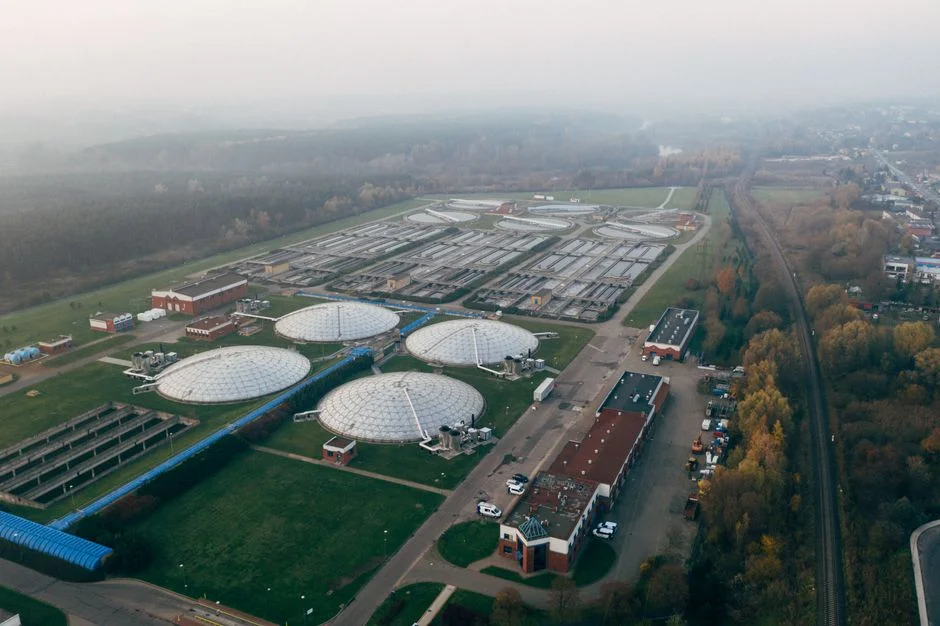
The WSZ underground package plant combines anoxic/aerobic contact oxidation, sedimentation, and disinfection in one buried unit; it is fully automated, requires no operator, and covers 1–80 m³/h (HydropureWater verified product catalog, undated). Its process configuration suits sites needing an integrated biological and solids-removal train without showing a conventional aeration-and-sedimentation layout at grade. The underground A/O package sewage treatment plant can be installed below grade with the surface used for landscaping or mounted on a trailer for mobile deployment.
The MBR route combines activated sludge with submerged PVDF membrane filtration, provides sub-1 μm filtration, and covers 10–2,000 m³/day; the catalogue reports a footprint 60% smaller than conventional systems (HydropureWater verified product catalog, undated). Its membrane-based separation makes it relevant where the specified treatment or reuse objective requires very low suspended solids. The MBR membrane bioreactor system should therefore be evaluated as a process and controls package, not simply as a smaller treatment tank.
Centralized sewerage moves collection and treatment infrastructure to the utility, but its feasibility depends on service availability, connection arrangements, and Faisalabad's multistage pumping reality (WASA Faisalabad, Sewerage Services, undated). A decentralized route gives the owner control over installation and operation, but it also transfers power, maintenance, sludge, and compliance responsibilities to the site. These distinct operational models require a clear understanding of the project's long-term maintenance capacity.
Compare reuse intensity, footprint, installation type, automation, sludge handling, and treatment specification—not headline capacity alone. A larger A/O unit may be adequate for gravity discharge and ordinary maintenance access; an MBR may be justified where low solids and reuse-oriented treatment drive the process decision. The A/O package plant versus MBR selection method provides a useful equipment-level comparison once the discharge objective is defined.
| Decision criterion | Packaged A/O | MBR | Centralized sewerage |
|---|---|---|---|
| Documented capacity | 1–80 m³/h | 10–2,000 m³/day | Subject to confirmation at the site |
| Process | A/O contact oxidation, sedimentation and disinfection | Activated sludge with submerged PVDF membrane filtration | Utility collection and treatment network |
| Installation | Buried package unit or trailer-mounted configuration | Surface treatment package requiring a confirmed footprint | Site collection works and connection to the utility |
| Primary selection driver | Integrated biological treatment and limited surface-space demand | Very low solids or reuse-oriented treatment | Confirmed service availability and connection feasibility |
| Owner responsibility | Plant, power, maintenance, sludge and effluent monitoring | Plant, membrane controls, maintenance, sludge and effluent monitoring | Network service plus project-specific connection and collection obligations |
Turn the decision into a procurement brief
Issue the same information request to the client, consultant, and shortlisted suppliers. Require measured domestic sewage flow, the design horizon, peak-flow assumptions, incoming wastewater characteristics, and the intended reuse or discharge target. The Chokera research supports evaluating multiple treatment parameters under changing climatic conditions rather than sizing from flow alone (Mehran University Research Journal of Engineering and Technology, undated). State whether the flow represents existing occupancy, a proposed development phase, or the total build-out.
- For the WSZ route, ask the supplier to map the selected capacity within the 1–80 m³/h range against the approved design flow and confirm the proposed below-grade or trailer-mounted arrangement (HydropureWater verified product catalog, undated).
- For the MBR route, request the selected 10–2,000 m³/day capacity, membrane configuration, controls, sludge-handling arrangement, and written confirmation that the quoted footprint fits the available area (HydropureWater verified product catalog, undated).
- Ask each supplier to define the treatment train, utilities, installation boundary, commissioning tests, operator training, spare-parts support, and performance warranty using the same project inputs.
- Assign approvals and operating responsibilities in writing for sewer connection, power, sludge disposal, and final effluent monitoring.
Do not convert an equipment catalogue into a permit. The supplied research does not establish a Faisalabad-specific regulatory limit for the project discharge. Require the applicable authority or client to identify the receiving route and effluent requirements, and write those requirements into the procurement and acceptance documents. The comparison of A/O package plants and MBR for reuse-oriented treatment can support the technical evaluation, but local approval remains a separate verification step.
Frequently Asked Questions
What flow should be used to size a domestic sewage treatment plant in Faisalabad?
Use the site's measured domestic sewage flow and agreed peak-flow basis, not Faisalabad's citywide sewage-generation figure. WASA Faisalabad reports approximately 280 MGD generated across the city, but that figure cannot represent a hotel, housing development, or factory (WASA Faisalabad, Sewerage Services, undated). Document occupancy, water demand, current flow data, and the design horizon before comparing capacity.
How much will a packaged sewage treatment plant cost?
The supplied research provides no Faisalabad-specific equipment quotation, so a defensible budget cannot be stated from citywide infrastructure data. Request itemized quotations using the same design flow, wastewater characteristics, footprint, installation type, controls, sludge handling, commissioning, and acceptance criteria. A packaged versus centralized sewage treatment comparison should also identify whether sewer connection and pumping charges apply to the centralized option.
Which supplier information is needed for a fair A/O versus MBR comparison?
Require each supplier to submit design flow, process configuration, treatment specification, confirmed footprint, installation arrangement, controls, sludge handling, utilities, commissioning tests, and written acceptance criteria. The WSZ catalogue states a 1–80 m³/h range, while the MBR catalogue states 10–2,000 m³/day and sub-1 μm filtration; those supplier-specific claims must be mapped to the same project basis (HydropureWater verified product catalog, undated).
What must be confirmed before ordering equipment in Faisalabad?
Confirm the feasible sewer route and connection approval with WASA Faisalabad, the owner of the final discharge obligation, applicable local approval requirements, and the applicable effluent or reuse criteria (WASA Faisalabad, Sewerage Services, undated). Also verify footprint, soil, groundwater, power, maintenance access, and sludge-removal arrangements. These items should be documented before a supplier's performance commitment becomes part of the purchase order.
Related Equipment
- underground A/O package sewage treatment plant — specifications, capacity range, and technical data