Confirm the discharge route and controlling permit
Pulp and paper plants near Canton that discharge to a municipal sewer generally meet pretreatment requirements through a permit-based treatment train rather than relying on one universal limit set. EPA’s 40 CFR Part 430 guidance identifies regulated pollutants by mill subcategory and explains how requirements apply to indirect dischargers through permits or other control mechanisms. The plant must also obtain and comply with its local sewer authority’s limits. A practical design starts with source and pollutant characterization, then matches physical removal, coagulation, clarification, and solids handling to those conditions. DAF is a candidate where suspended solids, colloids, oil and grease, or FOG drive the duty; a Lamella clarifier may suit flocculated solids separation after upstream conditioning. Final selection remains subject to Canton-area permit limits, mill-specific wastewater data, pilot results, and acceptance testing.
EPA states that Part 430 is incorporated into NPDES permits for direct dischargers, which discharge pollutants to waters of the United States, and into permits or other control mechanisms for indirect dischargers, which discharge pollutants to a publicly owned treatment works. The first design question is therefore not which clarifier to buy; it is whether the mill sends wastewater to a municipal sewer under a locally issued pretreatment or sewer-use authorization.
Request the current pretreatment permit, sewer-use permit or discharge authorization, applicable categorical limits, local limits, monitoring requirements, sampling points, reporting provisions, bypass conditions, and any approved equalization provisions from the authority accepting the discharge. Those documents are not included in the supplied research, so no Canton-area numerical limit should be assumed. The worksheet below separates confirmed regulatory inputs from missing project information.
| Decision item | Record before design | Owner | Status |
|---|---|---|---|
| Discharge route | Municipal sewer indirect discharge, permitted surface-water direct discharge, or unresolved route | Mill environmental manager | Known / unknown |
| Controlling authority | Authority issuing the permit and accepting discharge | Permit owner | Known / unknown |
| Regulatory basis | Part 430 subcategory, applicable categorical limits, local limits and permit conditions | Process engineer / permit owner | Known / unknown |
| Mill classification | Kraft, sulfite, groundwood, deink, secondary-fiber, purchased-pulp or other applicable operation | Mill operations | Known / unknown |
| Monitoring | Constituents, locations, frequency, methods, records and reporting duties | Laboratory / compliance lead | Known / unknown |
| Operation | Flow envelope, equalization, bypass, sampling and maintenance conditions | Operations / supplier | Known / unknown |
EPA’s subcategory list is a classification checklist, not a process-selection shortcut. It covers multiple kraft, sulfite, groundwood, deink, secondary-fiber and purchased-pulp operations, and the regulated pollutants vary by subcategory according to EPA’s “Pulp, Paper and Paperboard Effluent Guidelines” page. Record the production description used by the permitting authority so that classification does not rely on a shortened mill description.
Characterize wastewater by mill source and pollutant
Each mill stream requires separate characterization because plant-average flow can conceal the peak hydraulic loading and intermittent pollutant concentrations that control equipment performance. EPA’s “Pulp, Paper and Paperboard Effluent Guidelines” page states that regulated pollutants vary by subcategory; it does not provide Canton-specific numerical limits. The characterization matrix therefore must be completed with mill data and the controlling permit rather than populated with assumed values.
Build the matrix from representative operating data and prior monitoring, then test the controlling conditions separately. Request laboratory results, prior permit-monitoring reports, process descriptions, batch and upset records, and accepted bypass or equalization conditions. Sampling should identify pH, suspended solids, colloids, oil and grease or FOG, and every regulated constituent listed by the permit.
| Stream or source | Flow profile | pH | Suspended solids / colloids | Oil, grease or FOG | Permit constituents | Sample basis |
|---|---|---|---|---|---|---|
| Fiber-containing wastewater | Average / peak / batch | Enter result | Enter result | Enter result | Enter permit requirement | Representative and peak |
| Process or pulping wastewater | Average / peak / batch | Enter result | Enter result | Enter result | Enter permit requirement | Representative and peak |
| Coating, adhesive or wash water | Average / peak / batch | Enter result | Enter result | Enter result | Enter permit requirement | Representative and peak |
| Cooling, wash or utility water | Average / peak / batch | Enter result | Enter result | Enter result | Enter permit requirement | Representative and peak |
| Combined wastewater after equalization | Average / peak / storage excursion | Enter result | Enter result | Enter result | Enter permit requirement | Composite and grab samples |
Use the EPA subcategory list to confirm which operations are present, then map each operation to its actual wastewater sources. Do not assume that all pulp-and-paper mills generate the same wastewater or that one treatment train can handle every stream without segregation. Equalization may reduce short-term variations, but it does not remove the need to characterize the incoming constituents or establish the permitted operating envelope.
The next check is dilution. Compare raw and mixed-stream results with the permit’s monitoring basis and any permitted dilution provisions, using the actual permit language rather than a general assumption. If the permit requires sampling before or after equalization, preserve that distinction in the worksheet and in the proposed sampling locations.
Match removal duties to DAF or clarification
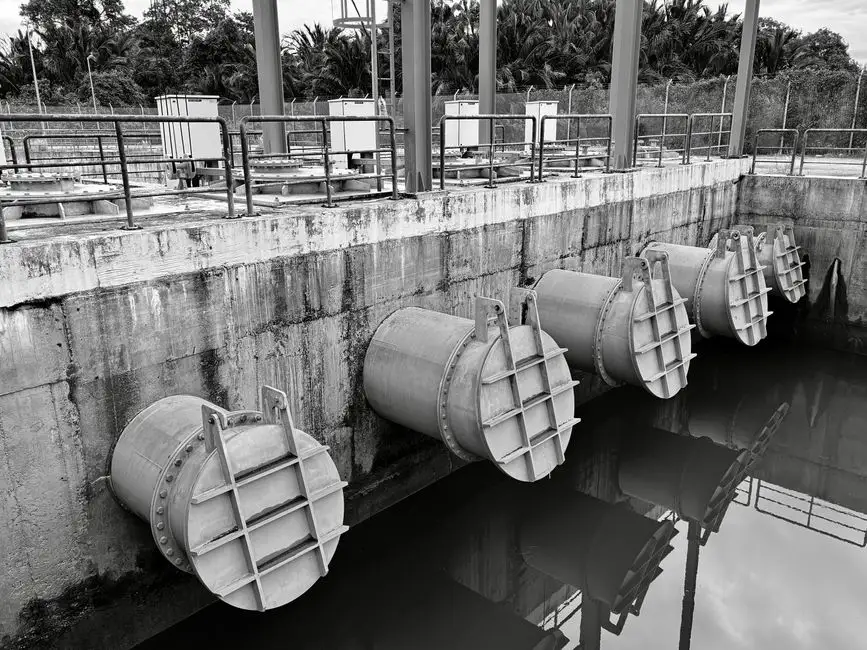
DAF and Lamella clarification solve different principal removal duties. DAF is the stronger candidate when the measured requirement centers on suspended solids, colloids, oil and grease, FOG or other floatable material. Lamella clarification becomes the stronger candidate when the required function is separation of flocculated solids after conditioning. This is a decision based on stream characteristics and permit duties, not equipment labels.
HydropureWater’s Lamella clarifier product record describes sludge recirculation, flocculation and inclined-plate separation, with a stated surface-loading rate of 20–40 m/h and a stated chemical-consumption reduction of up to 30%. Verify the applicable loading definition and operating basis with the supplier, then confirm actual hydraulic and solids-loading performance using the mill wastewater. Pilot testing is appropriate when waste characteristics vary or the available catalogue range does not resolve the duty.
| Decision condition | Preferred starting point | Required verification |
|---|---|---|
| Floatable oils, FOG, colloids or suspended solids drive the permit duty | DAF | Representative wastewater, pilot removal, recovered-solids quality, sludge handling |
| Flocculated solids separation is the primary duty | Lamella clarification | Floc properties, hydraulic loading, solids loading, sludge recirculation, carryover |
| Both duties are material | DAF followed by clarification or an alternative train | Overall mass balance and performance across the complete train |
| pH adjustment or coagulant and flocculant addition is required | Automatic chemical dosing | Chemical demand, jar or pilot tests, feed control, sequence and response to variation |
Where chemistry is needed, evaluate the automatic chemical dosing for coagulation and pH control. HydropureWater’s product record describes PLC-controlled dosing of coagulants, flocculants, pH adjusters and specialty chemicals. That record supports evaluating automatic feed; it does not establish a dose, chemical selection or compliance result without wastewater testing.
Use an if-then sequence: if floatable material governs, test DAF; if flocculated solids govern after conditioning, test Lamella clarification; if both govern, evaluate the complete train. Do not compare the units on catalogue capacity alone.
Size the pretreatment train around the worst controlled condition
Equipment should be sized against the controlling design condition, not the mill’s average wastewater flow. The supplied sources do not state Canton discharge limits, mill flow data or required reserve capacity, so these must be supplied by the mill and confirmed with the accepting authority.
Use the Lamella clarifier’s stated 20–40 m/h surface-loading range as a selection input rather than a final rating. Request the supplier to define the loading basis and demonstrate adequate hydraulic and solids-loading performance for the measured wastewater.
| Sizing input | Document to request | Design use | Status |
|---|---|---|---|
| Peak and batch flows | Flow study and production operating history | Hydraulic capacity and equalization check | Missing / received |
| Waste-quality variation | Representative and peak laboratory data | Removal duty and chemical demand | Missing / received |
| Solids concentration and properties | Solids analyses and pilot results | DAF loading, clarification loading and sludge handling | Missing / received |
| Permit operating envelope | Authorization and local limits | Acceptance limits and controls | Missing / received |
| Sludge route | Sludge quantity, conditioning and transport data | Storage, dewatering and disposal selection | Missing / received |
| Future operating needs | Production and product-change plan | Resilience and expansion review | Missing / received |
Evaluate sludge transport, conditioning, storage and dewatering with the selected separation process. A DAF float and a Lamella sludge have different handling requirements, and neither should be assigned a downstream route until its measured quantity, solids characteristics and destination are known.
Verify compliance with tests and operating records
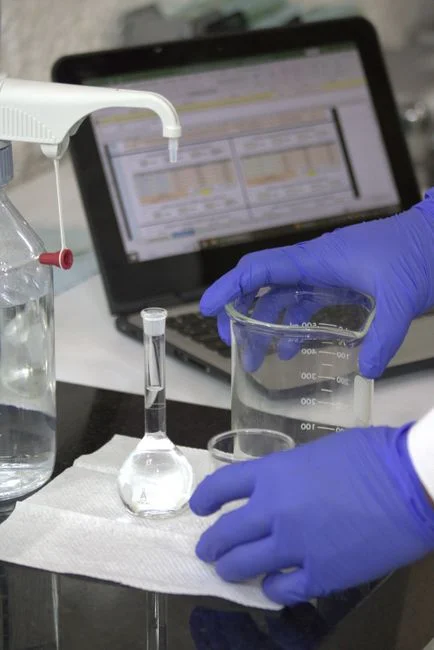
Acceptance criteria must use the exact local sewer limits and permit monitoring requirements. The supplied research contains no numerical Canton limits, so the acceptance plan should remain a controlled template until the permit and mill data are obtained.
- Obtain the controlling authorization and create a permit-to-equipment compliance matrix.
- Define each acceptance test against the selected unit’s measured treatment duty and the exact permit condition.
- Test representative wastewater through the complete train, including chemical feed, controls, alarms and solids withdrawal.
- Verify the documented operating envelope, including permitted flows, concentrations, equalization conditions and bypass provisions.
- Assign analytical sampling, permit reporting, startup, operator training, maintenance and corrective action responsibilities.
- Retain test results, calibration records, laboratory reports, operating logs and corrective-action records.
The mill’s compliance lead should own the permit matrix, the laboratory lead should own analytical methods and sample custody, operations should own routine controls and records, and the equipment supplier should support startup and functional testing. Responsibility does not replace the permit holder’s duty to remain within approved limits.
Frequently Asked Questions
Does EPA Part 430 provide a complete equipment specification for a pulp mill near Canton?
No. EPA’s “Pulp, Paper and Paperboard Effluent Guidelines” page states that regulated pollutants vary by subcategory and that indirect dischargers are subject to permits or other control mechanisms. Request the local authorization, applicable limits and mill-specific wastewater data before specifying equipment.
When should a mill choose DAF instead of Lamella clarification?
Choose DAF when floatable material, colloids, suspended solids, oil and grease or FOG drive the duty. Consider Lamella clarification when separation of flocculated solids is primary. Confirm the choice with representative wastewater and pilot results.
What should a buyer request before approving a supplier’s size?
Request the peak and batch flow study, representative and peak analytical results, equalization conditions, permit operating envelope, pilot data, loading basis and solids-handling plan. The DAF catalogue range or Lamella surface-loading statement alone is not final sizing evidence.
How should cost and supplier selection be evaluated?
Request a written scope separating equipment, chemical dosing, equalization, controls, civil work, startup, testing, training and sludge handling. Because no quotation is supplied, require itemized pricing and exclusions. Assess the supplier’s ability to provide documented performance tests, control narratives, operating support and traceable acceptance records.